Health
Is brachycephalic airway syndrome a real risk for Welsh Springer Spaniels?
No — it's documented in flat-faced breeds and doesn't apply to this breed's normal muzzle structure.

Quick answer
Is brachycephalic airway syndrome a real risk for Welsh Springer Spaniels?
No — it's documented in flat-faced breeds and doesn't apply to this breed's normal muzzle structure.
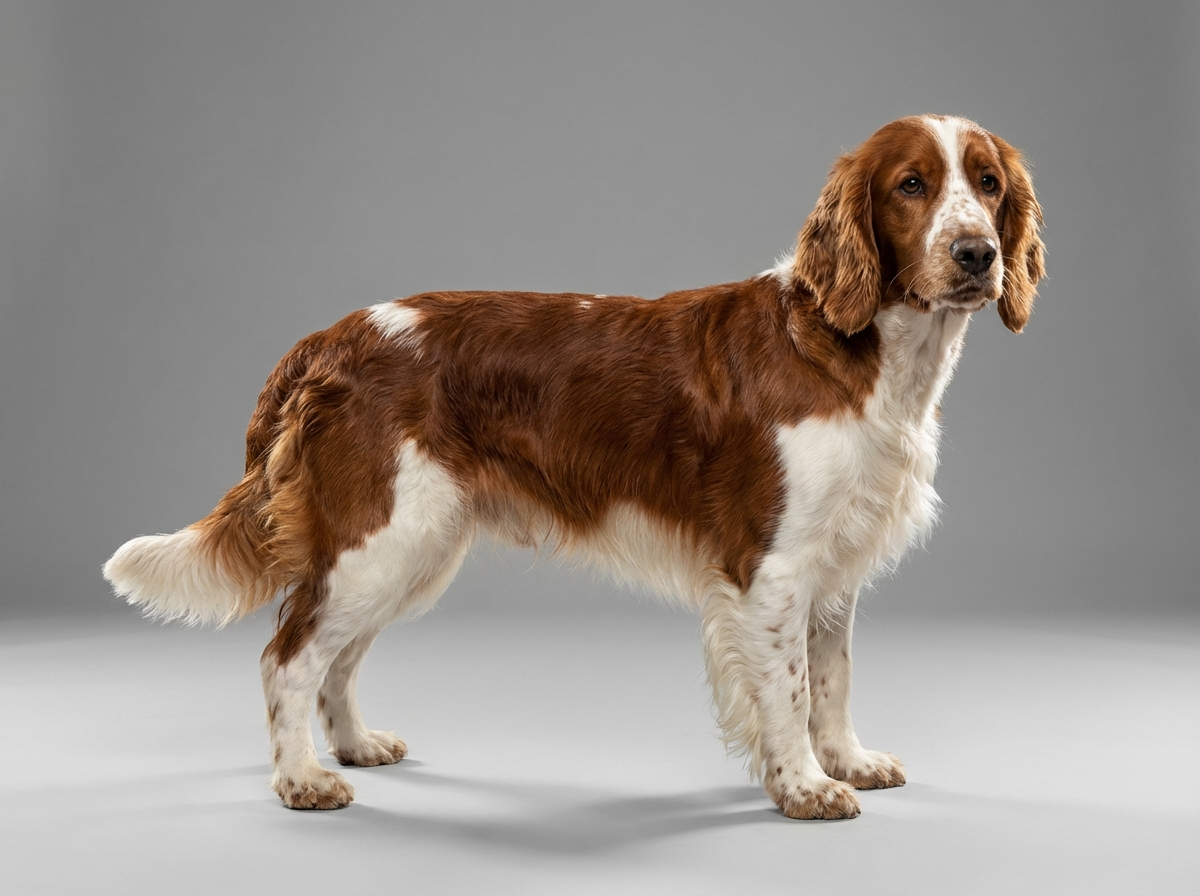
Brachycephalic breathing problems sound like they could apply to any dog that pants hard, but they're tied to a specific skull shape the Welsh Springer Spaniel simply doesn't have.
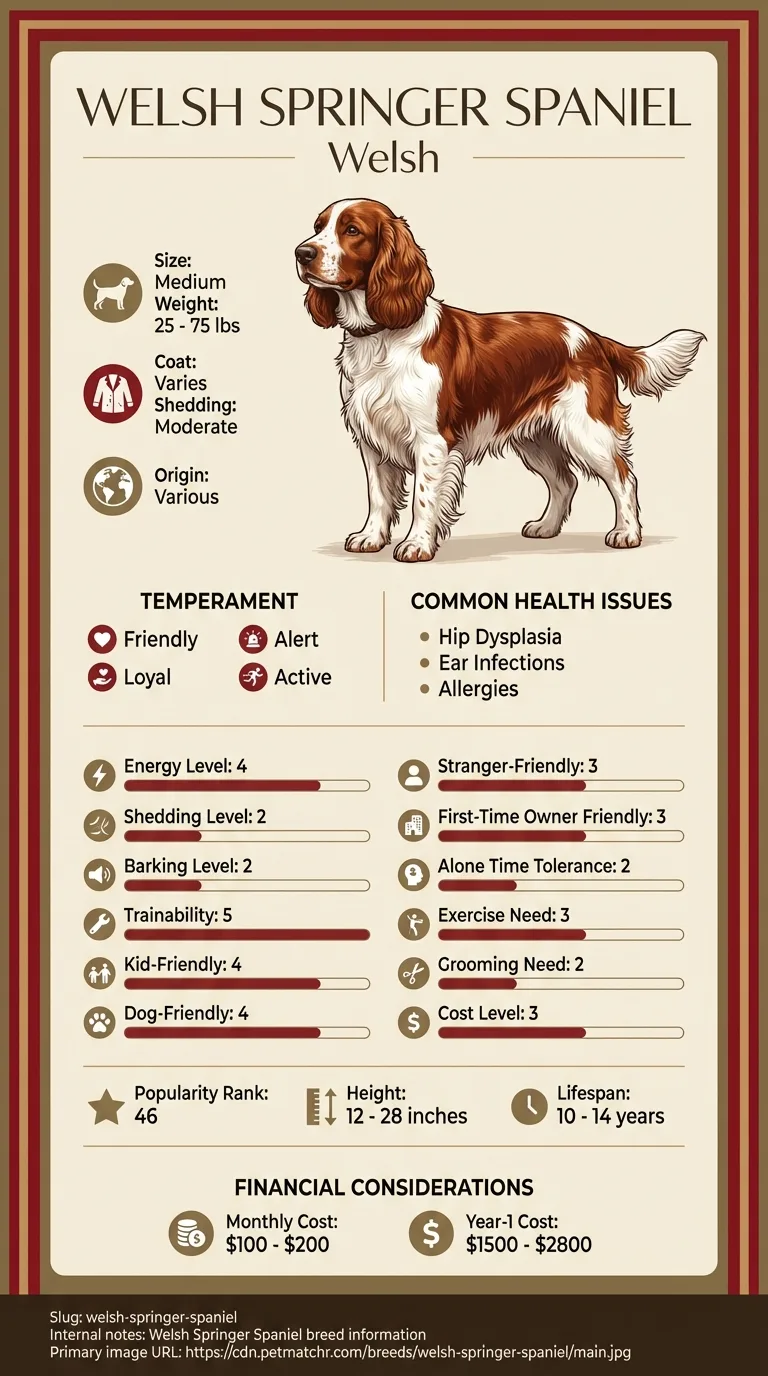
This page is for owners who've read about flat-faced breed airway problems elsewhere and want to know whether a Welsh Springer Spaniel's panting, snoring, or breathing after exercise is something similar to worry about.
This guide is not medical advice. If your dog shows pain, sudden behavior change, or worsening symptoms, consult a licensed veterinarian.
Some links may be affiliate links. We may earn a commission at no extra cost to you. We only suggest products we believe are helpful for dog owners.
We research and check what we publish, but we do not warrant that any figure, date, price, or statement is accurate, complete, or current, and we accept no liability for any loss, cost, injury, or other harm arising from the use of this site. Use it as one reference among several. You remain responsible for your own decisions and for your dog's care - confirm anything that matters with a licensed veterinarian or another qualified professional before you act on it. Full disclaimer.
Brachycephalic airway syndrome is a structural condition specific to flat-faced breeds like Bulldogs, Pugs, French Bulldogs, and Boston Terriers, and it is not established as occurring in the Welsh Springer Spaniel. This breed's moderately long muzzle and normal skull proportions mean its airway anatomy doesn't produce the obstruction seen in truly brachycephalic dogs.
Brachycephalic airway syndrome affects a large share of dogs within truly flat-faced breeds, sometimes the majority of individuals in severe lines, but it has no documented occurrence in the Welsh Springer Spaniel because the breed's muzzle structure doesn't produce the underlying anatomy.
Brachycephalic airway syndrome is driven by selective breeding for a shortened skull, a trait deliberately fixed in breeds like Bulldogs and Pugs but never part of the Welsh Springer Spaniel's breed standard, which calls for a proportionate, moderately long muzzle. Because that skull-shortening trait was never selected for in this breed's lines, the underlying anatomy for the syndrome simply isn't present.
Since this condition isn't structurally possible in a Welsh Springer Spaniel, there are no environmental triggers to manage for it in this breed. General heat and humidity precautions still apply to any dog during vigorous exercise, but that's a matter of ordinary care, not brachycephalic risk management.
Talk to a vet promptly for sudden severe breathing distress, blue-tinged gums, or collapse, since these always need evaluation regardless of breed — though in a Welsh Springer Spaniel the cause is far more likely cardiac, orthopedic, or unrelated illness than an airway structure problem.
See all Welsh Springer Spaniel health problems, which breeds are prone to brachycephalic features, or the full Welsh Springer Spaniel breed guide for temperament, exercise needs and ownership costs.
Because brachycephalic airway syndrome isn't relevant to the Welsh Springer Spaniel, there's no disease timeline to track or manage for it in this breed.
Success here means redirecting attention away from a mismatched breathing condition and toward the breed's actual documented risks — regular hip screenings, ear checks, and eye exams that catch real issues early.
Brachycephalic airway syndrome develops because a dog's skull is bred to be short while the soft tissue inside — soft palate, tongue, throat lining — stays roughly the same size, crowding the airway. The Welsh Springer Spaniel was bred as a working flushing dog and kept a proportionate, moderately long muzzle that gives its airway normal clearance.
That structural difference is why vets don't screen this breed for the syndrome the way they would a Bulldog or Pug. A Welsh Springer Spaniel's nostrils, soft palate, and throat anatomy simply aren't built the way a flat-faced dog's are.
Understanding this distinction matters because it stops owners from misreading normal panting as an emergency airway problem it structurally cannot be.
Since airway obstruction isn't a realistic concern here, it's more useful to know what breathing changes in a Welsh Springer Spaniel do warrant attention and what they usually point to.

Desmond adopted a nine-month-old Welsh Springer Spaniel in Spokane and, while reading up on canine respiratory problems after a friend's Frenchie needed airway surgery, wondered if his own dog's panting after fetch was an early warning sign of the same thing. His vet checked the dog's soft palate, nostrils, and airway anatomy during a routine visit and found nothing resembling brachycephalic structure at all — a normal spaniel muzzle, open nostrils, easy breathing even after a hard run. The panting was simply exercise recovery in a healthy, moderately active medium-sized dog. The visit turned into a broader conversation about what actually is worth tracking for a Welsh Springer Spaniel: hip and ear health, plus routine eye checks as the dog ages.
Key takeaway: Heavy panting after exercise in a Welsh Springer Spaniel is normal recovery, not a brachycephalic airway problem — this breed's face isn't shaped in a way that produces that syndrome, and the real health priorities lie elsewhere.
It's a structural breathing problem caused by a shortened skull that crowds the soft palate, throat, and nostrils, well documented in flat-faced breeds like Bulldogs and Pugs.
No, this breed has a normal, moderately long muzzle, so it isn't documented as occurring in Welsh Springer Spaniels at all.
In a breed with normal airway anatomy, heavy panting after vigorous exercise is typically just healthy recovery, not a sign of obstruction.
There's no established need for that screening in this breed, since the underlying shortened-skull anatomy that causes the syndrome isn't part of its structure.
Sudden severe labored breathing, blue or pale gums, or collapse always need immediate care, but in this breed the cause is more likely cardiac or another unrelated issue than airway structure.
The breed's genuinely documented risks are hip dysplasia, ear infections, epilepsy, glaucoma, and hypothyroidism, all of which are worth far more attention than airway structure.
Snoring in this breed is usually related to sleep position or minor allergies rather than any structural airway condition, since it lacks the flat-faced anatomy behind that syndrome.
No — it's documented in flat-faced breeds and doesn't apply to this breed's normal muzzle structure.
Focus on the breed's documented risks: hip dysplasia, ear infections, epilepsy, glaucoma, and hypothyroidism.
Usually not — it's typically normal exercise recovery given this breed's clear airway anatomy.
No, this surgery addresses a structural problem specific to flat-faced skulls that this breed doesn't have.
No, but budgeting for routine hip, ear, and eye screenings is a more useful priority for this breed.
A one-page prep sheet for this condition: the signs, the questions to ask, what to get priced. Unlocks here.
You get: Vet visit prep sheet
No spam. One-click unsubscribe. See our privacy policy.
Preview page 1 before you decide.