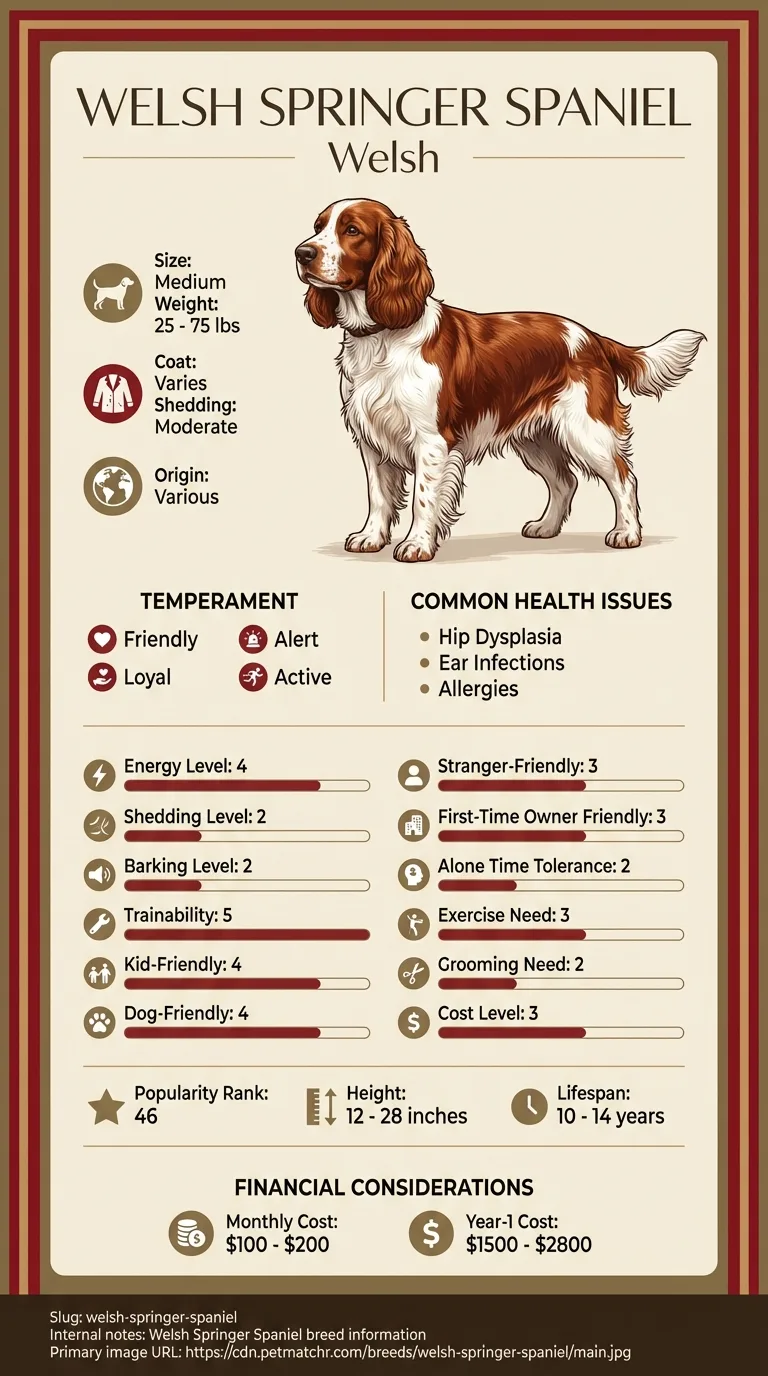
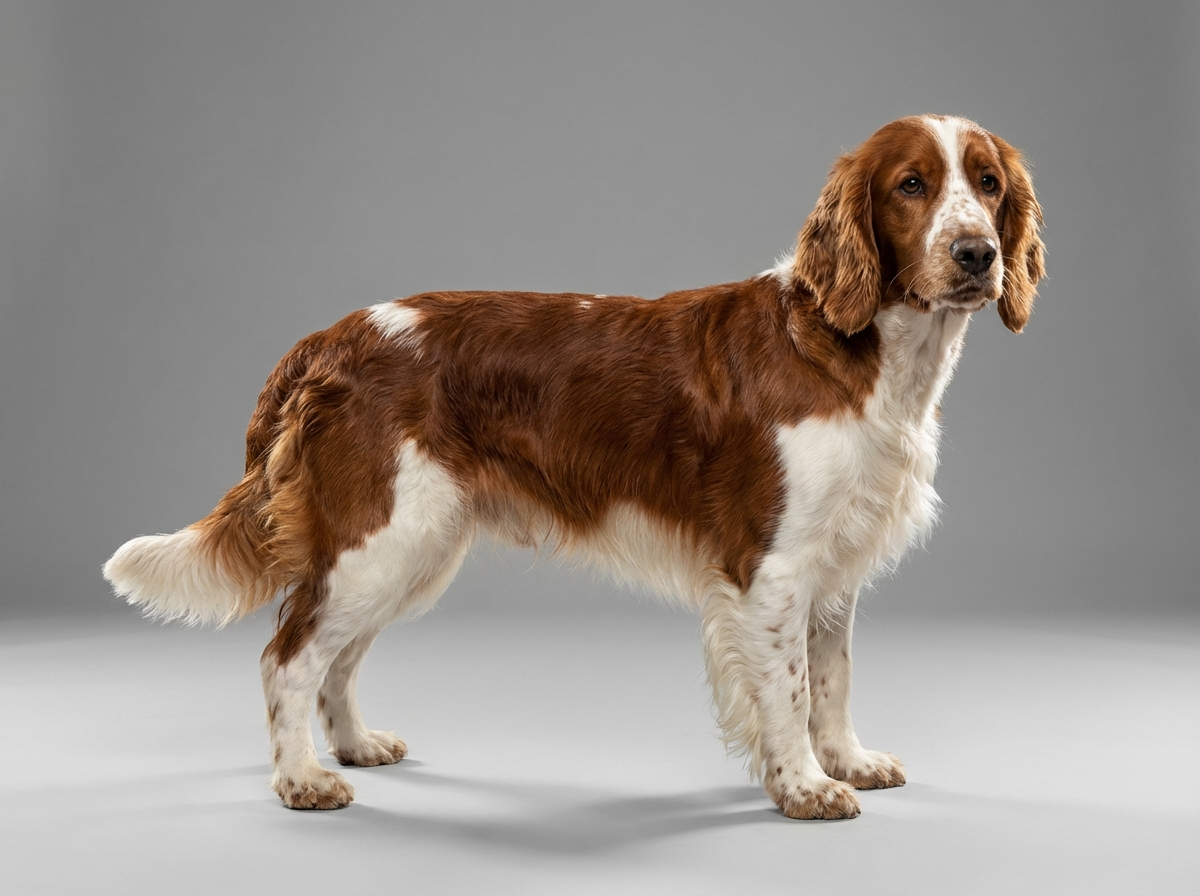
Welsh Springer Spaniels are genuinely uncommon in the United States, with a small number of litters registered each year. A rare breed and an abundant local supply of sellers is a combination that deserves care, because a puppy advertised at short notice in a state with this much breeding capacity may not have come from where the listing implies.
What separates a good source from a poor one is documentation you can verify rather than atmosphere you can feel. For this breed, two screenings matter most. Hip evaluations on both parents, submitted to and readable through a public orthopaedic registry, speak to the documented hip dysplasia risk. An eye examination performed by a board-certified veterinary ophthalmologist — repeated annually rather than done once — speaks to the glaucoma risk, which is the condition where a bad outcome is fastest and least recoverable.
Ask to see the results themselves, with registry numbers, rather than a verbal assurance that the dogs are "health tested". Ask whether either parent or any close relative has had a seizure, given epilepsy's place on this breed's list. A breeder who welcomes those questions is the one you want; a breeder who deflects them has told you something useful. None of this costs the buyer anything beyond patience, and it is the only point in the dog's life where the hereditary side of the ledger is still open.