Health
Is bloat a documented risk for Welsh Springer Spaniels?
No, it isn't among this breed's documented top health issues, but GDV can occur in any dog with a moderately deep chest.

Quick answer
Is bloat a documented risk for Welsh Springer Spaniels?
No, it isn't among this breed's documented top health issues, but GDV can occur in any dog with a moderately deep chest.
A stomach that fills with gas and then twists on itself cuts off its own blood supply within hours, which is why bloat kills dogs that seemed fine at breakfast.
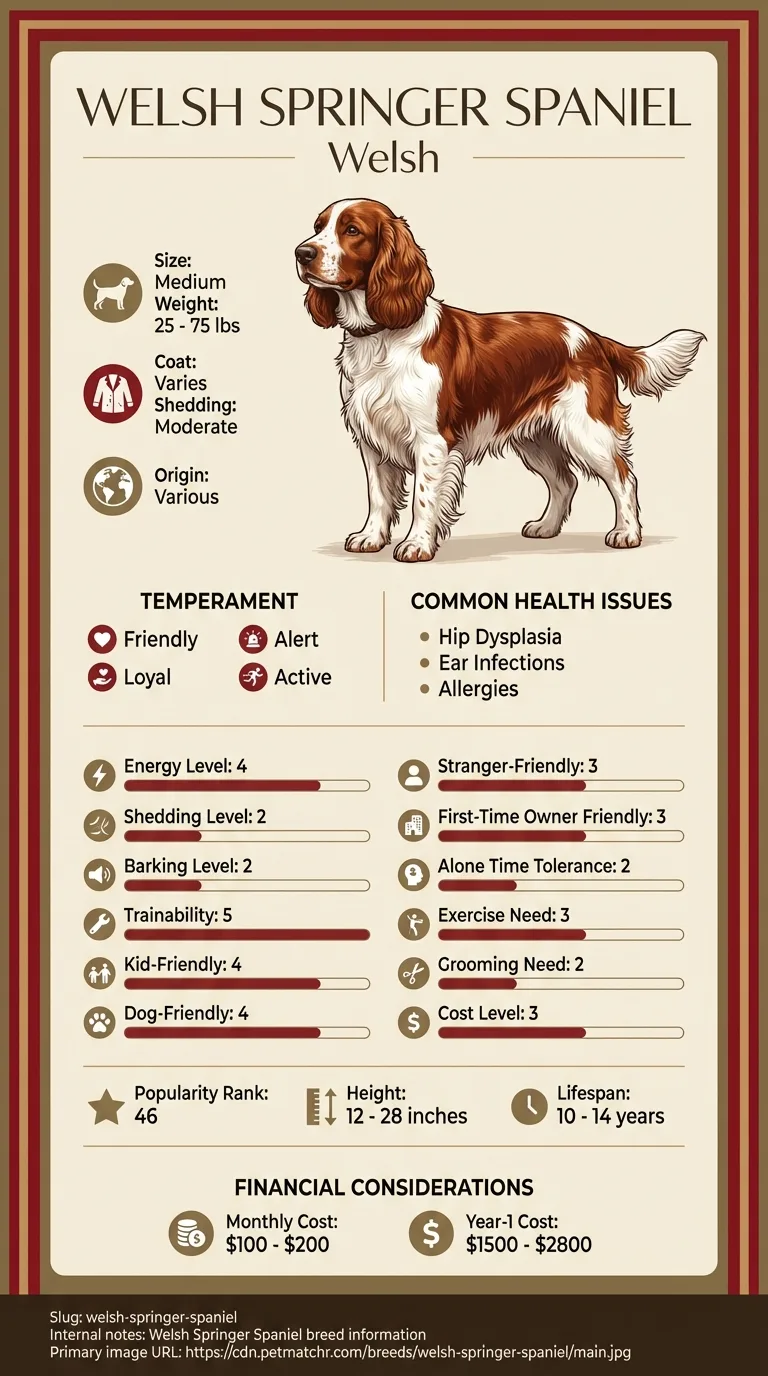
Owners of active, food-motivated dogs who eat quickly are at the highest practical risk, since fast eating and post-meal activity are two of the most consistent contributing factors regardless of breed.
This guide is not medical advice. If your dog shows pain, sudden behavior change, or worsening symptoms, consult a licensed veterinarian.
Some links may be affiliate links. We may earn a commission at no extra cost to you. We only suggest products we believe are helpful for dog owners.
We research and check what we publish, but we do not warrant that any figure, date, price, or statement is accurate, complete, or current, and we accept no liability for any loss, cost, injury, or other harm arising from the use of this site. Use it as one reference among several. You remain responsible for your own decisions and for your dog's care - confirm anything that matters with a licensed veterinarian or another qualified professional before you act on it. Full disclaimer.
Gastric dilatation-volvulus is a life-threatening emergency in which the stomach fills with gas and, in its most dangerous form, twists on itself, cutting off blood supply. It isn't a documented top risk for the Welsh Springer Spaniel, which is a medium breed rather than one of the large, deep-chested breeds most associated with GDV, but it can still occur and requires immediate emergency treatment when it does.
GDV isn't among the Welsh Springer Spaniel's documented health issues, and the classic high-risk breeds are large and giant, especially deep-chested dogs. It's included here because it's a genuine emergency that can affect any breed with a moderately deep chest, and every owner benefits from knowing the signs regardless of their dog's specific risk level.
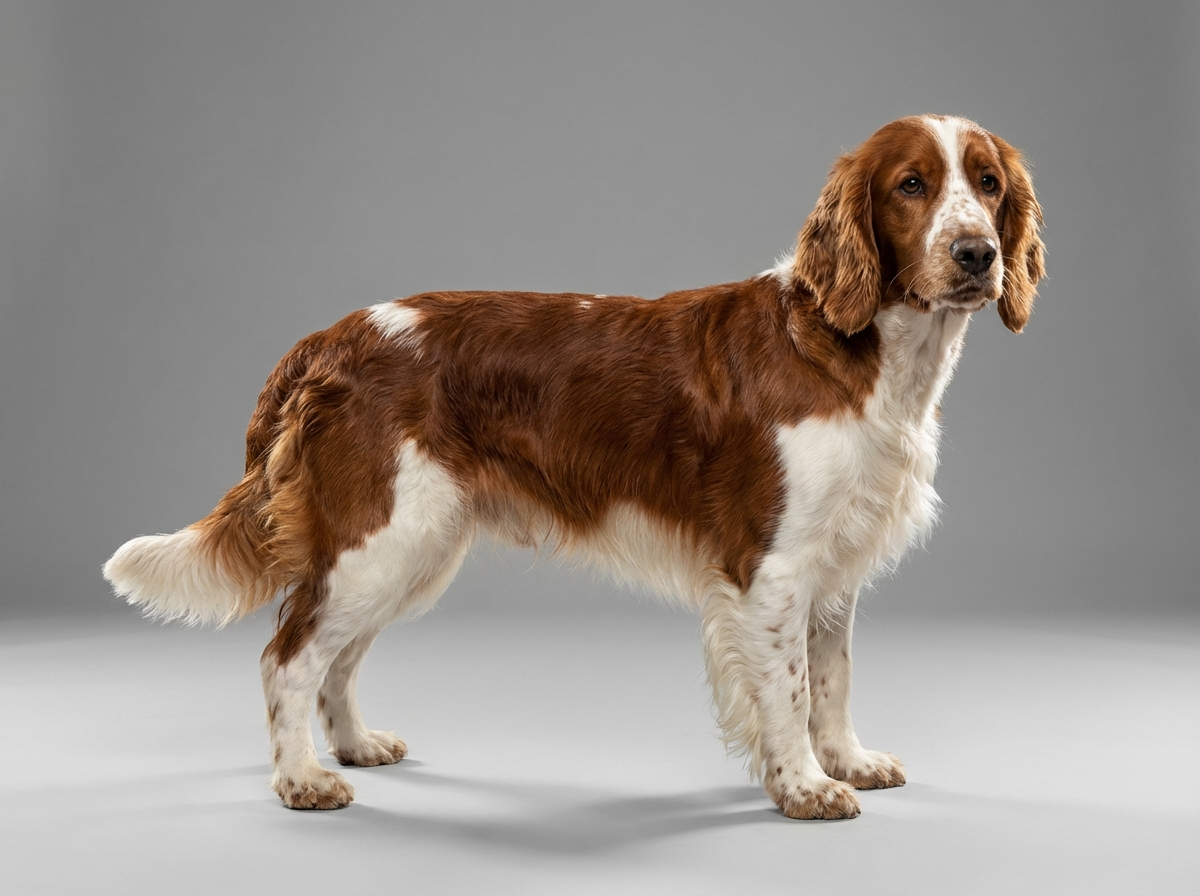
There's no documented breed-specific predisposition to GDV for the Welsh Springer Spaniel in breeds.json. As a medium sporting breed with a moderately deep chest relative to its size, the anatomical risk factor that drives GDV in classic high-risk breeds, chest depth relative to width, is present to a lesser degree here than in large, narrow-chested breeds.
The environmental and behavioral triggers are the same ones that apply across breeds: fast eating, gulping air, a single large daily meal, and vigorous activity soon after eating. These factors matter regardless of a dog's documented breed-level risk.
Treat this as an emergency, not a scheduling decision. If you see a swollen or tight abdomen combined with unproductive retching, restlessness, drooling, or weakness, go to an emergency vet immediately. Do not wait to see if symptoms improve on their own.
See all Welsh Springer Spaniel health problems, which breeds are prone to bloat gastric dilatation volvulusgdv, or the full Welsh Springer Spaniel breed guide for temperament, exercise needs and ownership costs.
GDV has no recovery timeline in the way a chronic condition does; it's an acute emergency that either resolves with immediate surgical treatment or becomes life-threatening within hours. Dogs that receive prompt surgery and don't develop complications often recover within one to two weeks post-surgery.
Success means recognizing the signs early enough to get emergency treatment before the stomach twists or before shock sets in. Prevention through feeding habits reduces risk but can't eliminate it entirely.
Gastric dilatation-volvulus, GDV, starts when the stomach fills with gas faster than it can be released, causing it to expand like a balloon. In a straightforward bloat without twisting, that's uncomfortable and dangerous on its own. In the more severe volvulus form, the distended stomach rotates on its axis, pinching off the blood supply to the stomach wall and often trapping the spleen along with it.
Once that rotation happens, tissue starts dying within a matter of hours without surgery, and the trapped blood flow can trigger a cascade of shock throughout the body. This is why GDV is treated as a true surgical emergency rather than something to monitor overnight.
The Welsh Springer Spaniel isn't among the classic high-risk breeds for GDV, which tend to be large, giant, and especially deep-chested dogs. But it's a medium sporting breed with a reasonably deep chest for its size, and the disease can affect any dog, which is why every owner should know the signs regardless of breed-specific risk level.
These signs, especially in combination, describe a dog that needs emergency veterinary care immediately, not a wait-and-see approach.

Gethin's Welsh Springer Spaniel, Ianto, had always been a fast, enthusiastic eater, finishing his bowl in under a minute. One evening after dinner and a game of fetch in the yard, Ianto started pacing restlessly and tried to vomit several times without bringing anything up. His belly looked slightly swollen. Gethin didn't wait to see if it would pass. He called the emergency vet, described the symptoms, and drove straight there. X-rays confirmed early bloat without a full twist yet, caught early enough that Ianto was treated with decompression and monitoring rather than emergency surgery. Gethin now feeds Ianto from a slow-feeder bowl split into two smaller meals, and keeps at least an hour of calm time between eating and play.
Key takeaway: Acting within the first hour, rather than waiting to see if symptoms pass, was the difference between a manageable case and a surgical emergency.
No, this breed isn't among the classic high-risk breeds, which tend to be large or giant, deep-chested dogs like Great Danes or Weimaraners. GDV can still occur in a medium breed with a moderately deep chest, so the signs are still worth knowing.
Emergency treatment, including stabilization, imaging, and surgery to untwist and secure the stomach, commonly runs $1,500 to $7,500 depending on severity, location, and whether complications like tissue damage are involved.
It can progress from first signs to life-threatening shock within a few hours. This is why any suspected case needs an emergency vet visit immediately rather than monitoring at home.
Fast eating, gulping air along with food, and heavy exercise soon after a large meal are all recognized contributing factors across breeds, even though they don't guarantee bloat will occur.
There's no guaranteed prevention, but slower feeding, smaller and more frequent meals, and avoiding vigorous exercise right after eating are reasonable, low-cost precautions any owner can take.
A gastropexy is a surgical procedure that tacks the stomach in place to prevent future twisting. It's more commonly recommended preventively for classic high-risk breeds, but your vet can advise whether it makes sense for your individual dog.
No, it isn't among this breed's documented top health issues, but GDV can occur in any dog with a moderately deep chest.
A swollen, tight abdomen combined with repeated unproductive retching is the clearest sign to treat as an emergency.
Treatment typically runs $1,500 to $7,500 depending on severity, facility, and whether complications develop.
Yes, fast eating and gulping air are recognized contributing factors across breeds, regardless of documented breed-specific risk.
It's best avoided; waiting an hour or two after eating before vigorous activity is a simple, reasonable precaution.
A one-page prep sheet for this condition: the signs, the questions to ask, what to get priced. Unlocks here.
You get: Vet visit prep sheet
No spam. One-click unsubscribe. See our privacy policy.
Preview page 1 before you decide.