Health
What's the fastest sign of an acute reaction?
Sudden facial swelling, especially around the muzzle and eyes, appearing within minutes to a couple of hours of a sting, new product or medication.

Quick answer
What's the fastest sign of an acute reaction?
Sudden facial swelling, especially around the muzzle and eyes, appearing within minutes to a couple of hours of a sting, new product or medication.
One hour a Saint Bernard is snoring on the porch; the next, its muzzle has doubled in size and its eyes are swelling shut. That is not a slow allergy building over weeks — it is an acute reaction, and it moves on its own timeline.
Owners who have only ever dealt with chronic itching in other dogs and are not braced for how fast a true acute reaction can escalate in a dog this size, especially first-time giant-breed owners who do not yet know their dog's normal face.
This guide is not medical advice. If your dog shows pain, sudden behavior change, or worsening symptoms, consult a licensed veterinarian.
Some links may be affiliate links. We may earn a commission at no extra cost to you. We only suggest products we believe are helpful for dog owners.
An acute allergic reaction is a fast immune response — usually facial swelling, hives or sudden itching — to a specific trigger like a sting, a new product or a vaccine, arriving within minutes to hours rather than building over weeks. In a Saint Bernard, loose facial skin makes the swelling look more dramatic and spread faster than it would in a tight-skinned breed.
True acute reactions are less common than the breed's chronic allergy and ear-infection problems, but they are not rare — most vets who see giant breeds regularly can describe at least a few sting-related swelling cases a season. Because the presentation is sudden and visible, it tends to alarm owners more than its actual frequency would suggest.
The breed itself is not unusually reaction-prone; the visible drama comes from anatomy, not immune sensitivity. Loose, elastic facial skin and deep flews give swelling more space to pool into, so a reaction that would be a small bump on a tight-skinned dog becomes an obviously distorted face on a Saint Bernard. The heavy double coat can also hide hives on the body for longer, so facial swelling often gets noticed first even when the sting happened elsewhere.
Most triggers are environmental and situational rather than constant: insect activity peaks in warm months when the dog is outside more, new grooming or flea products get introduced seasonally, and vaccine visits cluster around annual boosters. A dog that spends a lot of time in a yard with flowering plants or standing water has more insect exposure than one that is mostly walked on pavement.
Call same day for any facial swelling, hives, or sudden intense itching following a known exposure. Treat as a true emergency — go now, do not wait for an appointment — any swelling around the throat, difficulty breathing, drooling that will not stop, vomiting, collapse or extreme lethargy alongside swelling, since these can signal a reaction severe enough to compromise the airway.
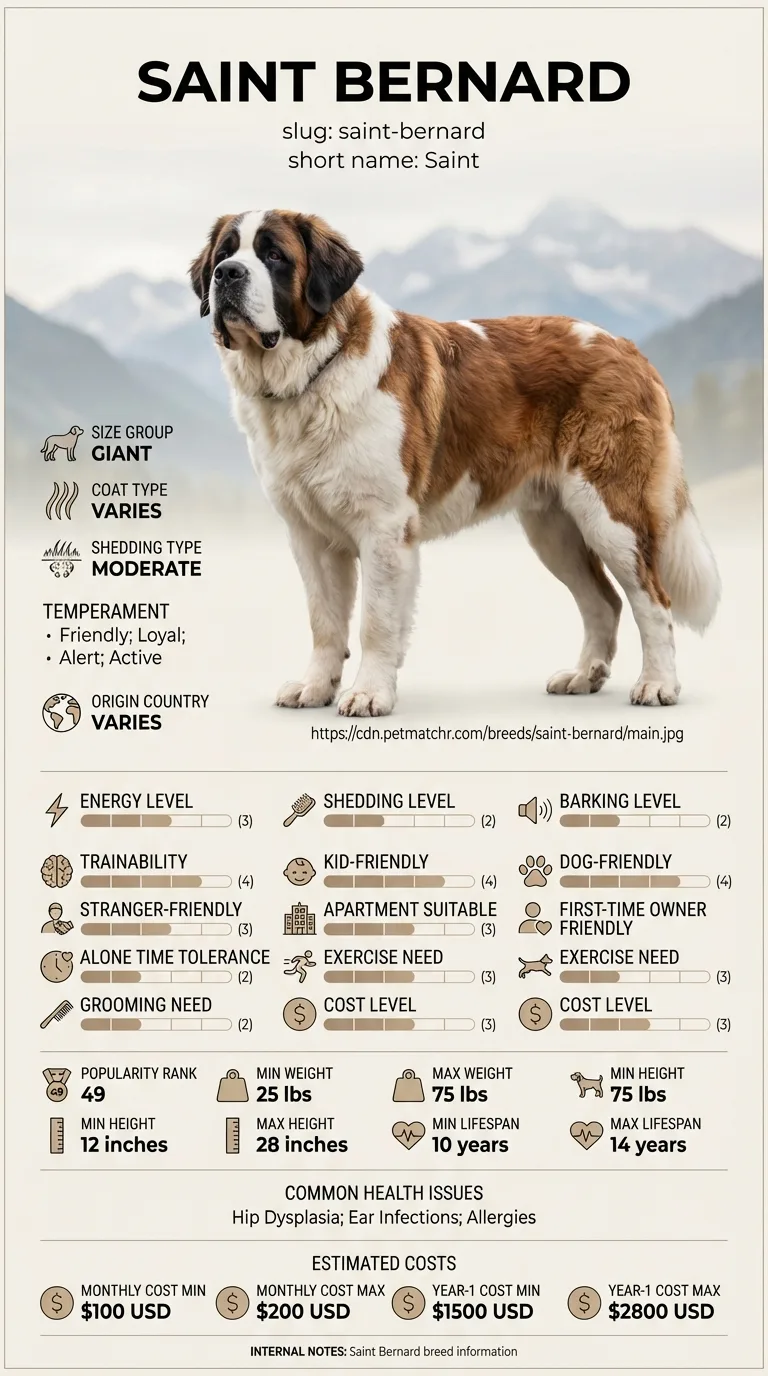
See all Saint Bernard health problems, which breeds are prone to allergic reactions, or the full Saint Bernard breed guide for temperament, exercise needs and ownership costs.
A single identified-trigger reaction, once treated, typically improves within a few hours and is fully resolved within one to two days. There is no lasting condition to manage afterward unless the dog turns out to be unusually reactive to a specific and avoidable substance.
Success looks like catching the next reaction within minutes rather than hours, having a vet-approved plan already in place, and, where a trigger was identified, avoiding it going forward — not eliminating all risk of a future sting or reaction, which is not realistically possible.
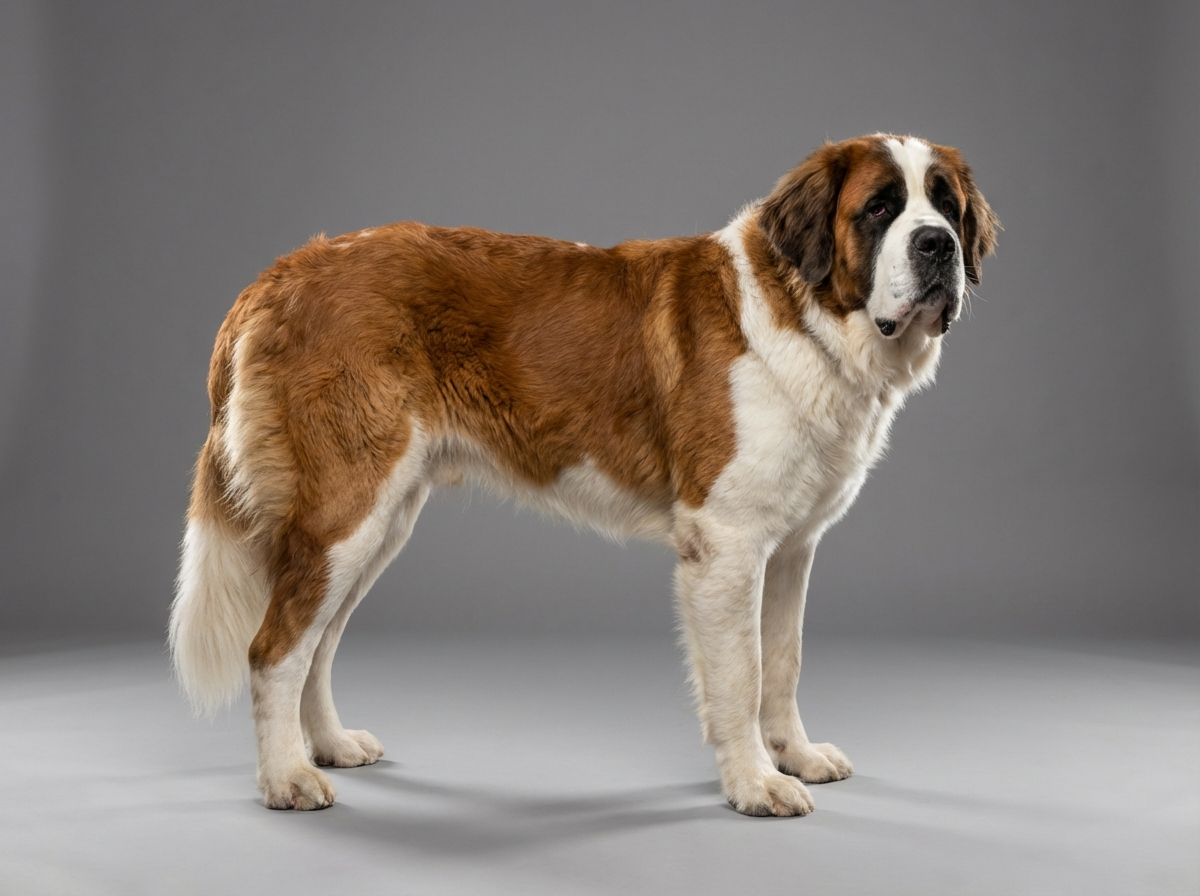
Saint Bernards carry loose, elastic skin across the muzzle, lips and neck — the same folds that give the breed its droopy, mournful expression. That skin has more room in it than a tight-skinned breed's does, and when histamine floods the tissue during a reaction, fluid pools into that slack easily. A reaction that would raise a small welt on a short-coated, tight-skinned dog can turn a Saint Bernard's whole muzzle into a swollen, wrinkled mass within twenty minutes.
The heavy double coat adds a second complication: hives on the trunk are easy to miss under thick fur until the dog is scratching hard enough to draw attention, so owners often notice facial swelling first simply because it is visible, not because the reaction started there. A sting on a paw or flank can still be the origin point even though the face is what swells.
None of this makes the reaction worse medically — it just means an owner needs to check the whole dog, not only the obviously puffy part, and needs to move quickly once swelling is spotted rather than waiting to see if it is 'just a bug bite.'
Most acute reactions trace back to one of a short list of causes, and narrowing it down after the fact — even a day later — helps avoid a repeat.

Otto, a six-year-old Saint Bernard, spent an ordinary July afternoon investigating a gap under his family's deck. Within half an hour his muzzle had swollen enough that his lips no longer met properly, and his eyes were nearly swollen shut. His owner, who had dealt with chronic ear infections in a previous dog but never a reaction like this, called the emergency clinic while driving over rather than waiting to see if it would pass. The vet found two sting marks near his nose, confirmed his breathing was clear, and gave an injectable antihistamine along with a short course of an anti-inflammatory. Otto's swelling peaked about an hour after treatment began, then steadily dropped over the following day. By the second morning his face looked normal again, aside from mild residual puffiness around one nostril.
Key takeaway: The speed of the swelling was frightening, but speed of response mattered more than the dramatic appearance — a same-day call, not a wait-and-see approach, was what kept a scary afternoon from becoming a genuine emergency.
Chronic allergies build over days or weeks and mostly cause itching, ear trouble and skin infections. An acute reaction appears within minutes to hours, often as facial swelling or hives, and is a separate event even in a dog that also has ongoing environmental allergies.
Call your vet or an emergency clinic immediately and describe the swelling while you drive over. Mild facial puffiness with no breathing trouble can sometimes be managed with a vet-directed antihistamine, but any swelling around the throat or trouble breathing is a true emergency.
There is nothing about the breed's immune system that makes reactions more frequent, but their loose facial skin makes any reaction they do have more visually dramatic and faster to notice.
Only give a medication your vet has already told you is safe for your specific dog and dose. Call first — dosing by weight matters, and a giant breed's dose is not just 'more' of a small dog's tablet.
Not necessarily. A single sting reaction does not predict a food or vaccine reaction. Your vet may still note it in the chart so future vaccines or medications are given with extra observation time.
Mild swelling from an identified trigger, once treated, typically starts improving within a few hours and resolves over one to two days. Swelling that keeps spreading rather than improving needs a recheck.
Some dogs do react more strongly to a second sting from the same insect type than the first. If your Saint Bernard has had one reaction, keep an emergency plan and your vet's after-hours number handy during insect season.
Sudden facial swelling, especially around the muzzle and eyes, appearing within minutes to a couple of hours of a sting, new product or medication.
Treat any swelling near the throat or any breathing difficulty as an emergency. Isolated muzzle puffiness with normal breathing still needs a same-day vet call.
Insect stings are the most common cause, followed by new topical products and, less often, vaccine reactions.
It can make swelling appear more dramatic, but appearance is not a reliable guide to severity — breathing and behavior matter more than how puffy the face looks.
Not usually a change in vaccine, but your vet may pre-treat with an antihistamine or extend the observation period after future shots.
A one-page prep sheet for this condition: the signs, the questions to ask, what to get priced. Unlocks here.
You get: Vet visit prep sheet
No spam. One-click unsubscribe. See our privacy policy.
Preview page 1 before you decide.