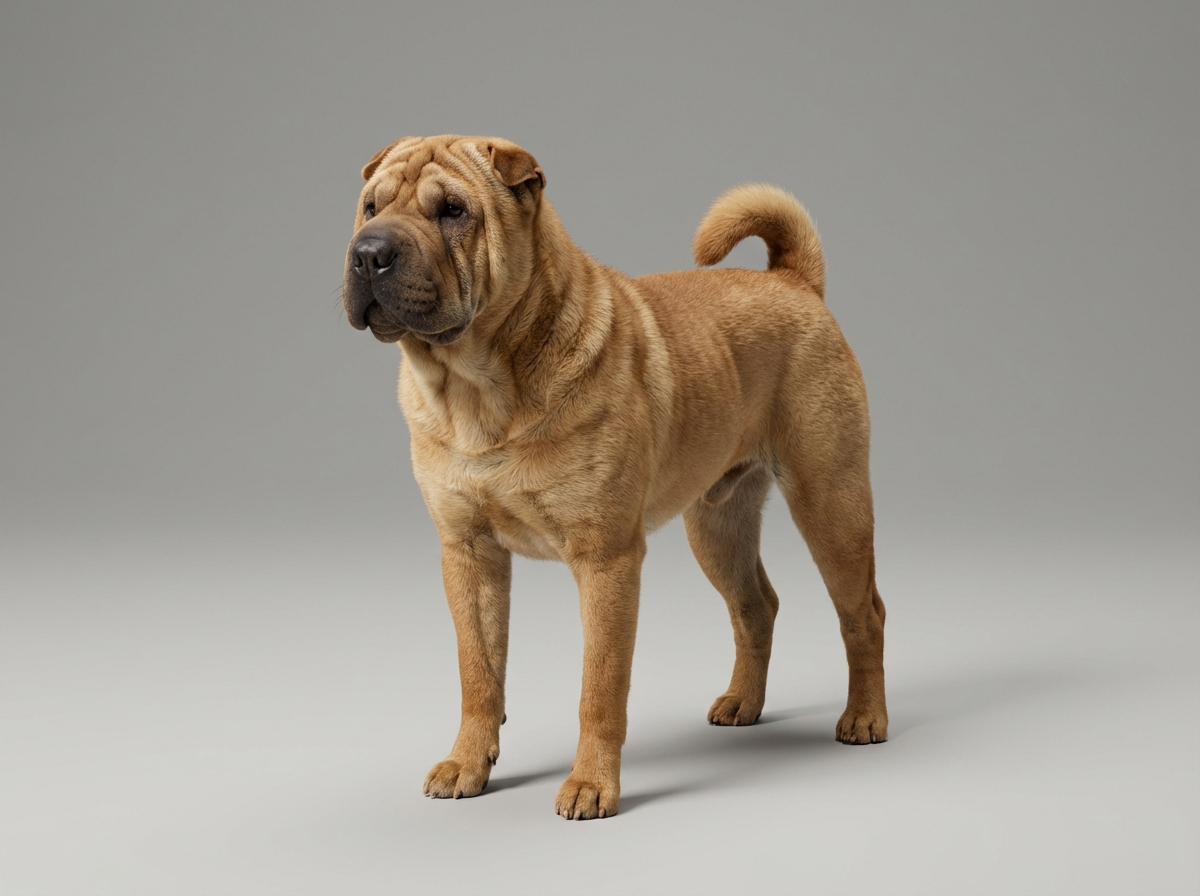
Saint Bernard cost in Houston
Roughly $147–$304 monthly and $2,156–$4,116 across year one, near the national middle, with the Gulf Coast twist being that a giant breed makes evacuation a vehicle-and-crate problem long before it is a money problem.
See Saint Bernard price across all cities →
Quick answer
Saint Bernard cost in Houston
Roughly $147–$304 monthly and $2,156–$4,116 across year one, near the national middle, with the Gulf Coast twist being that a giant breed makes evacuation a vehicle-and-crate problem long before it is a money problem.
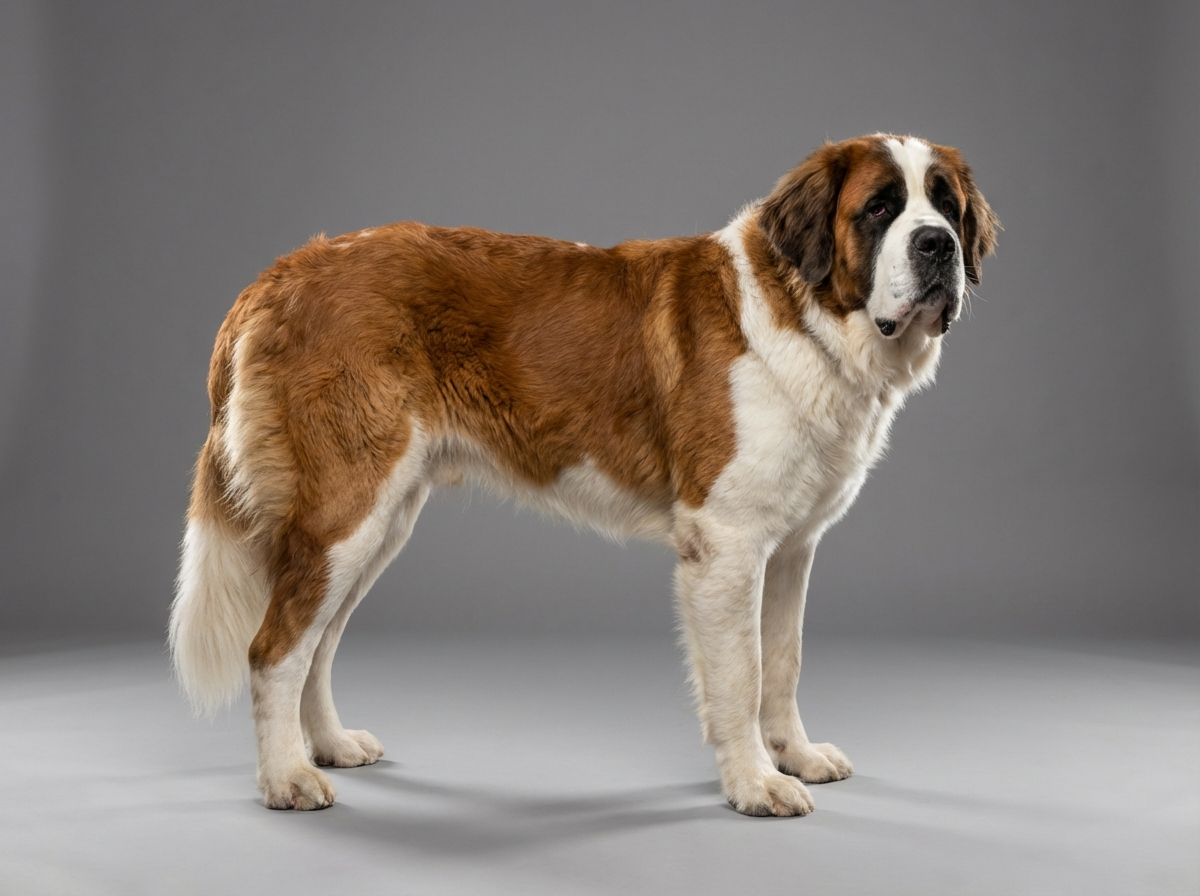
Owning a Saint Bernard in Houston works out at roughly $147 to $304 monthly, with twelve months of ownership landing somewhere near $2,156 to $4,116. Texas charges no state income tax and Houston's general costs sit fractionally under the US line, so the sticker shock here is mild. The Gulf Coast question that no national dog-budget guide answers is a different one: where does a hundred-and-fifty-pound animal go when the city is told to leave?

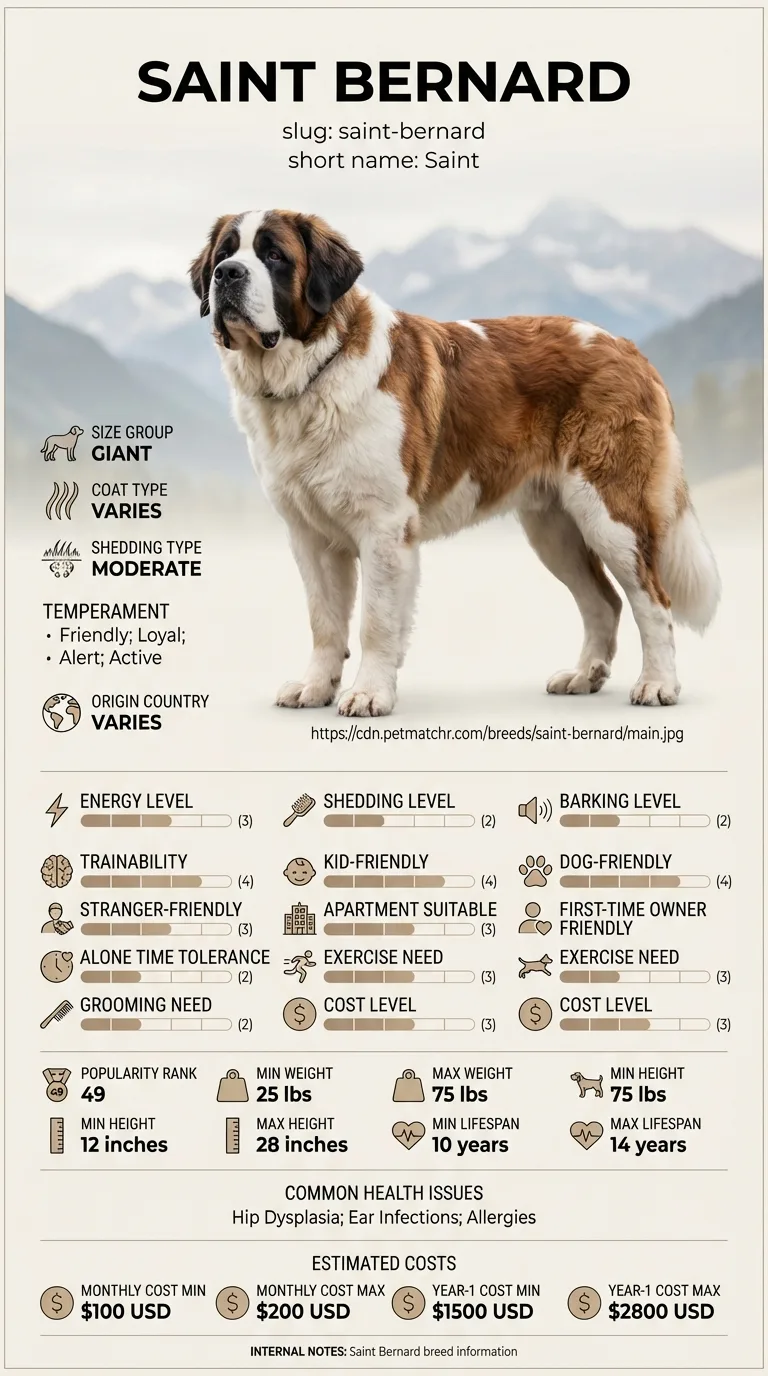
Set the weather aside and the expensive items are the documented ones: Hip Dysplasia, Elbow Dysplasia, Dilated Cardiomyopathy, Entropion and Bloat. Every one of them costs more in a giant than in a retriever, because anesthetic time, drug volumes and implant sizes are all quantities measured against a body that weighs 120 to 180 pounds.
Houston prices very close to the national middle, with a twelve-month prevention schedule as the clearest climate-driven line and a one-off preparedness kit worth building before storm season.
Estimate · source: estimation · confidence: medium · updated 2026-09-06 · not a quote
| Item | Cost range |
|---|---|
One-time setup plus a storm kit (crate, ramp, first exam, spay/neuter) The crate and ramp do double duty as everyday equipment, which is why they belong in the setup budget rather than a separate emergency line. | $510 - $880 |
| Item | Cost range |
|---|---|
Food (volume set by a 120-to-180-pound dog) Kibble prices track national commodity markets rather than Houston, so the quantity is what drives this number. Keeping a two-week buffer is sensible on this coast. | $70 - $126 |
Year-round parasite prevention The humid Gulf climate leaves no off-season, and at this body weight every dose falls in the highest bracket the manufacturer sells. | $32 - $57 |
Houston's routine care is affordable and predictable, so the argument for coverage rests almost entirely on the unscheduled surgical event.
If a five-figure abdominal or orthopedic surgery would genuinely destabilise the household, insure early and while nothing is yet on the medical record.
An owner already holding a reserve deep enough to fund overnight surgery without borrowing can reasonably carry the risk directly.
The savings in Houston come from being organised rather than from negotiating, because the market itself is already fairly priced.
Start with the ordinary numbers, because they are genuinely undramatic. Routine visits, boarding and grooming across the metro price close to the national average, and the absence of a state income tax leaves a little more room in most household budgets than a comparable coastal city would. The one climate line that never gets a holiday is parasite prevention, which on the humid upper Gulf Coast runs a true twelve months rather than a seasonal window, at the most expensive dosing weight the product line offers.
The planning problem is physical. A crate that an adult of this breed can genuinely stand and turn around in is a large item, it is heavy before the dog is in it, and it does not go into the back of a sedan alongside a family's own belongings. Neither does the dog, comfortably, for a long slow drive out of the region. Households here who have done this once will tell you the vehicle is the constraint, and the vehicle decision has to be made months before a storm has a name.
The breed's temperament is, at least, on your side. Gentle and patient are documented descriptions of this dog, and a crowded emergency shelter full of strangers and other animals is a genuine test of both. A dog rated 4 out of 5 with other dogs and 4 out of 5 with strangers is a far easier passenger through that experience than a reactive one would be.

None of this is expensive relative to the dog. A properly sized crate with wheels, a folding ramp so the dog loads itself rather than being lifted, and a fortnight's buffer of food and medication cover most of it, and all three earn their keep in ordinary weeks anyway. The ramp saves a lot of backs. The buffer means a supply-chain hiccup is not a crisis when the animal eating through it consumes at this volume.
The paperwork is free and people skip it. Current rabies certification, a photograph of the dog with a household member, and a microchip registration whose phone number is actually the one you still use are what turn a separated dog into a returned dog. Write down two boarding options inland, ideally in a different weather system, and confirm now that each one owns a run that fits a giant. That call takes four minutes in March and is impossible to make usefully in August.
Against that, Houston's steady-state budget is fair. The size surcharge on services is universal and unavoidable, the twelve-month prevention schedule is the single most obviously climate-driven line, and everything else tracks a metro that prices at very nearly the national middle.

A family in west Houston had done almost everything right before their first serious storm warning: buffer of food, medication packed, paperwork in a folder. What they had not done was try putting the crate in the vehicle. It went in only with the rear seats folded flat, which is where the children were meant to sit. They left in two cars, which worked, and afterwards bought a smaller collapsible travel crate that fits alongside people rather than instead of them.
Key takeaway: In Houston the evacuation rehearsal for a giant breed is not the route, it is the loading. Do it once on a calm afternoon rather than discovering the geometry under a deadline.
Roughly $147 to $304, sitting a fraction below the national average in line with the metro's general cost of living.
Somewhere around $2,156 to $4,116 once the first exam, spay or neuter and giant-sized gear are added to the recurring total.
Because pet-friendly public shelters generally expect a crated animal, and a crate sized for a 120-to-180-pound dog is a large, heavy object that has to fit in whatever you are driving.
A folding vehicle ramp. It solves loading for storms, for vet visits and for the years when the dog's joints are no longer young, which is more value than most gear delivers.
On the upper Gulf Coast, yes. The humid climate keeps the season running all twelve months, and this dog sits in the top dosing bracket for every product on the shelf.
Around $1,200 for a serious unscheduled visit at Houston's mid-range pricing, reflecting how much more of everything a giant patient consumes.
Roughly $147–$304 monthly and $2,156–$4,116 across year one, near the national middle, with the Gulf Coast twist being that a giant breed makes evacuation a vehicle-and-crate problem long before it is a money problem.
This guide is not medical advice. If your dog shows pain, sudden behavior change, or worsening symptoms, consult a licensed veterinarian.
Some links may be affiliate links. We may earn a commission at no extra cost to you. We only suggest products we believe are helpful for dog owners.
One sheet with every line item, the emergency fund and when insurance pays off - unlocks on this page.
You get: 12-month budget sheet
No spam. One-click unsubscribe. See our privacy policy.
Preview page 1 before you decide.