Health
What is Type I intervertebral disc disease?
A sudden rupture of a spinal disc's outer ring that launches material into the spinal canal all at once, unlike the gradual bulging seen in Type II disease.

Quick answer
What is Type I intervertebral disc disease?
A sudden rupture of a spinal disc's outer ring that launches material into the spinal canal all at once, unlike the gradual bulging seen in Type II disease.
One moment a Shar-Pei is walking normally, and minutes later it can be dragging a back leg, that speed is exactly what defines Type I disc disease.
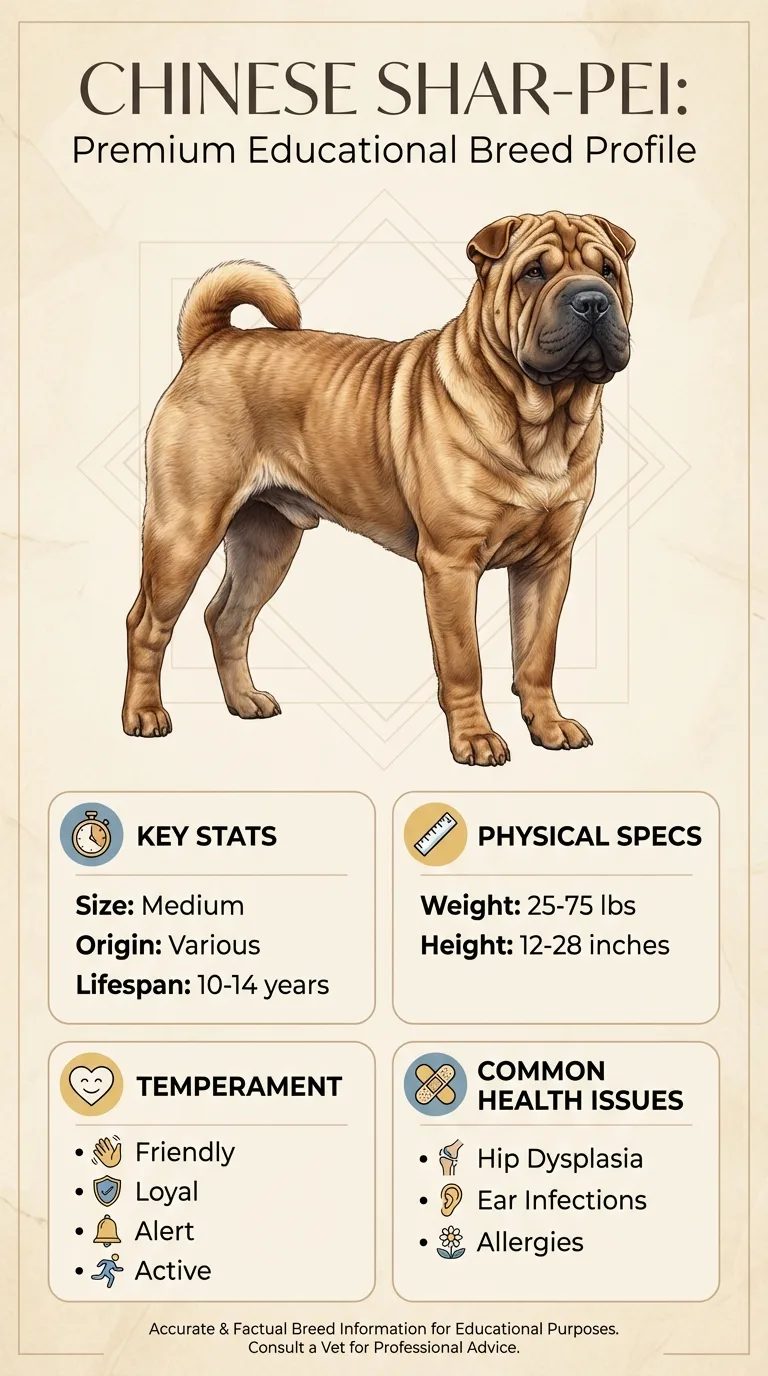
Owners who've witnessed a sudden onset of back pain, wobbliness, or leg weakness in their Shar-Pei, particularly following a jump, fall, or vigorous play session.
This guide is not medical advice. If your dog shows pain, sudden behavior change, or worsening symptoms, consult a licensed veterinarian.
Some links may be affiliate links. We may earn a commission at no extra cost to you. We only suggest products we believe are helpful for dog owners.
We research and check what we publish, but we do not warrant that any figure, date, price, or statement is accurate, complete, or current, and we accept no liability for any loss, cost, injury, or other harm arising from the use of this site. Use it as one reference among several. You remain responsible for your own decisions and for your dog's care - confirm anything that matters with a licensed veterinarian or another qualified professional before you act on it. Full disclaimer.
Type I intervertebral disc disease is a sudden, acute rupture of a spinal disc's outer ring, launching material into the spinal canal all at once rather than developing gradually. While the Chinese Shar-Pei isn't classically predisposed to this pattern the way chondrodystrophic breeds are, an acute rupture can still occur, particularly following a hard landing or fall onto an already age-weakened disc, and it's treated with real urgency once it happens.
This specific acute pattern is far less common in the Chinese Shar-Pei than in classically predisposed chondrodystrophic breeds, but it isn't impossible, and any sudden onset of back pain or leg weakness in this breed should be treated as a possible Type I event given how much treatment timing matters.
The Chinese Shar-Pei lacks the specific cartilage composition trait that predisposes chondrodystrophic breeds to early, spontaneous Type I disc rupture, meaning when it does occur here, it more often follows an identifiable physical trigger acting on a disc already weakened by ordinary age-related change.
A hard jump, fall, or awkward twisting movement provides the acute mechanical force that ruptures an already-weakened disc, and excess body weight adds extra force to any such impact, increasing the severity of a given trigger event.
Treat any sudden onset of back pain, wobbliness, dragging of a back leg, or paralysis as an emergency requiring same-day evaluation, ideally at a facility that can perform advanced imaging. Do not wait overnight to see if symptoms improve, since the window for the best surgical outcome narrows quickly with severe compression.
See all Chinese Shar PEI health problems, which breeds are prone to intervertebral disc disease ivdd type i, or the full Chinese Shar PEI breed guide for temperament, exercise needs and ownership costs.
Diagnosis and treatment decisions for a suspected Type I event typically need to happen within hours to a day or two of onset for the best outcome. Surgical recovery, when needed, generally involves several weeks of restricted activity and structured rehabilitation.
Success looks like prompt recognition and treatment leading to regained use of the limbs, particularly when deep pain sensation was still present at the time of treatment, followed by a cautious, ramp-and-rest-supported return to normal activity.
Type I disc disease is defined by how it happens, not just what it looks like on imaging: the disc's outer fibrous ring fails suddenly, often during or right after a jump, fall, or hard landing, launching a piece of the disc's harder inner material directly into the spinal canal. This is mechanically different from Type II disease, where the disc bulges gradually over months as the outer ring slowly weakens, producing a more chronic, progressive form of compression. The Chinese Shar-Pei isn't classically predisposed to Type I disease the way chondrodystrophic breeds like Dachshunds are, since that predisposition relates to a specific cartilage composition difference more common in short-legged, long-backed breeds. But any dog's disc can fail acutely under enough mechanical stress, particularly with age-related disc drying and weakening already present, and a hard landing off furniture or an awkward twist during play is enough to trigger the same acute event in a Shar-Pei that a genetically predisposed breed might experience with less provocation.
Because Type I disc disease happens suddenly and often severely, with a large chunk of disc material compressing the spinal cord all at once, the window between symptom onset and getting to a veterinary neurologist genuinely affects outcome in more severe cases. Dogs that still have deep pain sensation in the affected leg when they arrive for treatment generally have a meaningfully better surgical prognosis than dogs who've lost that sensation entirely, and that window can close within roughly twenty-four to forty-eight hours of severe compression. This is the core reason Type I disease is treated with more urgency than the slower, gradual Type II pattern: this isn't a wait-and-see-if-it-improves situation once significant weakness or paralysis has developed, it's a situation where hours matter for the dog's actual chance of walking normally again.

Ruby, a six-year-old Shar-Pei in Nashville, jumped off the bed one morning the way she had a thousand times before, but this time yelped sharply and immediately dragged her back right leg. Her owner didn't wait to see if it would pass, driving straight to an emergency clinic within the hour. An MRI confirmed a Type I disc rupture with significant spinal cord compression, though Ruby still had deep pain sensation in the affected leg, a hopeful sign. She underwent surgery that same evening. After six weeks of strict rest and structured rehabilitation exercises, Ruby regained full use of the leg and was back to her normal routine, now with a ramp permanently installed by the bed.
Key takeaway: Ruby's owner treating the sudden leg drag as an emergency rather than waiting overnight is very likely what preserved her chance at a full recovery, since deep pain sensation and treatment speed both worked in her favor.
It refers specifically to a sudden, acute rupture of the disc's outer ring, launching material into the spinal canal all at once, rather than the slower, gradual bulging seen in Type II disease.
Not to the same degree as chondrodystrophic breeds like Dachshunds, which have a specific cartilage trait linked to this pattern, but any dog's disc can rupture acutely under enough mechanical stress, particularly with age-related disc changes already present.
Because it happens suddenly and can cause severe spinal cord compression quickly, and the window for the best surgical outcome, particularly whether deep pain sensation is still present, can close within roughly a day or two.
It's often associated with a specific event like a hard landing from a jump, a fall, or an awkward twisting movement during play, though the underlying disc may have already been weakened by age before that trigger occurred.
Advanced imaging like MRI is used to confirm the location and severity of compression. Severe cases, especially with significant weakness or paralysis, are generally treated with emergency surgical decompression rather than conservative management alone.
It's a specific neurological test where a vet checks whether a dog reacts to a firm pinch on the toe. Its absence indicates more severe spinal cord damage and a meaningfully lower chance of regaining full function, making it a key factor in urgent treatment decisions.
Many dogs do, particularly with prompt surgical treatment while deep pain sensation is still present. Recovery odds drop the longer treatment is delayed and the more severe the initial neurological signs are.
A sudden rupture of a spinal disc's outer ring that launches material into the spinal canal all at once, unlike the gradual bulging seen in Type II disease.
Yes, especially with sudden weakness or paralysis, since the window for the best surgical outcome can close within about a day or two.
Often a hard landing, fall, or awkward twist during play, though age-related disc weakening usually sets the stage beforehand.
It's a significant expense, often several thousand dollars including imaging, surgery, and post-operative rehabilitation.
Advanced imaging like MRI is typically needed to confirm the exact location and severity before deciding on surgical versus conservative treatment.
A one-page prep sheet for this condition: the signs, the questions to ask, what to get priced. Unlocks here.
You get: Vet visit prep sheet
No spam. One-click unsubscribe. See our privacy policy.
See a sample page before you decide.
Early access list
The free prep sheet covers the same-day warning signs, a symptom log and the questions to ask. We are considering a fuller kit that adds a cost worksheet for the usual tests and treatments (US price ranges with their sources) and a plain-English guide to ways of covering the bill. It is not built yet; this list tells us whether it is worth building.
One email, no spam, unsubscribe anytime. Information only, not veterinary advice.