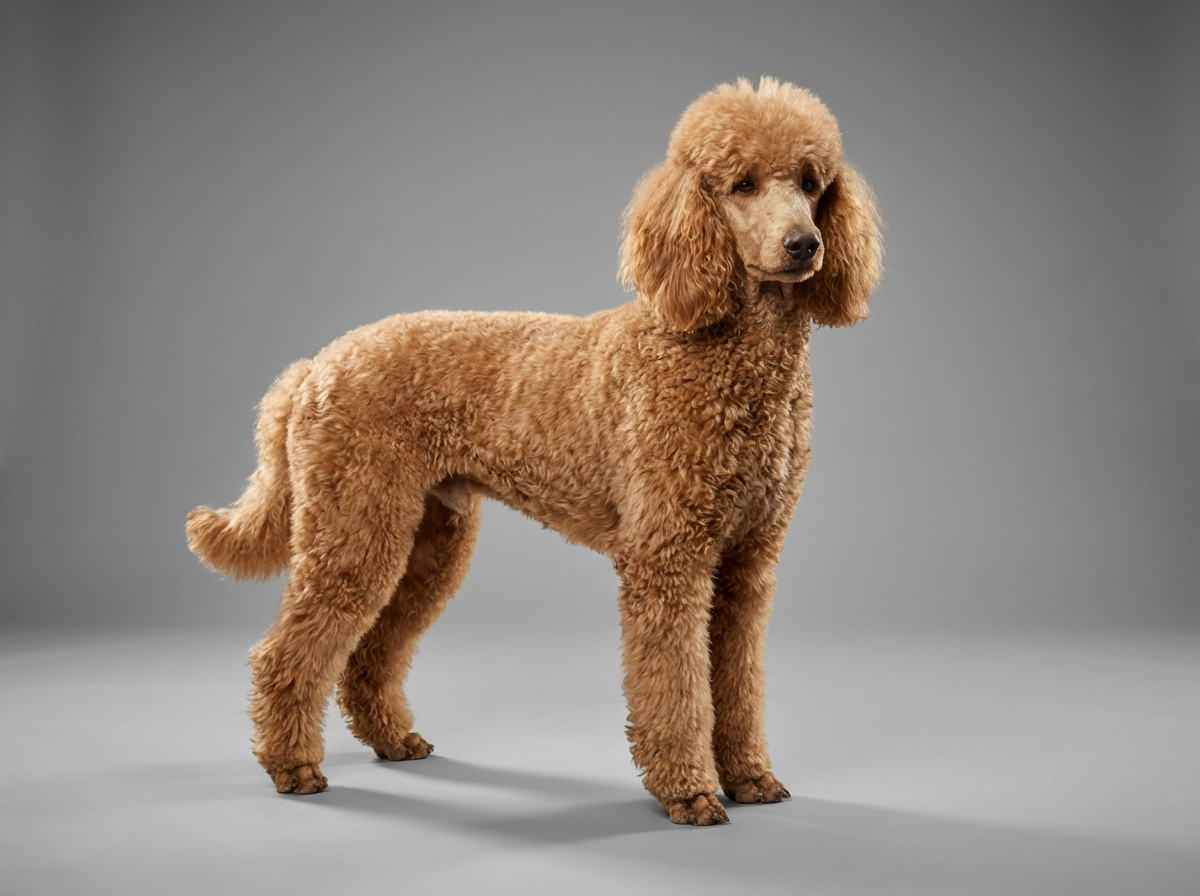
If your space is small and your schedule keeps you out of the house, the Pug's apartment score (5/5) and low exercise need fit better. If you can handle a strict grooming schedule and want a more active companion, the Poodle's high energy (4/5) is the draw.
Poodle or Pug? On paper they differ most on apartment suitability, and on the scales Poodle is the heavier at 6–70 lbs. Here is how the two compare on everything that shapes an ordinary week.
This is for someone already down to Poodle and Pug and deciding between them. For this pair the decision usually turns on apartment suitability and shedding, so those are covered first and in most detail. Anyone choosing from a flat has a clear answer here: Pug rates 5/5 against 0/5. Breed history is left out; what follows is what you will actually live with.
Quick verdict
Between Poodle and Pug, apartment suitability is what separates them, and Pug is the lower-effort dog of the two to keep.
Choose poodle if...
Choose Poodle if shedding is a problem in your house, your walking routine is modest and you want a dog that is more watchful with visitors.
Choose pug if...
Choose Pug if you are in a flat or a smaller home, you do not want a standing grooming appointment and you already have another dog.
Head-to-head comparison
Feature
poodle
pug
Winner
Size class
small
small
Equal
Weight
6–70 lbs
14–18 lbs
Equal
Height
0–0 in
10–13 in
Equal
Lifespan
12–15 years
13–15 years
pug
Exercise need
— (0/5)
Low (2/5)
poodle
Grooming need
Very high (5/5)
Low (2/5)
pug
Shedding
— (0/5)
High (4/5)
poodle
Energy level
High (4/5)
Low (2/5)
Equal
Barking
— (0/5)
Low (2/5)
poodle
Apartment suitability
— (0/5)
Very high (5/5)
pug
Good for first-time owners
Very high (5/5)
Very high (5/5)
Equal
Tolerates being alone
— (0/5)
Low (2/5)
pug
Trainability
— (0/5)
Moderate (3/5)
pug
Good with kids
Very high (5/5)
Very high (5/5)
Equal
Good with other dogs
— (0/5)
High (4/5)
pug
Friendly to strangers
— (0/5)
Very high (5/5)
pug
Cost level
Moderate (3/5)
Moderate (3/5)
Equal
Coat
Curly, dense single coat
Short, smooth double coat
Equal
Origin
—
Various
Equal
Typical monthly cost
$0–$0
$80–$150
Equal
Typical first-year cost
$0–$0
$1,100–$2,300
Equal
Deep dive
Size and build
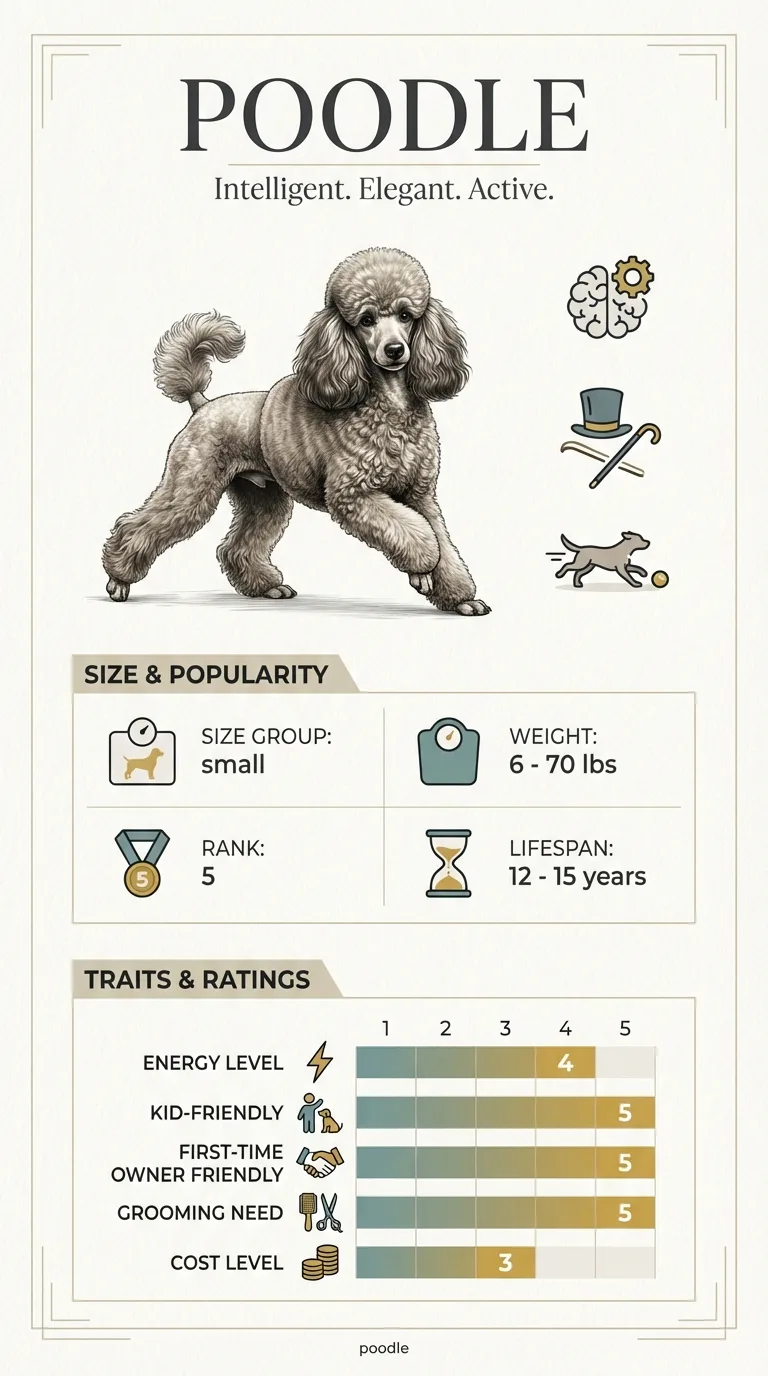
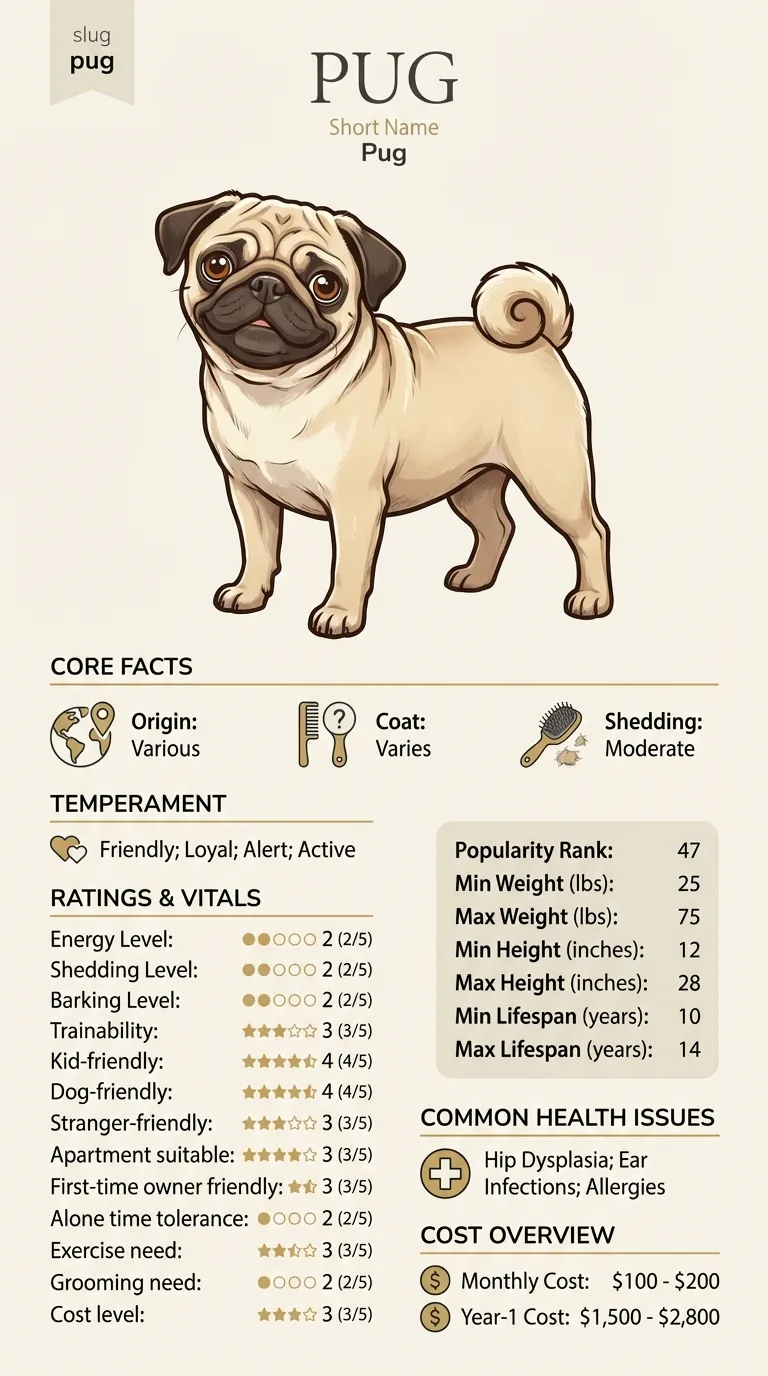
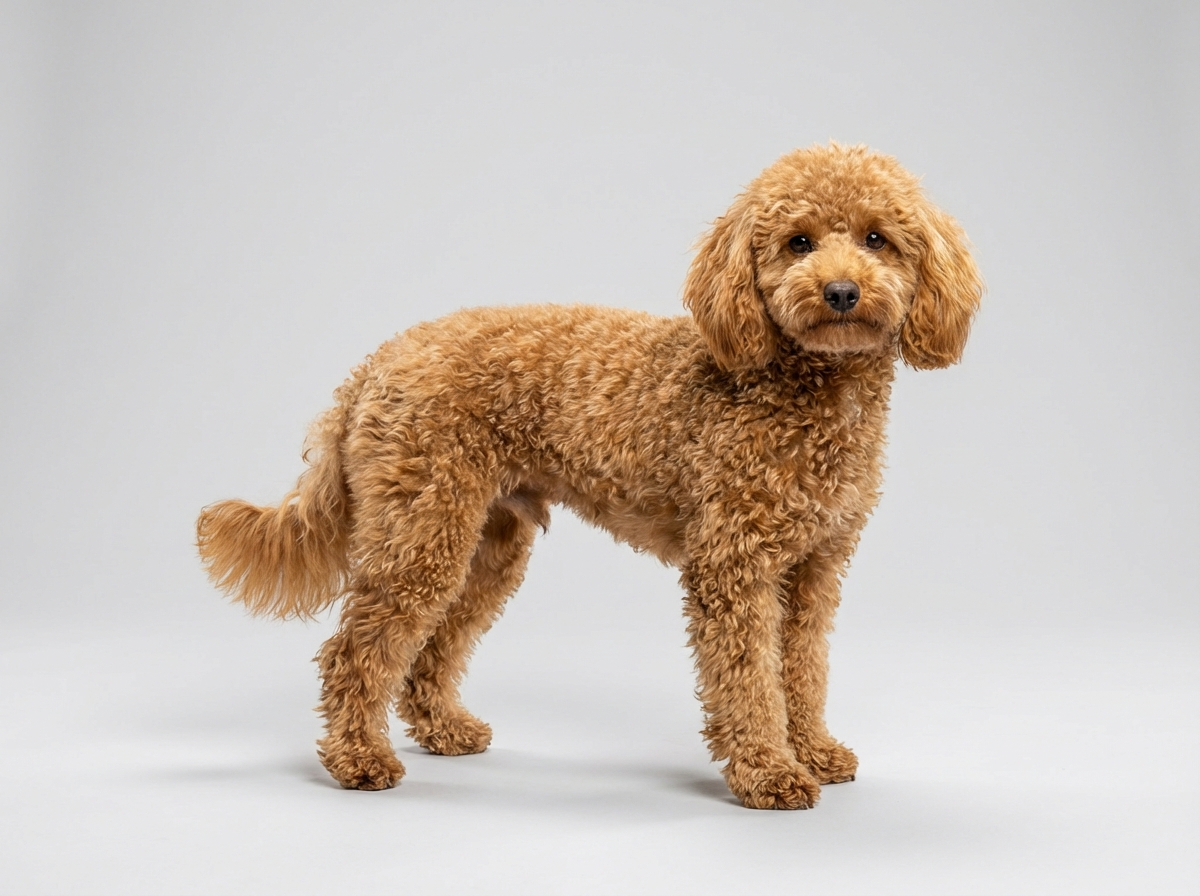
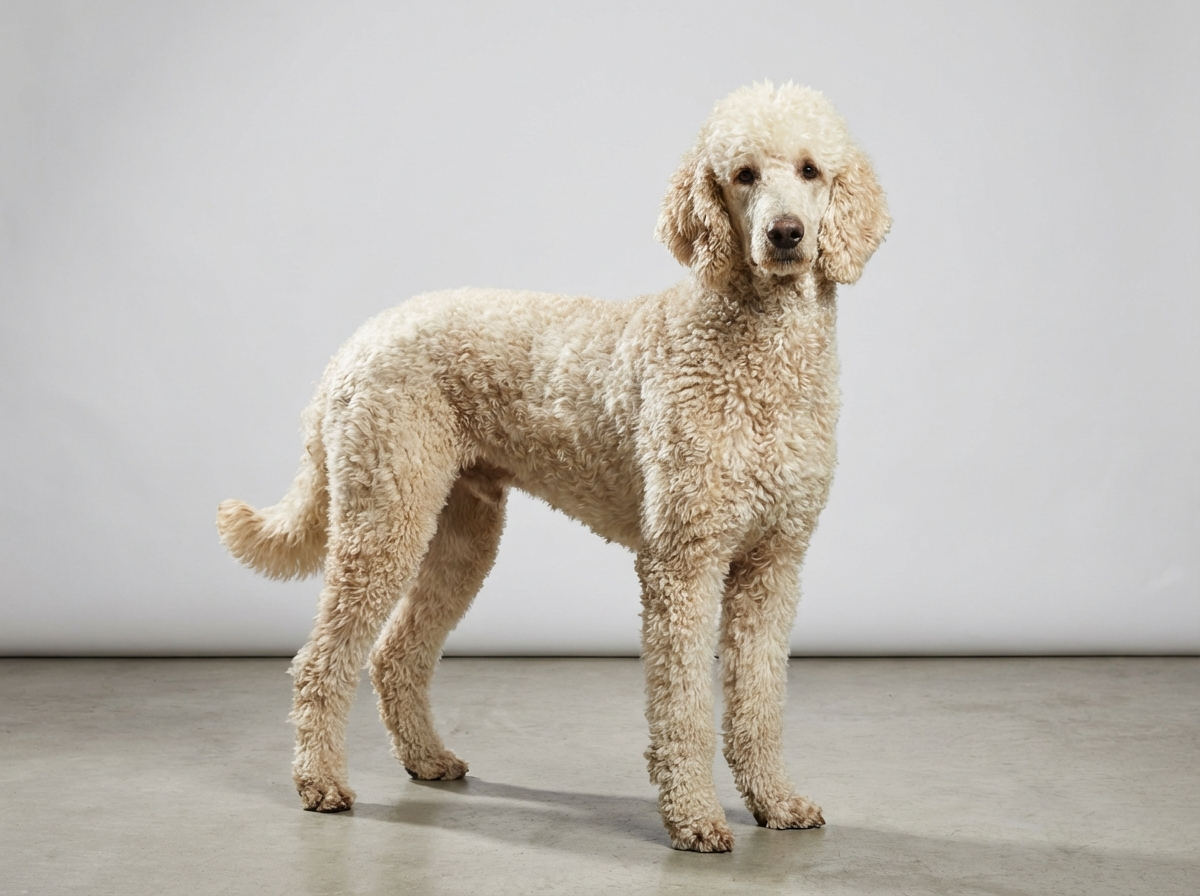
Poodles are sold as three size variants, which is why the breed's weight range runs from 6 lbs to 70 lbs on paper -- a toy Poodle and a standard Poodle are barely the same animal physically. The Pug is a single, consistent size: 14-18 lbs, 10-13 inches at the shoulder, no variants to sort through. If you want predictable adult size on day one, the Pug is the sure bet; with a Poodle you need to know which variant you're buying.
Energy and exercise
The Poodle rates high energy at 4/5, though the listing doesn't give it a numeric exercise-need score. The Pug is the opposite profile: low exercise need (2/5) and low energy (2/5), which tracks with a short-muzzled dog that overheats fast and shouldn't be pushed on long runs. If your idea of a walk is a couple of easy laps around the block rather than a jog, the Pug asks less of you day to day.
Grooming and shedding
This is where the two breeds trade places. The Poodle's curly, dense single coat needs very high grooming (5/5) -- regular brushing and professional clipping -- but the tradeoff is a coat that doesn't shed in the usual sense. The Pug is nearly the reverse: low grooming need (2/5) but high shedding (4/5), thanks to a short double coat that sends hair everywhere. Pick your chore: brushing bills or a lint roller habit.
Apartment living, noise and time alone
The Pug scores very high (5/5) on apartment suitability and low (2/5) on barking, which is a strong combination for close neighbors and thin walls. It does score low (2/5) on tolerating being alone, so it's not the breed for long solo days. The Poodle's apartment and barking numbers aren't listed here, but its high energy level (4/5) suggests it will want more from you than a Pug does in a small space.
Training and owner experience
Both breeds are rated very high (5/5) for first-time owners, so neither should intimidate a novice. The Pug adds a moderate trainability score (3/5) to that -- food-motivated but stubborn in short bursts. The Poodle's temperament is logged as intelligent, elegant and active, which lines up with its reputation, though no separate trainability figure is given here. Either way, you're not starting from a difficult place.
Kids, other dogs and visitors
Both dogs rate very high (5/5) with kids, so that's a wash. The Pug pulls ahead on the rest of the social checklist: high (4/5) with other dogs and very high (5/5) friendliness toward strangers. The Poodle's temperament notes intelligent, elegant, active -- nothing that suggests it struggles socially, but the table simply doesn't score those categories for this breed, so treat it as undocumented rather than weak.
Health and lifespan
The Pug carries a specific and serious list: brachycephalic airway syndrome, pug dog encephalitis, corneal ulcers, hemivertebrae and obesity. That's a flat-faced breed's typical burden, and it's worth budgeting for breathing-related vet visits. No health conditions are logged for the Poodle in this comparison. Lifespan tilts slightly to the Pug too -- 13-15 years against the Poodle's 12-15 -- though the two overlap almost entirely.
Cost to keep
The Pug's numbers are concrete: $80-150 a month, $1,100-2,300 in year one, at a moderate (3/5) cost level -- and that's before factoring in the breathing and eye issues flagged above, which can add up. The Poodle is rated the same moderate (3/5) cost tier, but no dollar figures are listed here, likely because cost swings so much between a toy and a standard-sized dog. Ask a breeder or shelter for size-specific numbers before you commit.
Poodle vs Pug at a glance
Poodle weighs 6–70 lbs and lives 12–15 years; Pug weighs 14–18 lbs and lives 13–15 years. The two diverge most on apartment suitability, shedding and friendly to strangers and 7 other rated axes. They are level on cost level, good for first-time owners and good with kids, so those cannot decide it. The comparison marks an easier option only where one exists. Facts like weight and country of origin are not scored. Both dogs are rated from the same dataset, which is what makes the numbers comparable with each other even though any individual dog sits somewhere inside its breed's range.
Poodle vs Pug: Which Suits Your Home? - Poodle vs Pug at a glance
Frequently asked questions
Is a Poodle or a Pug bigger?
Depends which Poodle. A Pug is consistently 14-18 lbs and 10-13 inches tall. Poodles range from 6 to 70 lbs because the breed comes in toy, miniature and standard sizes -- so a toy Poodle is smaller than a Pug, and a standard Poodle is roughly triple its weight.
Which sheds less?
The Pug sheds a lot -- rated 4/5 -- despite needing only low grooming. The Poodle's shedding isn't scored here, but its curly single coat is the reason it needs very high (5/5) grooming instead: less hair on the floor, more time at the groomer.
Is either good for a first-time owner?
Yes, both rate very high (5/5) for first-time owners. You won't go wrong on temperament with either choice; the harder decision is lifestyle fit -- grooming routine versus exercise needs.
Which is better for an apartment?
The Pug, clearly -- very high (5/5) apartment suitability and low (2/5) barking. It does poorly alone, though (2/5), so it needs company. The Poodle's apartment score isn't listed, but its higher energy level suggests it wants more room to move.
What will it cost me monthly?
The Pug runs $80-150 a month and $1,100-2,300 in the first year. The Poodle doesn't have dollar figures listed here -- its cost tier is rated the same moderate (3/5), but actual spend depends heavily on which size variant you get.
Do they share any health risks?
No overlap is listed. The Pug's risks -- airway syndrome, pug dog encephalitis, corneal ulcers, hemivertebrae, obesity -- are all tied to its flat face and body shape. No health conditions are recorded for the Poodle in this comparison.
Which is easier to train?
The Pug rates a moderate 3/5 for trainability. The Poodle doesn't have a trainability score here, but its temperament is listed as intelligent -- a trait usually associated with quicker learning, even though this table doesn't quantify it.
If your space is small and your schedule keeps you out of the house, the Pug's apartment score (5/5) and low exercise need fit better. If you can handle a strict grooming schedule and want a more active companion, the Poodle's high energy (4/5) is the draw.
Costs
What's the real monthly cost difference?
The Pug is documented at $80-150/month. The Poodle isn't given a dollar figure here, but shares the same moderate (3/5) cost tier -- actual cost will depend heavily on the size variant you choose.
Behavior
How much exercise does each dog need?
The Poodle logs a high energy level (4/5); the Pug is rated low (2/5) for both exercise need and energy, and its short muzzle makes strenuous exercise risky in heat.
Health
Which dog is likely to live longer?
The Pug's range is 13-15 years, the Poodle's is 12-15 -- they overlap for most of that span, with the Pug's floor sitting a year higher.
Related DogBreedCompass guides
Poodle breed guide – Readers comparing the two usually want the full profile of Poodle before deciding.
Pug breed guide – The same for Pug, so the comparison can be checked against the detail.
Poodle vs Bichon Frise – Bichon Frise is the closest breed to Poodle on the measured axes, so it is the natural next comparison.
Pug vs Boston Terrier – Boston Terrier sits closest to Pug, which makes it the alternative worth ruling out.
What Poodle costs to keep – Anyone weighing these two is usually also pricing them, and the cost pages carry city-level figures.
Pug health problems – The health pages set out what each breed is actually screened for.
Health information here is general and is not veterinary advice. If your dog shows pain, sudden behaviour change, or worsening symptoms, consult a licensed veterinarian.
Some links on this site are affiliate links. We may earn a commission at no extra cost to you, and we only suggest products we believe are helpful for dog owners.
We research and check what we publish, but we do not warrant that any figure, date, price, or statement is accurate, complete, or current, and we accept no liability for any loss, cost, injury, or other harm arising from the use of this site. Use it as one reference among several. You remain responsible for your own decisions and for your dog's care - confirm anything that matters with a licensed veterinarian or another qualified professional before you act on it. Full disclaimer.