Behavior
What are quick tips for managing Miniature Schnauzer brachycephalic features?
Keep your Miniature Schnauzer cool and avoid strenuous exercise in hot weather. Ensure they maintain a healthy weight and monitor for breathing difficulties.

Quick answer
What are quick tips for managing Miniature Schnauzer brachycephalic features?
Keep your Miniature Schnauzer cool and avoid strenuous exercise in hot weather. Ensure they maintain a healthy weight and monitor for breathing difficulties.
Miniature Schnauzers can have brachycephalic features that lead to breathing difficulties.
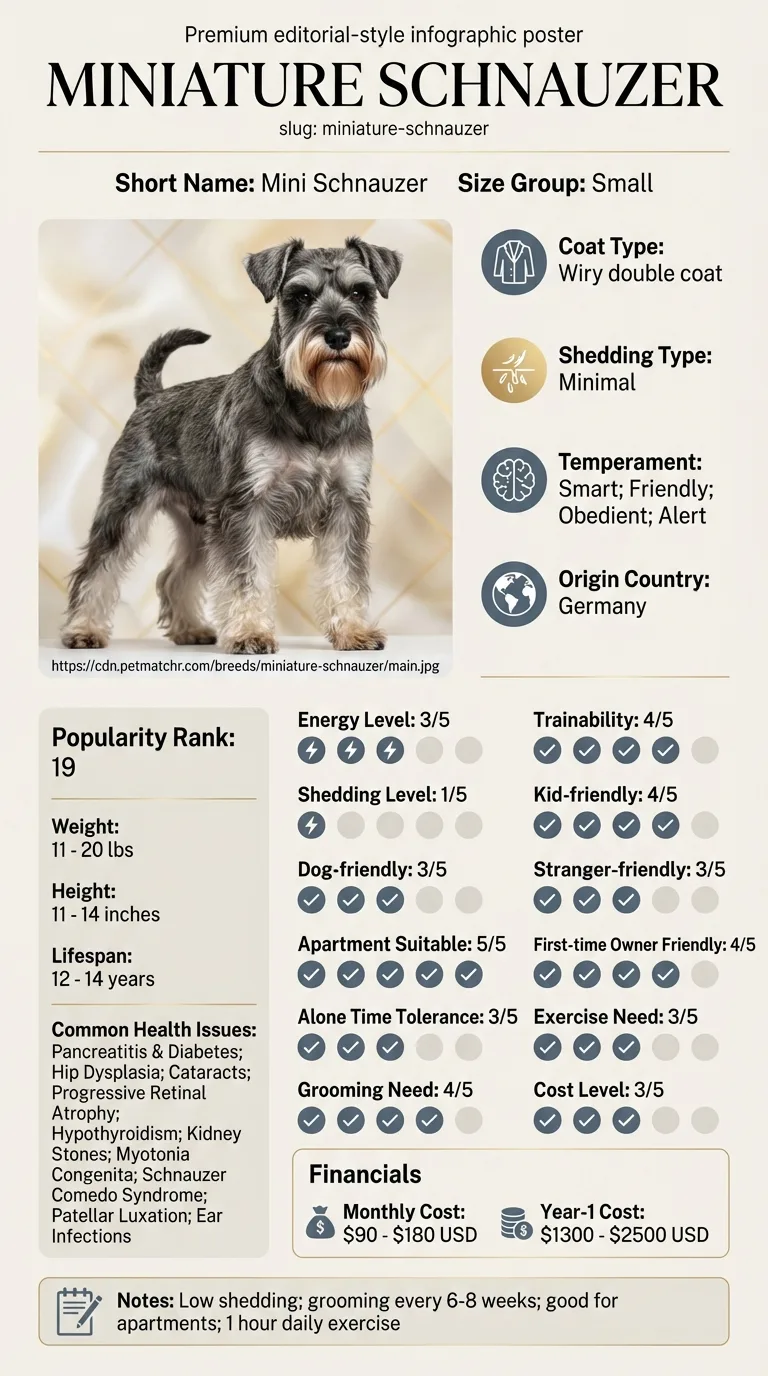
This issue typically affects Miniature Schnauzer owners who live in warmer climates or those who may not be familiar with how to manage these features. First-time dog owners or busy families might find it particularly challenging to recognize and address these concerns.
This guide is not medical advice. If your dog shows pain, sudden behavior change, or worsening symptoms, consult a licensed veterinarian.
Some links may be affiliate links. We may earn a commission at no extra cost to you. We only suggest products we believe are helpful for dog owners.
We research and check what we publish, but we do not warrant that any figure, date, price, or statement is accurate, complete, or current, and we accept no liability for any loss, cost, injury, or other harm arising from the use of this site. Use it as one reference among several. You remain responsible for your own decisions and for your dog's care - confirm anything that matters with a licensed veterinarian or another qualified professional before you act on it. Full disclaimer.
Check this first
Understanding when Miniature Schnauzer brachycephalic features become an emergency is crucial for your dog's health. While some symptoms can be mild and manageable, others require immediate veterinary attention. Knowing the difference can save your dog's life.
Red-Flag Signs to Call Your Vet Immediately: - Severe Breathing Difficulty: If your Mini Schnauzer is struggling to breathe, with loud wheezing or gasping. - Fainting or Unresponsiveness: Sudden lethargy or fainting episodes should be treated as emergencies. - Cyanosis: If your dog’s tongue or gums turn blue, this indicates a lack of oxygen. - Persistent Coughing or Gagging: Continuous coughing or gagging can signal serious airway obstruction.
Mild Cases to Monitor: - Occasional Snorting or Snoring: These sounds can be typical for brachycephalic breeds and often aren't serious. - Mild Exercise Intolerance: If your Mini Schnauzer gets tired more quickly than usual during play, it may not require immediate action. - Slight Nasal Congestion: A little congestion may be manageable with home care and observation.
In these mild cases, develop a plan to monitor your dog's condition. Ensure they have a cool and calm environment to help with any breathing issues. Always consult with your vet if you have concerns, especially if symptoms worsen over time. Your vigilance is key to keeping your Mini Schnauzer healthy and happy.
If any of these apply, call your vet or an emergency clinic now. The rest of this page is for the cases that are not an emergency.
Miniature Schnauzers are known for their adorable size and lively personality, but some may exhibit brachycephalic features that can lead to breathing issues. This condition can manifest as snoring, labored breathing, or excessive panting, especially during exercise or in warm weather. Owners may notice their Mini Schnauzer struggling for air, which can be alarming and stresses the importance of monitoring their health closely.
Brachycephalic features can occur in Miniature Schnauzers, though they are not as common as in breeds specifically bred for flat faces. Many owners may not even realize their dog has these features unless they start showing signs of distress. Regular vet check-ups are crucial for early detection and management of any related health concerns.
Miniature Schnauzers are not traditionally classified as brachycephalic, but some may exhibit brachycephalic features due to selective breeding. These features can lead to moderate breathing difficulties, especially when they are stressed or overheated. Their compact size and facial structure can further contribute to these issues.
Environmental factors can exacerbate breathing difficulties in Miniature Schnauzers. Hot weather, high humidity, and poor air quality can make it harder for them to breathe. Additionally, factors like obesity can worsen these issues, as excess weight puts more strain on their respiratory system.
It's important to consult a vet if your Miniature Schnauzer shows persistent breathing problems or if you notice any signs of distress, such as coughing or lethargy. Your vet can assess their health and recommend treatments or lifestyle changes.
Avoiding these common mistakes can help improve your Miniature Schnauzer's brachycephalic features and overall health.
Start here: Miniature Schnauzer Most Common Genetic Disorders: Screening
See all Miniature Schnauzer health problems, which breeds are prone to brachycephalic features, or the full Miniature Schnauzer breed guide for temperament, exercise needs and ownership costs.
You may see improvements within 4 to 8 weeks of consistent care and management.
Success means your Miniature Schnauzer can breathe more easily, with reduced snoring or wheezing, and shows less anxiety during exercise.
When Sarah adopted Daisy, her Miniature Schnauzer, she immediately noticed Daisy's brachycephalic features caused her to wheeze and snore, especially during playtime. Concerned, Sarah consulted her vet, who suggested gradual exercise and training techniques to help manage Daisy's breathing. Over the next few weeks, Sarah focused on short, controlled play sessions and introduced calming techniques during walks. With patience and consistent effort, Daisy’s breathing improved significantly, and she became more active and playful.
Key takeaway: With proper training and management, you can help your Miniature Schnauzer breathe easier and enjoy a happier, healthier life.
Brachycephalic features in Miniature Schnauzers often arise from selective breeding. These traits can lead to breathing difficulties due to their short snouts. It's important to monitor your dog's health and consult a vet if you notice any issues. This answer relates to Miniature Schnauzer brachycephalic features.
To help manage breathing difficulties, ensure your Miniature Schnauzer maintains a healthy weight. Regular exercise and avoiding heat stress are crucial. If issues persist, consult your vet for tailored advice.
Training techniques focus on positive reinforcement, especially for calming behaviors. Teaching commands like 'calm' can help during stressful situations. Consistency is key in reinforcing positive behavior.
Watch for signs like excessive panting, coughing, or lethargy. If your dog seems to have difficulty breathing, especially during exercise or in hot weather, contact your vet promptly. Early intervention can make a big difference.
Yes, brachycephalic traits can result in serious health issues, including respiratory distress. Regular vet check-ups can help catch any complications early. Prioritize your dog's health to ensure a happy life.
If your Miniature Schnauzer is exhibiting signs like excessive panting, noisy breathing, or trouble exercising, these could indicate breathing difficulties. It's important to monitor these symptoms and consult your vet if they persist.
Yes, Miniature Schnauzers with brachycephalic features can be more susceptible to heat stress. Due to their shorter snouts, they may struggle to regulate their body temperature effectively, so keep them cool and hydrated, especially in hot weather.
Improving your Miniature Schnauzer's breathing may involve maintaining a healthy weight and avoiding extreme temperatures. Regular vet check-ups can also help ensure that any underlying health issues are addressed promptly.
You should take your Miniature Schnauzer to the vet if they show severe breathing difficulties, like gasping for air or bluish gums. Early intervention can prevent more serious health issues from developing.
Yes, training can help manage your Miniature Schnauzer's behavior related to their brachycephalic features. Focus on positive reinforcement techniques to encourage calm behavior, especially in stressful situations.
Keep your Miniature Schnauzer cool and avoid strenuous exercise in hot weather. Ensure they maintain a healthy weight and monitor for breathing difficulties.
Regular vet check-ups, weight management, and avoiding overheating can improve your dog's breathing. Simple adjustments can make a big difference.
Focus on calmness and obedience training. Use positive reinforcement to encourage good behavior and reduce anxiety.
A one-page prep sheet for this condition: the signs, the questions to ask, what to get priced. Unlocks here.
You get: Vet visit prep sheet
No spam. One-click unsubscribe. See our privacy policy.
Preview page 1 before you decide.