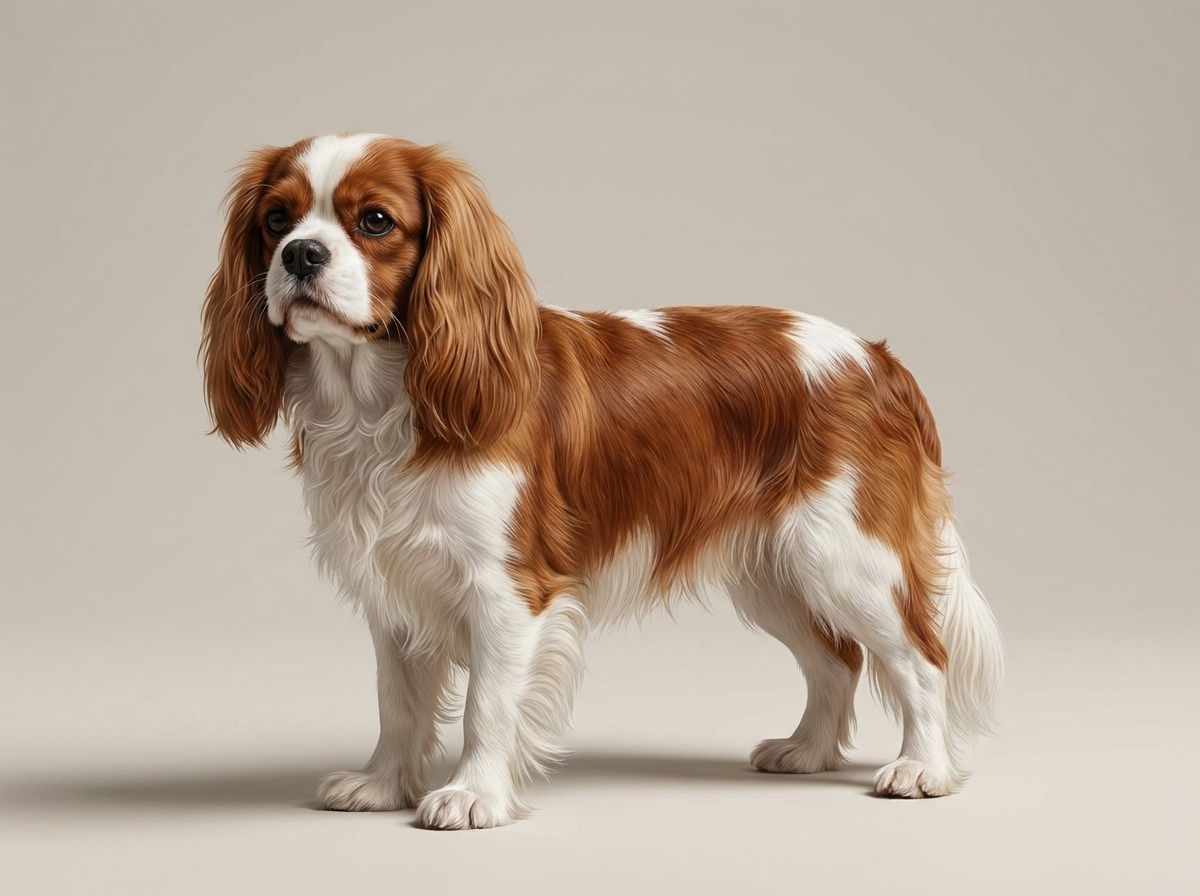
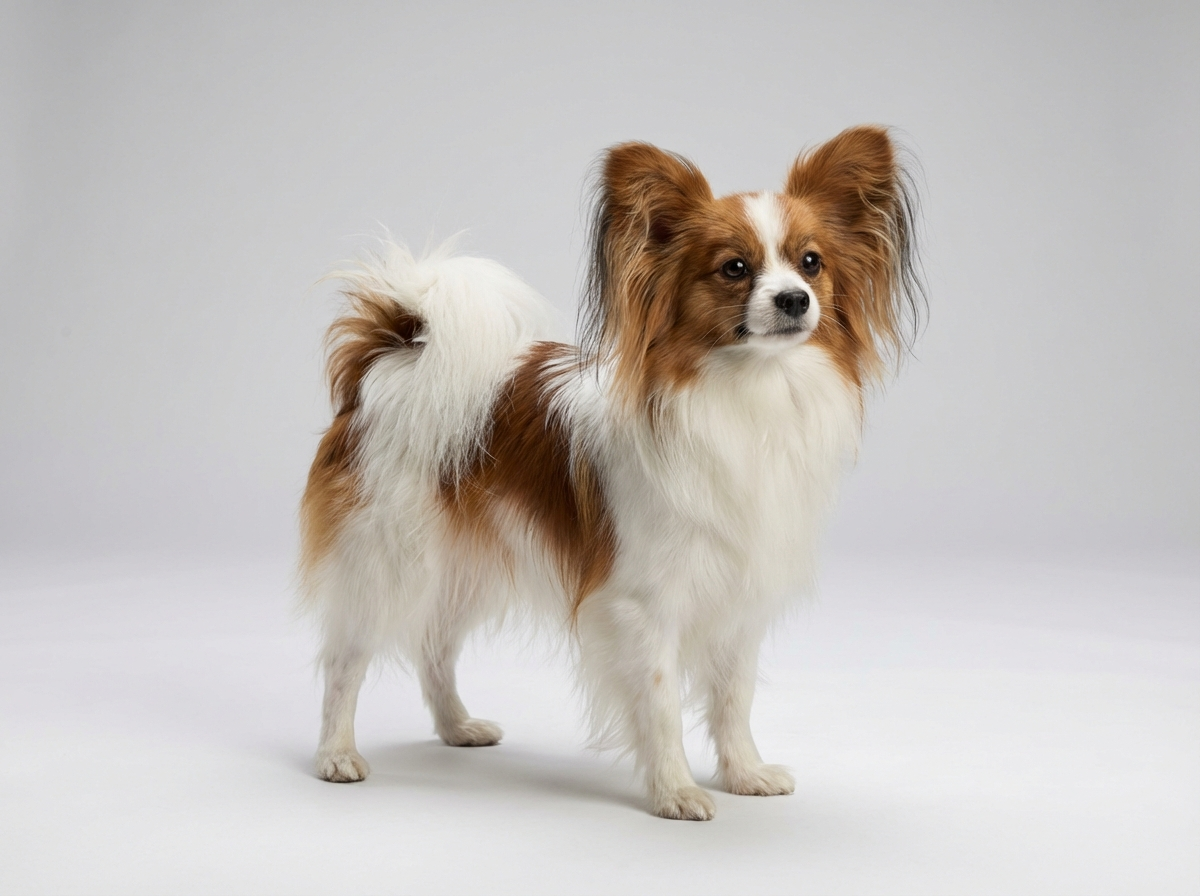
Health
What is the first sign of hypothyroidism in a Papillon?
Usually the coat. The ear fringe and tail plume thin and lose body, and the dog starts seeking warm spots and moving less.

Quick answer
What is the first sign of hypothyroidism in a Papillon?
Usually the coat. The ear fringe and tail plume thin and lose body, and the dog starts seeking warm spots and moving less.
A Papillon that has gone from lively to lethargic and whose ear fringes have turned scraggly is describing a metabolic problem, not a personality change.
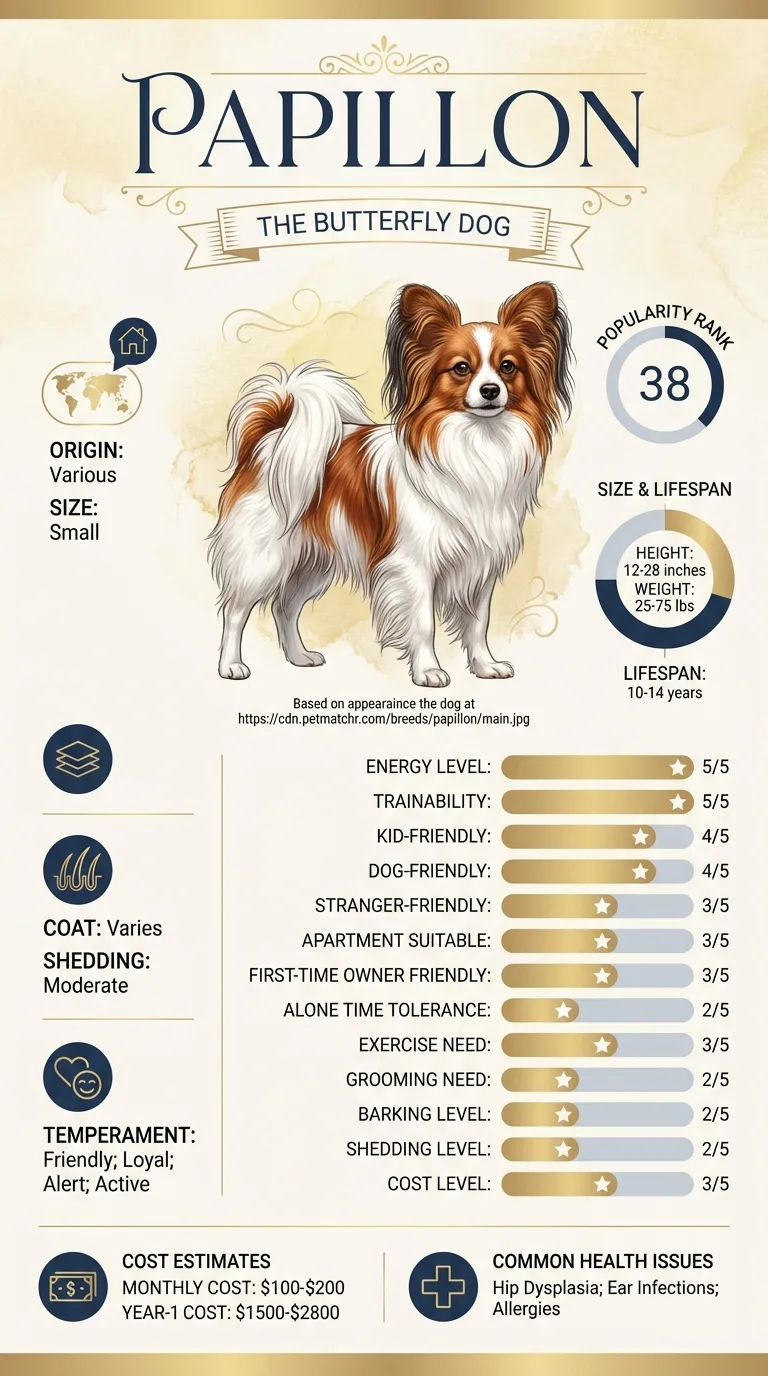
Owners of middle aged Papillons whose dog has quietly become a different animal over six months, and groomers or owners who have noticed the plume and fringe losing their length and body.
This guide is not medical advice. If your dog shows pain, sudden behavior change, or worsening symptoms, consult a licensed veterinarian.
Some links may be affiliate links. We may earn a commission at no extra cost to you. We only suggest products we believe are helpful for dog owners.
Hypothyroidism is an underactive thyroid gland producing too little of the hormone that sets metabolic rate. The result is a dog that gains weight on unchanged food, loses coat quality, feels the cold, and stops initiating activity. In a Papillon, a breed with a distinctive long fringed single coat and a body weighing under ten pounds, both the coat change and the weight change are unusually detectable if anyone is looking.
Hypothyroidism is among the more frequently diagnosed hormonal disorders in dogs overall, and it is not a signature Papillon condition in the way that patellar luxation and progressive retinal atrophy are. It appears here because the breed's very long lifespan means plenty of Papillons reach the age band where it emerges, and because the symptoms are easy to write off as ordinary ageing.
The gland fails for reasons that are largely independent of body size, most often because the dog's own immune system has gradually destroyed the tissue. What the Papillon contributes is visibility rather than susceptibility. Its coat is a single silky layer with prominent fringing that depends on long uninterrupted growth cycles, so a metabolic slowdown reads directly off the ears and tail. And a five to ten pound frame turns small absolute weight changes into large proportional ones.
Household factors do not cause the gland to fail, and no diet or product prevents it. What the environment does control is how long it takes anyone to notice. A dog groomed regularly by someone who knows the coat gets flagged early. A dog whose weight is never measured, whose food is poured by eye, and whose reduced activity gets attributed to getting older can go a year or more before the question is asked.
Book an appointment if your Papillon has gained weight on unchanged food, has lost coat from the fringes or the tail, has become noticeably less willing to do things it used to enjoy, or has developed recurring skin or ear infections. None of these is an emergency and a routine slot is appropriate. Do seek urgent care if a dog with these signs becomes profoundly weak, wobbly, collapses or has a very low body temperature, since that combination needs immediate assessment rather than a scheduled blood test.
See all Papillon health problems, which breeds are prone to hypothyroidism, or the full Papillon breed guide for temperament, exercise needs and ownership costs.
Energy and appetite usually improve within two to four weeks of starting treatment. Weight follows over a couple of months alongside portion control. The coat is last: expect three to six months before the fringes look like a Papillon's again, and longer for full feathering. Monitoring bloodwork continues for life.
Success is a dog back in the middle of its healthy weight range, initiating play again, with a fringe that has regrown, and a stable dose confirmed by bloodwork rather than by how the owner thinks the dog seems.
Hair grows in cycles, and thyroid hormone drives the growth phase. When hormone levels fall, follicles that finish a cycle simply do not restart. Hair is not shed dramatically. It just fails to be replaced, and the coat thins from the areas where it was longest and worked hardest.
On a Papillon those areas are unmistakable. The fringe on the ears, the plume on the tail and the feathering on the back of the legs are the breed's defining ornamentation, and they are also the last regions to finish growing in a normal cycle. They thin first. Owners describe fringes that look chewed, a plume that has gone limp and sparse, or feathering that never grew back properly after a summer clip.
Because the Papillon has a single coat with no dense undercoat beneath it, there is nothing to hide the change. In a double coated breed the same loss can sit invisible under a woolly layer for months. Here it shows.
Other skin changes follow: darkened patches, a dull greasy feel, a tail that thins toward the base, cool skin, and a dog that seeks warm spots it never used to bother with. None of this is diagnostic on its own, and several other conditions produce similar coats. What it earns is a blood test, not a conclusion.

Owners of large dogs can afford to notice weight in pounds. On a Papillon the meaningful unit is ounces.
If you think your Papillon has hypothyroidism, the plan is three steps: write down what you have seen and when it started, book a veterinary appointment rather than waiting for the next flare, and take video of the behaviour or symptom before you go — the thing you are worried about rarely happens in the consulting room. Screening in the parents covers patellar luxation, progressive retinal atrophy, dental disease.
What the vet visit should produce is a diagnosis and a written plan, not just reassurance: what is being ruled out, what the monitoring interval is, and which signs mean you come back sooner. Ask what the treatment costs across a year rather than per visit, because that is the number that decides whether you are managing this condition or reacting to it.
Between appointments, keep a short log — dates, what you saw, what changed. It is the single most useful thing an owner brings to a follow-up, and for hypothyroidism it is often what separates a clear pattern from a guess.
Solveig was seven when her groomer mentioned that her ear fringes had not recovered from a trim eight months earlier and that her tail plume was thinner than it had been. Her owner Aleks had put her slowing down to age, which at seven, in a breed that lives to fifteen, made little sense once he said it out loud. She had gone from six pounds nine ounces to seven pounds thirteen ounces on identical food. Aleks only knew that because his vet had weighed her at every visit and the numbers were on the file. Bloodwork confirmed hypothyroidism. Within three weeks Solveig was pestering him for walks again. Her weight came back down over two months. The fringes took until the following spring, and Aleks admits he checked them more often than was reasonable.
Key takeaway: In a Papillon, the coat and the scale are both early warning systems, but only if someone is recording them. Slowing down at seven is a symptom, not a stage of life, in a breed built to reach fifteen.
With blood testing, usually starting with a screening thyroid level and, if that is low or borderline, moving to a fuller panel that includes free hormone and the pituitary signal. Interpretation matters, because other illnesses and some medications suppress thyroid readings in dogs whose glands are perfectly normal. Your vet will read the numbers alongside the clinical picture.
Most commonly in middle age, roughly between four and eight, though it can appear either side of that. Because Papillons live fourteen to sixteen years, a dog diagnosed at six may spend a full decade on treatment, which makes getting the diagnosis right rather than approximately right worth the extra test.
Usually yes, and it is one of the more satisfying things to watch. Coat response lags behind the dog's energy and mood, so expect the personality to return in weeks and the fringe and plume to take three to six months to look right again. Full restoration of a Papillon's feathering can take longer still.
Behaviour change is a recognised part of the picture in some dogs, including reduced tolerance and lower engagement, and it can improve with treatment. It is not a general explanation for anxiety though. If your dog's problem is distress when left alone, that is far more likely to be a separation issue in a breed that scores low on tolerating time by itself.
No. True hypothyroidism means the gland is not producing enough hormone, and no food replaces a hormone. Diet has a legitimate supporting role in managing the weight that comes with it, but the underlying deficiency is treated with hormone replacement prescribed and monitored by your vet.
Expect recheck bloodwork some weeks after starting, then periodically for the rest of the dog's life, with sampling timed relative to dosing so the result is interpretable. Requirements can drift over a fourteen year lifespan, so a dose set at six is not automatically right at eleven.
Usually the coat. The ear fringe and tail plume thin and lose body, and the dog starts seeking warm spots and moving less.
Half a pound is already meaningful on a seven pound dog. Weigh monthly on a kitchen scale, because the silky coat hides the change completely.
No, but it is very treatable. Daily hormone replacement with periodic bloodwork usually restores normal energy, weight and coat.
The medication is generally inexpensive. The recurring cost is monitoring bloodwork, which sits on top of the breed's usual eighty to one hundred fifty dollars a month.
A one-page prep sheet for this condition: the signs, the questions to ask, what to get priced. Unlocks here.
You get: Vet visit prep sheet
No spam. One-click unsubscribe. See our privacy policy.
Preview page 1 before you decide.