Costs
Papillon cost in Washington, DC
About $100–$188/month, $1,375–$2,875 for year one — well above average, with a real fit for DC's transient diplomatic community given this breed's tiny, portable size.

See Papillon price across all cities →
Quick answer
Papillon cost in Washington, DC
About $100–$188/month, $1,375–$2,875 for year one — well above average, with a real fit for DC's transient diplomatic community given this breed's tiny, portable size.
A Papillon in Washington, DC costs about $100 to $188 a month, with the first year running near $1,375 to $2,875 — well above the national average, worth a real, practical note: DC genuinely has one of the highest per-capita populations of diplomatic and international-organization staff in the country, people who typically relocate every two to four years, and this breed's documented top apartment-suitability and genuinely tiny, portable size make it a practical choice for that kind of transient lifestyle.
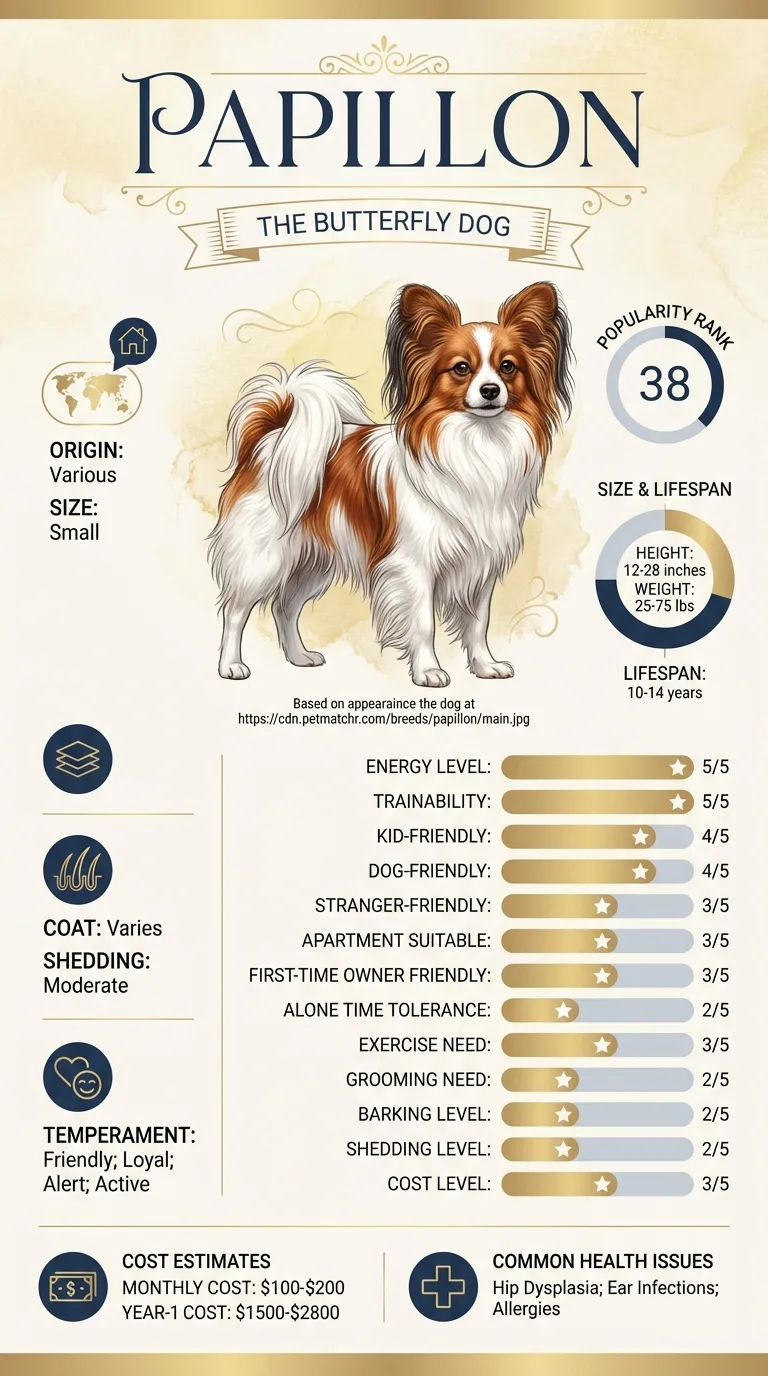
Patellar Luxation and Progressive Retinal Atrophy are this breed's more commonly documented health risks, alongside real, documented Dental Disease and Collapsing Trachea risk. This breed's small size keeps most routine costs low, though this breed's low alone-time tolerance means daycare or a dog walker is a real cost many owners end up budgeting for.
These figures reflect DC's genuinely elevated general pricing, with a real note on the travel-ready gear this breed's tiny, portable size makes worthwhile given the district's rotational diplomatic community.
Estimate · source: estimation · confidence: medium · updated 2026-09-05 · not a quote
| Item | Cost range |
|---|---|
International travel carrier and documentation A real, worthwhile cost for a household expecting a diplomatic rotation, made more manageable by this breed's genuinely tiny, portable size. | $80 - $200 |
One-time setup (initial vet visit, spay/neuter, gear) Covers the first exam, vaccinations, spay/neuter if needed, and basic gear — priced at DC's above-average rates. | $350 - $588 |
| Item | Cost range |
|---|---|
Food Reflects this breed's genuine 5-to-10-pound size, priced above the national average given DC's elevated general cost of living. | $35 - $59 |
Each range starts from a national baseline for this breed's size class and is then adjusted for local cost of living and veterinary pricing. The baselines, and the source each one came from, are listed on our sources page (dataset 2026.09). Two inputs, the purchase price and the emergency reserve, have no published national figure we could verify, so we leave them to you rather than invent them.
These are planning estimates, not quotes. Your own numbers will move with the individual dog, your vet and your insurer. Build a budget with your own figures.
For a Papillon in Washington, DC, insurance is genuinely worth taking seriously given this breed's documented Patellar Luxation and Progressive Retinal Atrophy risks, a consideration this market's above-average vet pricing only sharpens.
Given this breed's real, documented joint and eye risk profile and DC's above-average vet pricing, insurance purchased while the dog is young is worth pricing out seriously before anything is on record.
Owners who've built a genuinely solid emergency fund and are comfortable managing a smaller-scale procedure themselves can reasonably self-insure instead.
DC's above-average costs call for real planning, and keeping travel documentation current avoids a costly last-minute scramble before an anticipated rotation.
DC's real, genuinely high concentration of diplomatic and international-organization staff means a meaningful share of the city's residents plan around a two-to-four-year rotation rather than a permanent home. This breed's documented top apartment-suitability rating and genuinely tiny size mean it relocates and adjusts to new housing far more easily than a larger, more space-dependent breed would.
An airline-approved travel carrier and up-to-date international pet-travel documentation, kept current well ahead of any anticipated move, are real, practical investments worth making for a household that expects a rotation.
DC otherwise ranks among the more expensive metros this guide tracks for general costs, and a large share of dogs here live in apartments or rowhouses without a private yard, making dog-walking or daycare a realistic recurring cost.

A Washington, DC diplomatic staffer facing a sudden reassignment overseas worried about relocating their Papillon on short notice, only to find the process far simpler than a colleague's experience moving a much larger dog. Current paperwork and a proper travel carrier, kept ready well before the move was announced, made the whole transition manageable.
Key takeaway: In Washington, DC specifically, this breed's real tiny, portable size makes it a genuinely practical fit for the district's rotational diplomatic community.
About $100–$188, well above the national average, reflecting the district's genuinely elevated general cost of living.
Roughly $1,375–$2,875, including the initial vet exam, spay/neuter if needed, and gear on top of ongoing monthly costs.
In a real, practical way, yes — this breed's documented top apartment-suitability and genuinely tiny, portable size make relocating and adjusting to new housing far easier than for a larger breed.
An airline-approved carrier and current international pet-travel documentation, kept up to date well ahead of an anticipated rotation, are real, practical basics worth having ready.
Worth pricing out given this breed's documented Patellar Luxation and Progressive Retinal Atrophy risks — DC's above-average vet pricing makes a procedure here notably more expensive than a typical market.
Around $665 covers a typical significant vet visit in this market, reflecting DC's above-average local pricing.
About $100–$188/month, $1,375–$2,875 for year one — well above average, with a real fit for DC's transient diplomatic community given this breed's tiny, portable size.
This guide is not medical advice. If your dog shows pain, sudden behavior change, or worsening symptoms, consult a licensed veterinarian.
Some links may be affiliate links. We may earn a commission at no extra cost to you. We only suggest products we believe are helpful for dog owners.
We research and check what we publish, but we do not warrant that any figure, date, price, or statement is accurate, complete, or current, and we accept no liability for any loss, cost, injury, or other harm arising from the use of this site. Use it as one reference among several. You remain responsible for your own decisions and for your dog's care - confirm anything that matters with a licensed veterinarian or another qualified professional before you act on it. Full disclaimer.
One sheet with every line item, the emergency fund and when insurance pays off - unlocks on this page.
You get: 12-month budget sheet
No spam. One-click unsubscribe. See our privacy policy.
Preview page 1 before you decide.