Back and Spine Issues in Papillons: Grading the Problem Before Panicking About It
Quick answer
What separates a knee problem from a spine problem?
Intermittency. A kneecap that slips gives a few skipping steps and then normal walking. Spinal cord signs are constant and involve the dog placing its feet wrongly rather than carrying a leg.
There are two kinds of disc disease and they belong to two different kinds of dog. Knowing which one is being discussed tells you most of what you need to know about the outlook.
Anyone who has been given the letters IVDD in a consultation or a search result and is trying to work out whether it applies to a nine pound spaniel with normal leg length, and anyone watching an older Papillon lose confidence in its hindquarters.
Important reminder
This guide is not medical advice. If your dog shows pain, sudden behavior change, or worsening symptoms, consult a licensed veterinarian.
Some links may be affiliate links. We may earn a commission at no extra cost to you. We only suggest products we believe are helpful for dog owners.
We research and check what we publish, but we do not warrant that any figure, date, price, or statement is accurate, complete, or current, and we accept no liability for any loss, cost, injury, or other harm arising from the use of this site. Use it as one reference among several. You remain responsible for your own decisions and for your dog's care - confirm anything that matters with a licensed veterinarian or another qualified professional before you act on it. Full disclaimer.
What this problem looks like
Back and spine complaints in a Papillon cover a range from a strained muscle to genuine spinal cord compression. Disc disease is possible but not typical for the breed, and when it does occur in a normally proportioned dog it tends to be the slow, age-related form rather than the sudden herniation seen in long-backed breeds. The grading of neurological function, not the word on the diagnosis, is what determines urgency.
Common triggers
Age-related disc degeneration in a dog well into its second decade
An awkward landing from furniture that twists the spine rather than compressing it straight
Being stepped on, dropped, or caught under a closing door
Rough handling under the front legs that leaves the hindquarters hanging
A sudden hard pull against a collar rather than a harness
Not common in this breed and not part of its documented health picture. The comparison worth holding on to is that a Dachshund's lifetime risk of type one disc herniation is measured in tens of percent, while a normally proportioned toy spaniel sits in a much lower band. Most Papillon back complaints resolve as soft-tissue strains.
Why this happens
Breed factors
Chondrodystrophy is the single trait that best predicts explosive disc disease, and it is the trait the Papillon does not have. Its discs mature normally, so they do not calcify and shatter early. What the breed does bring is very light bone, thin paraspinal muscle and a fourteen to sixteen year lifespan that gives slow degenerative change plenty of time to develop. Any hind-limb complaint in this breed also has to be weighed against patellar luxation, which is documented here and is a far more likely explanation.
Environment factors
Household geometry is the main hazard. Beds and sofas are proportionally enormous, hard floors punish landings, and a small dog that follows its people from room to room spends its day underfoot. Cold, hard surfaces stiffen an older spine. Collars rather than harnesses transmit every lunge into the neck, which matters more in a breed already carrying a documented windpipe weakness.
What you can do at home (once it is not an emergency)
When to talk to your vet
This is an emergency, out of hours if necessary, if your Papillon cannot stand, is dragging either hind leg, has lost bladder control, is knuckling its feet over, or shows no response when a toe is firmly pinched. Spinal cord compression is time-critical and the window in which function can be recovered is measured in hours to a couple of days. Same-day attention is needed for a dog in obvious pain that will not settle, that yelps repeatedly on movement, or that has become suddenly and completely unwilling to jump. A routine appointment is appropriate for gradual hind-end weakness or stiffness developing over weeks in an older dog.
At home, alongside your vet's plan
Film your dog walking away from you and towards you on a phone. Slowed down, a skipping stride and a knuckling foot look completely different, and a vet can see in ten seconds what takes ten minutes to describe.
Check the tops of the hind toenails once a month. Wear on the upper surface means the foot is being dragged, which is a neurological finding.
Keep the dog's weight at the low end of the five to ten pound range, since every extra ounce loads a spine that is already carrying its own limits.
Set up a floor-level sleeping and eating station so an unsteady dog never has to climb to meet its basic needs.
If rest has been prescribed, use a pen rather than trusting a closed door, and keep it in the room the family uses.
A muscular strain settles in one to two weeks. Conservatively managed disc disease requires four to eight weeks of genuinely strict confinement and then a graded return over a further month. Surgical cases typically walk again within days to weeks depending on the grade at presentation, followed by two to three months of rehabilitation. Slow, age-related change is managed indefinitely.
A dog that places all four feet deliberately, walks without scuffing, gets up without complaint and can be lifted without flinching. After a serious spinal event, success may mean a Papillon that walks confidently on flat ground and uses ramps for everything else, which is a good outcome rather than a compromise.
Type one and type two, and why the difference matters here
Type one disc disease is the explosive version. The centre of the disc calcifies early in life and then herniates suddenly through its outer ring into the spinal canal, often over minutes. It belongs overwhelmingly to chondrodystrophic breeds: dogs bred for a long body on short, curved legs, in which cartilage matures abnormally throughout the skeleton. Dachshunds are the archetype.
Type two is the slow version. The disc bulges gradually over months in a normally proportioned, usually older dog, producing a progressive weakness rather than a sudden crisis.
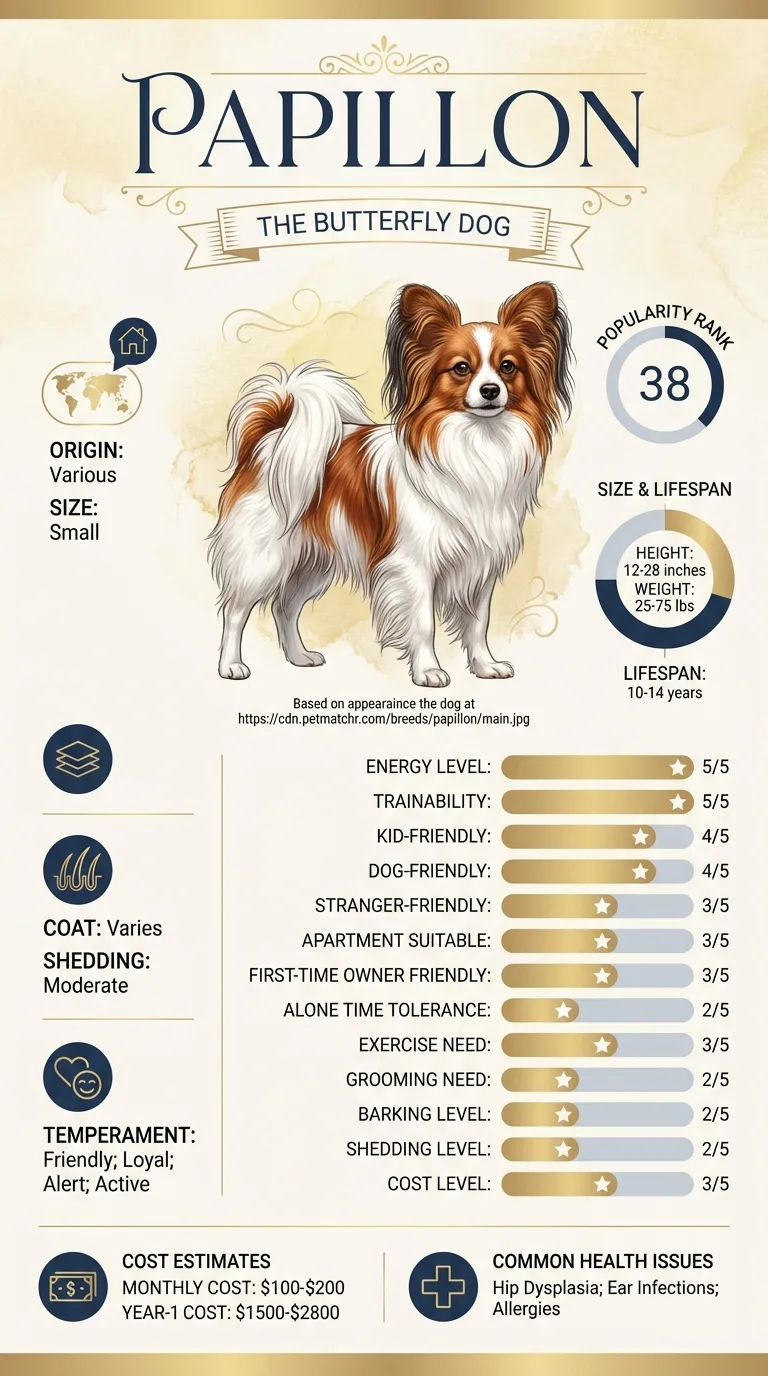
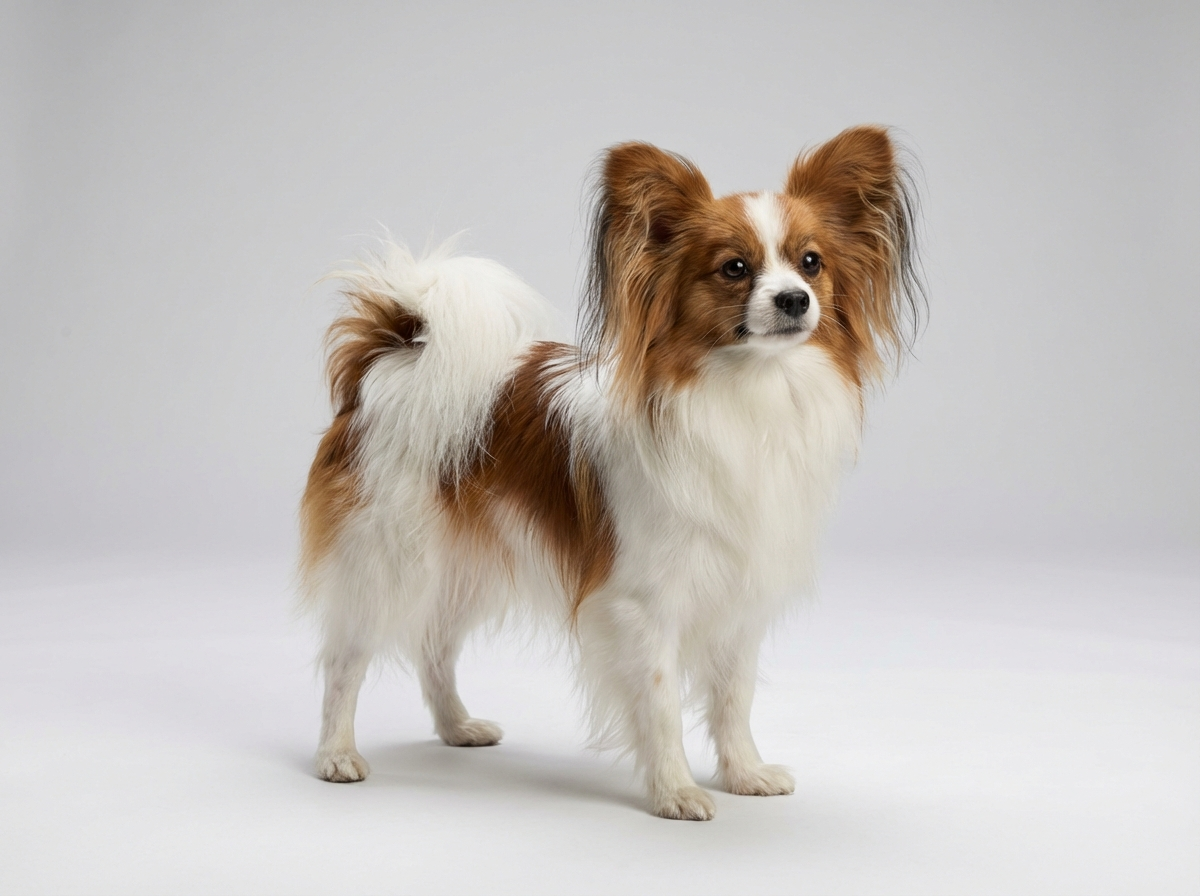
Papillons are not chondrodystrophic. Their legs are straight and proportionate, and the breed's documented health list carries no spinal entry at all. That places their disc risk closer to that of a generic small dog than to a Dachshund's, and pushes type two, the age-related kind, ahead of type one in likelihood.
Back and Spine Issues in Papillons - Type one and type two disc disease
What a wobbly back end usually turns out to be
Owners who see a Papillon struggling behind almost always think spine first. Vets usually think knee first, because patellar luxation is on this breed's documented health list and disc disease is not.
A slipping kneecap produces a characteristic skipping stride: the dog hops for a step or two with a hind leg carried, then drops it and carries on as if nothing happened. That intermittency is the giveaway. Spinal cord problems do not switch on and off between strides.
A cruciate ligament rupture produces sudden lameness on one leg that does not resolve, with the dog toe-touching rather than skipping. Arthritis produces stiffness that is worst after rest and improves with a few minutes of movement.
Spinal cord signs look different again: scuffed toenails on the tops of the nails, legs that cross or knuckle over, and a dog that no longer knows exactly where its back feet are. That last group is the one that changes the urgency of the appointment.
Two seconds of phone footage
Dominik's ten-year-old Papillon, Otto, started having odd moments on walks where a back leg seemed to fail. Dominik was convinced it was a slipped disc and arrived at the appointment expecting a referral.
He had filmed thirty seconds of Otto trotting on the pavement. Played at half speed, the pattern was unmistakable: Otto hopped with the right hind held up for two strides, then put it down and trotted normally. His toenails were evenly worn and he placed his feet precisely.
The vet diagnosed a grade two luxating patella, not a spinal problem. Otto went onto a weight reduction plan, a physiotherapy programme to build his thigh muscle, and a ramp to the sofa. The skipping is now down to a handful of times a month.
Key takeaway: How the leg fails matters more than that it fails. Intermittent skipping is a joint; consistent misplacement of the foot is a nerve.
Frequently asked questions
Do Papillons get intervertebral disc disease?
They can, as any dog can, but they are not a predisposed breed. The explosive type one form is concentrated in chondrodystrophic breeds with long backs and short curved legs, and the Papillon has neither feature. It does not appear on the breed's documented health list.
How is disc disease graded?
Vets use a scale running from pain only, through weakness, to inability to walk, to loss of the ability to feel a deep pinch in the toes. The grade at presentation drives the treatment decision and the outlook more than any image does, which is why the neurological exam comes before the scan.
Can disc disease be managed without surgery?
Lower grades, where the dog can still walk, are often managed with strict confinement, pain control and a slow return to activity over six to eight weeks. Dogs that cannot walk generally do better with surgery, and the decision is time-sensitive rather than something to sleep on.
What does strict rest actually mean?
Confinement in a pen or a crate large enough to stand and turn, with lead walks only for toileting, for the full period prescribed. It does not mean a quiet house. A Papillon left loose in a room will jump onto something within the hour, which is exactly what the rest is meant to prevent.
My older Papillon is scuffing its back toes. Is that a disc?
Scuffing the tops of the nails means the dog is not lifting the foot cleanly, which is a neurological sign rather than a joint one. It deserves a proper examination promptly. Type two disc bulging is one explanation among several in an ageing dog.
Is spinal surgery realistic on a dog this small?
Yes. Veterinary neurosurgeons operate on toy breeds routinely and size is not the limiting factor. The limitations are cost, access to a referral centre, and how much function the dog still has when it arrives.
What separates a knee problem from a spine problem?
Intermittency. A kneecap that slips gives a few skipping steps and then normal walking. Spinal cord signs are constant and involve the dog placing its feet wrongly rather than carrying a leg.
Health
Which back sign is a true emergency?
Inability to stand or walk, dragging hind legs, loss of bladder control, or a dog that does not react when a toe is pinched. Those need an immediate assessment, because the outcome depends on how quickly pressure comes off the cord.
Costs
What does spinal treatment cost?
Conservative management with imaging and medication commonly runs several hundred to a couple of thousand dollars. Referral surgery with MRI typically starts in the low thousands, which is far beyond the breed's ordinary yearly veterinary budget.
Living
How do I set up a crate rest space?
Use a pen big enough to stand, turn and lie flat, with non-slip bedding, food and water at floor level, and no step or lip to climb over. Put it where the household is, since an alert breed left alone will try to get out.
Training
How do I stop a confined Papillon going stir-crazy?
Work the brain instead of the body. Scent games in a snuffle mat, food puzzles and short nose-only training sessions tire this breed genuinely, and its high trainability makes six weeks of confinement survivable.
Related DogBreedCompass guides
Papillon back problems and neck instability – The neck rather than the mid-back is where toy-breed spinal risk concentrates.