Behavior
What are some quick tips for Yorkshire Terrier back/spine issues?
Avoid letting your Yorkie jump from heights and maintain a healthy diet to prevent obesity. Regular vet visits can help monitor their spine health.

Quick answer
What are some quick tips for Yorkshire Terrier back/spine issues?
Avoid letting your Yorkie jump from heights and maintain a healthy diet to prevent obesity. Regular vet visits can help monitor their spine health.
Yorkshire Terrier back/spine issues can be serious, affecting their mobility and quality of life.
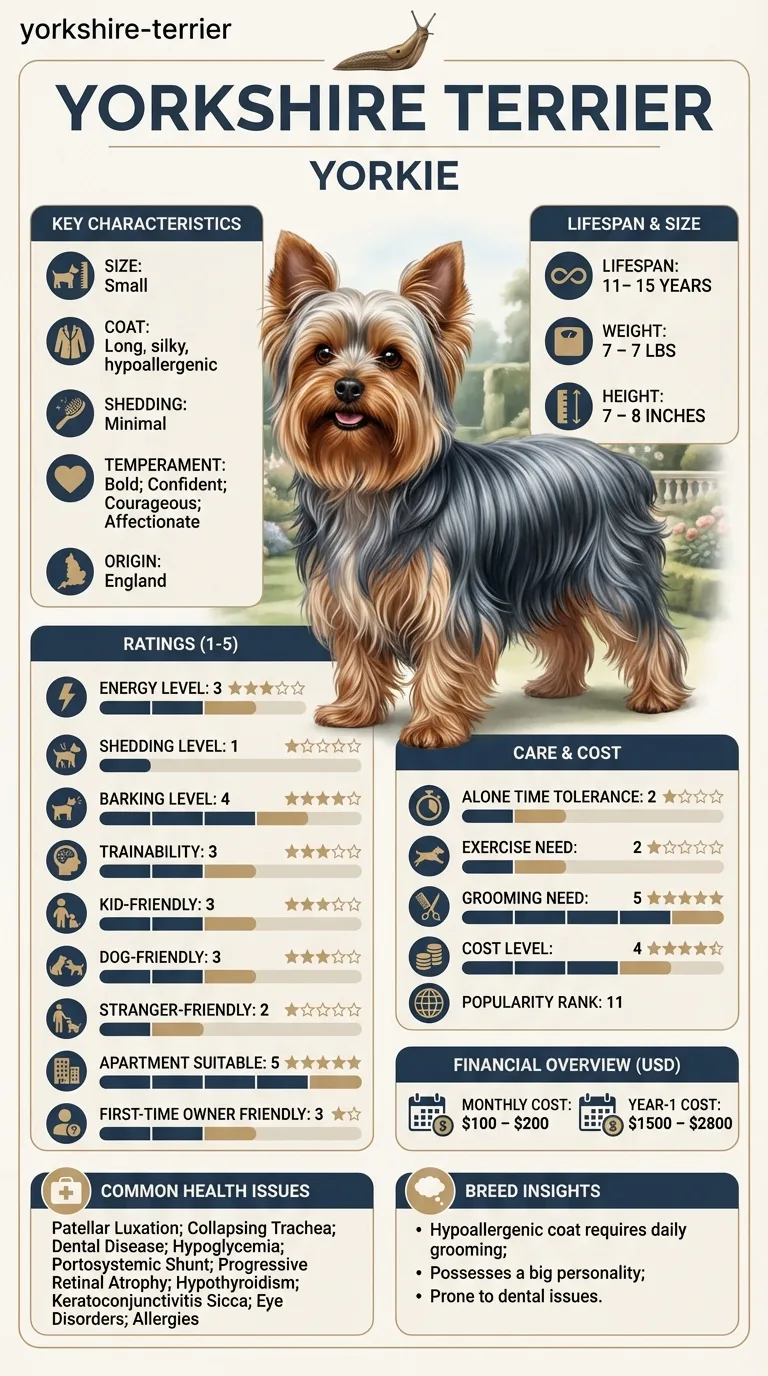
Owners of Yorkshire Terriers, especially those unaware of the breed's health challenges, often face this issue. First-time dog owners may find it particularly difficult to understand the symptoms and when to seek help.
This guide is not medical advice. If your dog shows pain, sudden behavior change, or worsening symptoms, consult a licensed veterinarian.
Some links may be affiliate links. We may earn a commission at no extra cost to you. We only suggest products we believe are helpful for dog owners.
We research and check what we publish, but we do not warrant that any figure, date, price, or statement is accurate, complete, or current, and we accept no liability for any loss, cost, injury, or other harm arising from the use of this site. Use it as one reference among several. You remain responsible for your own decisions and for your dog's care - confirm anything that matters with a licensed veterinarian or another qualified professional before you act on it. Full disclaimer.
Check this first
It's crucial to know when Yorkshire Terrier back/spine issues are serious enough to warrant an emergency vet visit. Certain signs indicate immediate attention is needed. If your Yorkie is suffering from severe pain, unable to stand or walk, or displaying weakness in their hind legs, these are red flags.
Additionally, if you notice any signs of paralysis or loss of bladder control, call your vet right away. These situations can indicate severe intervertebral disc disease, which is a medical emergency.
On the other hand, if your Yorkshire Terrier shows mild discomfort but still walks, eats, and interacts normally, you can monitor their condition. Look for signs like slight limping, occasional whining, or minor stiffness. If these symptoms are mild and your pup is otherwise healthy, you can wait and see how they progress.
Just ensure you create a plan for monitoring their behavior and consult with your vet if things don’t improve.
In summary, trust your instincts. If you’re uncertain whether it’s an emergency, it’s always best to err on the side of caution and consult your vet.
If any of these apply, call your vet or an emergency clinic now. The rest of this page is for the cases that are not an emergency.
Yorkshire Terrier back/spine issues are a common concern for owners. These small dogs can suffer from intervertebral disc disease, which affects their spine and can cause pain, weakness, or even paralysis. Day-to-day, this may look like your Yorkie having difficulty jumping, showing signs of discomfort when picked up, or hesitating to walk.
Back/spine issues are relatively common in Yorkshire Terriers, especially as they age. Many Yorkies may experience some degree of spinal problems in their lifetime, making it important for owners to be aware of signs and preventive measures.
Yorkshire Terriers are small dogs with long backs, making them prone to intervertebral disc disease. Their unique body structure can lead to increased stress on their spines, especially in active or jumpy pups. Additionally, their playful nature can result in rough play that may exacerbate spine issues.
Environmental factors also play a significant role in back issues. Slippery floors can cause falls and injuries, while inadequate support during jumps can strain their backs. Moreover, improper lifting techniques by owners can lead to sudden injuries that affect the spine.
Consult your vet if your Yorkshire Terrier shows signs of pain, such as yelping, reluctance to move, or changes in eating habits. Early intervention can be crucial for managing back issues effectively. If you notice any sudden changes in their mobility, it's essential to seek veterinary advice promptly.
Avoiding these common mistakes can help improve your Yorkshire Terrier's back/spine issues. Here are some behaviors to steer clear of:
Start here: Yorkshire Terrier Most Common Genetic Disorders: Screening
See all Yorkshire Terrier health problems, which breeds are prone to backspine issues, or the full Yorkshire Terrier breed guide for temperament, exercise needs and ownership costs.
Addressing Yorkshire Terrier back/spine issues typically takes 3 to 6 months of consistent care and follow-up with your vet.
Success means your Yorkie shows improved mobility, reduced pain, and a happier demeanor while engaging in daily activities.
Laura, a devoted Yorkie owner, noticed her 5-year-old dog, Bella, struggling to jump onto the couch. After a vet visit confirmed early signs of back issues, Laura felt overwhelmed. She learned about appropriate exercises and started a gentle stretching routine for Bella, paired with a supportive harness for walks. Over the next few months, Bella gradually regained her strength. Laura was thrilled to see her pup play again without discomfort, and they both enjoyed their daily walks more than ever.
Key takeaway: Consistent care and targeted exercises can significantly improve a Yorkshire Terrier's back health and quality of life.
Yorkshire Terriers can develop back or spine issues due to their small size and genetic predisposition to conditions like intervertebral disc disease. Factors such as obesity, improper handling, or jumping from heights can also contribute to these problems. It's essential to monitor their weight and avoid activities that stress their spine. This answer relates to Yorkshire Terrier back/spine issues.
To prevent back and spine issues, ensure your Yorkie maintains a healthy weight and avoid excessive jumping or rough play. Regular vet check-ups can also help catch potential problems early. Additionally, consider using ramps for furniture instead of allowing your dog to jump.
Signs of back and spine issues include difficulty walking, reluctance to jump or climb stairs, yelping when touched, or a hunched posture. If you notice any of these symptoms, consult your veterinarian promptly for an assessment.
Yes, many back and spine issues in Yorkshire Terriers are treatable. Treatment options range from medication and physical therapy to surgery in severe cases. Early intervention is crucial for the best outcome.
Training can help by teaching your Yorkie to avoid movements that may exacerbate back or spine issues. Focus on commands that encourage safe behavior, like 'off' to prevent jumping. Consistent training can also strengthen their core muscles, providing better support for their spine.
If your Yorkshire Terrier shows signs of pain, such as whining when touched or struggles to get up, it's time to visit the vet. Additionally, if they exhibit severe lethargy or incoordination, prompt attention is crucial.
Yes, back and spine issues can be hereditary in Yorkshire Terriers. Certain genetic predispositions can make them more susceptible, so it’s important to discuss your dog’s family history with your vet.
For older Yorkshire Terriers, providing a comfortable bed and minimizing jumping can help alleviate discomfort. Gentle exercise, like short walks, may also be beneficial, but always consult with your vet for a tailored approach.
Training techniques that focus on building strength and flexibility can potentially help prevent back issues. Activities such as low-impact obedience training or gentle agility exercises can promote a healthy back, but ensure they're suitable for your dog's current health.
Avoid letting your Yorkie jump from heights and maintain a healthy diet to prevent obesity. Regular vet visits can help monitor their spine health.
Treatment costs can vary widely, typically ranging from $200 for basic care to several thousand dollars for surgeries. Always check with your vet for estimates.
Yes, severe back and spine issues can impact your Yorkie's quality of life and lifespan. Early treatment is vital to manage these conditions effectively.
A one-page prep sheet for this condition: the signs, the questions to ask, what to get priced. Unlocks here.
You get: Vet visit prep sheet
No spam. One-click unsubscribe. See our privacy policy.
Preview page 1 before you decide.