Health
What distinguishes DM from arthritis?
Pain. Arthritis hurts on joint flexion and is worse after rest. DM is completely painless and produces misplaced feet, scuffed nail tops and crossing legs rather than stiffness.

Quick answer
What distinguishes DM from arthritis?
Pain. Arthritis hurts on joint flexion and is worse after rest. DM is completely painless and produces misplaced feet, scuffed nail tops and crossing legs rather than stiffness.
The single most useful thing about this disease is what it does not do. It does not hurt, and that absence is what separates it from almost everything it resembles.
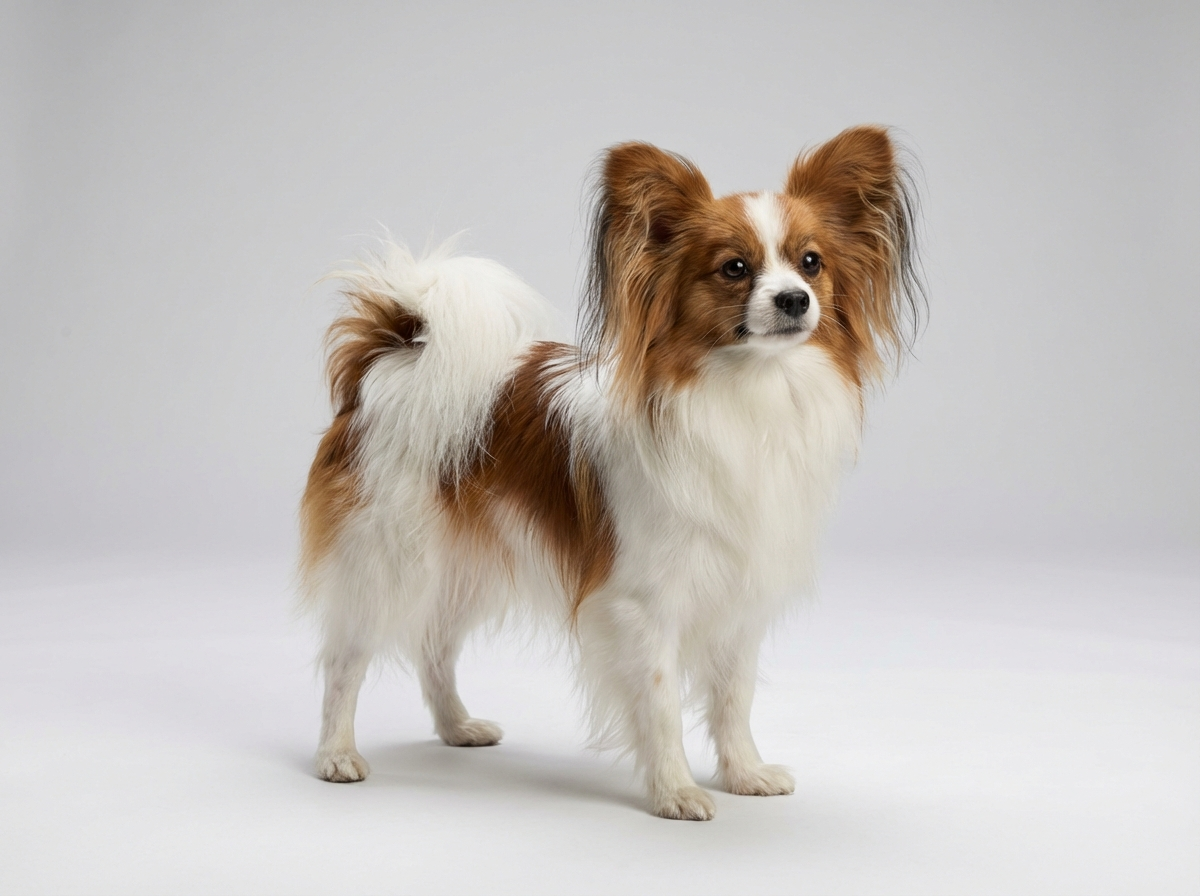
Owners of an ageing Papillon whose back legs have started to wobble, scuff or cross, who have found this diagnosis online and want to know whether it fits a nine pound spaniel.
This guide is not medical advice. If your dog shows pain, sudden behavior change, or worsening symptoms, consult a licensed veterinarian.
Some links may be affiliate links. We may earn a commission at no extra cost to you. We only suggest products we believe are helpful for dog owners.
We research and check what we publish, but we do not warrant that any figure, date, price, or statement is accurate, complete, or current, and we accept no liability for any loss, cost, injury, or other harm arising from the use of this site. Use it as one reference among several. You remain responsible for your own decisions and for your dog's care - confirm anything that matters with a licensed veterinarian or another qualified professional before you act on it. Full disclaimer.
Degenerative myelopathy is a slowly progressive, painless degeneration of the spinal cord that begins as hind-limb incoordination and ends in paralysis. It has no treatment and no confirmatory test in a living dog, and it is diagnosed by excluding everything else. It belongs to a specific set of breeds, and the Papillon is not among them.
Meaningfully common in the breeds it affects, where it is a leading cause of hind-limb paralysis in older dogs. Absent from the documented picture in Papillons. Owners of small dogs usually encounter this diagnosis through internet searching rather than through a veterinary consultation, and the search terms overlap heavily with far more likely conditions.
The genetic variant associated with the disease is present at high frequency in a small number of breeds, and clinical disease has been confirmed in those populations. No such association exists for the Papillon. The breed's own documented spinal and neurological profile is empty, and its recorded issues cluster in the knees, eyes, teeth, skull and windpipe. A Papillon's normal leg-to-body proportions also mean it lacks the disc anatomy that causes compressive cord disease in short-legged breeds.
Nothing in the environment is known to cause or prevent the disease. Environment does determine how well any dog with hind-limb weakness functions. Slippery hard flooring turns mild incoordination into an inability to stand up. Cold, thin bedding causes pressure sores in a dog that cannot reposition itself. Stairs, steps and raised furniture become impassable early, and a household that adapts early keeps a dog mobile for considerably longer.
Seek urgent attention for hind legs that have become weak suddenly rather than gradually, for any loss of bladder or bowel control, for a dog that cannot stand at all, or for weakness accompanied by pain, crying out or a hunched posture. That combination suggests a compressive spinal lesion, which is often treatable and is time-critical. Book a prompt routine appointment for a gradual change in gait, scuffed hind nails, crossing legs, or a dog that has become unsteady on turns. Ask specifically for both a neurological and an orthopaedic examination, because in this breed the answer is more likely to be in a joint.
See all Papillon health problems, which breeds are prone to degenerative myelopathy dm, or the full Papillon breed guide for temperament, exercise needs and ownership costs.
Reaching a diagnosis takes weeks, because it is arrived at by excluding treatable conditions with examination and imaging. If the diagnosis is genuinely degenerative myelopathy, expect steady progression from first wobbliness to loss of hind-limb function over roughly six months to three years, without remission. In a Papillon, the far more likely outcome of the investigation is a treatable orthopaedic diagnosis and a plan that improves things.
Success in the investigation is finding the treatable cause, which in this breed is the probable result. If the disease is confirmed, success shifts to function and dignity: a dog kept mobile with a support harness and non-slip floors, comfortable and clean, still engaged with its household, with the decision about the end made deliberately rather than in a crisis.
Almost everything that makes a dog's back end unreliable hurts. Arthritis hurts. A torn cruciate hurts. A herniated disc pressing on nerve roots hurts a great deal. A slipping kneecap produces a yelp.
Degenerative myelopathy does not, because it destroys the conducting pathways rather than compressing or inflaming them. A dog with early DM walks with its hind feet in the wrong places but shows no reaction whatever to having the spine, hips and knees flexed, extended and pressed.
What it produces instead is proprioceptive loss: the dog no longer knows precisely where its back feet are. The signs follow from that. The tops of the hind nails wear down because the foot is dragged rather than lifted. The feet cross over one another when turning. The dog stands with a hind foot knuckled over onto its knuckles and does not correct it, which a neurologically intact dog does instantly.
Appetite, alertness and enthusiasm stay entirely normal, which many owners find the most difficult part.

The disease was first described in German Shepherds and is best documented there, in Pembroke Welsh Corgis, in Boxers, in Chesapeake Bay Retrievers and in Rhodesian Ridgebacks. Those are the populations in which the genetic variant is common and in which the clinical disease has been confirmed at post-mortem.
The Papillon's documented health list contains patellar luxation, progressive retinal atrophy, dental disease, an open fontanel and a collapsing trachea. Nothing spinal, and nothing neurological.
A further complication is that the DNA test reports genetic risk, not disease. A dog can carry two copies of the at-risk variant and never develop clinical signs, which means a positive test in a breed where the disease is not established should be interpreted cautiously rather than treated as an answer.
What this means practically is that a wobbly-legged Papillon needs a proper neurological and orthopaedic examination first. In this breed the answer is far more often a knee, a joint or, occasionally, a compressive spinal lesion that is actually treatable.
If you think your Papillon has degenerative myelopathy, the plan is three steps: write down what you have seen and when it started, book a veterinary appointment rather than waiting for the next flare, and take video of the behaviour or symptom before you go — the thing you are worried about rarely happens in the consulting room. Screening in the parents covers patellar luxation, progressive retinal atrophy, dental disease.
What the vet visit should produce is a diagnosis and a written plan, not just reassurance: what is being ruled out, what the monitoring interval is, and which signs mean you come back sooner. Ask what the treatment costs across a year rather than per visit, because that is the number that decides whether you are managing this condition or reacting to it.
Between appointments, keep a short log — dates, what you saw, what changed. It is the single most useful thing an owner brings to a follow-up, and for degenerative myelopathy it is often what separates a clear pattern from a guess.
Ravi's twelve-year-old Papillon, Nima, began stumbling on the kitchen floor. He found a description of degenerative myelopathy that matched what he was seeing and spent a fortnight assuming the worst. At the appointment the vet did two things. She flexed and extended both stifles, and Nima pulled away and turned her head on the left one. Then she gently turned each hind foot onto its knuckles; Nima flipped both back instantly. That combination pointed away from a cord problem and towards a painful joint. Nima had advanced arthritis in the left stifle, downstream of a luxating patella noted years earlier, and she had been compensating until the smooth floor took away her grip. Runners went down that week and a treatment plan started. Nima walked steadily for another two and a half years.
Key takeaway: Two thirty-second tests separate these conditions: does it hurt when the joints are moved, and does the dog correct a knuckled foot. Pain plus correction means look at the joints.
It is not documented in the breed. The disease is concentrated in German Shepherds, Corgis, Boxers and a handful of other breeds where the genetic variant is common. A Papillon with hind-limb weakness has a much longer and more likely list of alternative explanations.
By exclusion. There is no test that confirms it in a living dog. A neurologist rules out compressive spinal disease with advanced imaging, confirms the pattern of painless progressive weakness, and considers the DNA result as supporting evidence. Definitive confirmation is only possible after death.
That the dog carries the at-risk variant, not that it has or will develop the disease. Many dogs with two copies never show signs. In a breed where the clinical disease is not established, a positive result carries much less weight than it would in a Corgi.
No treatment stops or reverses it. Physiotherapy and controlled exercise slow functional decline and are genuinely worthwhile. Harnesses, carts and non-slip flooring maintain quality of life. Anything sold as a cure for this condition should be treated with deep scepticism.
In affected breeds, typically from first wobbliness to inability to walk on the hind legs over six months to three years, with the forelimbs eventually involved in dogs that live long enough. Progression is steady rather than sudden, and does not have good and bad days in the way arthritis does.
Arthritis, an unstable kneecap, a cruciate injury, or a slowly bulging disc are all more probable. All of those are painful to some degree and most are treatable, which is precisely why a proper examination matters more than a search result.
Pain. Arthritis hurts on joint flexion and is worse after rest. DM is completely painless and produces misplaced feet, scuffed nail tops and crossing legs rather than stiffness.
No. The breed's documented issues are patellar luxation, progressive retinal atrophy, dental disease, an open fontanel and a collapsing trachea. Nothing neurological appears there.
Usually seventy to one hundred and fifty dollars as a standalone test, and it is often included in broader panels. In a breed where the disease is not established, its interpretive value is limited.
Non-slip flooring throughout, a support harness with a rear handle, boots to protect dragging toes, ramps instead of steps, and bedding thick enough to prevent pressure sores.
Structured physiotherapy can. Controlled walking, standing balance work and stepping over low poles maintain muscle and coordination for longer, and Papillons engage with this kind of work readily.
A one-page prep sheet for this condition: the signs, the questions to ask, what to get priced. Unlocks here.
You get: Vet visit prep sheet
No spam. One-click unsubscribe. See our privacy policy.
Preview page 1 before you decide.