Papillon vs Shetland Sheepdog: Which Suits Your Home?
Quick answer
Papillon or shetland sheepdog -- which should you pick?
Choose the papillon if you want less barking and a friendlier reaction to strangers. Choose the sheltie if you want a slightly bigger dog that's great with kids and don't mind a very vocal alert system.
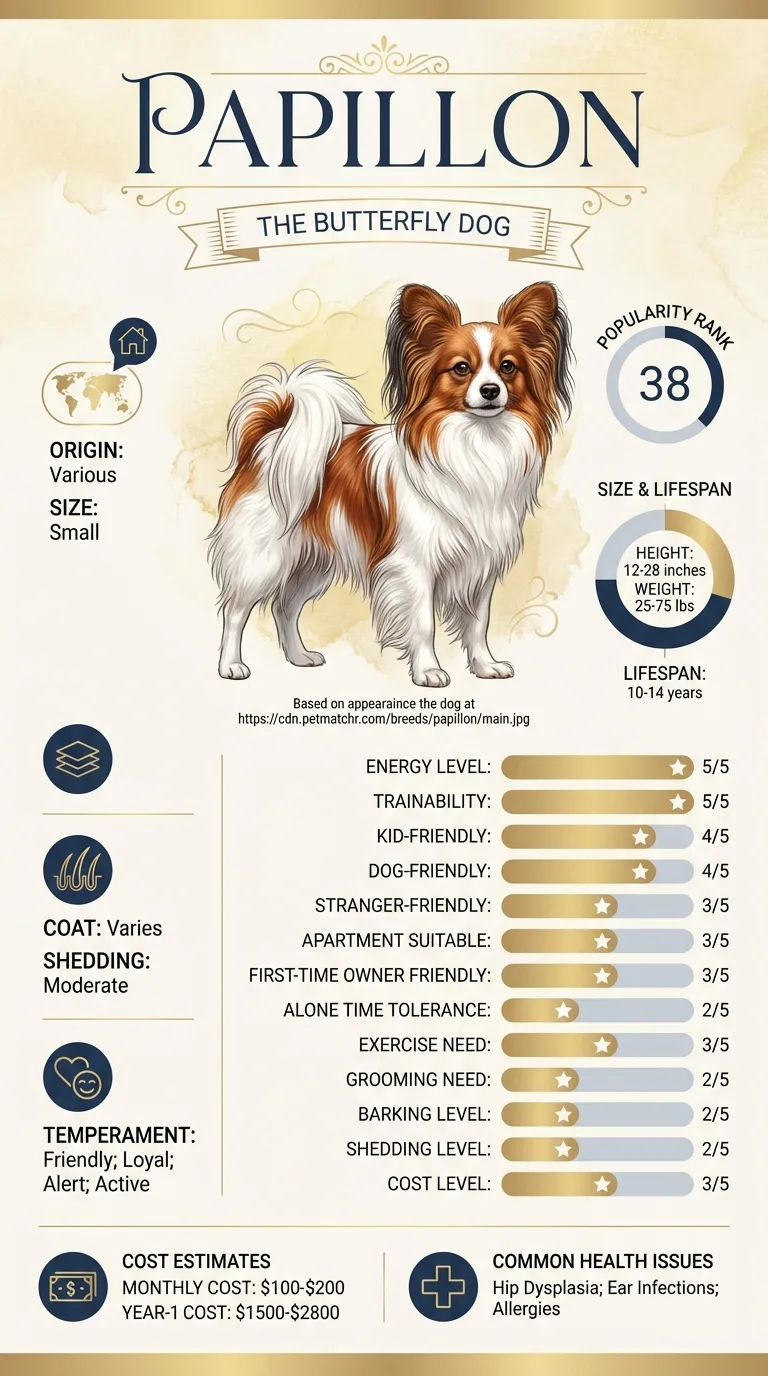
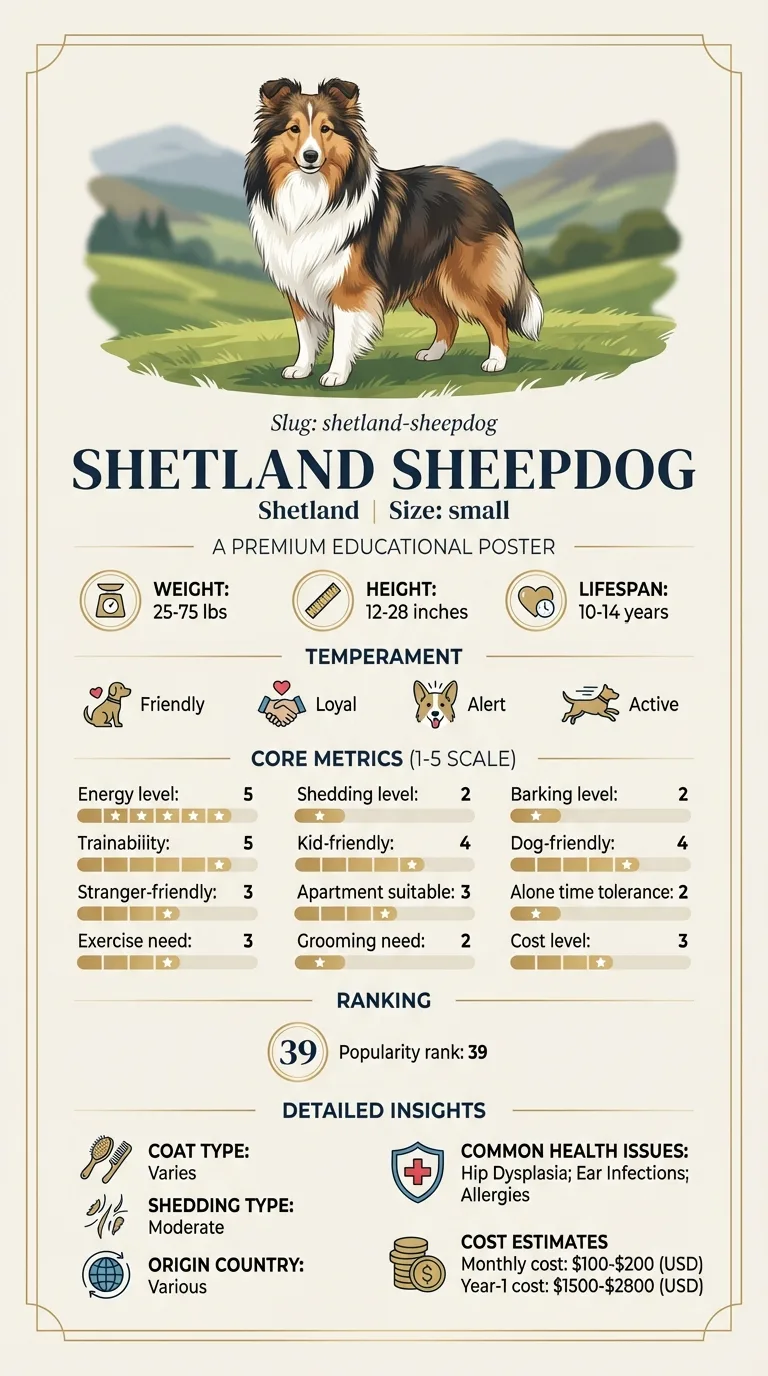
Papillon or Shetland Sheepdog? On paper they differ most on grooming need, and on the scales Shetland Sheepdog is the heavier at 15–25 lbs. Here is how the two compare on everything that shapes an ordinary week.
This is for someone already down to Papillon and Shetland Sheepdog and deciding between them. For this pair the decision usually turns on grooming need and apartment suitability, so those are covered first and in most detail. Anyone choosing from a flat has a clear answer here: Papillon rates 5/5 against 3/5. There is no origin story here — only what changes about your week.
Quick verdict
Between Papillon and Shetland Sheepdog, grooming need is what separates them, and Papillon is the lower-effort dog of the two to keep.
Choose papillon if...
Choose Papillon if you are in a flat or a smaller home, you do not want a standing grooming appointment and shedding is a problem in your house.
Choose shetland sheepdog if...
Choose Shetland Sheepdog if there are young children at home, you want a dog that can keep up with an active routine and you want a dog that is more watchful with visitors.
Head-to-head comparison
Feature
papillon
shetland sheepdog
Winner
Size class
small
small
Equal
Weight
5–10 lbs
15–25 lbs
Equal
Height
8–11 in
13–16 in
Equal
Lifespan
14–16 years
12–14 years
papillon
Exercise need
Moderate (3/5)
High (4/5)
papillon
Grooming need
Low (2/5)
High (4/5)
papillon
Shedding
Low (2/5)
High (4/5)
papillon
Energy level
High (4/5)
High (4/5)
Equal
Barking
High (4/5)
Very high (5/5)
papillon
Apartment suitability
Very high (5/5)
Moderate (3/5)
papillon
Good for first-time owners
High (4/5)
High (4/5)
Equal
Tolerates being alone
Low (2/5)
Low (2/5)
Equal
Trainability
Very high (5/5)
Very high (5/5)
Equal
Good with kids
Moderate (3/5)
High (4/5)
shetland sheepdog
Good with other dogs
High (4/5)
High (4/5)
Equal
Friendly to strangers
High (4/5)
Low (2/5)
papillon
Cost level
Low (2/5)
Moderate (3/5)
papillon
Coat
Long, silky single coat
Long, dense double coat
Equal
Origin
Various
Various
Equal
Typical monthly cost
$80–$150
$80–$150
Equal
Typical first-year cost
$1,100–$2,300
$1,100–$2,300
Equal
Deep dive
Size and build
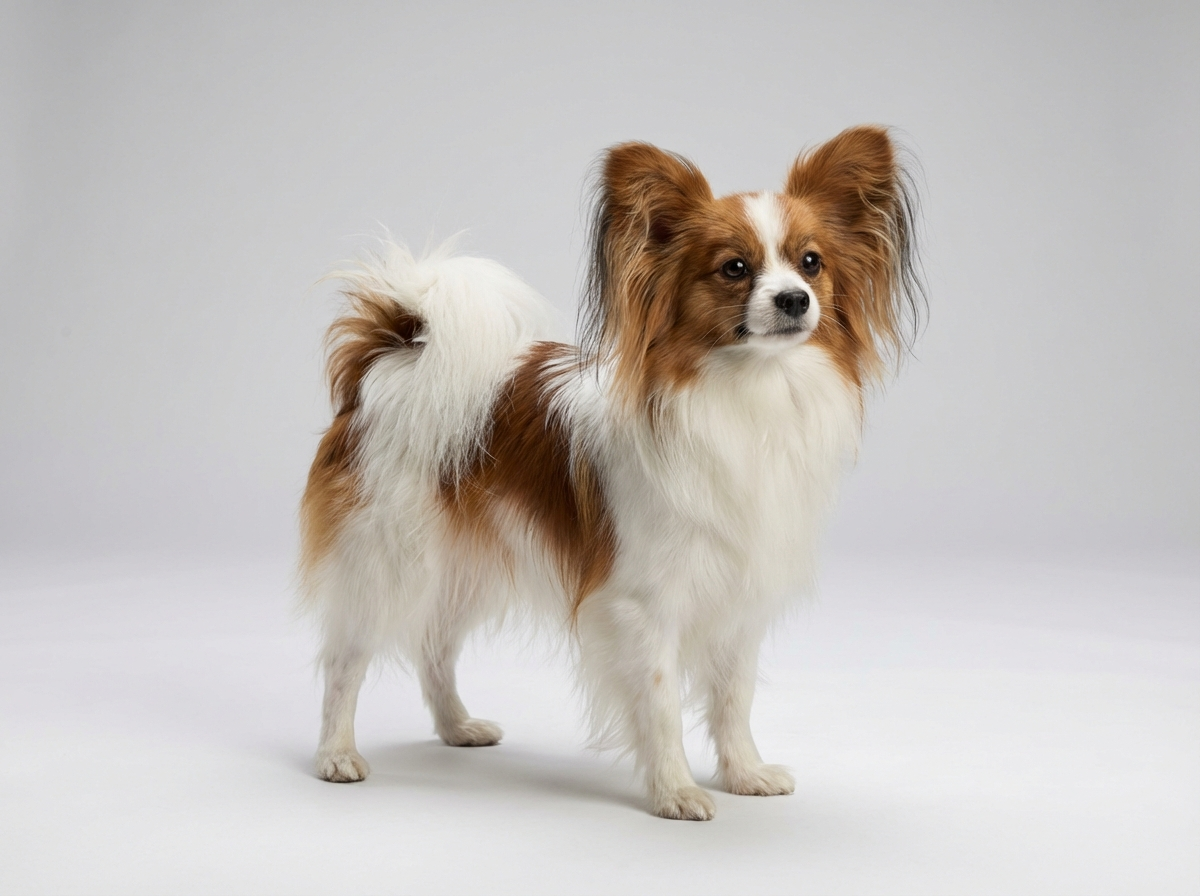
Both breeds fall in the small size class, but the sheltie is noticeably bigger -- 15 to 25 pounds and 13 to 16 inches against the papillon's 5 to 10 pounds and 8 to 11 inches. Think of the sheltie as a scaled-down collie and the papillon as something closer to a toy spaniel; they share the small-dog label without sharing much else physically.
Energy and exercise
The sheltie needs high exercise (4/5) against the papillon's moderate (3/5), though both rate high (4/5) on energy level itself. Shelties were bred to herd, and that instinct shows up as a genuine need to move and work, not just burn off puppy energy -- expect to give a sheltie a job, even if that job is fetch.
Grooming and shedding
This is a clear split: grooming rates low (2/5) for the papillon and high (4/5) for the sheltie, whose double coat needs regular brushing to prevent mats, especially around the ruff. Shedding follows the same pattern -- low (2/5) for the papillon, high (4/5) for the sheltie -- so expect noticeably more fur management with the sheltie despite both being long-coated breeds on paper.
Apartment living, noise and time alone
The papillon rates very high (5/5) for apartment suitability against the sheltie's moderate (3/5). Barking is where the sheltie really stands out -- very high (5/5), a full point above the papillon's already-high (4/5) rating -- shelties are known for vocalizing at anything that moves, which matters a great deal in close quarters. If you're weighing a sheltie for a condo or shared building, plan on some bark-training investment from day one rather than hoping the behavior fades with age.
Training and owner experience
Both breeds train exceptionally well, tying at very high (5/5) for trainability, and both rate high (4/5) for first-time owners. This is one of the more evenly matched pairs in the batch on the training front -- whichever you pick, expect a dog that's eager to learn and responsive to consistent handling. Neither breed poses the kind of training challenge that would rule out a first dog, which is unusual given how differently they otherwise compare on size and grooming.
Kids, other dogs and visitors
The sheltie edges ahead with kids, high (4/5) against the papillon's moderate (3/5). Other dogs tie at high (4/5) for both. Strangers is the standout difference: the papillon rates high (4/5), the sheltie just low (2/5) -- shelties tend to be reserved or wary around unfamiliar people, a trait tied to their herding heritage. That reserve isn't the same as unfriendliness -- it typically shows up as aloofness rather than anything approaching aggression, per the temperament data for the breed.
Health and lifespan
The papillon lives longer on average, 14 to 16 years against the sheltie's 12 to 14. The sheltie's health list includes collie eye anomaly, MDR1 drug sensitivity, dermatomyositis, hypothyroidism, and patellar luxation -- five conditions, with patellar luxation also appearing on the papillon's own list, making it a shared concern worth screening for regardless of which breed you choose.
Cost to keep
Cost level rates low (2/5) for the papillon and moderate (3/5) for the sheltie, but the actual dollar ranges land identically: $80 to $150 monthly and $1,100 to $2,300 first-year for both breeds. This is the one pair in the batch where the raw numbers tie completely even though the cost-level rating doesn't. That makes the sheltie's higher grooming demands the more useful variable to weigh here, since the raw dollar figures alone won't tell these two apart.
Papillon vs Shetland Sheepdog at a glance
Papillon weighs 5–10 lbs and lives 14–16 years; Shetland Sheepdog weighs 15–25 lbs and lives 12–14 years. The two diverge most on grooming need, apartment suitability and shedding and 1 other rated axes. They are level on tolerates being alone, good with other dogs and energy level, so those cannot decide it. Where the table declares a winner it means less work for the owner, nothing more; descriptive rows are left as ties on purpose. The value here is in the differences between the two columns; treat any single score as approximate.
Papillon vs Shetland Sheepdog: Which Suits Your Home? - Papillon vs Shetland Sheepdog at a glance
Frequently asked questions
Is a sheltie bigger than a papillon?
Yes, noticeably -- 15 to 25 pounds against 5 to 10, though both are classified as small dogs.
Which barks more?
The sheltie, rated very high (5/5) against the papillon's already-high (4/5) rating. Vocal alerting is a defining sheltie trait.
Which is friendlier with strangers?
The papillon, by a wide margin -- high (4/5) against the sheltie's low (2/5). Shelties tend to be reserved with people they don't know.
Do they cost the same to keep?
Almost exactly -- both land at $80 to $150 monthly and $1,100 to $2,300 in year one, despite the sheltie carrying a slightly higher overall cost-level rating.
Which sheds less?
The papillon, clearly -- low (2/5) against the sheltie's high (4/5), despite the sheltie's coat looking similarly long.
Is a sheltie good for a first-time owner?
Yes -- it rates high (4/5), tying the papillon in that category, and both breeds are considered easy to train.
Do they share any health concerns?
Patellar luxation appears on both lists, so it's worth asking a breeder about hip and knee health testing no matter which breed you pick.
Papillon or shetland sheepdog -- which should you pick?
Choose the papillon if you want less barking and a friendlier reaction to strangers. Choose the sheltie if you want a slightly bigger dog that's great with kids and don't mind a very vocal alert system.
Costs
Do they cost the same?
Essentially yes -- both run $80-150 a month and $1,100-2,300 in the first year.
Behavior
Which needs more exercise?
The sheltie, rated high (4/5) against the papillon's moderate (3/5) -- its herding background means it wants a job to do.
Health
Which lives longer?
The papillon, 14-16 years on average versus the sheltie's 12-14.
Related DogBreedCompass guides
Papillon breed guide – Readers comparing the two usually want the full profile of Papillon before deciding.
Shetland Sheepdog breed guide – The same for Shetland Sheepdog, so the comparison can be checked against the detail.
Papillon vs Maltese – Maltese is the closest breed to Papillon on the measured axes, so it is the natural next comparison.
Health information here is general and is not veterinary advice. If your dog shows pain, sudden behaviour change, or worsening symptoms, consult a licensed veterinarian.
Some links on this site are affiliate links. We may earn a commission at no extra cost to you, and we only suggest products we believe are helpful for dog owners.
We research and check what we publish, but we do not warrant that any figure, date, price, or statement is accurate, complete, or current, and we accept no liability for any loss, cost, injury, or other harm arising from the use of this site. Use it as one reference among several. You remain responsible for your own decisions and for your dog's care - confirm anything that matters with a licensed veterinarian or another qualified professional before you act on it. Full disclaimer.