Behavior
What are quick tips for Havanese back/spine issues?
Maintain a healthy weight and limit jumping to reduce strain on their spine. Regular vet visits can catch issues early. Gentle exercise like leash walks is best.

Quick answer
What are quick tips for Havanese back/spine issues?
Maintain a healthy weight and limit jumping to reduce strain on their spine. Regular vet visits can catch issues early. Gentle exercise like leash walks is best.
Havanese back/spine issues can lead to serious health problems if left untreated.
Typical owners include first-time pet parents or busy families who may not recognize early symptoms. Those with older Havanese dogs may also face these challenges more frequently.
This guide is not medical advice. If your dog shows pain, sudden behavior change, or worsening symptoms, consult a licensed veterinarian.
Some links may be affiliate links. We may earn a commission at no extra cost to you. We only suggest products we believe are helpful for dog owners.
We research and check what we publish, but we do not warrant that any figure, date, price, or statement is accurate, complete, or current, and we accept no liability for any loss, cost, injury, or other harm arising from the use of this site. Use it as one reference among several. You remain responsible for your own decisions and for your dog's care - confirm anything that matters with a licensed veterinarian or another qualified professional before you act on it. Full disclaimer.
Check this first
Recognizing when Havanese back/spine issues require immediate veterinary attention is crucial. If your Havanese shows signs of severe pain, such as whining, yelping, or reluctance to move, it’s time to call your vet. Other red flags include loss of coordination, weakness in the legs, or if they cannot walk at all, as these can indicate more serious conditions like intervertebral disc disease.
If any of these apply, call your vet or an emergency clinic now. The rest of this page is for the cases that are not an emergency.
Havanese back/spine issues can lead to significant discomfort for your furry friend. These problems often manifest as difficulty in mobility, reluctance to jump or climb stairs, and noticeable pain when touched along the spine. As a small breed, Havanese dogs are particularly susceptible to intervertebral disc disease, which can cause serious health issues if not addressed early.
Back and spine issues are relatively common in Havanese dogs, especially as they age. It's essential for owners to monitor their pets and seek veterinary advice if they notice any signs of pain or difficulty moving.
Havanese dogs have a genetic predisposition to back and spine issues, particularly intervertebral disc disease. Their small size and unique body structure can contribute to these problems, especially if they experience rapid weight gain or lack proper exercise.
Environmental factors can also play a role. For instance, a lack of supportive bedding or exposure to slippery floors can lead to accidents that strain their backs. Additionally, improper lifting or carrying techniques can exacerbate spine issues.
If your Havanese displays severe pain, reluctance to move, or noticeable changes in behavior, contact your vet immediately. Early intervention can prevent further issues and ensure your dog receives the appropriate care.
Avoiding these common mistakes can help your Havanese manage back and spine issues better. Here are some behaviors to steer clear of.
Start here: Havanese Most Common Genetic Disorders: What to Screen For
See all Havanese health problems, which breeds are prone to backspine issues, or the full Havanese breed guide for temperament, exercise needs and ownership costs.
You can expect to see significant improvements in your Havanese's back/spine issues within 6 to 12 weeks of consistent care and follow-up with your vet.
Success looks like your Havanese being more mobile, showing less discomfort, and enjoying daily activities without pain.
On the other hand, if your Havanese exhibits mild signs, like slight stiffness or occasional discomfort after play, you might be able to monitor them at home. Make sure to provide a comfortable resting area and limit their activity. Keep an eye on their behavior and consult your vet if symptoms persist or worsen over a few days.

When Sarah adopted Daisy, her Havanese, she quickly noticed that Daisy often hesitated to jump onto the couch and seemed a bit stiff. After a vet visit, Sarah learned that Daisy had early signs of back issues. Determined to help her furry friend, Sarah researched training methods and adjusted Daisy's playtime to include gentle exercises that strengthened her back muscles. Additionally, Sarah invested in a supportive dog bed to help Daisy rest comfortably. Over the next few months, Daisy’s mobility improved, and she became more active and playful.
Key takeaway: With patience and the right approach, you can effectively manage your Havanese's back/spine issues and enhance their quality of life.
Havanese back/spine issues are often due to intervertebral disc disease, a condition that affects their spine. This breed is prone to hereditary factors and can be affected by obesity or excessive jumping. Regular vet check-ups can help identify potential problems early.
To prevent back/spine issues, keep your Havanese at a healthy weight and avoid high-impact activities. Gentle exercises like short walks and swimming can help maintain their strength without strain. Consult your vet for a tailored exercise plan.
Using positive reinforcement training can encourage your Havanese to follow commands that reduce stress on their back, such as 'sit' or 'stay.' Teaching them to avoid jumping off furniture can also protect their spine. Consistency and patience are key.
Watch for signs of pain like yelping, difficulty moving, or reluctance to play. Changes in their posture, such as a hunched back or dragging their hind legs, may also indicate spine issues. If you notice any of these signs, consult a vet immediately.
Yes, activities that involve jumping or climbing stairs can put unnecessary strain on a Havanese's back. Avoid letting them jump off furniture or engage in rough play. Instead, provide safe, gentle play options that keep their spine in mind.
Early signs of Havanese back/spine issues can include reluctance to jump or play, decreased activity, and changes in posture. If your Havanese shows signs of pain when touched or has difficulty walking, it’s time to consult your vet.
Yes, certain back/spine issues like intervertebral disc disease can be hereditary in Havanese. Responsible breeding practices should help reduce the risk, but it's always wise to discuss your dog’s family history with your vet.
For older Havanese dealing with back/spine issues, a comfortable bed, gentle exercise, and weight management can help. Always consult your vet for tailored advice and treatment options to keep your dog comfortable.
If your Havanese has a suspected back/spine injury, limit their movement and contact your vet immediately. They may recommend imaging tests and provide medication or physical therapy to help your dog recover.
Yes, training techniques that promote gentle movements and discourage jumping can help prevent back/spine issues in Havanese. Focus on commands that encourage stable footing and avoid vigorous activities that may strain their back.
Maintain a healthy weight and limit jumping to reduce strain on their spine. Regular vet visits can catch issues early. Gentle exercise like leash walks is best.
Teach commands like 'off' to prevent jumping on and off furniture. Use positive reinforcement to encourage good behavior and reduce pressure on their back.
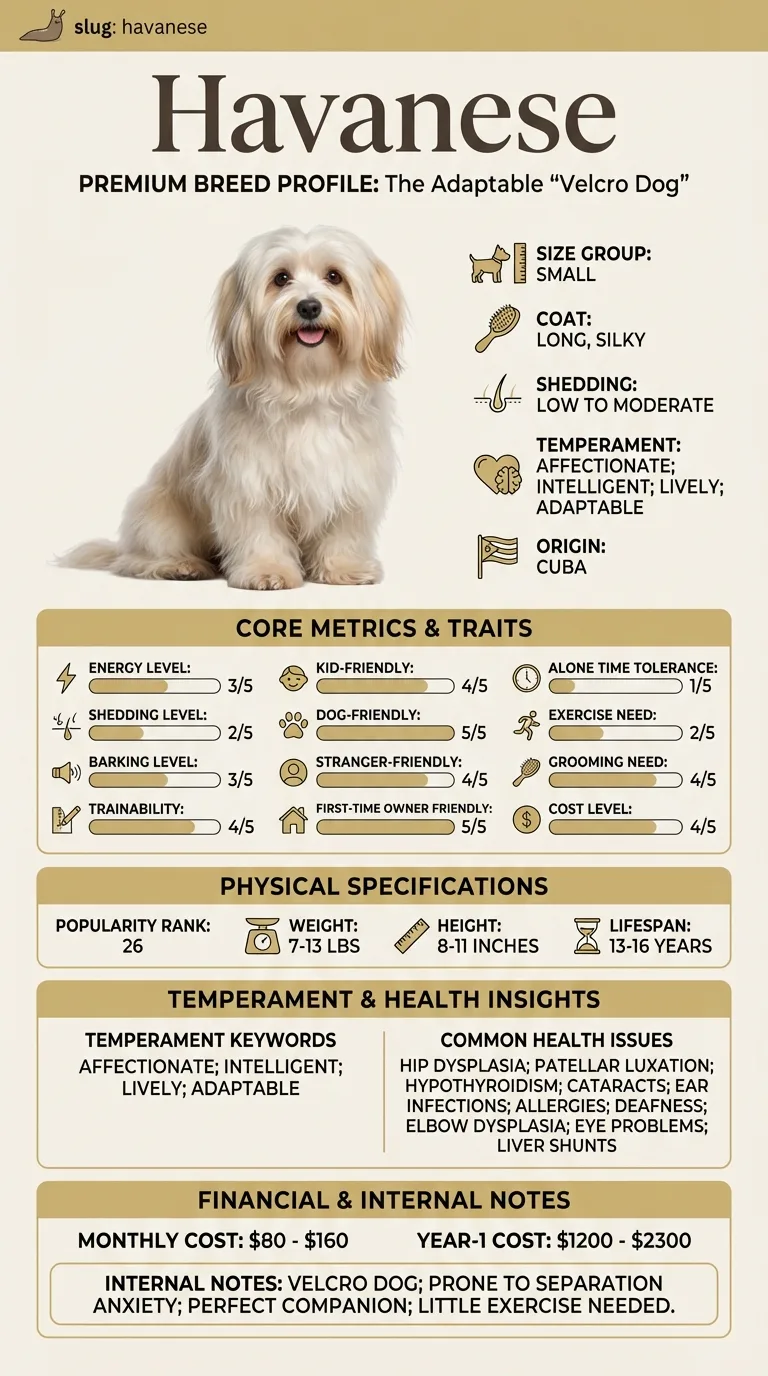
Havanese are prone to several health issues, including hip dysplasia and patellar luxation. Regular health check-ups can help manage these risks.
Monthly costs for a Havanese can range from $80 to $160, depending on food, grooming, and vet care. Be prepared for potential health-related expenses as well.
Ensure they have a comfortable bed and avoid hard surfaces that can strain their back. Regular gentle exercise and a balanced diet are also essential.
A one-page prep sheet for this condition: the signs, the questions to ask, what to get priced. Unlocks here.
You get: Vet visit prep sheet
No spam. One-click unsubscribe. See our privacy policy.
Preview page 1 before you decide.