Behavior
More energetic?
The Papillon, rated High (4/5) energy versus the Shar-Pei's Low (2/5).

Quick answer
More energetic?
The Papillon, rated High (4/5) energy versus the Shar-Pei's Low (2/5).
Chinese Shar-Pei or Papillon? On paper they differ most on trainability, and on the scales Chinese Shar-Pei is the heavier at 45–60 lbs. Here is how the two compare on everything that shapes an ordinary week.
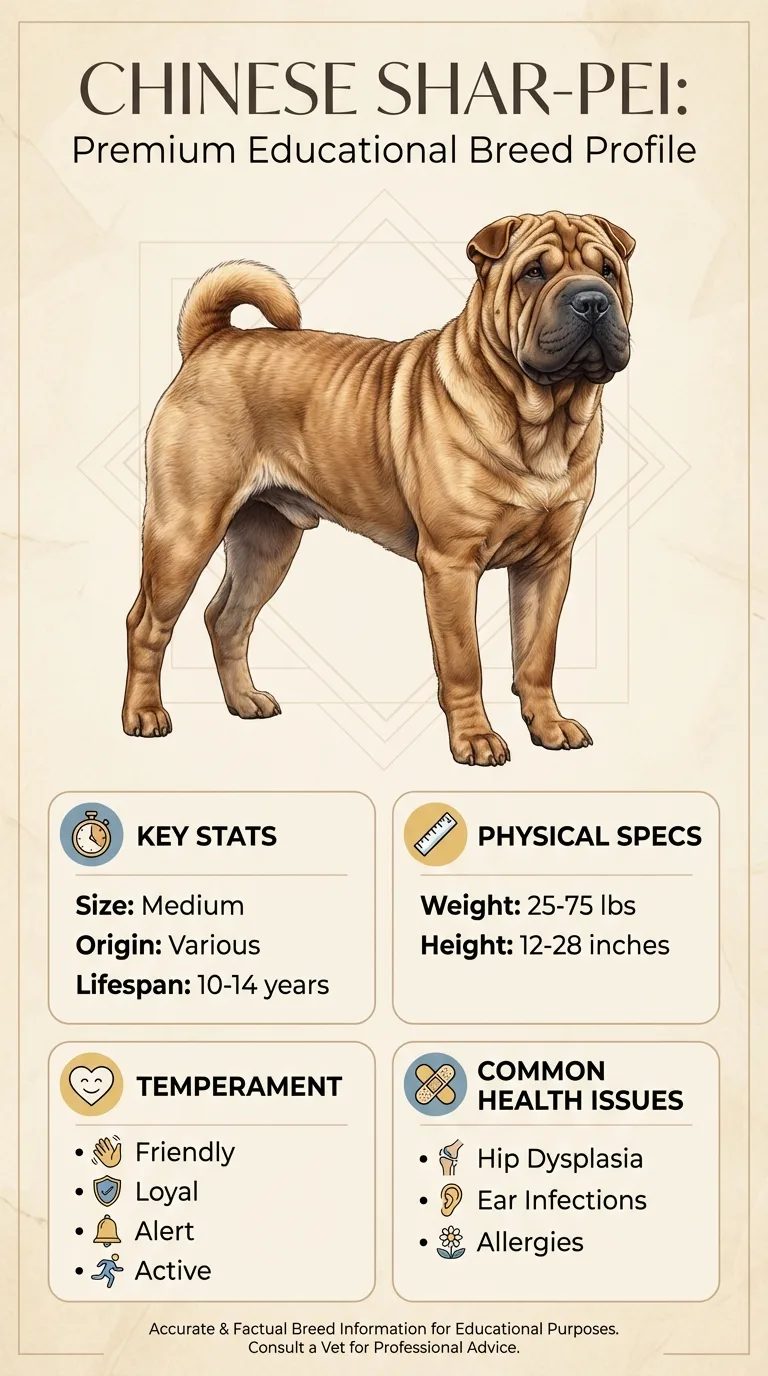
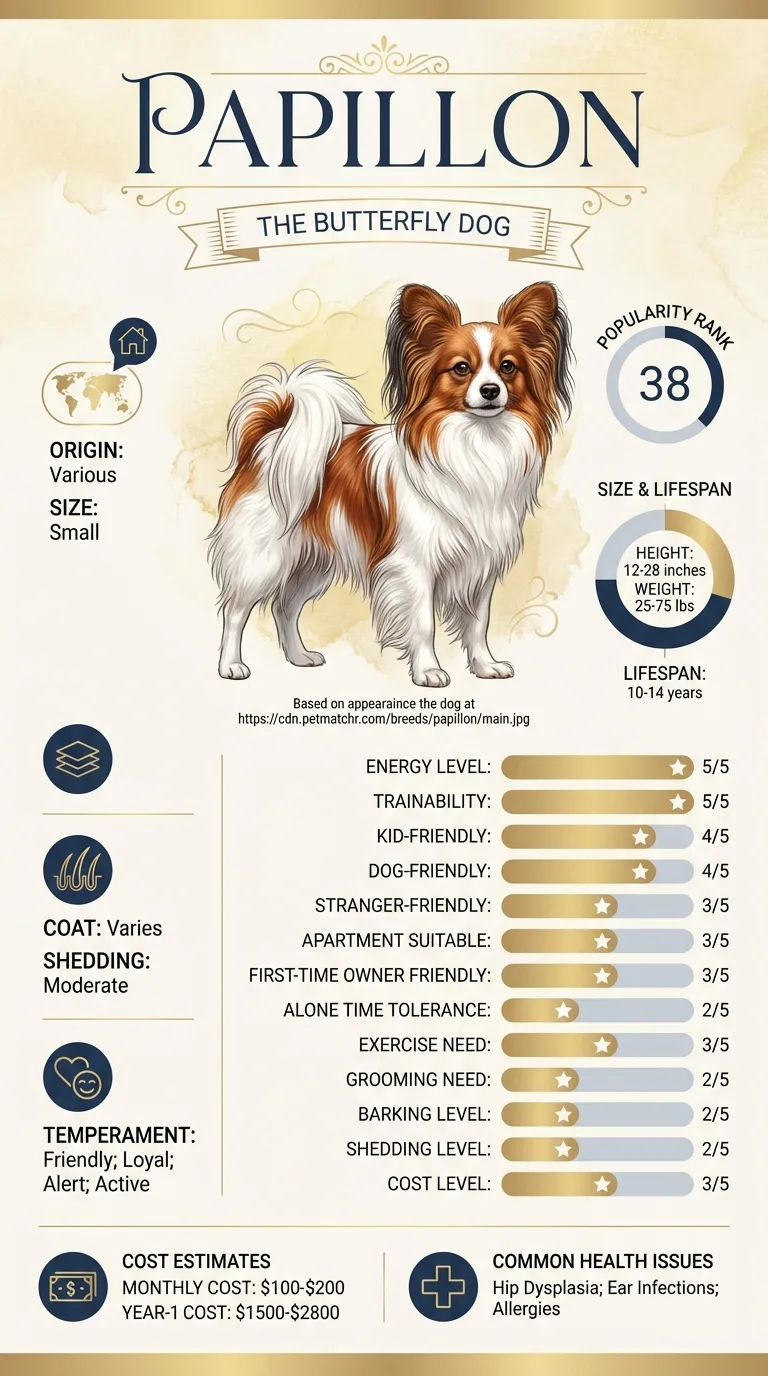
This is for someone already down to Chinese Shar-Pei and Papillon and deciding between them. For this pair the decision usually turns on trainability and energy level, so those are covered first and in most detail. Anyone choosing from a flat has a clear answer here: Papillon rates 5/5 against 4/5. The focus throughout is on daily consequences rather than breed background.
Between Chinese Shar-Pei and Papillon, trainability is what separates them, and Papillon is the lower-effort dog of the two to keep.
Choose Chinese Shar-Pei if your walking routine is modest, the dog will be alone during the working day and you want a dog that is more watchful with visitors.
Choose Papillon if you are in a flat or a smaller home, this is your first dog and you already have another dog.
| Feature | chinese shar pei | papillon | Winner |
|---|---|---|---|
| Size class | medium | small | Equal |
| Weight | 45–60 lbs | 5–10 lbs | Equal |
| Height | 18–20 in | 8–11 in | Equal |
| Lifespan | 8–12 years | 14–16 years | papillon |
| Exercise need | Low (2/5) | Moderate (3/5) | chinese shar pei |
| Grooming need | Low (2/5) | Low (2/5) | Equal |
| Shedding | Low (2/5) | Low (2/5) | Equal |
| Energy level | Low (2/5) | High (4/5) | Equal |
| Barking | Low (2/5) | High (4/5) | chinese shar pei |
| Apartment suitability | High (4/5) | Very high (5/5) | papillon |
| Good for first-time owners | Low (2/5) | High (4/5) | papillon |
| Tolerates being alone | Moderate (3/5) | Low (2/5) | chinese shar pei |
| Trainability | Low (2/5) | Very high (5/5) | papillon |
| Good with kids | Moderate (3/5) | Moderate (3/5) | Equal |
| Good with other dogs | Low (2/5) | High (4/5) | papillon |
| Friendly to strangers | Low (2/5) | High (4/5) | papillon |
| Cost level | High (4/5) | Low (2/5) | papillon |
| Coat | Short and harsh | Long, silky single coat | Equal |
| Origin | Various | Various | Equal |
| Typical monthly cost | $100–$200 | $80–$150 | Equal |
| Typical first-year cost | $1,400–$2,900 | $1,100–$2,300 | Equal |
A Papillon weighs as little as 5 pounds, barely a tenth of a Shar-Pei's 45-pound floor, and stands just 8 to 11 inches versus 18 to 20. The name Papillon means "butterfly" in French, a nod to its large, fringed ears that fan out like wings — a striking contrast to the Shar-Pei's tightly wrinkled, almost armor-like skin. One breed was built for the lap of French nobility; the other for guarding property in ancient China. Practically speaking, a Papillon can be carried in one hand, while a Shar-Pei needs a proper leash, a sturdy collar, and both arms if it ever needs lifting.
Don't let the Papillon's toy size fool you on energy — it rates High, 4/5, well above the Shar-Pei's Low, 2/5, and needs Moderate, 3/5, exercise against the Shar-Pei's Low, 2/5. Papillons were bred as active companion dogs and often excel at agility despite their size, channeling that energy into quick, playful bursts rather than long endurance runs. The Shar-Pei, in contrast, is genuinely low-key, content with short walks and long rest periods. An owner picturing a sleepy lapdog because of the Papillon's tiny frame should recalibrate — it's the livelier of these two breeds by a clear margin.
Coat care ties across the board here — both breeds rate Low, 2/5, for grooming and Low, 2/5, for shedding, despite looking nothing alike. The Papillon's long, silky single coat lacks a dense undercoat, so it doesn't mat as readily as its flowing look might suggest, and a weekly brushing keeps it tidy. The Shar-Pei's short, harsh coat needs even less hands-on time. This is a rare case where the numbers say the two breeds are genuinely comparable, meaning coat maintenance won't be the deciding factor for anyone choosing between them.
Both breeds suit small spaces, but the Papillon's High, 4/5, barking rating is worth noting for anyone in close quarters — it's a notably more vocal dog than the Shar-Pei's Low, 2/5. The Shar-Pei also tolerates solitude better, Moderate 3/5 against the Papillon's Low 2/5, meaning the smaller dog is more prone to separation-related stress and noise when left alone. The Papillon does edge out the Shar-Pei on raw apartment suitability, Very High 5/5 versus High 4/5, largely on size alone. An apartment dweller who works long hours away from home may find the quieter, more self-sufficient Shar-Pei the more realistic fit.
The Papillon is one of the most trainable toy breeds around, rated Very High, 5/5, and High, 4/5, for first-time owners — both far ahead of the Shar-Pei's Low, 2/5, on each measure. Its quick-witted, confident temperament makes it a strong performer in obedience and agility work, while the Shar-Pei's independent, reserved nature means training progresses more slowly and needs more patience and consistency. A first-time owner set on the Shar-Pei should be prepared to work harder for the same results a Papillon owner might see within a few weeks of consistent lessons.
With kids, the two tie at Moderate, 3/5 — the Shar-Pei because of its reserved temperament, the Papillon because of its small, easily injured frame around rough play. Elsewhere the Papillon pulls ahead clearly: High, 4/5, with other dogs and High, 4/5, friendliness to strangers, against Low, 2/5, on both for the Shar-Pei. A household that regularly hosts guests or has multiple dogs will likely find the Papillon adapts faster, while the Shar-Pei's guarded nature calls for more deliberate, gradual introductions to new people and animals.
The Papillon's 14-to-16-year lifespan is among the longest of any breed on this site, well past the Shar-Pei's 8-to-12-year range. Both breeds carry exactly five listed conditions, but they don't overlap at all. The Papillon's list includes Patellar Luxation and Collapsing Trachea, both common in toy breeds with delicate joints and airways, plus Open Fontanel, a soft spot in the skull that doesn't always close — a trait worth asking breeders about. The Shar-Pei's conditions center on its skin and folds instead. Neither list is unusually alarming, but they call for different kinds of vigilance: joint and airway care for the Papillon, skin-fold care for the Shar-Pei.
The Papillon is notably cheaper to keep: a Low, 2/5, overall cost rating against the Shar-Pei's High, 4/5, with monthly costs of $80 to $150 versus $100 to $200, and a first-year range of $1,100 to $2,300 compared with $1,400 to $2,900. Small food portions and minimal grooming needs both keep the Papillon's bills down, while the Shar-Pei's higher end reflects its size and the ongoing attention its skin folds require. Over a longer lifespan too — the Papillon can live years past the Shar-Pei — the cost gap has more years to compound in the smaller dog's favor.
Chinese Shar-Pei weighs 45–60 lbs and lives 8–12 years; Papillon weighs 5–10 lbs and lives 14–16 years. The two diverge most on trainability, energy level and good for first-time owners and 4 other rated axes. They are level on grooming need, good with kids and shedding, so those cannot decide it. The table below marks a winner only where one breed is genuinely easier for a typical owner; size and origin are facts rather than merits and stay level. Ratings come from one source applied to both breeds, so they are meaningful against each other rather than as absolute scores.

Yes — it rates High (4/5) energy, well above the Shar-Pei's Low (2/5), and channels it into agility-style bursts rather than long runs.
The Papillon by a wide margin, rated Very High (5/5) trainability against the Shar-Pei's Low (2/5).
Yes, rated High (4/5), noticeably more vocal than the Shar-Pei's Low (2/5) barking rating.
The Shar-Pei, rated Moderate (3/5) tolerance for being alone versus the Papillon's Low (2/5).
14 to 16 years, considerably longer than the Shar-Pei's 8 to 12 year lifespan.
The Papillon, rated Low (2/5) overall cost versus the Shar-Pei's High (4/5), with a first-year range of roughly $1,100-$2,300 versus $1,400-$2,900.
A soft spot in the skull that sometimes doesn't fully close, one of five conditions on the breed's health list — worth asking a breeder about.
The Papillon, rated High (4/5) energy versus the Shar-Pei's Low (2/5).
The Papillon, rated Very High (5/5) versus the Shar-Pei's Low (2/5).
The Papillon, at 14-16 years versus the Shar-Pei's 8-12 years.
The Papillon, rated Low (2/5) cost versus the Shar-Pei's High (4/5).
Secure checkout on Stripe. We never see your card.
7-day money-back guarantee. Instant access.
Health information here is general and is not veterinary advice. If your dog shows pain, sudden behaviour change, or worsening symptoms, consult a licensed veterinarian.
Some links on this site are affiliate links. We may earn a commission at no extra cost to you, and we only suggest products we believe are helpful for dog owners.
We research and check what we publish, but we do not warrant that any figure, date, price, or statement is accurate, complete, or current, and we accept no liability for any loss, cost, injury, or other harm arising from the use of this site. Use it as one reference among several. You remain responsible for your own decisions and for your dog's care - confirm anything that matters with a licensed veterinarian or another qualified professional before you act on it. Full disclaimer.
Match your lifestyle to the right dog.
Take quizNot sure which breed is right for you? Take our 2-minute quiz to find out.
Take the quiz