Behavior
What are quick tips for Miniature Schnauzer back/spine issues?
Maintain a healthy weight, provide gentle exercise, and support their back when lifting. Regular vet check-ups are essential to catch any issues early.

Quick answer
What are quick tips for Miniature Schnauzer back/spine issues?
Maintain a healthy weight, provide gentle exercise, and support their back when lifting. Regular vet check-ups are essential to catch any issues early.
Miniature Schnauzer back/spine issues can be a serious concern for dog owners. These problems often stem from intervertebral disc disease, which can result in pain and mobility challenges.
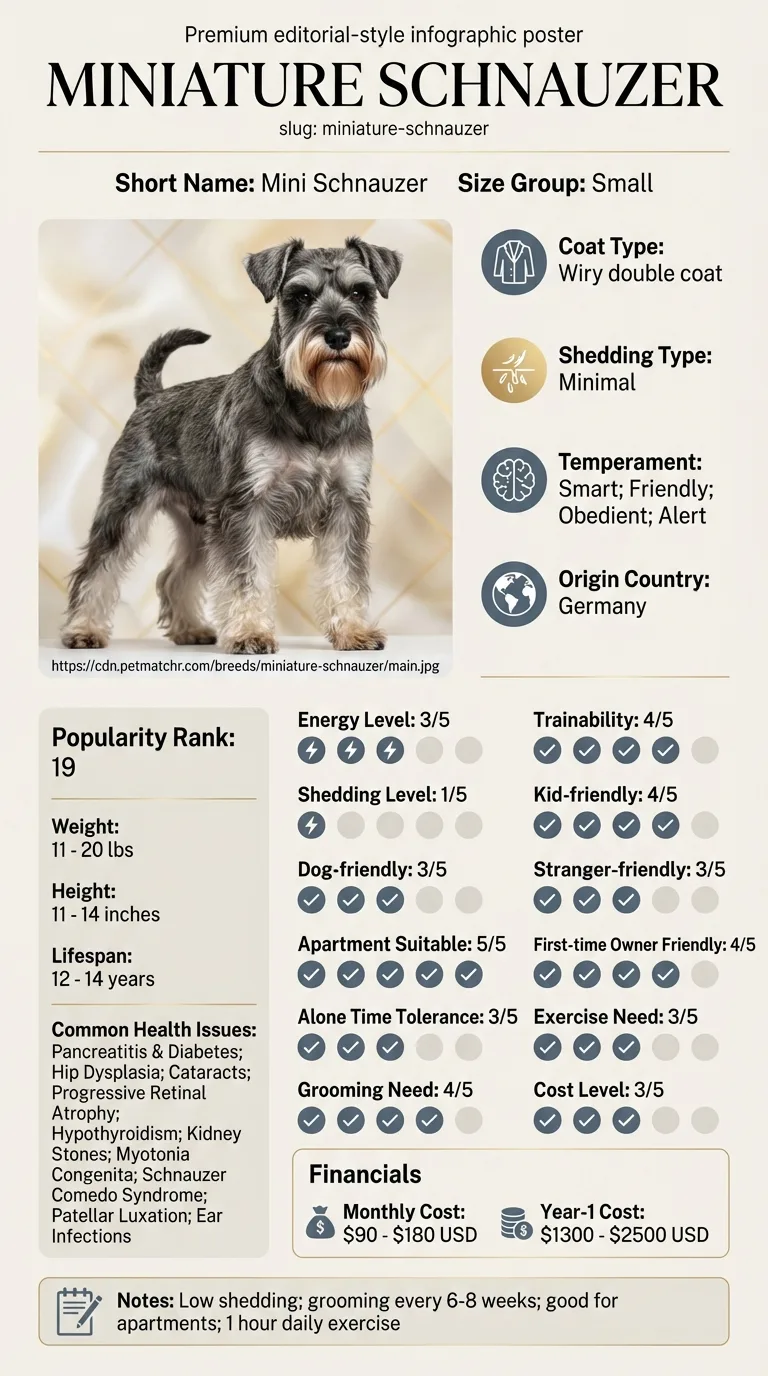
Owners of Miniature Schnauzers, especially those who are first-time pet parents or live in apartments, may notice these issues. Busy lifestyles and limited exercise can exacerbate back problems, leading to frustration and concern.
This guide is not medical advice. If your dog shows pain, sudden behavior change, or worsening symptoms, consult a licensed veterinarian.
Some links may be affiliate links. We may earn a commission at no extra cost to you. We only suggest products we believe are helpful for dog owners.
We research and check what we publish, but we do not warrant that any figure, date, price, or statement is accurate, complete, or current, and we accept no liability for any loss, cost, injury, or other harm arising from the use of this site. Use it as one reference among several. You remain responsible for your own decisions and for your dog's care - confirm anything that matters with a licensed veterinarian or another qualified professional before you act on it. Full disclaimer.
Check this first
Recognizing when your Miniature Schnauzer's back or spine issues require immediate attention is crucial. There are specific signs that indicate it's time to call your vet right away. Conversely, some mild cases can be monitored at home with a solid plan.
Red-Flag Signs: - Sudden inability to walk or stand. - Severe pain when touched or moved. - Signs of paralysis in the hind legs. - Loss of bladder or bowel control. - Persistent whining or signs of distress.
If you notice any of these symptoms, do not wait. Call your vet immediately as these could indicate serious conditions, such as intervertebral disc disease, that require urgent care.
Mild Cases That Can Be Monitored: - Occasional stiffness or limping after exercise. - Slight hesitation to jump or climb stairs. - Mild whining without other distress signs.
In these situations, keep a close watch on your Miniature Schnauzer. You can monitor their behavior while providing rest and comfort. If symptoms persist or worsen, seek veterinary advice. Keeping a record of their condition can also help your vet assess the situation better.
By understanding these signs, you can take quick action when necessary and ensure your Miniature Schnauzer's well-being. Always err on the side of caution when it comes to your furry friend's health.
If any of these apply, call your vet or an emergency clinic now. The rest of this page is for the cases that are not an emergency.
Miniature Schnauzer back/spine issues can be a serious concern for owners. These problems often manifest as difficulty jumping, reluctance to climb stairs, or signs of pain when touched along the spine. The most common cause is intervertebral disc disease, which can lead to mobility issues and discomfort in your dog.
Back/spine issues are relatively common among Miniature Schnauzers, especially as they age. Studies suggest that around 20% of this breed may experience some form of spinal problem during their lifetime, making it crucial for owners to be vigilant about their dog's health.
Miniature Schnauzers are small dogs with a compact build. This structure can make them more susceptible to back and spine issues, especially if they engage in rough play or jumping. Their genetic history may also contribute to a predisposition for intervertebral disc disease.
Inappropriate exercise, such as excessive jumping or roughhousing, can lead to back problems. Additionally, a lack of proper support during activities, like climbing stairs or jumping off furniture, can strain their spines. An unbalanced diet and obesity can exacerbate these issues.
If your Miniature Schnauzer displays symptoms like limping, difficulty jumping, or seems in pain when moving, it's essential to consult a vet. They can assess the severity of the issue and recommend treatment options.
Avoiding certain behaviors can help prevent worsening your Miniature Schnauzer's back/spine issues. Here are some common mistakes owners make and alternatives to try.
Start here: Miniature Schnauzer Most Common Genetic Disorders: Screening
See all Miniature Schnauzer health problems, which breeds are prone to backspine issues, or the full Miniature Schnauzer breed guide for temperament, exercise needs and ownership costs.
It typically takes a few weeks to a few months to see improvement in your Miniature Schnauzer's back/spine issues with consistent care and follow-up with your vet.
Success means your dog shows less pain and more mobility, allowing them to enjoy daily activities like walks and playtime.
Samantha, a busy nurse in Chicago, noticed her Miniature Schnauzer, Max, was struggling to jump onto the couch and seemed hesitant to go for walks. After a vet visit revealed early signs of intervertebral disc disease, she felt overwhelmed. Determined to help Max, she started a gentle exercise routine and used supportive harnesses. She also worked on training him to avoid jumping from high places. Over two months, Max regained his enthusiasm for walks and started playing with his toys again, much to Samantha's relief.
Key takeaway: With the right care and training adjustments, you can help your Miniature Schnauzer lead a happier, more active life despite back/spine issues.
Signs of back or spine issues in a Miniature Schnauzer include reluctance to move, yelping when touched, and changes in posture. You might also notice difficulty jumping or climbing stairs. If any of these signs appear, it's important to consult your vet for a proper diagnosis.
To prevent back/spine issues in your Miniature Schnauzer, maintain a healthy weight and provide low-impact exercise. Avoid jumping from heights and provide supportive bedding. Regular vet visits are crucial to monitor spine health.
Back and spine issues are relatively common in Miniature Schnauzers, particularly intervertebral disc disease. Awareness of their specific health risks and regular vet visits can help manage and prevent these issues over time.
Yes, training can help by teaching your Miniature Schnauzer to avoid risky behaviors that may worsen back/spine issues. Use positive reinforcement and focus on gentle commands. Always consult a trainer experienced with small breeds.
Treatment options include medications for pain relief, physical therapy, and in severe cases, surgery. Your vet will determine the best course based on the severity of the issue. Early intervention often leads to better outcomes.
Yes, Miniature Schnauzers can develop back or spine issues as they age, especially if they have a genetic predisposition. Regular check-ups can help catch any problems early. Maintaining a healthy weight and providing proper exercise can also reduce the risk.
Helping a Miniature Schnauzer with back or spine issues involves creating a comfortable living space and avoiding activities that strain their back. Gentle, low-impact exercises like short walks can be beneficial. Your vet may also recommend specific medications or therapies.
If your Miniature Schnauzer shows any signs of pain, difficulty moving, or abnormal posture, it's time to visit the vet. Timely intervention can prevent more serious complications. Don't wait for symptoms to worsen.
Maintain a healthy weight, provide gentle exercise, and support their back when lifting. Regular vet check-ups are essential to catch any issues early.
It's best to take your Miniature Schnauzer for a check-up at least once a year, or more often if they show signs of discomfort or mobility issues.
Yes, a supportive, soft bed can help alleviate pressure on their spine. Ensure it's not too high off the ground to prevent jumping injuries.
Short walks and gentle play are ideal. Avoid high-impact activities like jumping from furniture to keep their spine safe.
A one-page prep sheet for this condition: the signs, the questions to ask, what to get priced. Unlocks here.
You get: Vet visit prep sheet
No spam. One-click unsubscribe. See our privacy policy.
Preview page 1 before you decide.