Health
How much more likely are purebred dogs to get cancer?
Broad comparisons put purebred dogs at roughly 1.9 times the cancer risk of non-purebred dogs.

Quick answer
How much more likely are purebred dogs to get cancer?
Broad comparisons put purebred dogs at roughly 1.9 times the cancer risk of non-purebred dogs.
A closed gene pool concentrates a breed's best traits and its worst risks together, and there's no way to inherit one without some exposure to the other.
Prospective owners weighing a purebred puppy against a mixed-breed rescue, and current owners trying to understand what "purebred risk" actually means in practice.
This guide is not medical advice. If your dog shows pain, sudden behavior change, or worsening symptoms, consult a licensed veterinarian.
Some links may be affiliate links. We may earn a commission at no extra cost to you. We only suggest products we believe are helpful for dog owners.
We research and check what we publish, but we do not warrant that any figure, date, price, or statement is accurate, complete, or current, and we accept no liability for any loss, cost, injury, or other harm arising from the use of this site. Use it as one reference among several. You remain responsible for your own decisions and for your dog's care - confirm anything that matters with a licensed veterinarian or another qualified professional before you act on it. Full disclaimer.
Purebred dogs are documented as roughly 1.9 times more likely to develop cancer than non-purebred dogs, a pattern rooted in the concentrated genetics of closed breeding populations rather than any flaw unique to this breed. This same concentration effect explains why conditions like hip dysplasia, cataracts, and hypothyroidism are specifically documented and repeated within this breed's own population.
This elevated cancer risk pattern applies broadly across purebred dog populations, this breed included, making it a relevant, population-level consideration for any prospective or current owner rather than an isolated concern unique to one breed.
This breed's documented health profile, hip dysplasia, cataracts, hypothyroidism, and related conditions, exists precisely because of the same closed-gene-pool concentration effect that drives the broader purebred cancer statistic, genetic variants repeating and concentrating within a limited founding population rather than being diluted.
Preventive care consistency, including early cancer screening and choosing a breeder who actively screens breeding stock, meaningfully influences individual outcomes even though the underlying genetic concentration pattern itself isn't something an individual owner can change after the fact.
Talk to your vet about any new lump, bump, unexplained weight loss, or persistent lethargy, since early detection significantly improves outcomes for many cancers. This isn't necessarily an emergency, but it shouldn't wait for the next annual visit either.
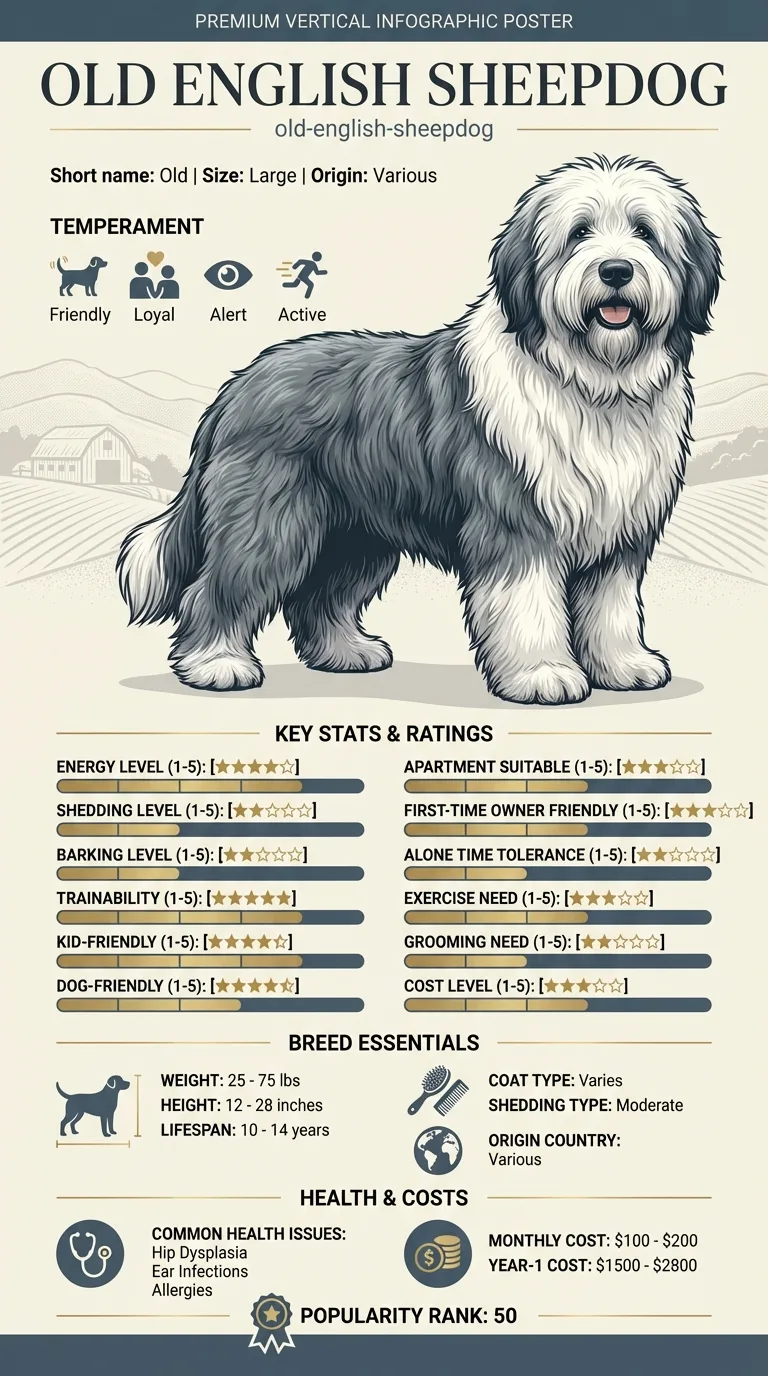
See all OLD English Sheepdog health problems, which breeds are prone to purebred vs mixed breeds, or the full OLD English Sheepdog breed guide for temperament, exercise needs and ownership costs.
This is a lifelong, population-level risk factor rather than something that changes over an individual dog's life, though risk generally increases with age regardless of purebred status, making middle age onward the period when proactive screening becomes most valuable.
Success looks like choosing a screened breeding line where possible, staying current on preventive care and early cancer screening, and catching any issues as early as possible, rather than expecting to eliminate a population-level statistical pattern entirely.
Every purebred dog breed descends from a limited founding population, and generations of breeding within that closed population, precisely what keeps a breed's traits consistent and predictable, also means genetic variants of all kinds, including disease-linked ones, get concentrated and repeated rather than diluted the way they would be through outcrossing. Mixed-breed dogs, by contrast, generally draw from a wider genetic pool, meaning a disease-linked variant inherited from one side is more often offset by a different variant from the other, a phenomenon sometimes called hybrid vigor. This explains the elevated purebred cancer statistic in general terms, but it's a population-level pattern, not a guarantee about any specific individual dog, purebred or mixed.
This breed's own documented health profile, hip dysplasia, cataracts, hypothyroidism, and the conditions covered elsewhere in this series, reflects exactly this concentration effect: traits that showed up in the breed's founding population generations ago and have persisted because the gene pool never expanded to dilute them. This isn't a reason to avoid the breed, since a well-documented health profile is actually more useful for prevention than an unknown one; a buyer knows what to screen for. It does mean that supporting breeders who actively screen breeding stock, and staying current on preventive care and early cancer screening as your dog ages, are genuinely meaningful ways to work against this statistical pattern rather than simply accepting it as fixed fate.

If you think your Old has purebred vs. mixed breeds, the plan is three steps: write down what you have seen and when it started, book a veterinary appointment rather than waiting for the next flare, and take video of the behaviour or symptom before you go — the thing you are worried about rarely happens in the consulting room. Screening in the parents covers hip dysplasia, cataracts, hypothyroidism.
What the vet visit should produce is a diagnosis and a written plan, not just reassurance: what is being ruled out, what the monitoring interval is, and which signs mean you come back sooner. Ask what the treatment costs across a year rather than per visit, because that is the number that decides whether you are managing this condition or reacting to it.
Between appointments, keep a short log — dates, what you saw, what changed. It is the single most useful thing an owner brings to a follow-up, and for purebred vs. mixed breeds it is often what separates a clear pattern from a guess.
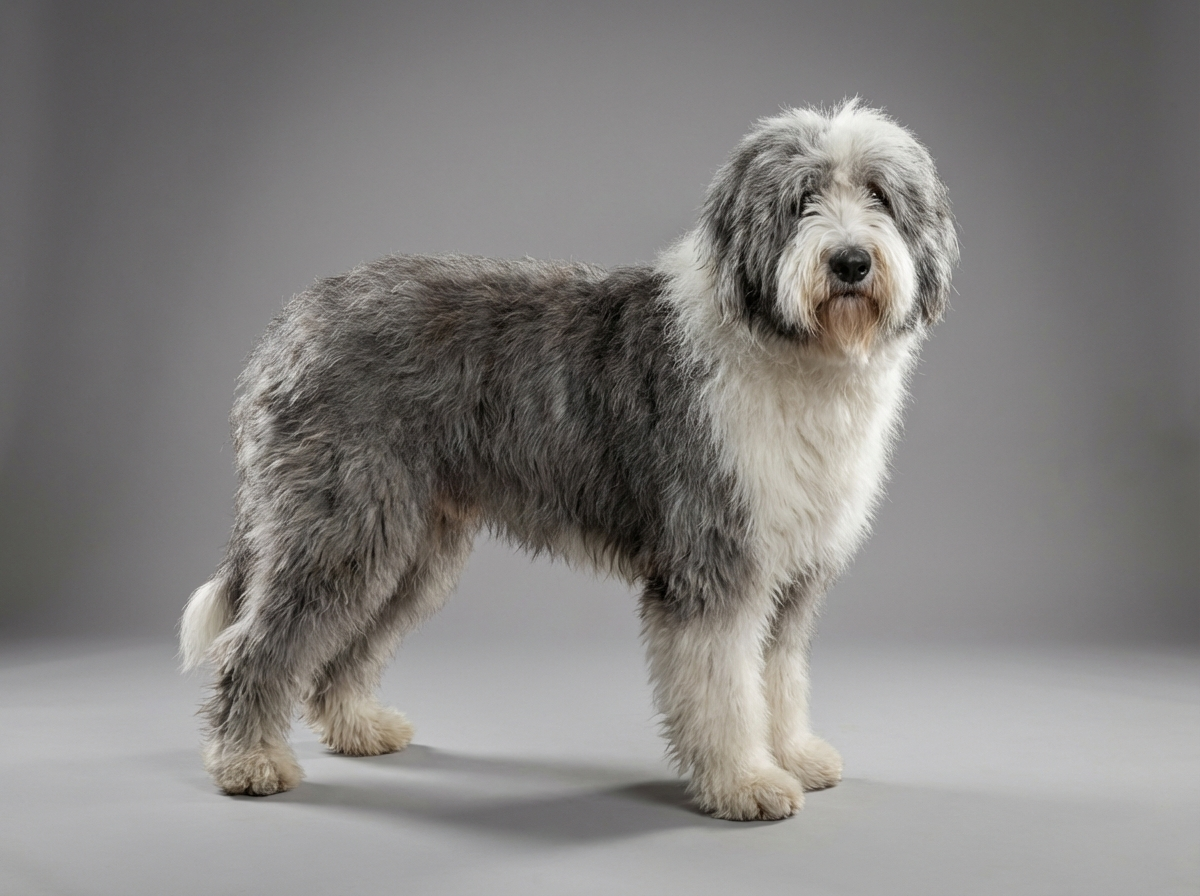
When Devon was deciding between a purebred Old English Sheepdog puppy and a mixed-breed rescue, a friend mentioned the elevated purebred cancer statistic, which gave Devon pause. After researching further, Devon chose a purebred puppy named Clover from a breeder who could document extensive health screening across several generations of breeding stock, including no known family history of cancer. Devon also committed to biannual wellness exams starting at Clover's seventh birthday specifically for early cancer screening, rather than waiting for the standard annual visit. Five years in, that screening routine has caught nothing concerning, but Devon considers it a worthwhile trade-off against the documented elevated risk.
Key takeaway: The statistic didn't change Devon's decision, but it did change the plan, turning a population-level risk into a concrete, proactive screening routine rather than something to simply hope wouldn't happen.
Broad population comparisons have found purebred dogs roughly 1.9 times more likely to develop cancer than non-purebred dogs, a pattern linked to concentrated genetics from closed breeding populations rather than any single specific flaw.
Breeding within a limited founding population, which is what keeps a breed's traits consistent, also concentrates and repeats genetic variants of all kinds, including disease-linked ones, rather than diluting them through outcrossing.
Not necessarily. A well-documented health profile, which this breed has, is actually useful for prevention since it tells owners and breeders exactly what to screen for, unlike an unknown mixed-breed genetic background.
Yes, breeders who actively screen breeding stock for known conditions and avoid pairing dogs with overlapping risk factors can meaningfully reduce, though not eliminate, the concentrated risk inherent to a closed gene pool.
No, it's a general population-level pattern, not a guarantee for any individual mixed-breed dog, some of which can still inherit concentrated risk from both parent breeds if those breeds happen to share a predisposition.
Choosing a breeder who screens breeding stock, staying current on preventive veterinary care, and pursuing early cancer screening as your dog reaches middle age are all genuinely meaningful, practical steps.
Yes, conditions like hip dysplasia, cataracts, and hypothyroidism being specifically documented in this breed reflects the same closed-gene-pool concentration effect that drives the broader purebred cancer statistic.
Broad comparisons put purebred dogs at roughly 1.9 times the cancer risk of non-purebred dogs.
A closed founding gene pool concentrates genetic variants of all kinds, including disease-linked ones, rather than diluting them through outcrossing.
It helps, since it tells owners exactly what to screen for, unlike an unpredictable, unknown mixed-breed genetic background.
Yes, avoiding pairings with overlapping known risk factors meaningfully reduces, though doesn't eliminate, concentrated genetic risk.
Many owners find it worthwhile given the documented health profile and elevated cancer risk statistic for purebred dogs generally.
A one-page prep sheet for this condition: the signs, the questions to ask, what to get priced. Unlocks here.
You get: Vet visit prep sheet
No spam. One-click unsubscribe. See our privacy policy.
Preview page 1 before you decide.