Health
What typically triggers a pancreatitis episode?
A high-fat meal well outside the dog's normal diet, like rich table scraps or fatty trash, is a common identifiable trigger.

Quick answer
What typically triggers a pancreatitis episode?
A high-fat meal well outside the dog's normal diet, like rich table scraps or fatty trash, is a common identifiable trigger.
One rich meal is sometimes all it takes to turn a normal digestive system into an inflamed, painful one within hours.
Owners whose dog has gotten into fatty table scraps or trash, and anyone noticing sudden vomiting, abdominal pain, or a hunched posture in their dog.
This guide is not medical advice. If your dog shows pain, sudden behavior change, or worsening symptoms, consult a licensed veterinarian.
Some links may be affiliate links. We may earn a commission at no extra cost to you. We only suggest products we believe are helpful for dog owners.
We research and check what we publish, but we do not warrant that any figure, date, price, or statement is accurate, complete, or current, and we accept no liability for any loss, cost, injury, or other harm arising from the use of this site. Use it as one reference among several. You remain responsible for your own decisions and for your dog's care - confirm anything that matters with a licensed veterinarian or another qualified professional before you act on it. Full disclaimer.
Pancreatitis is a sudden inflammation of the pancreas, often triggered by a high-fat meal, that causes vomiting, abdominal pain, and lethargy. It ranges from mild and self-limiting to severe and life-threatening, and while it isn't tied to any specific documented trait in this breed, it's common enough across dogs generally that recognizing the warning signs matters for any owner.
Pancreatitis isn't listed among this breed's specifically documented health issues, but it's a common enough emergency presentation across dogs generally, particularly around holidays and other occasions when fatty foods are more accessible, that it's worth every owner recognizing regardless of breed.
This isn't a condition tied to any specific trait in this breed's documented health record; it occurs through the same general digestive enzyme activation mechanism relevant to dogs of any breed, most often triggered by diet rather than genetics.
A high-fat meal, unsupervised access to trash or table scraps, and obesity are the main environmental and lifestyle factors that raise pancreatitis risk, all of which are largely within an owner's control through supervision and diet management.
Seek same-day veterinary care for repeated vomiting, a hunched or painful posture, loss of appetite with lethargy, or diarrhea with a notably greasy appearance. These signs can escalate quickly, and prompt treatment meaningfully improves outcomes.
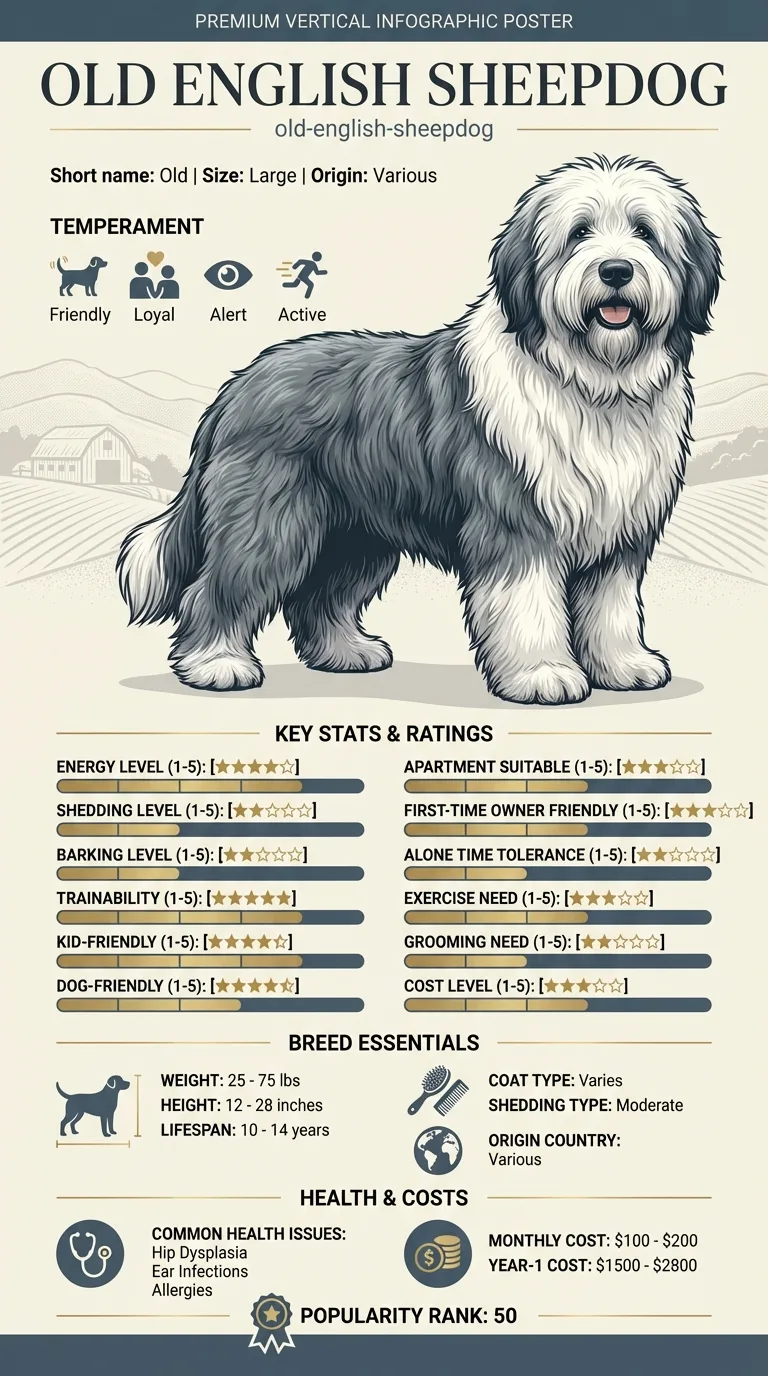
See all OLD English Sheepdog health problems, which breeds are prone to pancreatitis, or the full OLD English Sheepdog breed guide for temperament, exercise needs and ownership costs.
Mild episodes often improve within a few days of supportive care, while severe cases can require several days of hospitalization. Recovery is generally full for a single episode, though a lower-fat diet is often recommended afterward to reduce recurrence risk.
Success looks like a full resolution of the acute episode with supportive veterinary care, followed by dietary adjustments and closer supervision around fatty foods to reduce the odds of a repeat episode.
The pancreas normally releases digestive enzymes into the intestine in an inactive form, which then activate once they arrive to break down food safely. In pancreatitis, for reasons not always fully clear but strongly associated with high-fat meals, those enzymes activate prematurely inside the pancreas itself, essentially starting to digest the organ from within. The result is significant local inflammation and pain, along with nausea and vomiting as the digestive system reacts to the disruption. A single fatty meal, particularly one well outside a dog's normal diet, is one of the most common identifiable triggers, though some cases occur with no clear dietary cause at all. Severity varies widely: some dogs have a mild, short-lived episode that resolves with supportive care, while others develop a severe, systemic inflammatory response that requires intensive hospitalization.
These signs point toward a possible pancreatitis episode and warrant prompt evaluation rather than a wait-and-see approach.

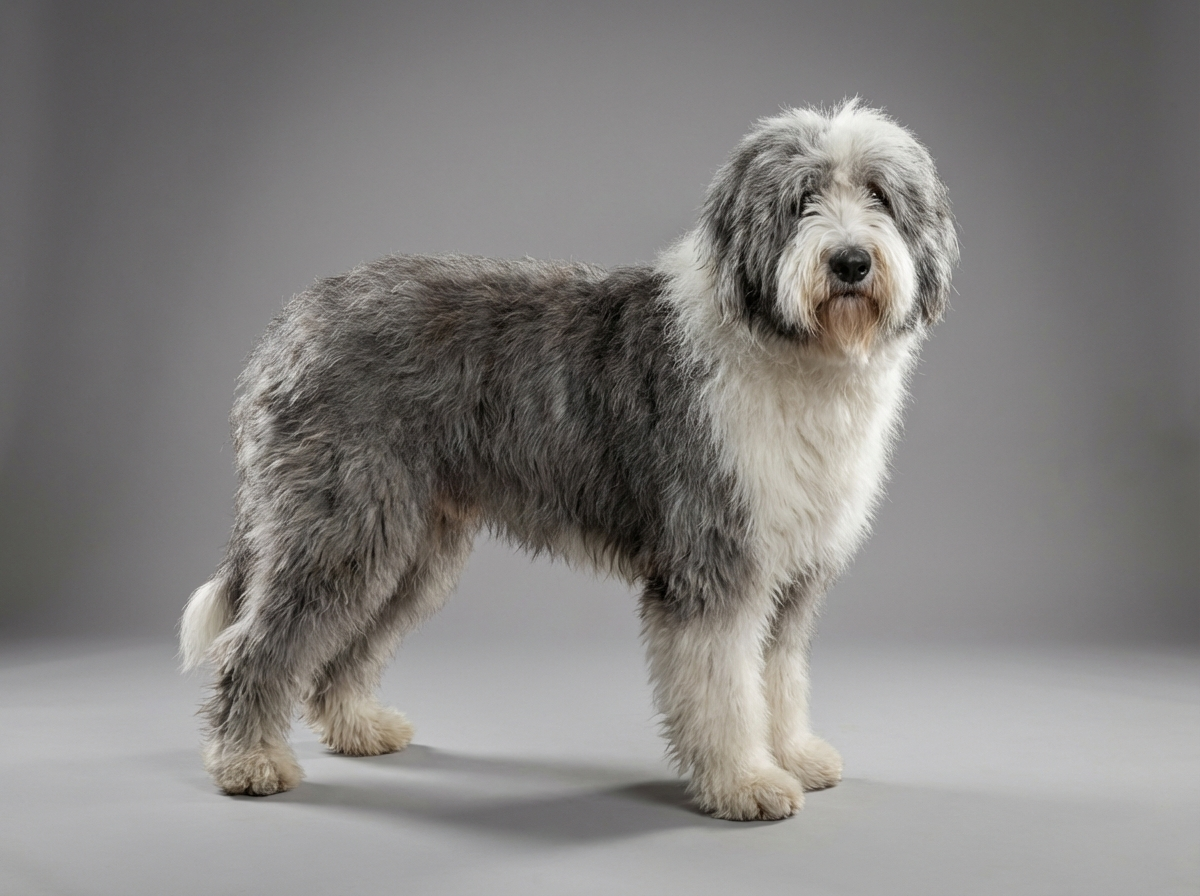
Ember, a five-year-old Old English Sheepdog in Des Moines, got into a plate of leftover gravy and turkey skin left within reach during a Thanksgiving gathering at her owner Deb's house. By that evening, Ember was vomiting repeatedly and standing with her front end lowered and rear end raised, clearly uncomfortable. Deb took her to an emergency vet, where bloodwork confirmed pancreatitis. Ember spent two nights hospitalized on IV fluids and anti-nausea medication before stabilizing enough to go home on a bland, low-fat diet. She recovered fully within about two weeks, and Deb now keeps counters strictly clear during any gathering with fatty food around.
Key takeaway: One accessible plate of rich food turned into a two-night hospital stay, and Ember's full recovery came down to getting her seen the same evening rather than waiting to see if the vomiting would pass.
A high-fat meal, particularly one well outside a dog's normal diet like rich table scraps or fatty trash, is one of the most commonly identified triggers, though some episodes occur without a clear identifiable cause.
Yes, especially with repeated vomiting, significant lethargy, or obvious abdominal pain. Severity can escalate quickly, so same-day veterinary evaluation is the safest approach rather than waiting to see if it resolves.
Bloodwork measuring pancreatic enzyme levels, sometimes alongside a specific pancreatic lipase test, is the primary diagnostic tool, often paired with abdominal ultrasound to assess the pancreas directly and rule out other causes of the symptoms.
Treatment typically centers on supportive care: IV fluids, anti-nausea medication, and pain management, allowing the pancreas time to calm down, with hospitalization required for more severe cases. There's no direct cure beyond supporting the body through the episode.
Yes, a dog that's had one episode is at somewhat higher risk for recurrence, which is why many vets recommend a lower-fat diet and stricter avoidance of fatty table scraps going forward.
Many vets recommend an ongoing lower-fat diet for dogs that have had pancreatitis, particularly if the episode was tied to a dietary trigger, as a reasonable precaution against recurrence.
Yes, repeated or severe episodes can damage the pancreas's insulin-producing cells over time, which is a recognized contributor to diabetes risk in some dogs as they age.
A high-fat meal well outside the dog's normal diet, like rich table scraps or fatty trash, is a common identifiable trigger.
Yes, especially with repeated vomiting or visible abdominal pain, since severity can escalate quickly.
Supportive care with IV fluids, anti-nausea medication, and pain management, sometimes requiring hospitalization for more severe cases.
Costs range from a few hundred dollars for a mild outpatient case to well over a thousand for hospitalization in a severe episode.
Yes, especially after a prior episode, since fatty treats and table scraps are among the most identifiable and preventable triggers.
A one-page prep sheet for this condition: the signs, the questions to ask, what to get priced. Unlocks here.
You get: Vet visit prep sheet
No spam. One-click unsubscribe. See our privacy policy.
Preview page 1 before you decide.