Health
Why do allergies hide longer in this breed?
The dense double coat obscures redness and skin changes that would be visible immediately on a short-coated dog.

Quick answer
Why do allergies hide longer in this breed?
The dense double coat obscures redness and skin changes that would be visible immediately on a short-coated dog.
The itch is the same as it would be in any dog; what's different here is how long it can hide before anyone notices.
Owners noticing excessive licking, scratching, or chewing at paws or flanks, especially anyone who's assumed their dog's coat would show a problem visibly before it became serious.
This guide is not medical advice. If your dog shows pain, sudden behavior change, or worsening symptoms, consult a licensed veterinarian.
Some links may be affiliate links. We may earn a commission at no extra cost to you. We only suggest products we believe are helpful for dog owners.
We research and check what we publish, but we do not warrant that any figure, date, price, or statement is accurate, complete, or current, and we accept no liability for any loss, cost, injury, or other harm arising from the use of this site. Use it as one reference among several. You remain responsible for your own decisions and for your dog's care - confirm anything that matters with a licensed veterinarian or another qualified professional before you act on it. Full disclaimer.
Allergic skin disease stems from an oversensitive immune response to environmental or food triggers, a mechanism common across dogs generally. In this breed, a dense double coat hides the resulting redness and irritation far longer than it would in a short-coated dog, meaning problems are often caught only once they've progressed to matting, hot spots, or visible hair loss.
Skin allergies are common across dogs generally regardless of breed, and this breed's coat doesn't make the underlying allergic mechanism more or less likely, only harder to catch early, which makes proactive hands-on checks especially worthwhile here.
This isn't a condition tied to a specific documented predisposition in this breed's health record; the underlying allergic mechanism is common across dogs generally. What is specific to this breed is its dense double coat, which delays visible detection of the redness and irritation that allergies cause at the skin.
Seasonal pollen exposure, dust mites in the home, specific food ingredients, and flea exposure are the main environmental triggers, all of which can be at least partially managed through cleaning routines, diet choices, and consistent flea prevention.
Talk to your vet about persistent itching, redness found during a skin check, or any hot spot development. Seek prompt care for facial swelling, difficulty breathing, or hives, which can indicate a more severe allergic reaction requiring immediate attention.
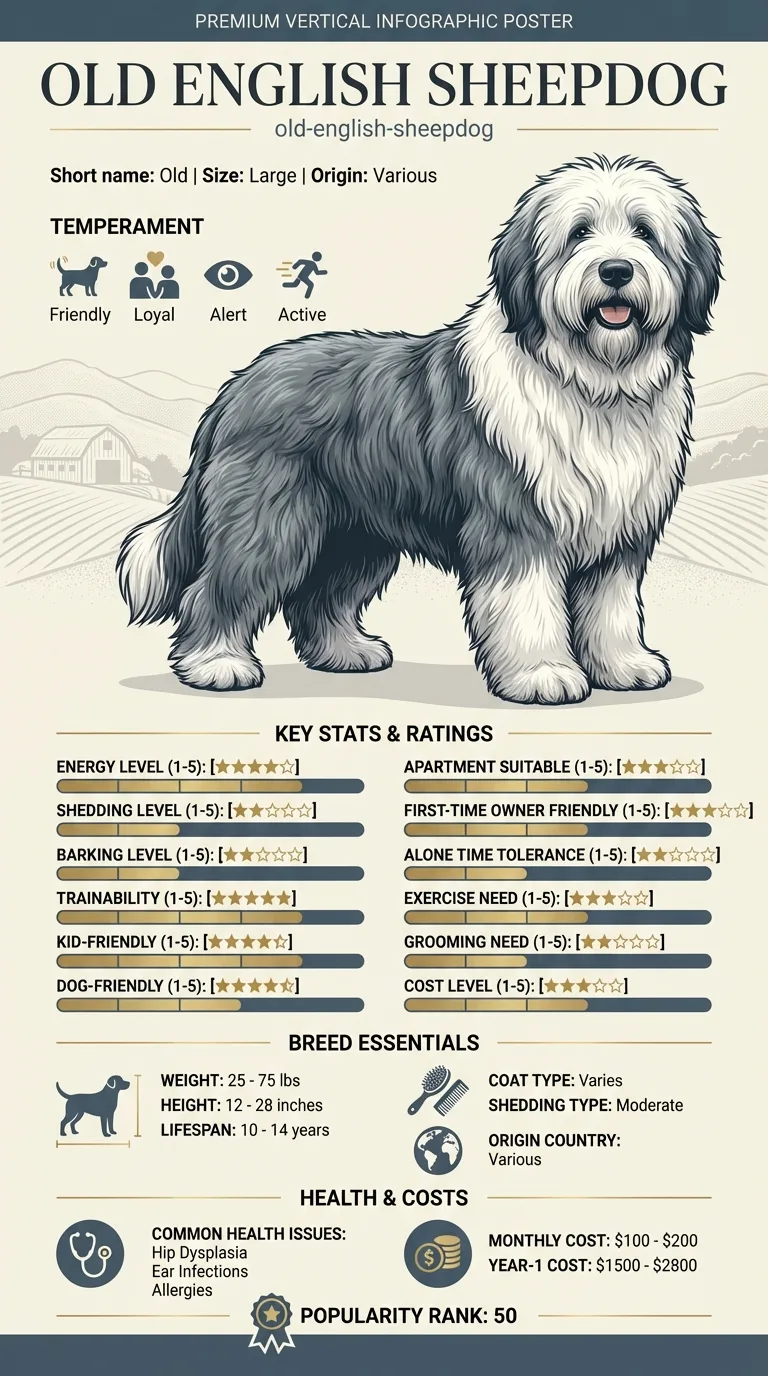
See all OLD English Sheepdog health problems, which breeds are prone to skin allergies, or the full OLD English Sheepdog breed guide for temperament, exercise needs and ownership costs.
Identifying a specific trigger, whether through an elimination diet or allergy testing, typically takes several weeks to a few months of careful observation. Once identified, symptom control often improves within a few weeks of consistent trigger avoidance and treatment.
Success looks like identified and managed triggers, a comfortable dog with minimal itching, and skin checked regularly enough that any new flare is caught early rather than progressing to a hot spot or secondary infection.
An allergy is the immune system mistakenly treating a harmless substance, a pollen grain, a dust mite protein, a food ingredient, as a threat, triggering the release of inflammatory chemicals that cause itching and redness at the skin. Environmental allergens like pollen and dust mites tend to produce seasonal or year-round itching concentrated on the paws, face, ears, and belly, while food allergies more often show up as a combination of itching alongside gastrointestinal symptoms and can occur at any time of year regardless of season. In this breed specifically, the itching and redness that result are frequently hidden by the coat until they've progressed to hair loss, matting from constant licking, or a hot spot, which is exactly why relying on visible coat changes as the first clue means catching the problem later than an owner ideally would.
Because visible coat changes lag behind the actual skin irritation in this breed, these hands-on habits matter more here than in a short-coated dog.

Buttons, a six-year-old Old English Sheepdog in Portland, had been licking her front paw more than usual for about a week before her owner Todd noticed anything, since her thick coat gave no visible sign anything was wrong. When he finally parted the fur to check, he found a raw, oozing hot spot that had clearly been developing for days underneath. His vet treated the hot spot and identified an environmental allergy as the likely underlying cause, given the seasonal timing. Todd started doing weekly hands-on skin checks going forward rather than waiting for visible signs, and caught the next seasonal flare early enough to manage it with medication before it progressed to another hot spot.
Key takeaway: The hot spot had been building invisibly under Buttons's coat for days, and switching to a hands-on weekly check, not just watching for visible signs, is what let Todd catch the next flare before it became a repeat emergency.
A dense double coat hides the redness, hair loss, or skin changes that would be immediately visible on a short-coated dog, meaning owners often notice a problem only once it's progressed to matting, hot spots, or more obvious hair loss.
Environmental allergies often follow a seasonal pattern and concentrate on paws, face, and belly. Food allergies tend to occur year-round and often come with gastrointestinal symptoms alongside the itching.
Hot spots, areas of intensely irritated, often oozing skin, frequently develop when a dog licks or scratches an itchy allergic area repeatedly, turning a hidden allergy into a suddenly very visible skin problem.
A vet may recommend an elimination diet trial to test for food allergies, or allergy testing through blood or skin tests to identify specific environmental triggers, depending on the pattern of symptoms.
No, allergies are generally managed rather than cured, through a combination of identifying and avoiding triggers where possible, medication during flares, and consistent skin and coat care.
A weekly hands-on check, parting the coat at the paws, belly, and ears specifically, catches problems considerably earlier than waiting for visible coat changes in this breed.
Yes, constant scratching and licking can break the skin barrier, allowing secondary bacterial or yeast infections to develop on top of the original allergic irritation.
The dense double coat obscures redness and skin changes that would be visible immediately on a short-coated dog.
Year-round itching that comes with gastrointestinal symptoms, rather than a seasonal pattern.
Weekly, parting the coat at paws, belly, and ears specifically, catches allergic skin changes earlier than visual inspection alone.
Allergy testing, prescription diets, and ongoing medication can add up to a meaningful recurring cost, especially for chronic cases.
No, they're generally managed long-term through trigger avoidance and treatment rather than cured outright.
A one-page prep sheet for this condition: the signs, the questions to ask, what to get priced. Unlocks here.
You get: Vet visit prep sheet
No spam. One-click unsubscribe. See our privacy policy.
See a sample page before you decide.
Early access list
The free prep sheet covers the same-day warning signs, a symptom log and the questions to ask. We are considering a fuller kit that adds a cost worksheet for the usual tests and treatments (US price ranges with their sources) and a plain-English guide to ways of covering the bill. It is not built yet; this list tells us whether it is worth building.
One email, no spam, unsubscribe anytime. Information only, not veterinary advice.