Health
Does this breed get skin infections from facial folds?
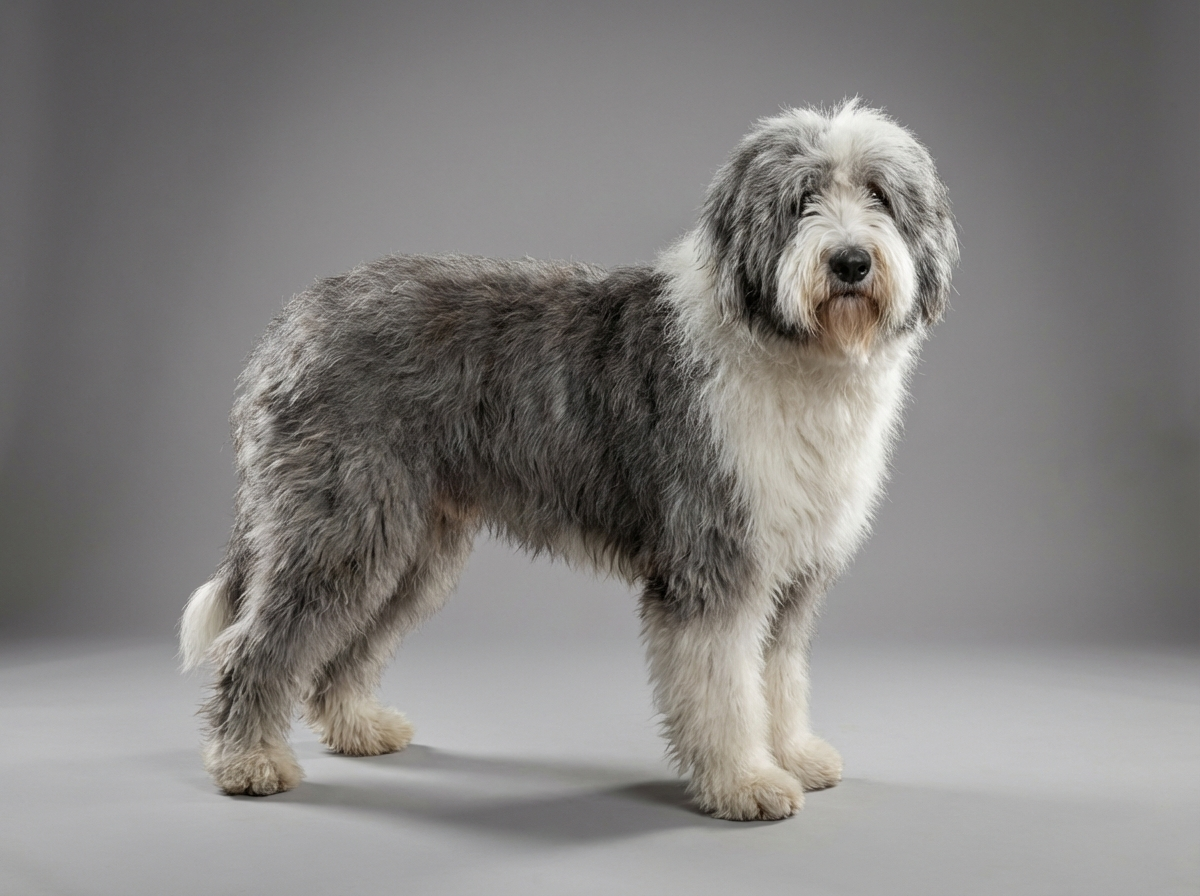
No, it doesn't have facial folds; moisture gets trapped by the dense coat itself rather than skin creases.

Quick answer
Does this breed get skin infections from facial folds?
No, it doesn't have facial folds; moisture gets trapped by the dense coat itself rather than skin creases.
This breed doesn't have folds to blame, but a foot of coat does the same job of trapping moisture against the skin just as effectively.
Owners who skip thorough drying after baths or wet walks, and anyone who's noticed a persistent odor, redness, or scabbing hidden under the coat that wasn't obvious at first glance.
This guide is not medical advice. If your dog shows pain, sudden behavior change, or worsening symptoms, consult a licensed veterinarian.
Some links may be affiliate links. We may earn a commission at no extra cost to you. We only suggest products we believe are helpful for dog owners.
We research and check what we publish, but we do not warrant that any figure, date, price, or statement is accurate, complete, or current, and we accept no liability for any loss, cost, injury, or other harm arising from the use of this site. Use it as one reference among several. You remain responsible for your own decisions and for your dog's care - confirm anything that matters with a licensed veterinarian or another qualified professional before you act on it. Full disclaimer.
This breed lacks the facial fold structure that traps moisture in wrinkly-faced breeds, but its dense double coat produces a similar practical effect, hair acting like a sponge that holds water against the skin after baths, wet walks, or normal drooling. That trapped moisture creates a favorable environment for secondary bacterial and yeast infections, most often around the eyes, muzzle, ears, and any matted areas.
This isn't part of this breed's specifically documented health conditions the way hip dysplasia or cataracts are, but moisture-related skin issues are a common, largely preventable everyday concern for owners of any densely double-coated breed, this one included.
This breed's documented dense double coat, while lacking any facial fold structure, still traps moisture against the skin through sheer hair density, functioning similarly to how skin folds trap moisture in other breeds even though the underlying anatomy is completely different.
Incomplete drying after bathing or wet walks, infrequent brushing that allows matting to develop, and humid environments generally all extend how long moisture stays trapped against the skin, directly raising infection risk.
Talk to your vet about persistent odor, visible redness, scabbing, or a rapidly developing hot spot. These aren't usually emergencies, but they respond better to prompt treatment than to a wait-and-see approach, especially once the skin barrier is already compromised.
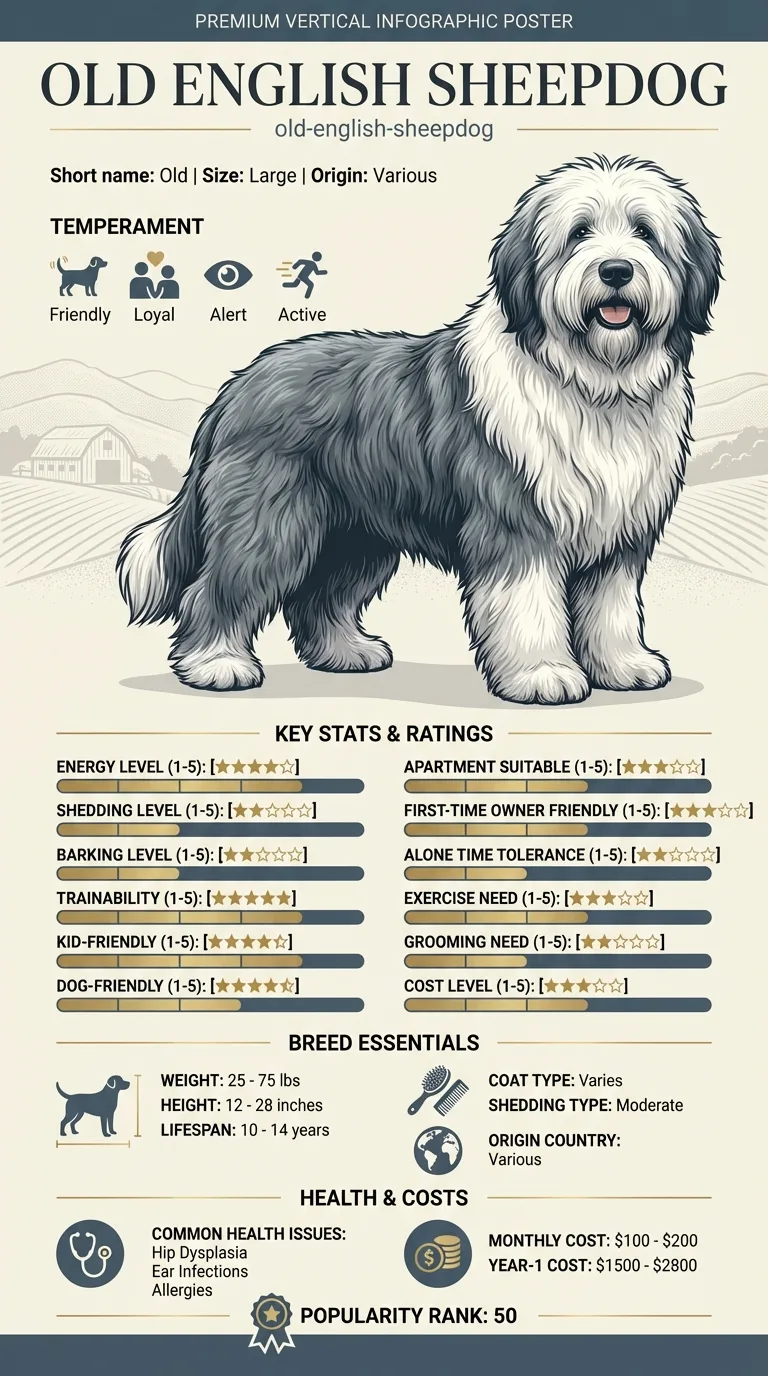
See all OLD English Sheepdog health problems, which breeds are prone to skin infections, or the full OLD English Sheepdog breed guide for temperament, exercise needs and ownership costs.
Mild moisture-related irritation often resolves within a week of improved drying and grooming habits. An established infection typically needs one to two weeks of vet-directed treatment, sometimes longer for a stubborn or recurring case.
Success looks like a coat and skin kept genuinely dry after baths and wet weather, regular checks that catch any redness or odor early, and infections, when they do occur, caught and treated before progressing to a more serious hot spot.
The areas most prone to trapped moisture in this breed are the hair around the eyes and muzzle, which stays damp from normal drinking, eating, and drooling, the area behind and under the ears, where airflow is limited by the surrounding coat, and anywhere matting has occurred, since a mat holds water against the skin far longer than a well-brushed section of coat does. Unlike a true facial fold, which stays damp because skin sits directly against skin, this breed's version of the problem comes from hair itself acting like a sponge, soaking up water from a bath, rain, or drool and releasing it slowly against the skin over the following hours rather than drying quickly the way a bare or short-coated area would.
Skin that stays damp for extended periods loses some of its natural protective barrier function, and the warm, moist environment created underneath a wet mat or damp facial hair becomes genuinely favorable for the bacteria and yeast that are normally present on skin in small, harmless numbers to overgrow. This typically shows up as redness, an unpleasant odor, greasy or flaky skin, or visible scabbing once the coat is parted to look. A hot spot, an area of intensely irritated, oozing skin that develops rapidly, often within a day, is a related but usually separate mechanism, typically starting from a dog licking or scratching an already irritated or itchy spot rather than simple moisture alone, though the two can certainly compound each other in a heavily coated dog.

Sailor, a seven-year-old Old English Sheepdog in Seattle, developed a faint but persistent odor that his owner Priscilla couldn't quite place, despite bathing him on his usual schedule. When she finally parted the coat around his ears and muzzle to look closely, she found mild redness and a slightly greasy texture to the skin underneath. Her vet confirmed a mild secondary skin infection, likely from moisture that hadn't fully dried after baths given Seattle's damp climate and Sailor's dense coat around those areas. After a course of topical treatment and a new habit of thoroughly towel- and blow-drying his face and ears after every bath, the odor and redness resolved within ten days and haven't returned.
Key takeaway: The odor was the first clue, but it took actually parting the coat to see what was really happening underneath, and a genuinely damp climate meant Sailor's normal bath routine needed a drying step added, not a different shampoo.
No, this breed has a normal facial structure covered by long hair rather than skin folds. Moisture still gets trapped against the skin, but through the coat acting like a sponge rather than skin-on-skin folds.
Around the eyes and muzzle from normal drooling and drinking, behind and under the ears where airflow is limited, and anywhere matting has developed, since a mat holds moisture against the skin far longer than a well-brushed coat.
An unpleasant odor, visible redness or scabbing once the coat is parted, or greasy, flaky skin are the main signs, since visual coat changes often lag behind the actual skin condition.
A hot spot develops rapidly, often within a day, usually from a dog licking or scratching an irritated area. A more general infection tends to build more gradually from ongoing trapped moisture, though the two can occur together.
Treatment depends on whether bacteria or yeast is involved, determined by your vet, and typically includes clipping hair away from the area, medicated cleansing, and sometimes topical or oral medication for more significant infections.
Thorough drying after baths or wet walks, particularly around the face and ears, regular brushing to prevent matting, and periodic hands-on skin checks are the most effective preventive habits.
The underlying infection mechanism isn't unique to this breed, but its dense double coat creates more opportunities for moisture to become trapped against the skin than a short-coated breed typically experiences.
No, it doesn't have facial folds; moisture gets trapped by the dense coat itself rather than skin creases.
Around the eyes and muzzle, behind and under the ears, and anywhere matting has developed.
An unpleasant odor or visible redness and scabbing once the coat is parted to look directly at the skin.
Thorough drying after baths or wet walks and regular brushing to prevent matting are the most effective preventive steps.
A basic vet visit and topical or oral medication for a mild infection commonly runs under two hundred dollars, more for a severe or recurring case.
A one-page prep sheet for this condition: the signs, the questions to ask, what to get priced. Unlocks here.
You get: Vet visit prep sheet
No spam. One-click unsubscribe. See our privacy policy.
Preview page 1 before you decide.