Health
Does this breed get sudden disc ruptures like a Dachshund?
Not typically. Its normally proportioned build tends toward gradual disc bulging over months rather than sudden, dramatic rupture.

Quick answer
Does this breed get sudden disc ruptures like a Dachshund?
Not typically. Its normally proportioned build tends toward gradual disc bulging over months rather than sudden, dramatic rupture.
The same diagnosis can mean a sudden collapse in one breed and a slow, months-long decline in another, and body shape is most of the reason why.
Owners of middle-aged and senior dogs noticing gradual hind-end weakness, reluctance to jump, or a subtly changed gait rather than a sudden, dramatic loss of mobility.
This guide is not medical advice. If your dog shows pain, sudden behavior change, or worsening symptoms, consult a licensed veterinarian.
Some links may be affiliate links. We may earn a commission at no extra cost to you. We only suggest products we believe are helpful for dog owners.
We research and check what we publish, but we do not warrant that any figure, date, price, or statement is accurate, complete, or current, and we accept no liability for any loss, cost, injury, or other harm arising from the use of this site. Use it as one reference among several. You remain responsible for your own decisions and for your dog's care - confirm anything that matters with a licensed veterinarian or another qualified professional before you act on it. Full disclaimer.
Intervertebral disc disease in this breed typically follows a gradual pattern, discs slowly bulging outward over months to years rather than rupturing suddenly, a difference driven by this breed's normally proportioned large build rather than a chondrodystrophic one. It isn't among the breed's most defining documented conditions, but it's a real, gradually developing risk in aging large dogs generally.
Gradual disc disease isn't specifically flagged in this breed's documented health record, but it appears often enough in aging large, normally built dogs generally that unexplained hind-end weakness in a senior dog of this breed warrants a neurological workup rather than an assumption of simple arthritis.
This breed's normally proportioned build, rather than a short-legged, long-backed chondrodystrophic one, means its discs are less prone to the early calcification that causes sudden ruptures, but they still weaken gradually with age the way any large dog's spine does over a decade of use.
Excess body weight adds direct load to the spine over time, and repeated high-impact activity like jumping accelerates disc wear, both of which can turn a slow, age-related process into a faster-progressing one.
Talk to your vet promptly about any new hind-end weakness, dragging toenails, or coordination changes. Seek emergency care immediately if your dog suddenly can't stand, loses bladder or bowel control, or shows signs of significant pain, since rapid progression can still happen even in a gradual-pattern case.
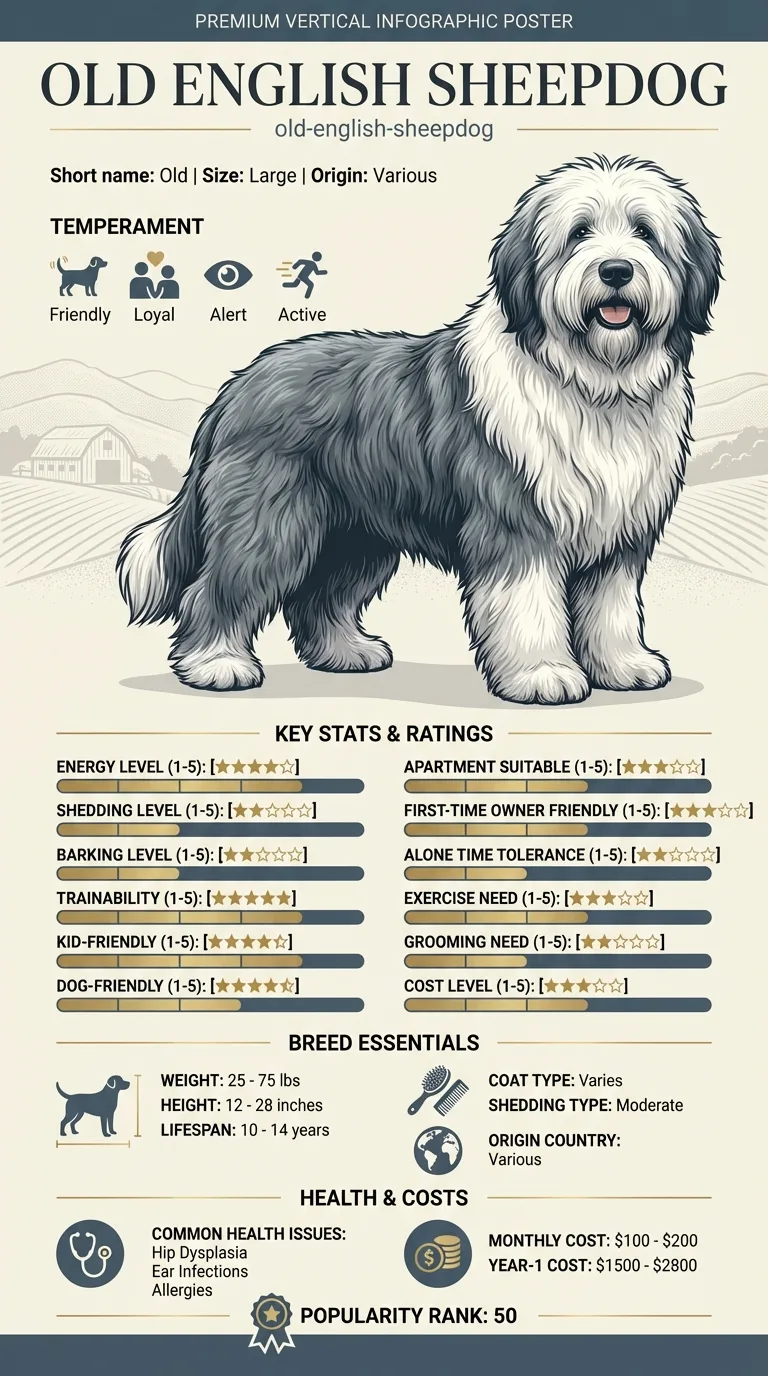
See all OLD English Sheepdog health problems, which breeds are prone to intervertebral disc disease ivdd, or the full OLD English Sheepdog breed guide for temperament, exercise needs and ownership costs.
Gradual disc disease often develops over months before symptoms are noticeable enough to prompt a vet visit. Diagnosis typically follows within a few weeks of a neurological workup, and treatment, whether conservative or surgical, is generally a months-long recovery process.
Success looks like halting further progression and preserving as much mobility as possible, whether through activity modification alone or with surgical support, rather than a full reversal of any disc changes already present.
Discs between the vertebrae act as cushions, and they can fail in two broadly different ways. In chondrodystrophic breeds, discs tend to degenerate early and calcify, making them prone to sudden, forceful rupture, a Type I pattern that can cause dramatic pain or paralysis within hours. In a normally built large breed, discs are more likely to bulge gradually outward over months to years as the outer disc wall slowly weakens with age, a Type II pattern that puts steady, low-grade pressure on the spinal cord rather than a single sudden impact. The practical result for an owner is a dog that seems to be developing hind-end weakness, an unsteady walk, or reluctance to jump gradually over a period of weeks or months, rather than one that suddenly can't stand at all.
Because the onset is slow, these signs are easy to attribute to normal aging at first.

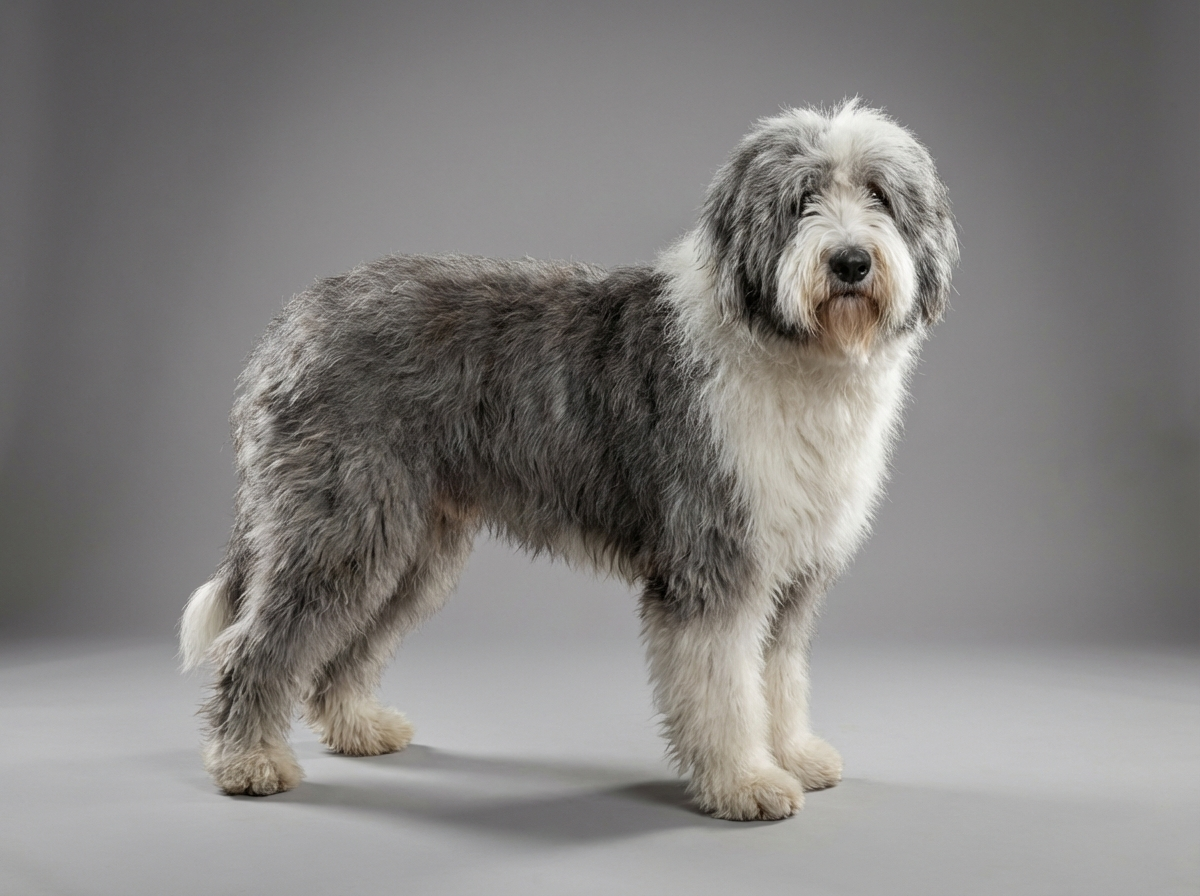
Gus, a nine-year-old Old English Sheepdog in Kansas City, had started walking with a slightly wider stance in his back legs over the course of a summer, something his owner Renee initially attributed to arthritis given his age. When Gus also began scuffing his back toenails on walks, Renee brought it up at his next vet visit rather than waiting for his annual exam. A neurological exam found delayed reflexes in his hind legs, and an MRI confirmed a bulging disc putting gradual pressure on his spinal cord. Gus started a strict activity restriction plan with weight management and anti-inflammatory treatment, avoiding surgery for the time being. Four months in, his gait had stabilized and the toenail scuffing had mostly resolved.
Key takeaway: A gait change that looked like ordinary arthritis was actually a slow-building spinal problem, and catching it at the scuffing-toenail stage rather than waiting gave Gus's family real treatment options short of surgery.
It isn't among this breed's most defining documented health issues, but disc disease does occur across large, normally proportioned breeds as they age, typically following a gradual pattern rather than the sudden ruptures seen in short-legged breeds.
This breed's discs are more likely to bulge gradually over months rather than rupture suddenly, since it lacks the early disc degeneration and calcification seen in chondrodystrophic breeds like Dachshunds.
A neurological exam checking reflexes and proprioception is the starting point, with MRI as the gold-standard imaging to confirm disc involvement and locate the affected level precisely, since X-rays alone don't reliably show disc material itself.
Mild cases are sometimes managed with strict activity restriction, weight control, and vet-directed anti-inflammatory treatment, though more advanced cases with significant weakness often need surgical decompression for the best chance at recovery.
Arthritis typically causes stiffness that eases with movement and stays localized to specific joints. IVDD affects the spinal cord's function directly, causing weakness, dragging toenails, or coordination problems that don't improve simply by moving around.
Not necessarily. A gradual case can still progress to significant spinal cord compression and real mobility loss if untreated; it's simply slower, which can unfortunately mean it goes unaddressed longer before anyone realizes how serious it's become.
High-impact activity like repeated jumping can accelerate disc wear and worsen symptoms once a bulge is present, which is why activity modification is usually part of any management plan, surgical or not.
Not typically. Its normally proportioned build tends toward gradual disc bulging over months rather than sudden, dramatic rupture.
A widening or wobblier back-leg gait, reluctance to jump, or mild toenail dragging developing gradually over weeks to months.
No, mild cases are sometimes managed with rest, weight control, and medication, though more advanced weakness often benefits from surgical decompression.
MRI imaging alone commonly runs over a thousand dollars, with surgery adding substantially more, making this one of the costlier neurological conditions to manage.
Many can, especially with early intervention, weight management, and activity modification, though some permanent weakness may remain depending on how much spinal cord compression occurred before treatment.
A one-page prep sheet for this condition: the signs, the questions to ask, what to get priced. Unlocks here.
You get: Vet visit prep sheet
No spam. One-click unsubscribe. See our privacy policy.
Preview page 1 before you decide.