Bloodhound vs Old English Sheepdog: Which Suits Your Home?
Quick answer
Bloodhound or Old English Sheepdog — which fits more households?
The Sheepdog trains a bit easier and lives longer, but its grooming demands are steep; the Bloodhound is the lower-maintenance coat with a harder-to-train nose. Pick based on which chore you'd rather deal with.
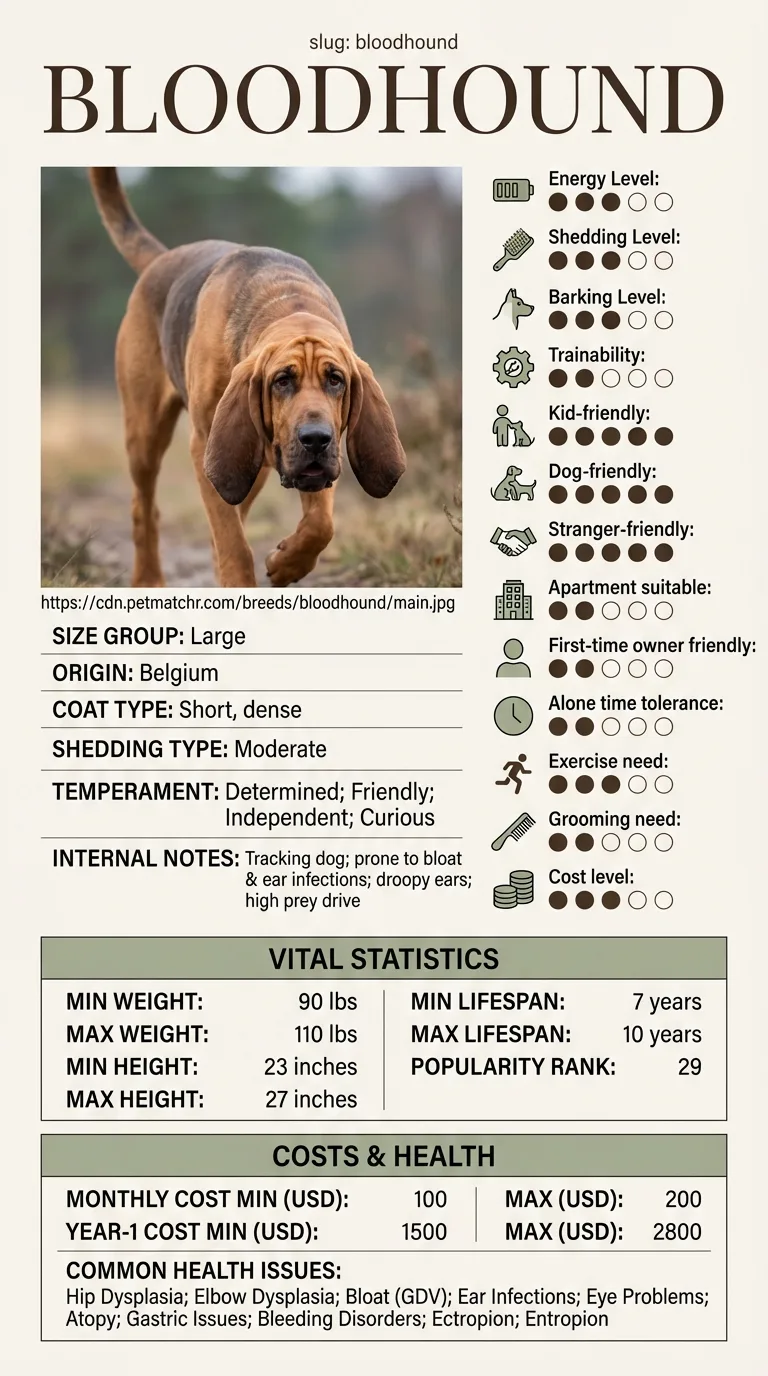
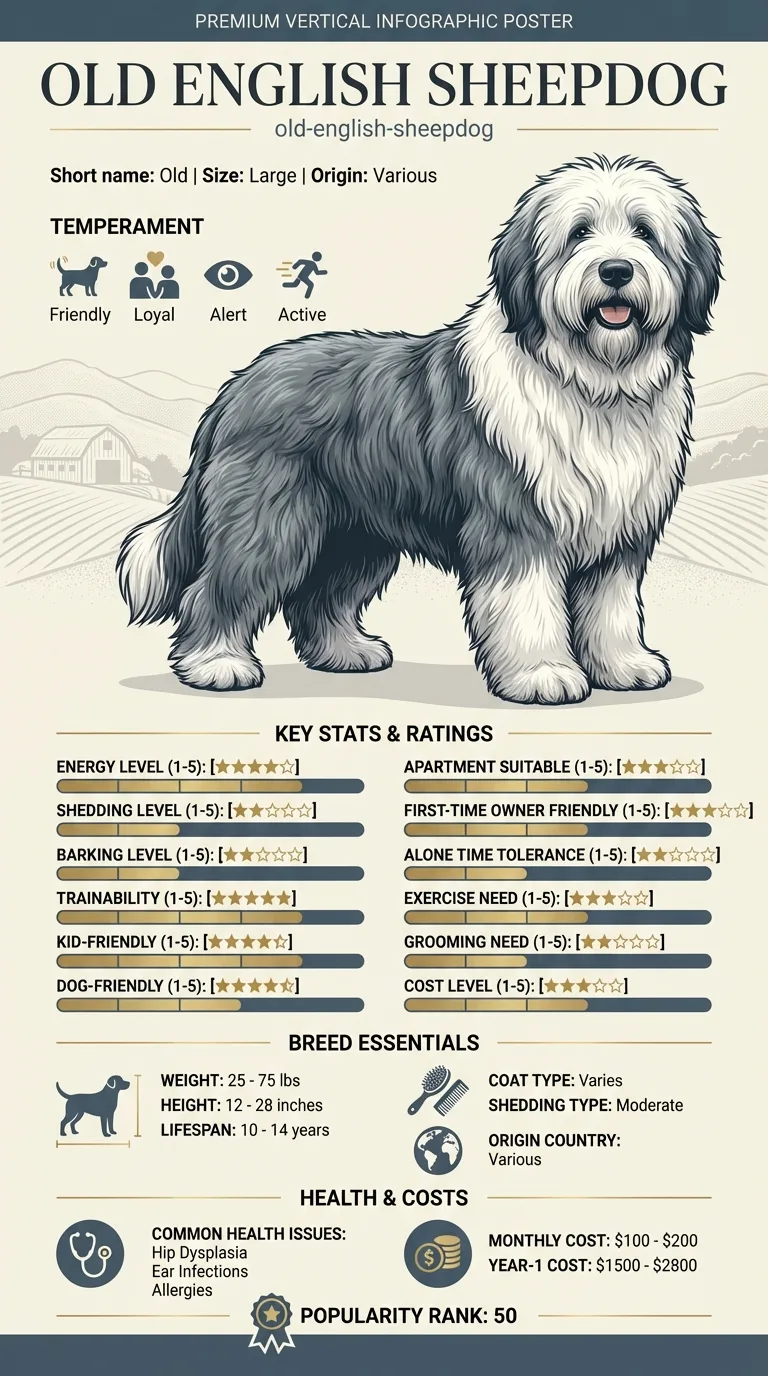
Bloodhound or Old English Sheepdog? On paper they differ most on grooming need, and on the scales Bloodhound is the heavier at 90–110 lbs. Here is how the two compare on everything that shapes an ordinary week.
This is for someone already down to Bloodhound and Old English Sheepdog and deciding between them. For this pair the decision usually turns on grooming need, so those are covered first and in most detail. Both rate 2/5 for flats, so housing does not settle this one. There is no origin story here — only what changes about your week.
Quick verdict
Between Bloodhound and Old English Sheepdog, grooming need is what separates them, and Bloodhound is the lower-effort dog of the two to keep.
Choose bloodhound if...
Choose Bloodhound if you do not want a standing grooming appointment and shedding is a problem in your house.
Choose old english sheepdog if...
Choose Old English Sheepdog if there are young children at home, you want a dog that picks up training quickly and a smaller dog suits your car, your home or your back.
Head-to-head comparison
Feature
bloodhound
old english sheepdog
Winner
Size class
large
large
Equal
Weight
90–110 lbs
60–100 lbs
Equal
Height
23–27 in
20–24 in
Equal
Lifespan
7–10 years
10–12 years
old english sheepdog
Exercise need
Moderate (3/5)
Moderate (3/5)
Equal
Grooming need
Low (2/5)
Very high (5/5)
bloodhound
Shedding
Moderate (3/5)
High (4/5)
bloodhound
Energy level
Moderate (3/5)
Moderate (3/5)
Equal
Barking
Moderate (3/5)
Moderate (3/5)
Equal
Apartment suitability
Low (2/5)
Low (2/5)
Equal
Good for first-time owners
Low (2/5)
Low (2/5)
Equal
Tolerates being alone
Low (2/5)
Low (2/5)
Equal
Trainability
Low (2/5)
Moderate (3/5)
old english sheepdog
Good with kids
High (4/5)
Very high (5/5)
old english sheepdog
Good with other dogs
High (4/5)
High (4/5)
Equal
Friendly to strangers
High (4/5)
High (4/5)
Equal
Cost level
Moderate (3/5)
High (4/5)
bloodhound
Coat
Short, dense
Long, shaggy double coat
Equal
Origin
Belgium
Various
Equal
Typical monthly cost
$100–$200
$110–$240
Equal
Typical first-year cost
$1,500–$2,800
$1,700–$3,200
Equal
Deep dive
Size and build
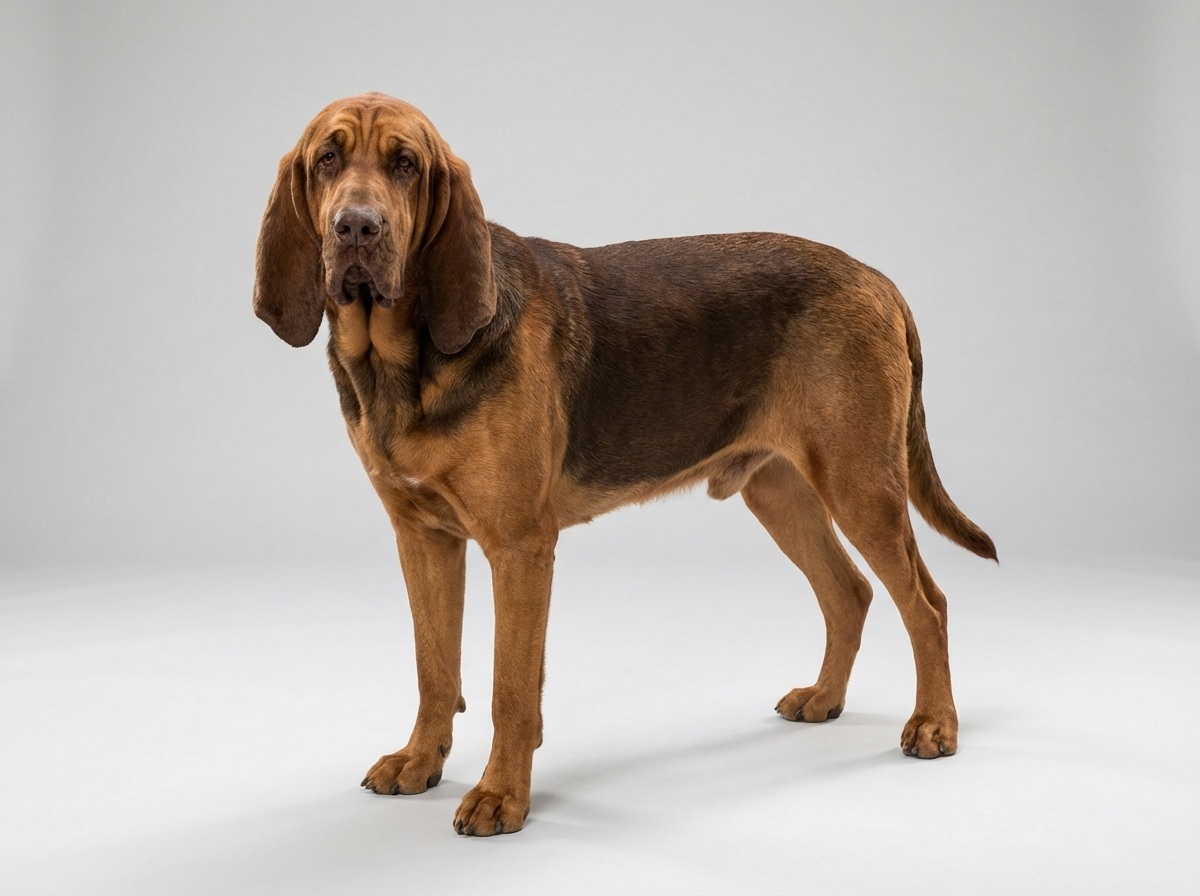
Both breeds land in the large-dog bracket, but they carry their weight differently. The Bloodhound is taller and heavier on paper — 90-110 lbs and 23-27 inches — against the Old English Sheepdog's 60-100 lbs and 20-24 inches. In person the Sheepdog often reads as the bulkier of the two because its long, shaggy coat adds visual mass the Bloodhound's short coat doesn't. Both need a real amount of floor space regardless of the scale numbers.
Energy and exercise
These two are evenly matched at moderate (3/5) for both exercise need and energy level, so daily walks plus some yard time will satisfy either dog. What differs is motivation: the Bloodhound wants to follow a scent trail, while the Old English Sheepdog was bred to herd and does best with a job or at least a task-like game. A bored Sheepdog will invent its own entertainment, often by herding your kids or the furniture.
Grooming and shedding
The Bloodhound is the low-maintenance option here — 2/5 on grooming, 3/5 on shedding, and a short coat that mostly takes care of itself. The Old English Sheepdog is nearly the opposite: very high grooming demand (5/5) and high shedding (4/5) from that long, dense double coat. Owners of Sheepdogs typically budget for brushing several times a week and periodic professional grooming just to prevent matting.
Apartment living, noise and time alone
Apartment suitability, tolerance for being alone, and barking level all come out tied at low (2/5), low (2/5), and moderate (3/5) respectively. Neither dog is built for a small space or a long solo workday, and both will vocalize when something's off — the Bloodhound with a deep bay, the Sheepdog with a more insistent, herding-style bark. If you're apartment-bound, this comparison won't hand you an easy winner.
Training and owner experience
Both breeds rate low (2/5) on first-time-owner suitability, so neither is the obvious starter dog. The gap opens on trainability: the Old English Sheepdog scores moderate (3/5), a step up from the Bloodhound's low (2/5). Sheepdogs are working stock and generally more responsive to structured commands, while the Bloodhound's nose tends to override whatever you were just asking of it.
Kids, other dogs and visitors
Both dogs are good with kids and other dogs, and both greet strangers warmly (4/5 across the board), with the Sheepdog edging slightly ahead on kids at very high (5/5). Its herding instinct means it may try to "manage" a group of running children rather than just play with them — worth knowing if your kids find that annoying rather than charming. The Bloodhound has no such tendency; it just wants to be near everyone.
Health and lifespan
The Old English Sheepdog outlives the Bloodhound on average, 10-12 years against 7-10. Bloat (GDV) and hip dysplasia both appear on each breed's list, so deep-chested-dog precautions apply to either. The rest of their risk profiles differ: the Bloodhound leans toward eye and ear issues, atopy and bleeding disorders, while the Sheepdog carries cataracts, hypothyroidism and primary ciliary dyskinesia, a respiratory condition worth asking a breeder about directly.
Cost to keep
The Bloodhound costs less to keep overall (moderate, 3/5) than the Old English Sheepdog (high, 4/5), and the dollar ranges track that: $100-200 monthly and $1,500-2,800 in year one for the Bloodhound, versus $110-240 monthly and $1,700-3,200 for the Sheepdog. The gap is modest month to month but adds up over a decade of grooming bills on that heavy coat.
Bloodhound vs Old English Sheepdog at a glance
Bloodhound weighs 90–110 lbs and lives 7–10 years; Old English Sheepdog weighs 60–100 lbs and lives 10–12 years. The two diverge most on grooming need. They are level on tolerates being alone, apartment suitability and barking, so those cannot decide it. Where the table declares a winner it means less work for the owner, nothing more; descriptive rows are left as ties on purpose. The value here is in the differences between the two columns; treat any single score as approximate.
Bloodhound vs Old English Sheepdog: Which Suits Your Home? - Bloodhound vs Old English Sheepdog at a glance
Frequently asked questions
How do the two breeds compare in size?
The Bloodhound is generally the larger dog on paper, at 90-110 lbs and up to 27 inches, versus the Old English Sheepdog's 60-100 lbs and up to 24 inches. Visually the Sheepdog's thick coat can make it look bulkier than the numbers suggest.
Which sheds and needs more grooming?
The Old English Sheepdog, by a wide margin — very high (5/5) grooming need and high (4/5) shedding, against low (2/5) and moderate (3/5) for the Bloodhound. Anyone choosing the Sheepdog should plan on several brushing sessions a week.
Is either dog suited to a first-time owner?
Not really — both rate low (2/5) on first-time-owner suitability. The Sheepdog is somewhat more trainable (3/5 vs 2/5), which helps, but neither breed is an easy starter dog.
Would either work in an apartment?
Both score low (2/5) on apartment suitability, so this comparison doesn't produce a clear apartment winner. Both also tolerate being alone poorly, which compounds the space issue for anyone working long hours away from home.
What's the monthly cost difference?
Expect $100-200 a month for a Bloodhound and $110-240 for an Old English Sheepdog. The gap is small monthly but the Sheepdog's grooming needs make its first-year total noticeably higher, at $1,700-3,200 versus $1,500-2,800.
Do they overlap on health issues?
Yes, both carry risk for hip dysplasia and bloat (GDV). Beyond that they diverge — the Bloodhound toward skin and eye conditions, the Sheepdog toward cataracts and hypothyroidism, plus a respiratory condition called primary ciliary dyskinesia worth screening for.
Which lives longer?
The Old English Sheepdog, typically 10-12 years compared to the Bloodhound's 7-10. It's one of the more consistent advantages the Sheepdog holds in this matchup.
Bloodhound or Old English Sheepdog — which fits more households?
The Sheepdog trains a bit easier and lives longer, but its grooming demands are steep; the Bloodhound is the lower-maintenance coat with a harder-to-train nose. Pick based on which chore you'd rather deal with.
Costs
What's the monthly cost?
$100-200 for the Bloodhound, $110-240 for the Old English Sheepdog — a modest gap that widens once grooming bills are factored in.
Living
How much exercise does each need?
Both are rated moderate (3/5), so daily walks and some active play cover either breed's baseline needs.
Health
Which one lives longer?
The Old English Sheepdog, at 10-12 years versus the Bloodhound's 7-10 years.
Related DogBreedCompass guides
Bloodhound breed guide – Readers comparing the two usually want the full profile of Bloodhound before deciding.
Health information here is general and is not veterinary advice. If your dog shows pain, sudden behaviour change, or worsening symptoms, consult a licensed veterinarian.
Some links on this site are affiliate links. We may earn a commission at no extra cost to you, and we only suggest products we believe are helpful for dog owners.
We research and check what we publish, but we do not warrant that any figure, date, price, or statement is accurate, complete, or current, and we accept no liability for any loss, cost, injury, or other harm arising from the use of this site. Use it as one reference among several. You remain responsible for your own decisions and for your dog's care - confirm anything that matters with a licensed veterinarian or another qualified professional before you act on it. Full disclaimer.