Behavior
Why does this breed struggle so much with being left alone?
Its history as a close-working droving breed and documented gentle, watchful temperament give it a genuinely lower baseline tolerance for solitude than many other working breeds.

Quick answer
Why does this breed struggle so much with being left alone?
Its history as a close-working droving breed and documented gentle, watchful temperament give it a genuinely lower baseline tolerance for solitude than many other working breeds.
A dog bred for centuries to work a few feet from a human's side doesn't quietly adjust to an empty house just because the calendar says it's a workday.

Owners returning to full-time in-office work after a period of being home more, and anyone whose dog shows destructive behavior, excessive vocalization, or house-soiling specifically and only when left alone.
This guide is not medical advice. If your dog shows pain, sudden behavior change, or worsening symptoms, consult a licensed veterinarian.
Some links may be affiliate links. We may earn a commission at no extra cost to you. We only suggest products we believe are helpful for dog owners.
We research and check what we publish, but we do not warrant that any figure, date, price, or statement is accurate, complete, or current, and we accept no liability for any loss, cost, injury, or other harm arising from the use of this site. Use it as one reference among several. You remain responsible for your own decisions and for your dog's care - confirm anything that matters with a licensed veterinarian or another qualified professional before you act on it. Full disclaimer.
Separation anxiety in this breed traces directly to its documented temperament and working history: a droving dog bred to stay close and attentive to a handler rather than range independently. That same wiring today shows up as a genuinely lower baseline tolerance for solitude, producing destructive behavior, vocalization, or house-soiling specifically tied to an owner's departure.
This isn't listed among this breed's documented medical health issues, but its temperament profile, gentle and watchful rather than independent, combined with its close-working history, makes separation-related distress a genuinely common behavioral concern reported across the breed.
This breed's documented temperament, gentle, watchful, and adaptable, reflects a working history built on close partnership with a handler rather than independent operation, which translates today into a lower baseline tolerance for extended solitude than many other working or herding breeds.
A sudden increase in daily alone time, insufficient gradual conditioning as a puppy, a major routine disruption like a move, or a frightening experience that occurred while previously alone can all trigger or worsen separation-related distress.
A trainer experienced specifically in separation-related behavior, not just general obedience, is genuinely valuable here, since desensitization protocols require careful pacing that's easy to get wrong without experience.
Talk to your vet if separation-related behavior is severe, includes self-injury from escape attempts, or doesn't improve with consistent training, since medication alongside behavioral work may be appropriate for more severe cases. This isn't an emergency, but chronic severe distress affects quality of life and deserves proper support.
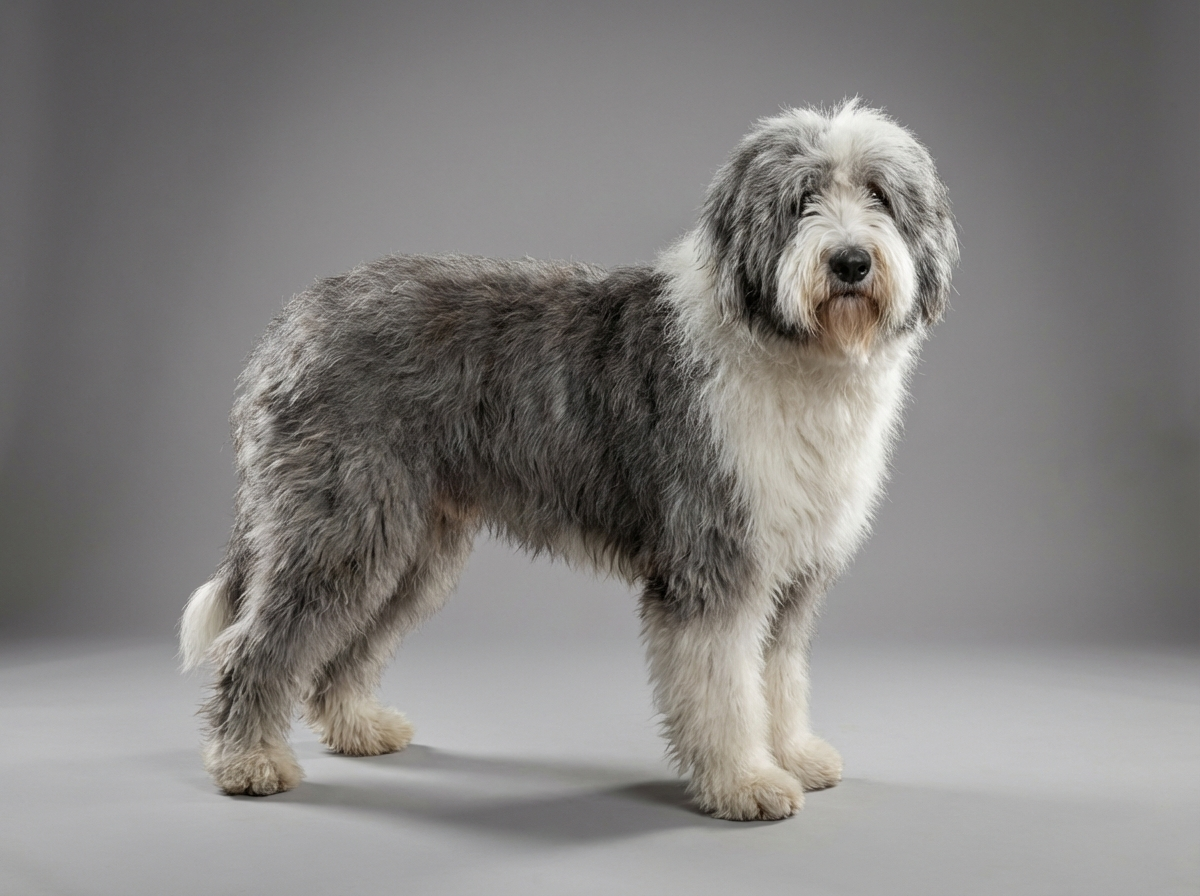
See all OLD English Sheepdog health problems, which breeds are prone to separation anxiety, or the full OLD English Sheepdog breed guide for temperament, exercise needs and ownership costs.
Mild cases can show meaningful improvement within a few weeks of consistent desensitization work. More severe, longstanding cases often take several months of patient, structured training, and some level of ongoing management may remain part of the picture long-term.
Success looks like a dog that can be left alone for a reasonable daily stretch without destructive behavior, excessive vocalization, or visible distress, achieved through gradual conditioning rather than expecting a naturally independent temperament to simply emerge.
Many herding breeds were developed to work with some independence from their handler, moving livestock across distance with only occasional direction. This breed's droving history was different, working in close partnership with a handler managing livestock along roads and through populated areas, a job that rewarded staying attentive and nearby rather than ranging independently. That history, combined with a documented temperament described as gentle and watchful rather than aloof or independent, adds up to a breed whose baseline comfort level with solitude is genuinely lower than many other working breeds, not because of poor training, but because of what the breed was selected for across generations.
These signs, occurring specifically during or shortly after an owner's departure and easing upon return, point to true separation-related distress rather than general misbehavior.

Dexter, a three-year-old Old English Sheepdog in Minneapolis, had never been left alone for more than an hour or two until his owner Grace returned to full-time in-office work after years of working from home. Within the first week, Grace came home to chewed door trim and a neighbor's complaint about howling. Rather than assuming Dexter would simply adjust, Grace brought in a trainer experienced in separation-related behavior, who built a desensitization plan starting with five-minute departures and slowly building up over six weeks. Grace also started leaving a frozen food puzzle specifically for departures. By week eight, Dexter was calmly settling in for full workday absences with no destructive behavior.
Key takeaway: Dexter's distress wasn't a training failure or bad behavior, it was a genuine mismatch between his breed's close-working wiring and a sudden new schedule, and treating it as a real adjustment process rather than disobedience is what actually worked.
This breed's history as a close-working droving dog, paired with its documented gentle, watchful temperament, gives it a genuinely lower baseline tolerance for solitude than many other working breeds, making separation-related distress a real and common concern.
Boredom-related destruction tends to happen regardless of whether the owner is present or absent and often centers on high-value chew items. True separation anxiety is specifically tied to departures and often concentrates near exit points like doors and windows.
Many dogs improve substantially with structured desensitization training, though some level of management, like never leaving a severely affected dog alone for very long stretches, may remain part of the long-term picture rather than being eliminated completely.
This can help some dogs but isn't a guaranteed fix, since separation anxiety is usually about the specific owner's absence rather than solitude in general. It's worth discussing with a trainer rather than assuming it will resolve the issue.
It typically starts with very short departures, seconds to a couple of minutes, gradually building duration only as the dog remains calm, rather than jumping straight to a full workday absence.
For more severe cases, a vet may discuss anti-anxiety medication as part of an overall plan alongside behavioral training, a decision made entirely by your vet based on severity, never something to start without guidance.
Mild cases can show improvement within a few weeks of consistent desensitization work, while more severe, longstanding cases can take several months of patient, structured training to see meaningful change.
Its history as a close-working droving breed and documented gentle, watchful temperament give it a genuinely lower baseline tolerance for solitude than many other working breeds.
Destructive behavior or vocalization concentrated specifically around departures and exit points, easing once the owner returns.
Many dogs improve substantially with structured desensitization training, though some ongoing management may remain part of the long-term picture for more severe cases.
Yes, a trainer experienced in separation-related behavior can build a structured desensitization plan more effectively than general obedience training alone.
For more severe cases, a vet may discuss anti-anxiety medication alongside training, a decision made under veterinary guidance rather than independently.
Behaviour changes often start with pain. The prep sheet for this page covers what to rule out, and what to ask.
You get: Vet visit prep sheet
No spam. One-click unsubscribe. See our privacy policy.
Preview page 1 before you decide.