Health
Can pancreatitis lead to diabetes in dogs?
Yes, it can — damage to the pancreas from repeated or severe episodes can affect insulin-producing cells, raising diabetes risk later.

Quick answer
Can pancreatitis lead to diabetes in dogs?
Yes, it can — damage to the pancreas from repeated or severe episodes can affect insulin-producing cells, raising diabetes risk later.
A senior Lab recovering from a pancreatitis episode isn't just managing the immediate illness — the same organ damage involved can quietly set the stage for a second, unrelated chronic condition to develop months or years later.
Owners of senior Labs who've weathered one pancreatitis episode and are now facing a diabetes diagnosis, unsure whether the two are connected or just unlucky coincidence.
This guide is not medical advice. If your dog shows pain, sudden behavior change, or worsening symptoms, consult a licensed veterinarian.
Some links may be affiliate links. We may earn a commission at no extra cost to you. We only suggest products we believe are helpful for dog owners.
Pancreatitis and diabetes frequently co-occur in senior Labrador Retrievers because damage from pancreatic inflammation can affect the same organ's insulin-producing cells, while diabetes-related metabolic changes can, in turn, increase susceptibility to pancreatic inflammation. Managing both together requires a coordinated diet and monitoring plan rather than treating each condition as entirely separate.
This combination is documented often enough in senior dogs generally, and particularly relevant for Labradors given the breed's already elevated pancreatitis risk from strong food motivation, that vets frequently monitor blood glucose more closely in senior Labs with a pancreatitis history.
Labradors carry elevated baseline pancreatitis risk due to intense food motivation and scavenging tendencies, which sets up more opportunities across a lifetime for pancreatic tissue damage that can later affect insulin production. Their 10 to 12 year lifespan gives this compounding risk time to develop, typically becoming most relevant in the senior years.
Repeated exposure to fatty, inappropriate food increases the number of lifetime pancreatitis risk events, while obesity — itself often tied to this breed's strong food drive — independently raises risk for both conditions, creating a combined environmental risk picture that's meaningfully within an owner's control.
Schedule a vet visit for increased thirst and urination, unexplained weight loss, or cloudy eyes in a senior Lab, especially one with a pancreatitis history — and seek emergency care for vomiting, lethargy, or collapse, which could indicate either a pancreatitis flare or a diabetic complication requiring urgent treatment.
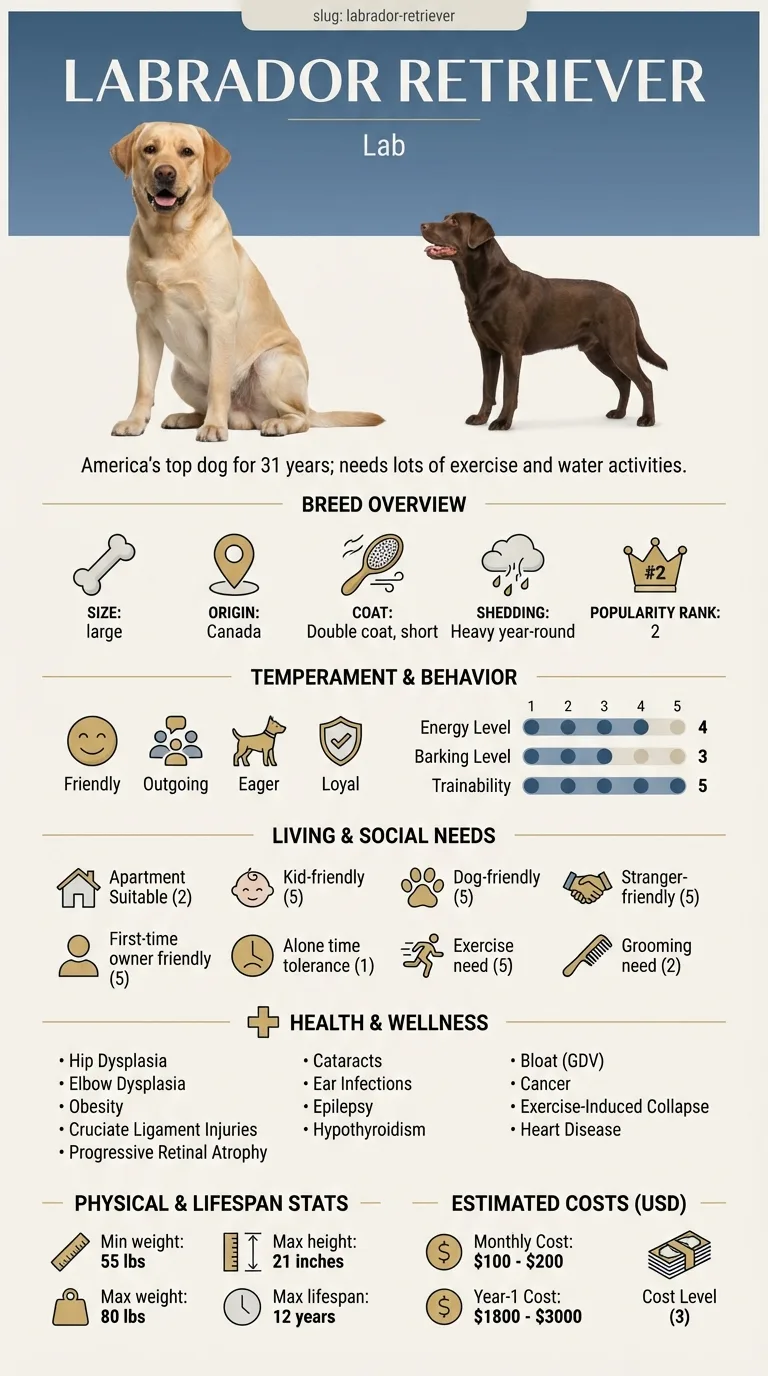
See all Labrador Retriever health problems, which breeds are prone to pancreatitis diabetes, or the full Labrador Retriever breed guide for temperament, exercise needs and ownership costs.
Diabetes management typically requires an initial regulation period of several weeks to establish the correct insulin dose through repeated blood glucose monitoring, alongside ongoing pancreatitis-conscious dietary management that continues indefinitely.
Success means stable blood glucose control alongside no further pancreatitis flares, achieved through a coordinated diet and monitoring plan — this is genuinely more demanding than managing either condition alone, but many senior dogs are managed successfully for years with consistent routine.
The pancreas has two separate but related jobs: producing digestive enzymes (the exocrine function, which is what goes wrong in pancreatitis) and producing insulin via specialized cells called islet cells (the endocrine function, which is what fails in diabetes). Repeated or severe pancreatitis episodes can cause enough damage to the surrounding pancreatic tissue that the insulin-producing islet cells are affected too, which is part of why dogs with a history of pancreatitis carry elevated diabetes risk later in life.
The relationship can run the other direction as well — diabetes itself is associated with elevated blood fat levels in some dogs, and that metabolic disruption can, in turn, increase susceptibility to pancreatic inflammation, creating a cycle where each condition can make the other more likely or harder to manage. This is particularly relevant for senior Labradors, since both conditions become meaningfully more common with age, and a food-motivated breed's higher lifetime pancreatitis risk adds an extra layer of vulnerability specific to Labs.
Managing both together requires real coordination: diabetes management depends on consistent meal timing and content for insulin dosing to work predictably, while pancreatitis management calls for a low-fat diet — meaning the two conditions' dietary needs have to be reconciled together with your vet rather than treated as two separate, potentially conflicting diet plans.

The good news is that many of the same daily habits support both conditions at once, which simplifies life more than managing two completely unrelated diagnoses would.
After her ten-year-old Lab, Belle, recovered from a hospitalized pancreatitis episode, her owner Sandra diligently switched her to a low-fat diet and thought the chapter was closed. About a year later, Sandra noticed Belle drinking noticeably more water and losing weight despite eating normally, and bloodwork confirmed diabetes. Belle's vet explained the documented connection between her prior pancreatitis and the new diagnosis, and helped Sandra find a diet that supported both conditions together, along with a consistent twice-daily insulin and feeding schedule. Two years later, Belle's diabetes remains well-controlled with no further pancreatitis flares.
Key takeaway: A prior pancreatitis episode isn't necessarily a closed chapter — it's worth mentioning at every future vet visit, since it's a documented risk factor for a second, seemingly unrelated condition down the road.
It can contribute to it — repeated or severe pancreatitis episodes can damage the insulin-producing islet cells within the pancreas, which is part of why dogs with a pancreatitis history carry elevated diabetes risk later in life, particularly in senior years.
Both conditions become more common with age, and pancreatic tissue damage from one can predispose to the other, creating a documented connection especially relevant for a breed already prone to pancreatitis due to strong food motivation.
Management typically centers on a low-fat, consistent diet that serves both conditions, along with regular insulin injections timed to meals for diabetes and close monitoring for any signs of pancreatic flare-up.
Increased thirst and urination, weight loss despite a normal or increased appetite, and sometimes cloudy eyes from diabetic cataracts are the classic signs, usually confirmed with blood and urine glucose testing.
Insulin and diabetes monitoring supplies typically run $50–$100 a month, plus prescription diet costs and periodic bloodwork, with total combined management often running $100–$200 a month depending on specific needs.
Yes, many dogs are managed successfully with a coordinated diet and monitoring plan, though it requires more consistent daily routine and vet involvement than managing either condition alone.
It's a documented and meaningful risk, though not a certainty — many dogs recover from pancreatitis without ever developing diabetes, but the connection is well-established enough that vets often monitor blood glucose more closely in dogs with a pancreatitis history.
Yes, it can — damage to the pancreas from repeated or severe episodes can affect insulin-producing cells, raising diabetes risk later.
A low-fat, consistent prescription diet often serves both conditions, though your vet should confirm the specific formula fits both needs.
Roughly $100–$200 a month for combined insulin, monitoring supplies, and prescription diet.
Increased thirst and urination along with weight loss despite normal appetite are the classic early signs.
Yes — consistent meal timing supports both stable insulin dosing for diabetes and portion control for pancreatitis prevention.
A one-page prep sheet for this condition: the signs, the questions to ask, what to get priced. Unlocks here.
You get: Vet visit prep sheet
No spam. One-click unsubscribe. See our privacy policy.
Preview page 1 before you decide.