Health
Is thyroiditis the same thing as hypothyroidism?
No — thyroiditis is the underlying autoimmune process; hypothyroidism is the resulting hormone deficiency diagnosis once thyroid function actually drops.

Quick answer
Is thyroiditis the same thing as hypothyroidism?
No — thyroiditis is the underlying autoimmune process; hypothyroidism is the resulting hormone deficiency diagnosis once thyroid function actually drops.
By the time standard bloodwork shows a clinically low thyroid hormone level, the underlying autoimmune destruction has often already been running for a long time — which is exactly why some breeding programs test for the antibodies years before symptoms would ever appear.
Breeders trying to reduce hereditary thyroid disease in their lines, and owners who want to understand why their dog's diagnosis felt like it appeared 'out of nowhere' when the process had actually been underway far longer.
This guide is not medical advice. If your dog shows pain, sudden behavior change, or worsening symptoms, consult a licensed veterinarian.
Some links may be affiliate links. We may earn a commission at no extra cost to you. We only suggest products we believe are helpful for dog owners.
Immune-mediated (lymphocytic) thyroiditis is the autoimmune process behind the majority of hypothyroidism cases in Labrador Retrievers, where the immune system gradually destroys thyroid tissue over a period that can span years before hormone levels drop enough to cause clinical symptoms. It has a documented hereditary component in this breed, which is why some testing programs look specifically for thyroid antibodies rather than waiting for a standard hormone panel to show a problem.
Thyroiditis specifically is harder to measure at a population level than clinical hypothyroidism since it requires specialized antibody testing that isn't part of routine bloodwork, but it's understood to underlie most Labrador hypothyroidism cases, and its hereditary pattern is well enough documented that some breed health programs specifically screen for it.
Labradors carry a documented genetic predisposition toward this specific autoimmune process, distinct from hypothyroidism caused by other mechanisms in some other species and occasionally other breeds. Their long 10 to 12 year lifespan gives this slow immune process ample time to progress from detectable antibodies to clinically significant hormone deficiency, typically surfacing in middle age.
There's no well-established environmental trigger for the underlying autoimmune process itself — this is understood as primarily a hereditary condition. Environmental factors become more relevant later, once hormone deficiency actually develops, since obesity and reduced activity can then compound the metabolic effects.
Discuss thyroid antibody testing with your vet if there's a known family history of thyroid disease, or if your dog is showing early signs of hormone deficiency like unexplained weight gain or coat changes — this isn't an emergency conversation, but it's worth raising proactively rather than waiting for symptoms to become obvious.
See all Labrador Retriever health problems, which breeds are prone to immune mediated thyroiditis, or the full Labrador Retriever breed guide for temperament, exercise needs and ownership costs.
A positive antibody test doesn't come with a predictable timeline to clinical hypothyroidism — some dogs progress over a few years, others remain stable with normal hormone levels for much longer. Periodic monitoring, often annually, is the standard approach once antibodies are detected.
For a breeding program, success means using antibody data to make more informed pairing decisions over generations. For an individual pet owner, success means catching the eventual hormone deficiency early through regular monitoring, so treatment can start before symptoms become significant.
Lymphocytic thyroiditis is an autoimmune condition where the immune system misidentifies thyroid tissue as a threat and gradually infiltrates and destroys it with immune cells called lymphocytes. This is a slow, progressive process — the thyroid gland has significant reserve capacity, so a dog can lose a large percentage of functional thyroid tissue before hormone production actually drops low enough to cause the clinical signs associated with hypothyroidism.
This is the key distinction from hypothyroidism as a diagnosis: hypothyroidism is the downstream hormonal deficiency, while thyroiditis is the upstream immune process causing it. A dog can test positive for thyroglobulin autoantibodies — evidence the immune attack is underway — years before actual hormone levels drop into a clinically low range. This window matters, because it means the disease process is detectable long before symptoms would ever prompt a vet visit.
Thyroiditis has a documented hereditary component in several breeds including Labrador Retrievers, which is why some breed clubs and health-conscious breeders specifically recommend thyroid antibody testing (not just a standard T4) as part of a comprehensive breeding health screen, ideally repeated periodically since antibody status can change over a dog's life.

This is a more specific and earlier-warning test than the standard thyroid panel most owners are familiar with — here's what it does and doesn't tell you.
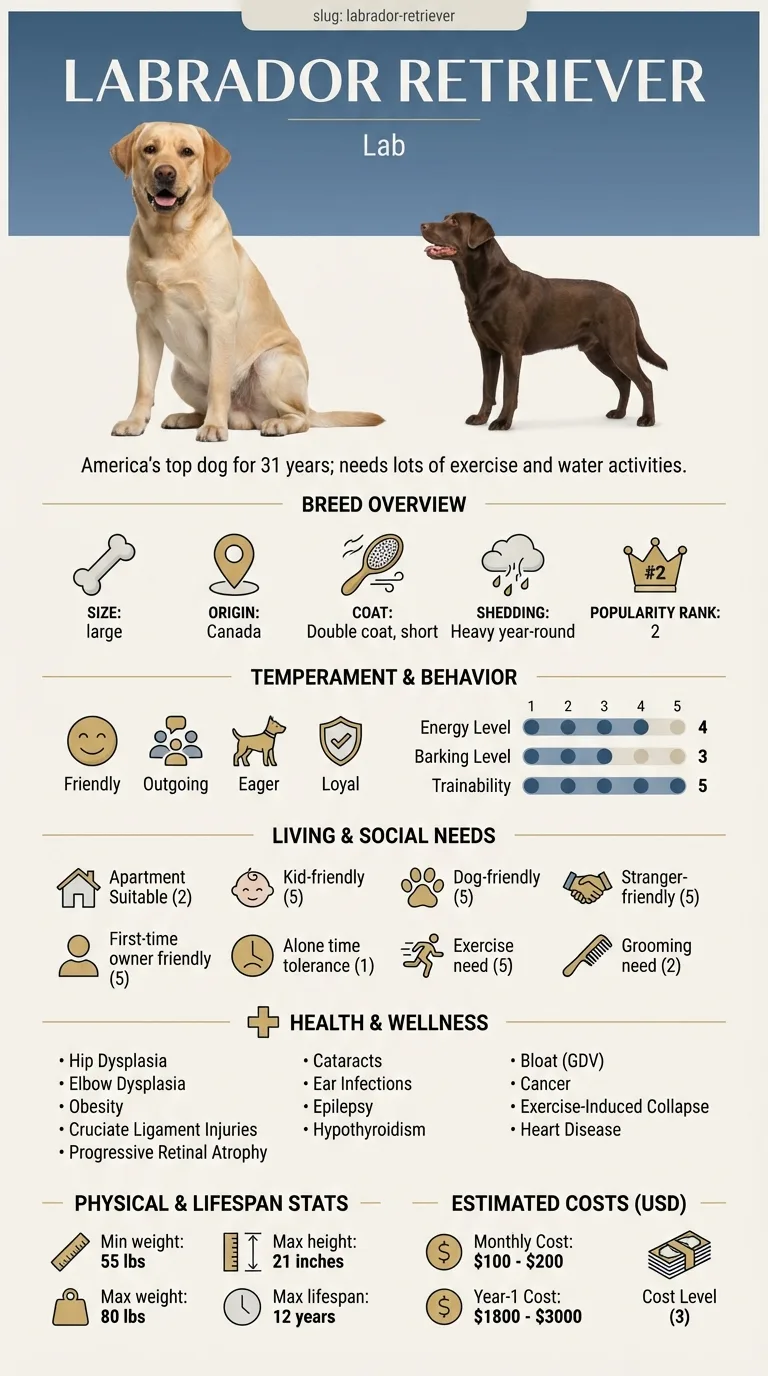
If you think your Lab has immune-mediated thyroiditis, the plan is three steps: write down what you have seen and when it started, book a veterinary appointment rather than waiting for the next flare, and take video of the behaviour or symptom before you go — the thing you are worried about rarely happens in the consulting room. Screening in the parents covers hip dysplasia, elbow dysplasia, obesity.
What the vet visit should produce is a diagnosis and a written plan, not just reassurance: what is being ruled out, what the monitoring interval is, and which signs mean you come back sooner. Ask what the treatment costs across a year rather than per visit, because that is the number that decides whether you are managing this condition or reacting to it.
Between appointments, keep a short log — dates, what you saw, what changed. It is the single most useful thing an owner brings to a follow-up, and for immune-mediated thyroiditis it is often what separates a clear pattern from a guess.
When breeder Linda learned that her Lab's littermate had been diagnosed with hypothyroidism at age five, she had her own breeding female, Juniper, tested for thyroglobulin autoantibodies even though Juniper showed no symptoms and her T4 level was completely normal. The antibody test came back positive. Linda didn't breed Juniper again and began annual thyroid panel monitoring instead of the standard less-frequent check. Two years later, Juniper's T4 finally dropped into a clinically low range, and because Linda had been watching closely, treatment started within days of the hormone shift rather than months after symptoms would have otherwise gone unnoticed.
Key takeaway: A positive antibody test years before any hormone deficiency shows up is exactly the kind of early information that changes both breeding decisions and how closely an individual dog gets monitored going forward.
Thyroiditis is the underlying autoimmune process where the immune system destroys thyroid tissue over time. Hypothyroidism is the resulting clinical diagnosis once hormone production drops low enough to cause symptoms. Thyroiditis can be present for years before hypothyroidism is diagnosed.
It's a specific blood test that detects antibodies indicating the immune system is actively attacking thyroid tissue, which can be positive well before a standard T4 hormone level drops into a clinically abnormal range.
Yes, there's a documented hereditary component in several breeds including Labrador Retrievers, which is why some breed health registries recommend thyroid antibody screening as part of breeding stock evaluation.
It's most commonly used in breeding programs rather than for pet dogs without symptoms, though if your dog's parents or littermates have had thyroid issues, discussing early antibody testing with your vet is reasonable.
Yes, at least for a time — a positive antibody test means the autoimmune process is underway, but it doesn't mean hormone levels have dropped enough to cause clinical hypothyroidism yet. Some dogs are monitored for years before treatment becomes necessary.
There's no treatment that stops the underlying autoimmune destruction itself — treatment is reserved for when hormone levels actually drop and hypothyroidism is diagnosed, at which point daily hormone replacement is the standard approach.
Because it can identify the disease process years earlier than a standard T4 test, giving breeders more information when deciding which dogs to include in a breeding program aimed at reducing hereditary thyroid disease over generations.
No — thyroiditis is the underlying autoimmune process; hypothyroidism is the resulting hormone deficiency diagnosis once thyroid function actually drops.
It means the immune system is actively attacking thyroid tissue, though hormone levels may still be normal for years afterward.
There's no known prevention for the underlying autoimmune process, since it has a hereditary component, but early detection allows for earlier monitoring.
Some health-conscious breeders do, specifically to make more informed breeding decisions aimed at reducing hereditary thyroid disease.
Typically not immediately — most vets monitor with periodic rechecks rather than starting medication before hormone levels actually drop.
A one-page prep sheet for this condition: the signs, the questions to ask, what to get priced. Unlocks here.
You get: Vet visit prep sheet
No spam. One-click unsubscribe. See our privacy policy.
Preview page 1 before you decide.