DogBreedCompass
← Back to breed profile

Understanding Miniature Schnauzer Pancreatitis & Diabetes

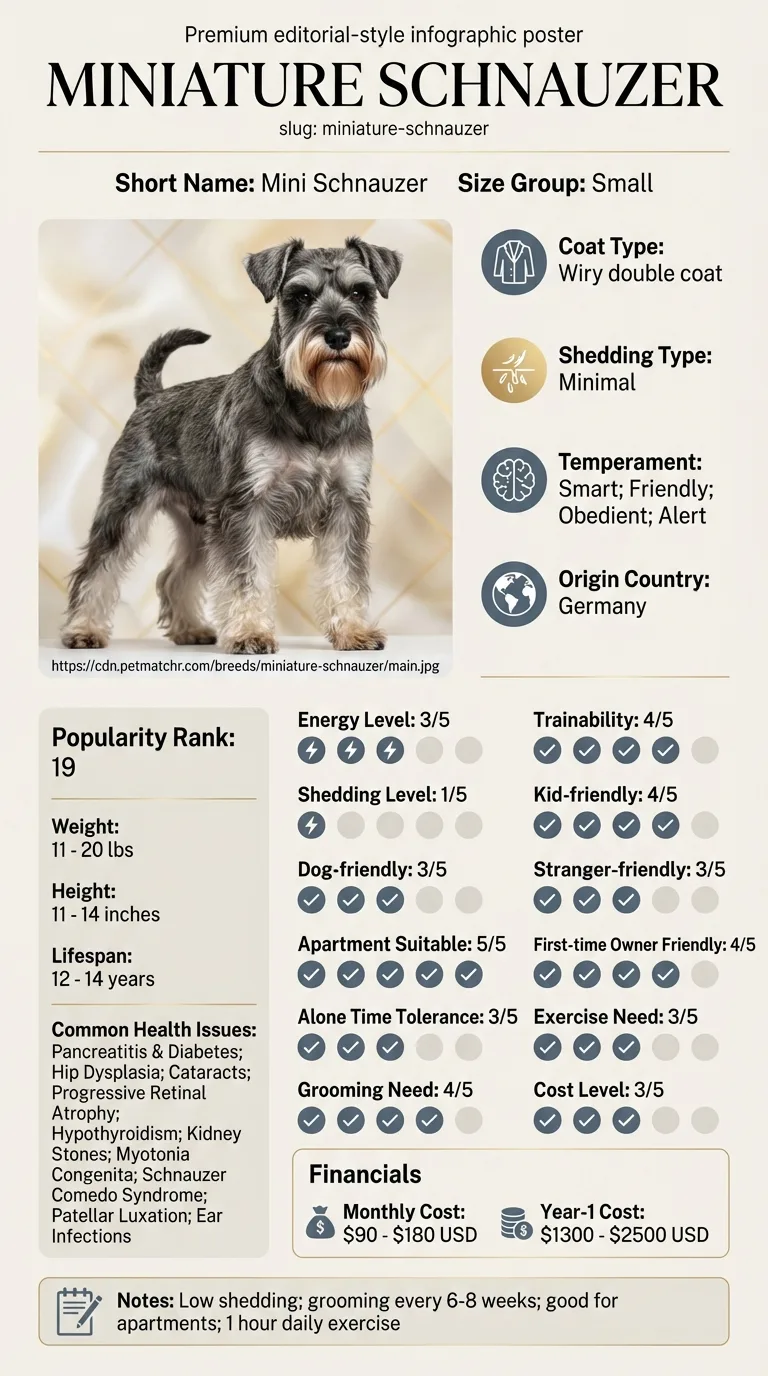
Miniature Schnauzers are prone to pancreatitis and diabetes, which can seriously affect their health. Managing these conditions is crucial for their well-being. (Miniature Schnauzer pancreatitis & diabetes)

Understanding Miniature Schnauzer Pancreatitis & Diabetes infographic

Many Miniature Schnauzer owners, especially those with senior dogs, face these challenges. Busy families or first-time dog owners may also feel overwhelmed trying to navigate the complexities of these health concerns.

Important reminder

This guide is not medical advice. If your dog shows pain, sudden behavior change, or worsening symptoms, consult a licensed veterinarian.

Some links may be affiliate links. We may earn a commission at no extra cost to you. We only suggest products we believe are helpful for dog owners.

What this problem looks like

Miniature Schnauzers can be prone to pancreatitis and diabetes, especially as they age. These health issues can lead to a range of daily challenges, including dietary restrictions and increased vet visits. Owners may notice their pups experiencing weight fluctuations, lethargy, or excessive thirst, which can be concerning and frustrating.

Common triggers

  • High-fat diets
  • Overeating or sudden diet changes
  • Genetic predisposition
  • Obesity
  • Sedentary lifestyle

Pancreatitis and diabetes are fairly common in Miniature Schnauzers, particularly in older dogs. Many owners report these conditions, highlighting the importance of regular vet check-ups and a well-managed diet.

Why this happens

Breed factors

Miniature Schnauzers are prone to pancreatitis and diabetes due to their genetic makeup. Their small size and specific dietary needs can predispose them to these conditions, especially as they age. Additionally, their wiry coat and energetic nature can lead to weight gain if not properly managed.

Environment factors

Poor diet, lack of exercise, and obesity are significant environmental factors contributing to pancreatitis and diabetes in Miniature Schnauzers. If they consume high-fat foods or are overfed, their risk increases. Stress and lack of routine can also exacerbate these health issues.

What you can try

At-home strategies

  • Create a balanced diet plan focusing on low-fat, high-fiber foods. Consult your vet for specific recommendations tailored to your Miniature Schnauzer.
  • Establish a consistent exercise routine, aiming for at least 30–60 minutes of activity each day. Regular walks and playtime can help maintain a healthy weight.
  • Monitor your dog's weight regularly. Keep track of any changes and adjust feeding and exercise accordingly. Weight management is crucial in preventing these conditions.

When to consider a trainer

If your Miniature Schnauzer is displaying signs of stress or anxiety that seem to affect their eating or activity levels, consider consulting a dog trainer. A professional can help address behavioral issues that may contribute to their health problems.

When to talk to your vet

If you notice symptoms like excessive thirst, frequent urination, or lethargy, contact your vet immediately. These can be signs of diabetes or pancreatitis and require prompt attention.

Realistic expectations

With consistent effort, you can see improvements in your Miniature Schnauzer's health and behavior within a few weeks. However, managing pancreatitis and diabetes is an ongoing process that requires regular vet visits and monitoring.

Success means your Miniature Schnauzer maintains a stable weight, has normal blood sugar levels, and shows fewer signs of discomfort. You'll also notice a more balanced energy level and improved overall happiness.

Mistakes that make this worse

Avoiding these common mistakes can help improve your Miniature Schnauzer's health and well-being. Here are some behaviors to watch out for.

  • Ignoring dietary restrictions: Feeding your Miniature Schnauzer table scraps or high-fat treats can worsen pancreatitis and diabetes. Stick to a vet-approved diet tailored for their condition.
  • Skipping regular vet visits: Neglecting routine check-ups can delay diagnosis and treatment. Schedule regular vet visits to monitor your dog's health closely.
  • Overlooking exercise needs: A lack of exercise can lead to obesity, worsening diabetes. Ensure your Miniature Schnauzer gets appropriate daily walks and playtime.
  • Giving in to begging: Allowing your dog to beg for food can reinforce bad habits and lead to overeating. Instead, stick to feeding schedules and ignore begging behavior.
  • Neglecting weight management: Letting your Miniature Schnauzer become overweight can exacerbate diabetes and pancreatitis. Monitor their weight and adjust their diet and exercise accordingly.
  • Stressful environments: Exposing your Miniature Schnauzer to high-stress situations can worsen their condition. Create a calm home environment to help reduce anxiety and stress.

When Miniature Schnauzer Pancreatitis & Diabetes is an Emergency

It’s crucial to know when your Miniature Schnauzer’s pancreatitis and diabetes may signal an emergency. If your dog shows any severe symptoms, it’s time to call your vet immediately. Red flags include persistent vomiting, lethargy, difficulty breathing, or signs of severe abdominal pain. These symptoms can indicate a serious condition that requires immediate medical attention.

On the other hand, some symptoms can be monitored. If your Mini Schnauzer has mild vomiting, decreased appetite, or a slight increase in thirst, you can keep a close eye on them for a day or two. However, if these symptoms worsen or don’t improve, don’t hesitate to reach out to your vet. Keeping a watchful eye can help you identify if a mild case needs to escalate into an emergency.

Remember, it’s better to err on the side of caution. If you're ever in doubt, it’s always best to consult your vet. They can provide guidance based on your dog’s specific condition and health history.

Understanding Miniature Schnauzer Pancreatitis & Diabetes - When Miniature Schnauzer Pancreatitis & Diabetes is an Emergency

A Journey to Health: Sarah and Max

Sarah, a busy nurse from Chicago, adopted her Miniature Schnauzer, Max, when he was just a puppy. As Max aged, he developed pancreatitis and diabetes, which left Sarah feeling overwhelmed. After consulting with her vet, Sarah learned to manage Max's condition through a strict diet and regular exercise. She also began tracking his food intake and glucose levels, which helped her stay on top of his health. With patience and dedication, Max not only stabilized his health but also became more energetic and playful than ever.

Key takeaway: Managing Miniature Schnauzer pancreatitis and diabetes requires commitment, but with the right approach, you can lead your furry friend to a healthier and happier life.

Frequently asked questions

Why does my Miniature Schnauzer have pancreatitis & diabetes?

Pancreatitis and diabetes in Miniature Schnauzers can be caused by several factors, including genetics, diet, and obesity. Older dogs are at higher risk, especially if they have a history of poor eating habits. Regular vet check-ups and a balanced diet can help manage these risks. This answer relates to Miniature Schnauzer pancreatitis & diabetes.

How can I stop my Miniature Schnauzer from developing pancreatitis & diabetes?

To reduce the risk of pancreatitis and diabetes, maintain a healthy weight and provide a well-balanced diet. Avoid feeding them table scraps and high-fat foods, and ensure they get regular exercise. Consult your vet for tailored dietary recommendations.

What are the symptoms of pancreatitis & diabetes in Miniature Schnauzers?

Symptoms may include increased thirst, frequent urination, weight loss, and lethargy. You might also notice changes in appetite or vomiting. If you see any of these signs, consult your vet immediately for a proper diagnosis.

What is the treatment for pancreatitis & diabetes in Miniature Schnauzers?

Treatment often includes medication, dietary changes, and regular monitoring of blood sugar levels. In some cases, hospitalization may be necessary for severe pancreatitis. Always follow your vet’s guidance for the best care plan.

Can Miniature Schnauzers with pancreatitis or diabetes still lead a happy life?

Yes, with proper management and care, Miniature Schnauzers can live happy and fulfilling lives. Regular vet visits, a strict diet, and consistent exercise are key to maintaining their health and quality of life.

What are the signs of pancreatitis in a Miniature Schnauzer?

Signs of pancreatitis in a Miniature Schnauzer can include vomiting, diarrhea, lethargy, and abdominal pain. If you notice these symptoms, it's important to consult your vet promptly, as pancreatitis can lead to serious complications.

Can a Miniature Schnauzer with diabetes have pancreatitis?

Yes, a Miniature Schnauzer with diabetes can also suffer from pancreatitis. The two conditions are related, and managing one may help mitigate the effects of the other. Regular veterinary check-ups are crucial for monitoring their health.

How can I help my Miniature Schnauzer manage pancreatitis and diabetes together?

To help your Miniature Schnauzer manage both conditions, provide a balanced diet tailored for diabetic dogs and ensure regular, moderate exercise. Consistent vet visits for monitoring blood sugar and pancreatic health are also important.

When should I take my Miniature Schnauzer to the vet for pancreatitis symptoms?

If your Miniature Schnauzer shows symptoms like persistent vomiting, severe lethargy, or signs of pain, take them to the vet immediately. Early intervention can significantly improve the prognosis for pancreatitis.

Is pancreatitis more common in older Miniature Schnauzers?

Yes, pancreatitis is more common in older Miniature Schnauzers. As they age, their risk for this condition increases, especially if they have other health issues like diabetes. Regular check-ups can help catch these problems early.

Quick answers

View more answers
Behavior

What are some quick tips for managing Miniature Schnauzer pancreatitis & diabetes?

Feed a low-fat diet and avoid high-calorie treats. Regular vet check-ups are crucial for monitoring their health. Ensure that they get consistent exercise to help maintain a healthy weight.

Health

How often should I take my Miniature Schnauzer to the vet for pancreatitis & diabetes?

It's recommended to have your Miniature Schnauzer checked at least twice a year. More frequent visits may be necessary if they show symptoms or if their condition changes.

Costs

What is the average cost of treating Miniature Schnauzer pancreatitis & diabetes?

Treatment costs can vary, typically ranging from $90 to $180 monthly, depending on the severity of the conditions and necessary medications. Be prepared for potential additional costs for regular vet visits.

Related DogBreedCompass guides

  • Miniature Schnauzer separation anxiety guideLearn how to manage your Miniature Schnauzer's separation anxiety, a common issue that can arise alongside health problems.
  • Miniature Schnauzer behavior problemsUnderstand the specific behavior problems that can occur with Miniature Schnauzers, especially those with health concerns.
  • Miniature Schnauzer cost breakdownExplore the costs associated with Miniature Schnauzers, including health care for conditions like pancreatitis and diabetes.
  • How to stop Miniature Schnauzer pancreatitis & diabetesGet tips on how to prevent and manage Miniature Schnauzer pancreatitis and diabetes through training and care.
  • Miniature Schnauzer pancreatitis & diabetes trainingFind out how to train your Miniature Schnauzer effectively, as training can help mitigate some health-related behavioral issues.

Related guides