Health
Is DCM genetic in Labradors?
No, unlike breeds such as Dobermans, Labradors aren't documented with a genetic DCM predisposition; the real connection here is diet-related.

Quick answer
Is DCM genetic in Labradors?
No, unlike breeds such as Dobermans, Labradors aren't documented with a genetic DCM predisposition; the real connection here is diet-related.
If DCM and Labrador came up together in something you read, the real story likely isn't genetics, it's what was in the food bowl.
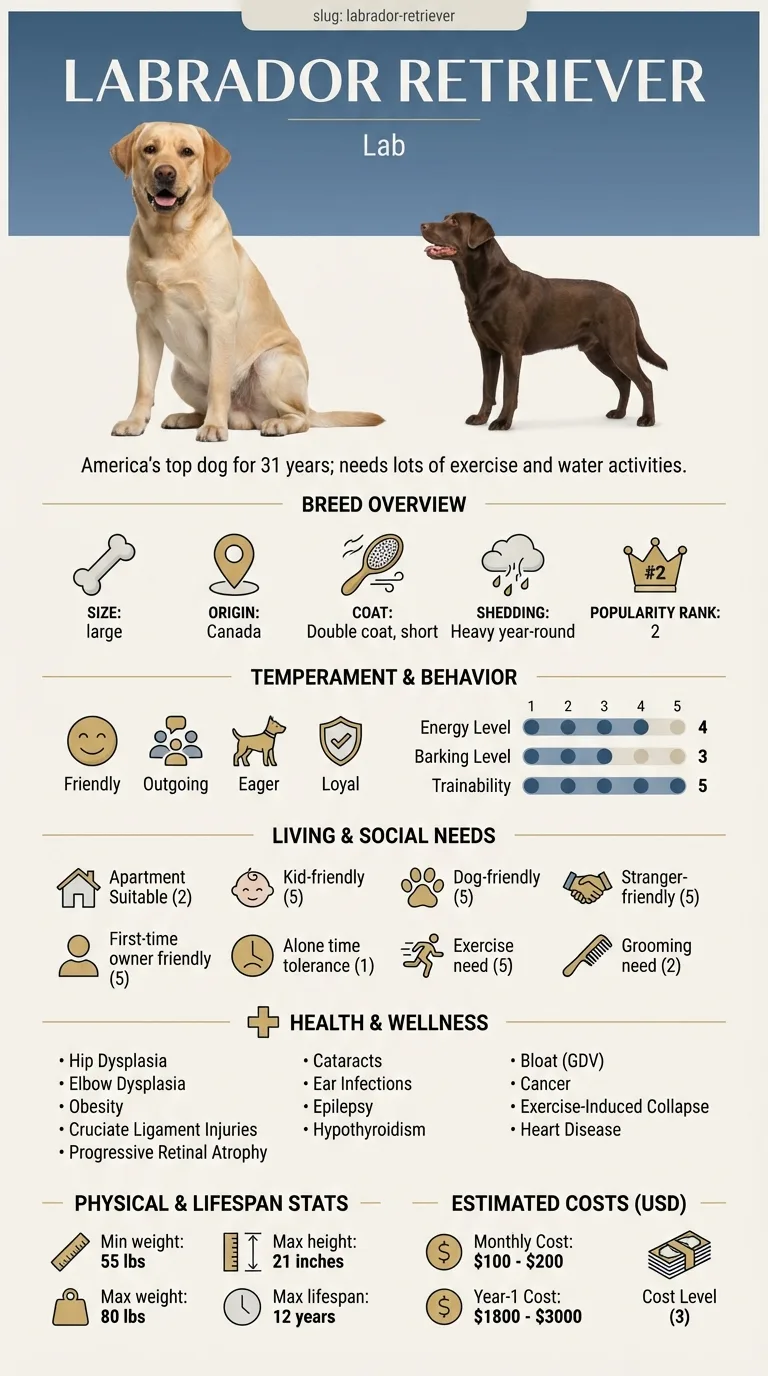
Owners feeding a grain-free, boutique, or legume-heavy diet, especially one built around peas, lentils, or exotic proteins as primary ingredients, are the ones most directly relevant to this specific, documented dietary concern.
This guide is not medical advice. If your dog shows pain, sudden behavior change, or worsening symptoms, consult a licensed veterinarian.
Some links may be affiliate links. We may earn a commission at no extra cost to you. We only suggest products we believe are helpful for dog owners.
We research and check what we publish, but we do not warrant that any figure, date, price, or statement is accurate, complete, or current, and we accept no liability for any loss, cost, injury, or other harm arising from the use of this site. Use it as one reference among several. You remain responsible for your own decisions and for your dog's care - confirm anything that matters with a licensed veterinarian or another qualified professional before you act on it. Full disclaimer.
Dilated cardiomyopathy, a disease where the heart muscle weakens and enlarges, isn't documented as a genetic risk for Labrador Retrievers the way it is for breeds like Dobermans. The real connection is dietary: Labradors were among the breeds notably represented in an FDA investigation starting around 2018 into DCM cases linked to grain-free, legume-heavy, and boutique exotic-protein diets, an association still being researched but significant enough to inform food choices for this breed.
Not documented as a genetic breed risk, but real enough as a diet-associated concern that it prompted a formal FDA investigation specifically noting Labrador Retrievers among the affected non-traditional breeds.
Labrador Retrievers don't carry the documented genetic mutations linked to classic inherited DCM in breeds like Dobermans or Great Danes. Their documented connection to DCM runs through diet rather than genetics, making this breed's real risk a matter of feeding choices rather than an inherited certainty.
Diets heavy in peas, lentils, or other legumes as primary ingredients, along with boutique exotic-protein formulas not rigorously tested for complete nutrition, are the environmental factors specifically implicated in the documented non-genetic DCM cases involving this breed.
Talk to your vet if your dog has been on a grain-free or boutique diet for a long period, even without symptoms, to discuss whether screening makes sense. See your vet promptly for reduced exercise tolerance, a new cough, labored breathing, or fainting.
See all Labrador Retriever health problems, which breeds are prone to dilated cardiomyopathy dcm, or the full Labrador Retriever breed guide for temperament, exercise needs and ownership costs.
If diet-associated DCM is suspected, a taurine test and echocardiogram typically confirm findings within a couple of weeks. Improvement after a diet change and supplementation, in cases where it occurs, has been documented over several months of consistent management.
Success is choosing a well-formulated diet proactively to avoid this risk altogether, or, if a case is caught early, seeing measurable improvement in heart function after switching diets and following veterinary guidance on supplementation and monitoring.
Starting around 2018, the FDA investigated a cluster of DCM cases reported in dogs, including a notable number of Labrador Retrievers, a breed not previously known for developing this condition. Many of the affected dogs had been eating grain-free diets heavy in peas, lentils, or other legumes as primary ingredients, or exotic-protein "boutique" formulas, feeding a hypothesis that these diet formulations were somehow interfering with normal taurine metabolism or heart muscle nutrition in susceptible dogs. Labradors appearing prominently in these non-genetic cases was itself notable, precisely because this breed doesn't have DCM's usual genetic backstory, making diet the more plausible explanation in these specific cases.
The investigation didn't conclusively prove every grain-free or legume-heavy diet causes DCM, and research is still evolving, but the honest, practical takeaway for Labrador owners is caution: choosing a diet from a well-established manufacturer with named meat as the first ingredient, formulated to meet recognized nutritional standards, rather than a boutique grain-free formula built heavily around peas or lentils, is a reasonable, evidence-informed choice. If your dog is already on a grain-free diet and you're concerned, a vet-guided taurine blood test and possibly an echocardiogram can check for early signs before symptoms appear.

If you think your Lab has dilated cardiomyopathy (dcm), the plan is three steps: write down what you have seen and when it started, book a veterinary appointment rather than waiting for the next flare, and take video of the behaviour or symptom before you go — the thing you are worried about rarely happens in the consulting room. Screening in the parents covers hip dysplasia, elbow dysplasia, obesity.
What the vet visit should produce is a diagnosis and a written plan, not just reassurance: what is being ruled out, what the monitoring interval is, and which signs mean you come back sooner. Ask what the treatment costs across a year rather than per visit, because that is the number that decides whether you are managing this condition or reacting to it.
Between appointments, keep a short log — dates, what you saw, what changed. It is the single most useful thing an owner brings to a follow-up, and for dilated cardiomyopathy (dcm) it is often what separates a clear pattern from a guess.
Copper, a six-year-old Labrador who'd been eating a boutique grain-free food built around lentils and buffalo for three years, started tiring more easily on walks and developed an occasional dry cough. Concerned after her vet asked directly about his diet, given the documented association in this breed, Copper's owner agreed to a taurine test and echocardiogram, which showed mildly reduced heart function and low taurine levels. Copper was switched to a diet from an established manufacturer with named meat as the first ingredient and started on taurine supplementation under veterinary guidance. A follow-up echocardiogram six months later showed meaningful improvement in his heart function, and his cough resolved entirely.
Key takeaway: A Labrador's DCM risk is much more likely to trace back to diet than genetics, which makes food choice a genuinely protective decision rather than an incidental one for this breed.
Not through the classic genetic pathway seen in breeds like Dobermans. Labradors became notable in DCM discussions through a documented cluster of diet-associated cases linked to certain grain-free and legume-heavy diets, investigated by the FDA starting in 2018.
Starting around 2018, the FDA investigated an unusual rise in DCM cases in breeds not typically predisposed to it, many linked to grain-free diets heavy in peas, lentils, or other legumes, or exotic-protein boutique formulas.
Many vets recommend caution with grain-free, legume-heavy, or boutique exotic-protein diets given the documented association, favoring a diet from an established manufacturer with named meat as the first ingredient and recognized nutritional formulation instead.
Lethargy, reduced exercise tolerance, coughing, labored breathing, or fainting can all indicate DCM, and any of these warrant a prompt veterinary cardiac evaluation.
In some documented cases, switching away from the suspected diet and adding taurine supplementation under veterinary guidance led to improvement in heart function, though outcomes vary and early detection matters significantly.
If you have concerns, ask your vet about a taurine blood test and possibly an echocardiogram, which can identify early signs before obvious symptoms develop.
Not necessarily, but the documented association is strong enough that many vets recommend choosing grain-inclusive or carefully formulated diets from established manufacturers unless there's a specific medical reason for a grain-free formula.
No, unlike breeds such as Dobermans, Labradors aren't documented with a genetic DCM predisposition; the real connection here is diet-related.
Grain-free diets heavy in peas, lentils, or other legumes, and boutique exotic-protein formulas, were the diets most represented in the FDA's investigated cases.
A diet from an established manufacturer with named meat as the first ingredient, formulated to meet recognized nutritional standards, is generally the safer, evidence-informed choice.
A taurine blood test is relatively affordable, while a full echocardiogram with a cardiologist adds a more significant cost, generally worth it if there's genuine diet-related concern.
Some documented cases improved after switching diets and adding taurine supplementation, though outcomes vary and veterinary guidance is important rather than switching foods without direction.
A one-page prep sheet for this condition: the signs, the questions to ask, what to get priced. Unlocks here.
You get: Vet visit prep sheet
No spam. One-click unsubscribe. See our privacy policy.
Preview page 1 before you decide.