Health
What triggers pancreatitis in Labradors most often?
A single high-fat meal, such as table scraps, trash, or fatty holiday food, is the classic and most common trigger.

Quick answer
What triggers pancreatitis in Labradors most often?
A single high-fat meal, such as table scraps, trash, or fatty holiday food, is the classic and most common trigger.
A single fatty meal that a smaller-drive breed might sniff and walk away from is exactly the kind of thing a food-motivated Lab will eat entirely, and that single high-fat event is enough to trigger a genuinely painful, sometimes life-threatening inflammation of the pancreas.
Owners who've had a Lab get into the trash or a table-scrap-heavy holiday meal, and owners managing a dog that's already had one pancreatitis episode trying to prevent a recurrence.
This guide is not medical advice. If your dog shows pain, sudden behavior change, or worsening symptoms, consult a licensed veterinarian.
Some links may be affiliate links. We may earn a commission at no extra cost to you. We only suggest products we believe are helpful for dog owners.
Pancreatitis in Labrador Retrievers is most commonly triggered by a single high-fat meal, which causes digestive enzymes to activate prematurely inside the pancreas and begin damaging pancreatic tissue itself. This breed's intense, indiscriminate food drive and strong scavenging tendencies make it disproportionately likely to encounter a triggering meal, from raided trash to fatty table scraps, compared to lower-drive breeds.
Pancreatitis is a frequently diagnosed gastrointestinal condition in Labradors specifically, driven largely by the breed's well-documented scavenging and counter-surfing tendencies, making it one of the more preventable conditions on this list through diligent food-access management.
Labradors rank near the top of typical food-motivation scales, a trait tied to the same genetic and temperament factors that drive the breed's broader weight-management challenges, and that intense drive translates directly into a higher likelihood of eating something fatty and inappropriate given any opportunity. Their strong scavenging instinct compounds this, making trash and table scraps a persistent risk in a way it isn't for pickier, less food-driven breeds.
Accessible trash cans, table scraps offered by well-meaning family or guests, and holiday gatherings with fatty food within reach are the dominant environmental triggers. Obesity, itself partly driven by this same food motivation, further raises baseline pancreatitis risk independent of any single triggering meal.
Seek prompt veterinary care for vomiting, a hunched or 'praying position' posture, lethargy, or reduced appetite, especially following a known fatty meal — and seek emergency care immediately for persistent vomiting, signs of significant pain, or any indication of dehydration or collapse.
See all Labrador Retriever health problems, which breeds are prone to pancreatitis, or the full Labrador Retriever breed guide for temperament, exercise needs and ownership costs.
Mild cases often improve within two to four days of supportive care and dietary adjustment. Moderate to severe cases requiring hospitalization typically involve several days of inpatient treatment before the dog is stable enough to go home, with a gradual return to a modified diet afterward.
Success means full recovery from the acute episode plus a sustainable long-term prevention plan, since the goal after a first attack shifts from treating the episode to genuinely preventing a recurrence through consistent food-access management.
The pancreas produces digestive enzymes that are normally activated only once they reach the intestines. A large, sudden intake of dietary fat can trigger those enzymes to activate prematurely, inside the pancreas itself, where they begin digesting the pancreatic tissue rather than food. This self-digestion process causes intense local inflammation, pain, and, in more severe cases, can trigger a systemic inflammatory response affecting other organs.
This is exactly why a single fatty meal — table scraps, a raided trash can, a well-meaning treat of bacon or fried food — is such a specific and well-documented trigger, distinct from many other conditions on this list that build up gradually. Symptoms typically appear within hours to a day or two after the triggering meal: vomiting, abdominal pain often shown as a 'praying position' with the front end down and rear end up, lethargy, and reduced appetite despite the dog's usual food drive.
Severity ranges from mild cases managed with supportive care and a bland, low-fat diet to severe cases requiring hospitalization with IV fluids and pain management. Dogs that have had one episode carry meaningfully elevated risk for recurrence, which is why long-term dietary management becomes part of life after a first attack rather than a one-time treatment and forget situation.

Given how strongly a Lab's food drive works against verbal 'no's, prevention here is mostly a management problem, not a training one.
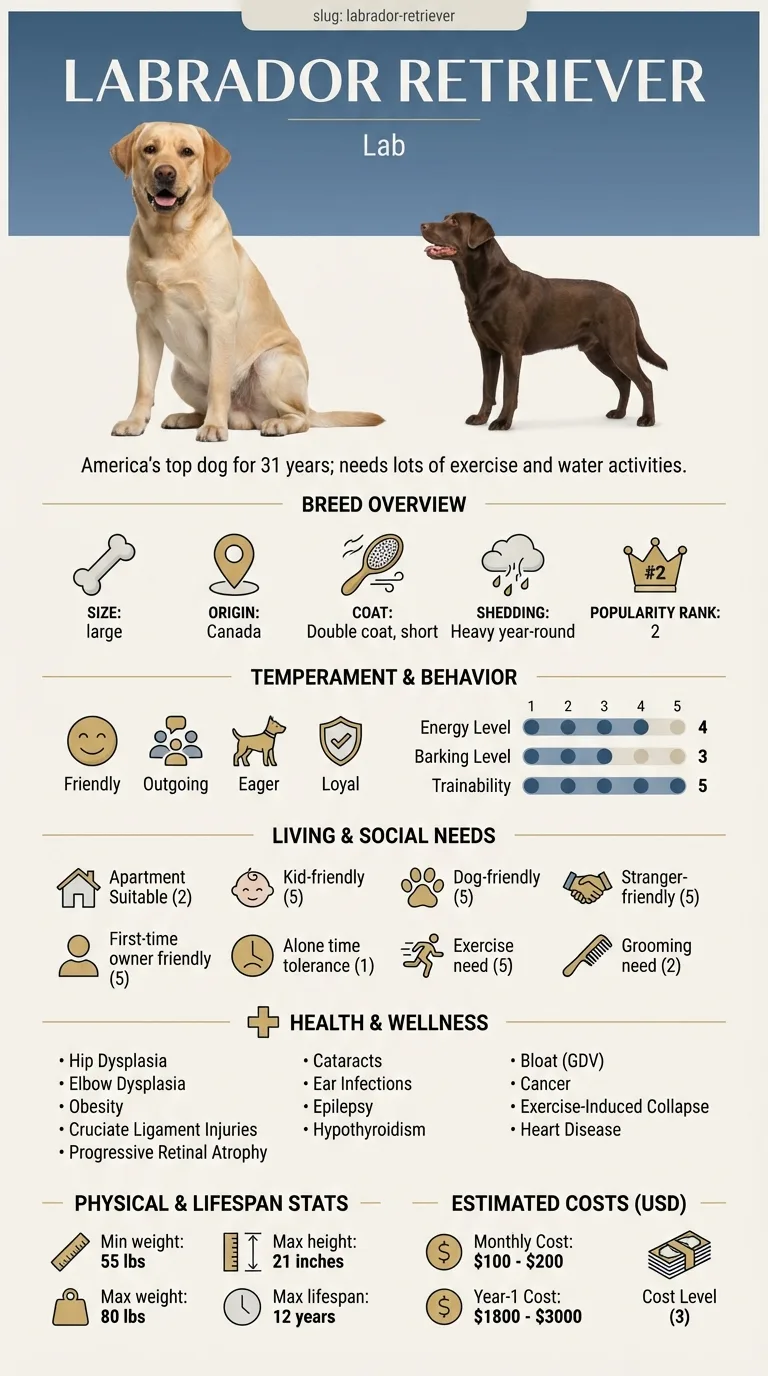
If you think your Lab has pancreatitis, the plan is three steps: write down what you have seen and when it started, book a veterinary appointment rather than waiting for the next flare, and take video of the behaviour or symptom before you go — the thing you are worried about rarely happens in the consulting room. Screening in the parents covers hip dysplasia, elbow dysplasia, obesity.
What the vet visit should produce is a diagnosis and a written plan, not just reassurance: what is being ruled out, what the monitoring interval is, and which signs mean you come back sooner. Ask what the treatment costs across a year rather than per visit, because that is the number that decides whether you are managing this condition or reacting to it.
Between appointments, keep a short log — dates, what you saw, what changed. It is the single most useful thing an owner brings to a follow-up, and for pancreatitis it is often what separates a clear pattern from a guess.
Todd's Lab, Duke, snuck a plate of turkey skin and gravy left unattended for barely a minute during Thanksgiving dinner. By the next morning, Duke was vomiting repeatedly and standing in an odd hunched position, refusing his usual eager breakfast entirely. An emergency vet visit confirmed moderate pancreatitis, and Duke spent two nights hospitalized on IV fluids and pain management before stabilizing. Todd now keeps a strict no-table-scraps rule enforced with every guest and has permanently switched Duke to a lower-fat maintenance diet, with no recurrence in the two years since.
Key takeaway: A single unattended plate is genuinely all it takes for a food-driven breed like this one — prevention here is almost entirely about managing physical access, not trusting the dog's restraint.
It's largely tied to their intense, indiscriminate food drive combined with strong scavenging tendencies, which makes them more likely than many breeds to get into fatty foods — trash, table scraps, holiday meals — that are the classic trigger for a pancreatitis episode.
Vomiting, abdominal pain often shown by a hunched or 'praying position' posture, lethargy, and reduced appetite are the classic early signs, typically appearing within hours to a day or two after a fatty meal.
It can be, particularly moderate to severe cases with persistent vomiting, significant lethargy, or signs of dehydration, which warrant prompt or same-day veterinary evaluation rather than waiting to see if it resolves on its own.
Bloodwork including a specific pancreatic enzyme test (cPLI) is the standard diagnostic tool, sometimes combined with abdominal ultrasound to assess inflammation severity and rule out other causes of the symptoms.
Mild cases are often managed with a bland, low-fat diet and anti-nausea medication on an outpatient basis. Moderate to severe cases typically require hospitalization with IV fluids, pain management, and close monitoring until the dog stabilizes.
Yes — dogs that have had one episode carry meaningfully elevated risk for recurrence, which is why long-term low-fat diet management is often recommended even after full recovery from the initial attack.
Mild outpatient cases might run $300–$600, while hospitalization for a moderate to severe case with IV fluids and monitoring can run $1,500–$4,000 or more depending on length of stay and complications.
A single high-fat meal, such as table scraps, trash, or fatty holiday food, is the classic and most common trigger.
Often a hunched, 'praying position' posture with the front end down and rear end up, along with vomiting and lethargy.
Moderate to severe cases with persistent vomiting or significant lethargy warrant prompt or same-day veterinary care.
Roughly $300–$600 for mild outpatient cases, up to $1,500–$4,000 or more for hospitalization of a severe case.
Yes — recurrence risk is meaningfully elevated after a first episode, which is why long-term low-fat diet management matters.
A one-page prep sheet for this condition: the signs, the questions to ask, what to get priced. Unlocks here.
You get: Vet visit prep sheet
No spam. One-click unsubscribe. See our privacy policy.
Preview page 1 before you decide.