Health
Can a Lab have kidney disease with no symptoms?
Yes — early-stage kidney disease is often completely asymptomatic and is typically caught through routine bloodwork rather than visible signs.

Quick answer
Can a Lab have kidney disease with no symptoms?
Yes — early-stage kidney disease is often completely asymptomatic and is typically caught through routine bloodwork rather than visible signs.
By the time an owner notices their Lab drinking noticeably more water, the kidneys have often already lost a significant portion of their function — which flips the usual instinct of 'wait until something looks wrong' on its head for this specific condition.
Owners of senior Labs navigating a diagnosis found on a routine wellness panel, and owners trying to understand why 'he seems totally fine' doesn't match what the bloodwork is showing.
This guide is not medical advice. If your dog shows pain, sudden behavior change, or worsening symptoms, consult a licensed veterinarian.
Some links may be affiliate links. We may earn a commission at no extra cost to you. We only suggest products we believe are helpful for dog owners.
Chronic kidney disease in Labrador Retrievers is a progressive, irreversible loss of kidney function that typically develops silently for a long time before symptoms like increased thirst or weight loss become noticeable. Because the kidneys have substantial reserve capacity, standard tests can miss early-stage disease, which is why newer bloodwork markers and regular senior screening matter so much for catching it early.
Chronic kidney disease becomes meaningfully more common in Labradors past middle age, following a pattern similar to aging dogs generally, which is why annual senior bloodwork screening starting around age seven has become standard veterinary practice.
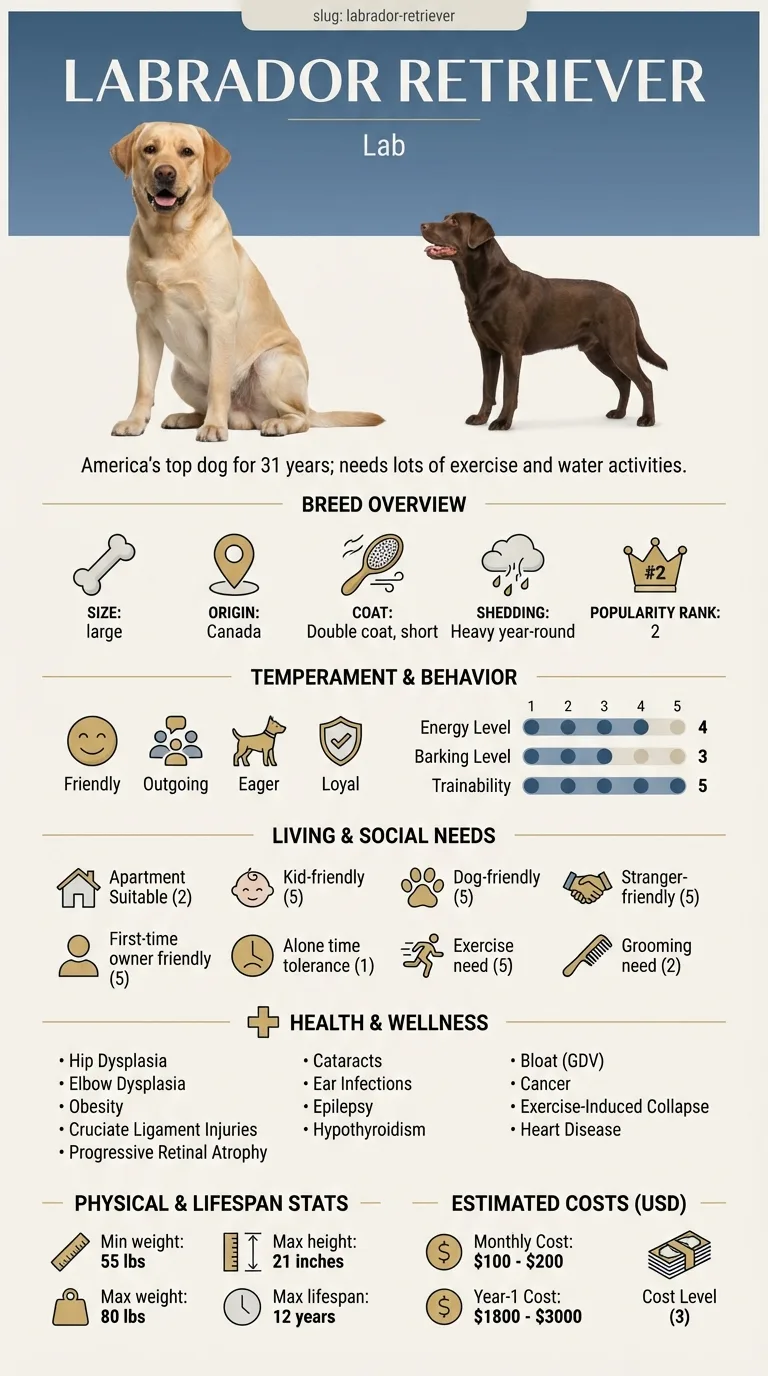
With a 10 to 12 year lifespan, Labradors live long enough for age-related kidney decline to become a real consideration in their senior years, similar to the pattern seen across most breeds as they age. There's no strong breed-specific genetic kidney disease documented in Labs the way there is in some other breeds, making age the primary driver here rather than a distinct hereditary condition.
Chronic mild dehydration, untreated dental disease contributing to systemic inflammation, and repeated episodes of acute kidney stress (from toxins, certain medications, or severe illness) can all accelerate kidney decline over time, on top of the baseline age-related risk every dog faces.
Schedule a vet visit for increased thirst or urination, unexplained weight loss, reduced appetite, or vomiting — and seek same-day care for a senior dog that suddenly stops drinking or eating entirely, or shows lethargy alongside these signs, since this can indicate an acute worsening requiring urgent treatment.
See all Labrador Retriever health problems, which breeds are prone to kidney disease, or the full Labrador Retriever breed guide for temperament, exercise needs and ownership costs.
After diagnosis, expect a recheck bloodwork panel four to six weeks after starting a new diet or medication to assess response, then ongoing monitoring every three to six months depending on stage. This is a lifelong management condition rather than one with a defined treatment endpoint.
Success means slowing progression and maintaining quality of life for as long as possible, not reversing the disease. Many dogs managed well from an early stage live years of good quality life after diagnosis, even though the underlying kidney function doesn't recover.
The kidneys filter waste products from the blood and concentrate urine, among many other jobs, and they're built with substantial redundancy — healthy tissue compensates for damaged tissue for a long time. This is protective in daily life but a real diagnostic challenge, because standard measures like creatinine, a common kidney value on bloodwork, don't rise into abnormal territory until roughly two-thirds of kidney function is already gone.
This is exactly why many vets now include a newer test called SDMA in senior bloodwork panels — it can detect kidney function loss earlier, sometimes when only 25 to 40 percent of function has been lost, giving a meaningfully earlier warning than creatinine alone. Once identified, chronic kidney disease is staged using the International Renal Interest Society (IRIS) system, which combines these blood values with urine testing to give a clearer picture of severity and guide treatment intensity.
Chronic kidney disease is progressive and not reversible, but the rate of progression varies enormously between dogs, and management — primarily through a kidney-specific prescription diet and monitoring — can meaningfully slow decline and extend both lifespan and quality of life in many cases.

Treatment intensity is staged to match how much kidney function remains, which is exactly why an accurate IRIS staging at diagnosis matters so much.
If you think your Lab has kidney disease, the plan is three steps: write down what you have seen and when it started, book a veterinary appointment rather than waiting for the next flare, and take video of the behaviour or symptom before you go — the thing you are worried about rarely happens in the consulting room. Screening in the parents covers hip dysplasia, elbow dysplasia, obesity.
What the vet visit should produce is a diagnosis and a written plan, not just reassurance: what is being ruled out, what the monitoring interval is, and which signs mean you come back sooner. Ask what the treatment costs across a year rather than per visit, because that is the number that decides whether you are managing this condition or reacting to it.
Between appointments, keep a short log — dates, what you saw, what changed. It is the single most useful thing an owner brings to a follow-up, and for kidney disease it is often what separates a clear pattern from a guess.
Diane brought her nine-year-old Lab, Sadie, in for an unremarkable annual wellness visit, expecting nothing more than the usual vaccines and exam. Routine senior bloodwork, including an SDMA test her vet had recently started running, flagged early kidney function loss even though Sadie showed absolutely no symptoms at home. Diane switched Sadie to a prescription renal diet and started six-month recheck bloodwork. Two years later, Sadie's kidney values have remained stable rather than declining further, and she's still an active, happy dog with no visible signs that anything is different — a direct result, her vet believes, of catching the disease at such an early stage.
Key takeaway: A completely symptom-free dog can still have meaningful kidney function loss, which is exactly why routine senior bloodwork matters more than waiting for visible signs before testing.
Early-stage kidney disease often has no visible symptoms at all, which is why it's frequently caught on routine bloodwork. As it progresses, increased thirst and urination, weight loss, and reduced appetite become more noticeable.
Yes — this is exactly what senior wellness bloodwork, particularly a newer test called SDMA, is designed to do, since it can detect meaningful kidney function loss well before creatinine or visible symptoms appear.
No, chronic kidney disease is progressive and not reversible, but the rate of decline varies significantly between dogs and can often be meaningfully slowed with diet and medical management, sometimes for years after diagnosis.
A prescription renal diet, typically lower in phosphorus and adjusted in protein quality, is the standard first-line management tool and has been shown to meaningfully slow disease progression in dogs at moderate to advanced stages.
The International Renal Interest Society (IRIS) staging system combines blood values like creatinine and SDMA with urine testing to classify severity into four stages, which then guides how aggressively the condition needs to be managed.
Prescription renal diet typically costs somewhat more than standard food, often an extra $20–$40 a month, plus periodic bloodwork rechecks running $75–$150 and additional medications depending on stage and complications.
Many vets recommend annual bloodwork including SDMA starting around age seven, moving to every six months once a dog is diagnosed or shows any early warning values, given how much earlier detection changes management options.
Yes — early-stage kidney disease is often completely asymptomatic and is typically caught through routine bloodwork rather than visible signs.
SDMA can detect meaningful kidney function loss earlier than the traditional creatinine value, sometimes catching it at 25 to 40 percent function loss.
Yes, a prescription renal diet is the standard first-line management tool and has been shown to slow disease progression.
Roughly an extra $20–$40 a month for prescription diet, plus periodic bloodwork rechecks.
Many dogs live comfortably for a significant time after diagnosis with proper diet and monitoring, since progression speed varies widely between individual dogs.
A one-page prep sheet for this condition: the signs, the questions to ask, what to get priced. Unlocks here.
You get: Vet visit prep sheet
No spam. One-click unsubscribe. See our privacy policy.
Preview page 1 before you decide.