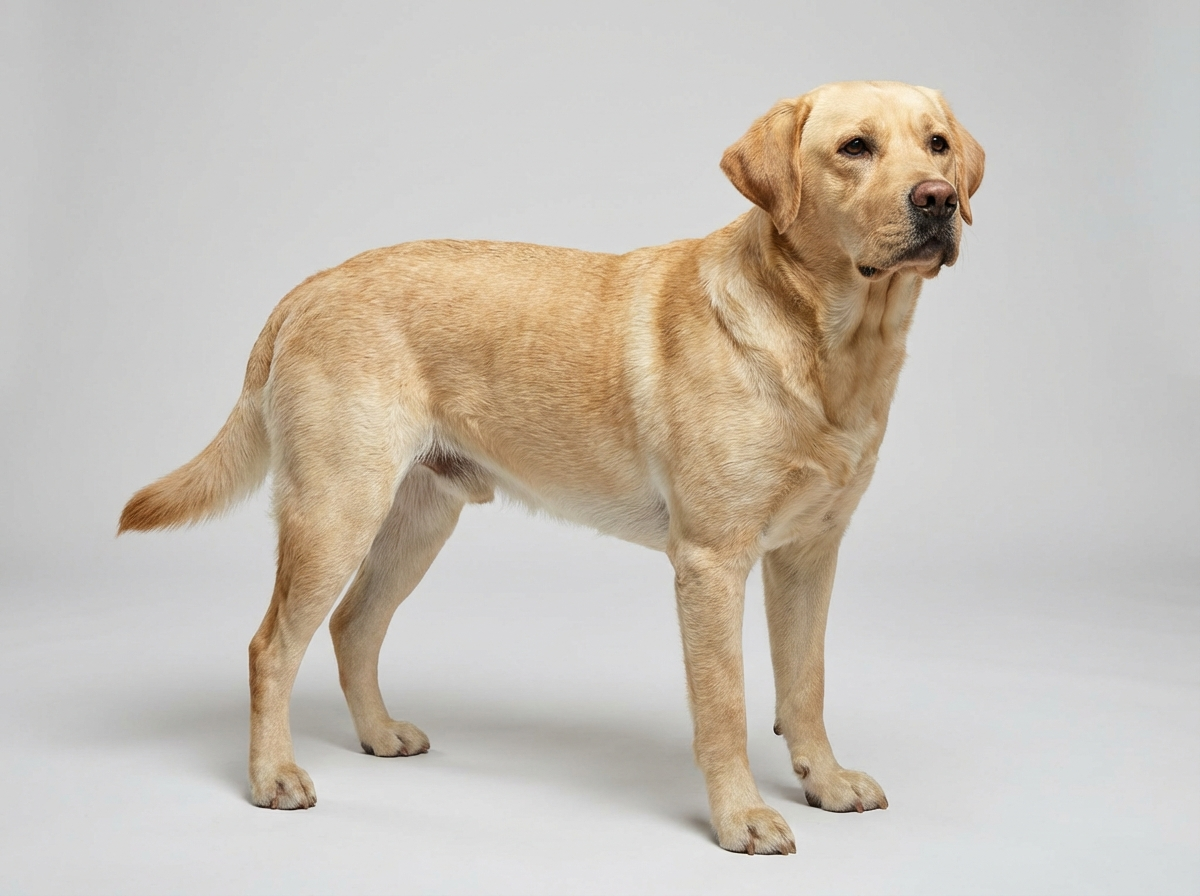
Health
Is straining to urinate an emergency in a Lab?
It can be, especially if paired with producing little or no urine — that combination warrants same-day veterinary evaluation.

Quick answer
Is straining to urinate an emergency in a Lab?
It can be, especially if paired with producing little or no urine — that combination warrants same-day veterinary evaluation.
A dog straining to urinate with little result looks the same to an owner whether the cause is a stone that will dissolve with diet or one that needs surgery — which is exactly why guessing at home is the wrong move here.

Owners noticing a sudden change in bathroom habits, and owners managing a recurring stone-former dog trying to understand why the same prevention plan doesn't work for every stone type.
This guide is not medical advice. If your dog shows pain, sudden behavior change, or worsening symptoms, consult a licensed veterinarian.
Some links may be affiliate links. We may earn a commission at no extra cost to you. We only suggest products we believe are helpful for dog owners.
Urolithiasis, or the formation of kidney and bladder stones, occurs in Labrador Retrievers as it does in most breeds, most commonly as struvite or calcium oxalate stones. These two types are managed very differently — one can often dissolve with diet, the other typically requires surgical removal — and the real danger scenario is a stone causing a complete urinary blockage, which is a genuine emergency, especially in male dogs.
Urolithiasis is a moderately common urinary condition across dog breeds generally, including Labradors, though it's less frequently diagnosed than conditions like ear infections or allergies. Recurrence in previously affected dogs is common enough that ongoing prevention matters even after successful treatment.
There's no strong Labrador-specific genetic predisposition toward stone formation documented the way there is in some other breeds, so risk in this breed tracks more closely with individual factors like diet, hydration, and urinary tract health than with breed genetics alone. Their food-motivated temperament can make portion and ingredient management for prevention diets more straightforward to implement than in a pickier breed.
Chronic low water intake, diets that promote alkaline or highly concentrated urine, and untreated urinary tract infections are the main environmental drivers of stone formation. Limited opportunities to urinate frequently, such as long stretches between bathroom breaks, can also allow crystals more time to form and aggregate.
See a vet promptly for straining to urinate, visible blood in urine, or frequent small urinations — and seek emergency care immediately for repeated straining with little or no urine produced, especially in a male dog, since a complete blockage can become life-threatening within a day or two.
See all Labrador Retriever health problems, which breeds are prone to kidney stones, or the full Labrador Retriever breed guide for temperament, exercise needs and ownership costs.
Struvite stone dissolution with prescription diet typically takes four to twelve weeks with follow-up imaging to confirm resolution. Calcium oxalate stones requiring surgery usually involve a recovery period of two to three weeks post-procedure before returning to normal activity.
Success means resolved stones confirmed by follow-up imaging and a sustainable long-term prevention plan tailored to the specific stone type, since this is a condition with meaningful recurrence risk that ongoing diet and hydration management can substantially reduce.
Struvite stones form in urine that's become too alkaline, often related to a urinary tract infection, and they have a real advantage: many dissolve with a specific prescription diet designed to acidify urine and reduce mineral concentration, sometimes avoiding surgery altogether. Calcium oxalate stones are the opposite story — they don't dissolve with diet once formed, so surgical or minimally invasive removal is typically necessary if they're causing a problem, and management afterward shifts to prevention rather than dissolution.
This is why a vet won't recommend treatment before knowing which type of stone is involved, usually determined through imaging (X-ray or ultrasound) plus urinalysis, and sometimes stone analysis after removal if surgery does happen. Diet, water intake, and urine pH all play into which type a given dog is prone to forming, and previous stone type is one of the better predictors of what a dog is likely to form again.
The real emergency scenario within this broader topic is a stone lodging in the urethra and causing a complete blockage, which is more physically likely in male dogs due to anatomy, and which stops urine output entirely — this is a true emergency, not a wait-and-see situation, because a fully blocked bladder can become life-threatening within a day or two.

Some of these warrant a same-week vet visit; one of them warrants dropping everything and going now.
Kevin noticed his six-year-old Lab, Gus, asking to go outside more frequently than usual, but producing only small amounts of urine each time. He initially wondered if Gus had picked up a bad habit, but mentioned it to his vet at what was meant to be a routine visit anyway. A urinalysis and X-ray found several small struvite stones along with a urinary tract infection. Gus was started on antibiotics for the infection and a prescription dissolution diet. A follow-up X-ray eight weeks later showed the stones had fully dissolved, and Kevin has kept him on a maintenance version of the diet since, with no recurrence over the following two years.
Key takeaway: Frequent small urinations that look like a training regression are worth a vet visit rather than more house-training patience — this symptom pattern is a classic early sign of stones or infection, not disobedience.
Struvite and calcium oxalate stones are the two most common types. Struvite stones can often be dissolved with a prescription diet, while calcium oxalate stones generally require surgical or minimally invasive removal since they don't dissolve with diet.
For struvite-prone dogs, yes — a prescription diet that manages urine pH and mineral concentration can meaningfully reduce recurrence. For calcium oxalate-prone dogs, diet and increased water intake help reduce risk but don't dissolve existing stones.
Repeated straining to urinate with little or no result, especially combined with restlessness or a visibly uncomfortable abdomen, are the key warning signs. A complete blockage is a true emergency requiring immediate veterinary care.
X-rays and ultrasound are used to locate and estimate the size and number of stones, along with a urinalysis to assess urine pH, crystals, and signs of infection, which together help determine likely stone type.
Surgical removal typically runs $1,500–$4,000 depending on complexity and whether the stone is in the bladder or has caused a urethral obstruction, which usually requires more urgent, and costlier, emergency intervention.
Yes, anatomically — male dogs have a narrower, longer urethra, which makes a complete blockage from a stone more physically likely and more dangerous than in females, even though both sexes can form stones.
Recurrence risk depends heavily on stone type and how consistently prevention measures are followed. Dogs on an appropriate long-term prescription diet with good water intake generally have meaningfully lower recurrence rates than untreated stone-formers.
The early signs are set out in the sections above, and they are the reason to book a veterinary appointment rather than wait. Kidney Stones in Labs is diagnosed by a vet, not from a symptom list, and the sooner it is on record the more options remain open.
The early signs are set out in the sections above, and they are the reason to book a veterinary appointment rather than wait. Kidney Stones in Labrador Retrievers is diagnosed by a vet, not from a symptom list, and the sooner it is on record the more options remain open.
It can be, especially if paired with producing little or no urine — that combination warrants same-day veterinary evaluation.
No — struvite stones often dissolve with a prescription diet, but calcium oxalate stones generally require surgical removal instead.
Typically $1,500–$4,000 depending on complexity and whether emergency obstruction is involved.
Yes — their narrower, longer urethra makes a complete blockage more physically likely than in female dogs.
Yes — increased water intake dilutes urine and reduces mineral concentration, lowering the risk of most stone types forming.
A one-page prep sheet for this condition: the signs, the questions to ask, what to get priced. Unlocks here.
You get: Vet visit prep sheet
No spam. One-click unsubscribe. See our privacy policy.
Preview page 1 before you decide.