Health
Is a squinting eye after a walk an emergency?
Not always, but persistent squinting beyond an hour, or visible redness and tearing, warrants a vet check to rule out a scratch or foreign body.

Quick answer
Is a squinting eye after a walk an emergency?
Not always, but persistent squinting beyond an hour, or visible redness and tearing, warrants a vet check to rule out a scratch or foreign body.
A sudden squint, watery eye, or obvious discomfort after a walk through brush or a swim is worth treating as a possible injury first, not automatically assuming it's a chronic condition.
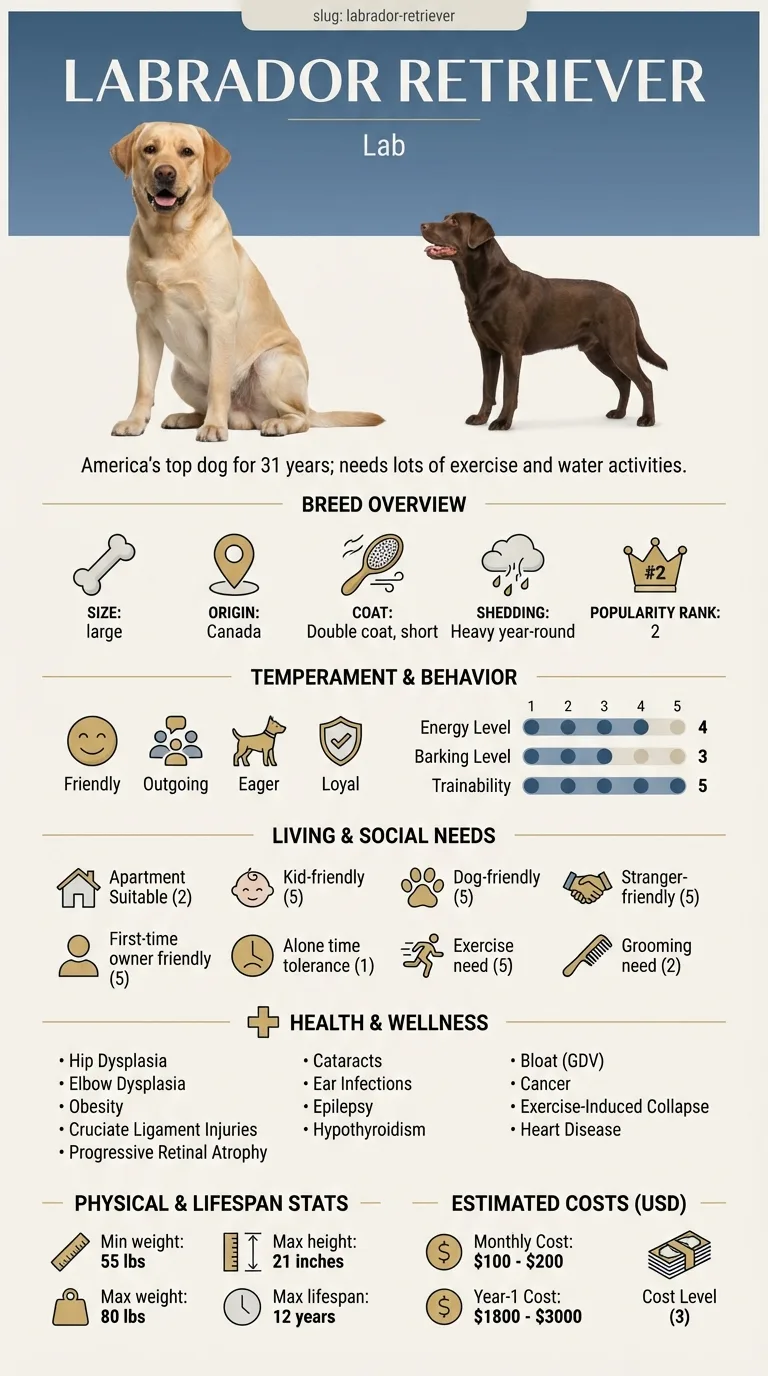
Owners of field-active, hunting, or heavily outdoors-oriented Labradors, particularly those retrieving through dense brush or working near water with debris, are the ones most likely to encounter acute eye injuries.
This guide is not medical advice. If your dog shows pain, sudden behavior change, or worsening symptoms, consult a licensed veterinarian.
Some links may be affiliate links. We may earn a commission at no extra cost to you. We only suggest products we believe are helpful for dog owners.
Check this first
A minor irritation, like a bit of debris causing brief squinting and tearing that resolves within an hour on its own, usually isn't urgent, though it's still worth a look to make sure nothing remains lodged. A true corneal scratch or ulcer typically causes persistent squinting, excessive tearing, light sensitivity, and visible cloudiness or redness that doesn't improve, and needs prompt veterinary attention since an untreated corneal ulcer can worsen quickly and threaten vision. Any eye injury accompanied by visible bleeding, a protruding or abnormally shaped eye, or a foreign object still embedded is an immediate emergency.
If any of these apply, call your vet or an emergency clinic now. The rest of this page is for the cases that are not an emergency.
For an active, outdoors-oriented breed like the Labrador Retriever, a meaningful share of real-world eye problems are acute injuries rather than chronic disease: corneal scratches, foreign bodies like grass seeds or debris, and minor irritation from retrieving through brush or swimming in murky water. Recognizing an injury early and knowing when persistent squinting, redness, or bleeding signals an emergency matters as much as understanding this breed's chronic eye conditions.
Genuinely common given this breed's active, retrieving-driven lifestyle, making acute eye injury a realistic, practical concern distinct from and arguably more frequent than this breed's chronic eye conditions for a field-active dog.
Labrador Retrievers were developed specifically to retrieve through dense cover and water, and that same drive in a modern pet dog creates genuine, ongoing exposure to sticks, branches, and waterborne debris at eye level, making acute eye trauma a practical, lifestyle-driven risk for this breed rather than a chronic disease process.
Dense brush, thorny vegetation, and debris-heavy water are the main environmental sources of acute eye injury. Rough play with other dogs and fast movement through unfamiliar outdoor terrain also raise the odds of an unexpected scratch or foreign body encounter.
See your vet promptly for persistent squinting, excessive tearing, visible redness, or cloudiness that doesn't resolve within an hour of returning from outdoor activity. Treat any visible bleeding, an embedded foreign object, or an abnormally shaped or protruding eye as an immediate emergency.
See all Labrador Retriever health problems, which breeds are prone to eye problems, or the full Labrador Retriever breed guide for temperament, exercise needs and ownership costs.
Minor irritation from debris typically resolves within an hour on its own or with a gentle rinse. A true corneal scratch treated promptly with antibiotic drops usually heals within five to seven days, while a more significant ulcer can take two to three weeks of closer veterinary management.
Success looks like catching and treating acute eye injuries early enough that they resolve fully without lasting damage, achieved through regular post-activity checks and prompt attention to any persistent symptom rather than waiting to see if it clears on its own.
Labrador Retrievers were developed to retrieve game through dense cover and water, and that same drive and lifestyle in a modern pet dog translates to real exposure: sticks and branches at eye level during brush retrieves, waterborne debris during swims, and the general rough-and-tumble of an active outdoor life. Corneal scratches, foreign bodies like grass seeds or debris caught under the eyelid, and minor conjunctival irritation are common, practical eye problems for this breed precisely because of how it's built and bred to behave, not because of any chronic disease process.
Nova, a four-year-old Labrador working as a hunting companion, came back from a dense-cover retrieve squinting hard and pawing at one eye. Her owner rinsed it gently with saline at home, but the squinting persisted past an hour, so she brought Nova to the vet the same afternoon. An exam with fluorescein dye revealed a corneal scratch, likely from brush contact during the retrieve, treated with a course of antibiotic drops. Nova's eye healed fully within a week, and her owner now does a quick eye check every time Nova returns from a dense-cover retrieve, catching one more minor scratch early the following season before it became anything more serious.
Key takeaway: For an active retrieving Labrador, acute eye injury from brush or debris is a genuinely common, practical risk, and prompt attention to persistent squinting or redness typically leads to a full, uncomplicated recovery.
Genuinely, yes, given this breed's active retrieving lifestyle through brush, water, and rough terrain, acute eye injuries like corneal scratches and foreign bodies are a realistic, practical risk distinct from chronic eye disease.
Persistent squinting, pawing at the eye, excessive tearing, and visible redness are the main signs. Gently checking under the eyelid for visible debris can help, but avoid trying to remove anything embedded yourself.
It can become serious if untreated, since an unhealed scratch can develop into a corneal ulcer that worsens quickly and threatens vision. Prompt veterinary treatment, usually antibiotic drops, typically resolves it well if caught early.
A gentle saline rinse for minor debris is reasonable, but if squinting or discomfort persists beyond an hour, or you suspect something is truly embedded, see a vet rather than attempting removal yourself.
Treat this as an emergency and go to a vet immediately; don't attempt to examine or treat a bleeding eye at home.
Yes, play with other dogs, running through brush, or contact with branches and debris during retrieving are all realistic sources of scratches, bruising, or foreign body injuries in an active Labrador.
Avoid letting your dog retrieve through especially dense, thorny brush when possible, rinse the face after swimming in debris-heavy water, and check the eyes after any activity where injury risk seems higher than usual.
Not always, but persistent squinting beyond an hour, or visible redness and tearing, warrants a vet check to rule out a scratch or foreign body.
Acute trauma, corneal scratches, foreign bodies, and minor irritation, from retrieving through brush and swimming in debris-heavy water, more than chronic eye disease.
A gentle saline rinse is reasonable for surface debris, but avoid trying to remove anything embedded, and see a vet if discomfort persists.
A vet visit with antibiotic eye drops for a straightforward scratch is a modest cost; a deeper ulcer needing more intensive treatment costs more.
Avoiding especially dense, thorny brush and rinsing the face after murky water swims meaningfully reduces risk, though it can't be eliminated entirely for an active field dog.
A one-page prep sheet for this condition: the signs, the questions to ask, what to get priced. Unlocks here.
You get: Vet visit prep sheet
No spam. One-click unsubscribe. See our privacy policy.
Preview page 1 before you decide.