DogBreedCompass
← Back to breed profile

Understanding Jack Russell Terrier Pancreatitis & Diabetes

Jack Russell Terriers are at risk for pancreatitis and diabetes, especially as they age. These conditions can significantly impact their health and quality of life. (Jack Russell Terrier pancreatitis & diabetes)

Understanding Jack Russell Terrier Pancreatitis & Diabetes infographic

Owners of Jack Russell Terriers, especially those with older dogs, often find themselves worried about these health issues. New dog owners or those unfamiliar with these conditions may feel overwhelmed by the necessary dietary and lifestyle changes.

Important reminder

This guide is not medical advice. If your dog shows pain, sudden behavior change, or worsening symptoms, consult a licensed veterinarian.

Some links may be affiliate links. We may earn a commission at no extra cost to you. We only suggest products we believe are helpful for dog owners.

What this problem looks like

Jack Russell Terrier pancreatitis and diabetes can be serious health issues for your pup. These conditions often manifest as weight loss, excessive thirst, and frequent urination. If your JRT is lethargic, has a poor appetite, or shows signs of abdominal pain, it may be time to consult your vet.

Common triggers

  • Overeating or consuming high-fat foods
  • Inactivity, especially in older dogs
  • Rapid weight gain or obesity
  • Genetic predisposition, particularly in senior JRTs

Pancreatitis and diabetes are relatively common in Jack Russell Terriers, especially as they age. Many JRTs are prone to these conditions due to their energetic nature and dietary habits, making awareness and preventive care essential.

Why this happens

Breed factors

Jack Russell Terriers are energetic and intelligent, but their high energy can lead to overeating or stress-related issues. These factors increase the risk of developing pancreatitis and diabetes, especially if their diet is not well-managed. Additionally, genetic predispositions may make some Jack Russells more vulnerable to these conditions.

Environment factors

Environmental factors like diet, lifestyle, and stress levels play a significant role in the development of pancreatitis and diabetes in Jack Russell Terriers. If they have access to unhealthy foods or treats, it can lead to obesity and related health issues. Moreover, a lack of regular exercise can contribute to weight gain and metabolic disorders.

What you can try

At-home strategies

  • Establish a balanced diet by consulting your vet for appropriate food recommendations. Look for high-quality, low-fat dog food designed for managing weight.
  • Implement a regular feeding schedule to prevent overeating. Measure out portions and avoid free-feeding to help control their weight.
  • Increase daily exercise by incorporating walks, playtime, and mental stimulation activities. Aim for at least 30 minutes of activity each day to keep them fit.

When to consider a trainer

If your Jack Russell Terrier exhibits significant behavior problems related to food, such as stealing food or being overly aggressive during mealtime, consider hiring a professional dog trainer. They can help address these issues and improve overall behavior.

When to talk to your vet

If you notice symptoms like increased thirst, frequent urination, vomiting, or lethargy, it's essential to consult your veterinarian. These could be signs of pancreatitis or diabetes and require immediate medical attention.

Realistic expectations

It may take several months to effectively manage your Jack Russell Terrier's pancreatitis and diabetes. Regular vet visits and dietary adjustments will be essential during this time.

Success means your dog has stable blood sugar levels, a healthy weight, and reduced pancreatitis symptoms, allowing them to enjoy a better quality of life.

Mistakes that make this worse

Avoiding common pitfalls can make managing Jack Russell Terrier pancreatitis and diabetes much easier. Here are some mistakes to watch out for.

  • Ignoring diet restrictions: Allowing your Jack Russell Terrier to eat whatever they want can worsen pancreatitis and diabetes. Stick to vet-recommended foods to help manage their condition.
  • Skipping regular vet visits: Neglecting routine check-ups can delay necessary interventions. Schedule regular appointments to monitor your dog's health and adjust their treatment plan.
  • Overfeeding: Giving too many treats or portions that are too large can lead to weight gain, which can worsen diabetes. Measure out food and limit treats to healthy options.
  • Failing to monitor symptoms: Not keeping an eye on changes in behavior or appetite can make problems worse. Track any unusual signs and report them to your vet promptly.
  • Neglecting exercise: A sedentary lifestyle can lead to obesity and worsen health issues. Develop a consistent, vet-approved exercise routine to keep your Jack Russell active.
  • Avoiding training: Failing to train your dog can lead to behavioral issues that complicate management. Invest time in training to help your dog understand commands and routines.
  • Using human food: Feeding your Jack Russell table scraps can introduce harmful ingredients. Stick to dog food designed for their specific health needs.

When Jack Russell Terrier Pancreatitis & Diabetes is an Emergency

Emergency signs include severe abdominal pain, continuous vomiting, lethargy, or loss of appetite. If your JRT shows any of these symptoms, it is crucial to seek veterinary help immediately. Additionally, if your dog appears dehydrated or has unusual behavior, don’t hesitate to call your vet.

On the other hand, some cases may be managed at home with careful observation. If your Jack Russell Terrier has mild digestive upset or slightly elevated blood sugar levels, you can monitor their condition for a day or two. Maintain a consistent feeding schedule and track any changes in behavior or appetite.

Remember, when it comes to your dog's health, it’s better to err on the side of caution. If you’re ever in doubt about your dog’s wellbeing, it’s best to consult your veterinarian. They can help you create a plan tailored to your Jack Russell Terrier’s needs and provide guidance on managing pancreatitis and diabetes effectively.

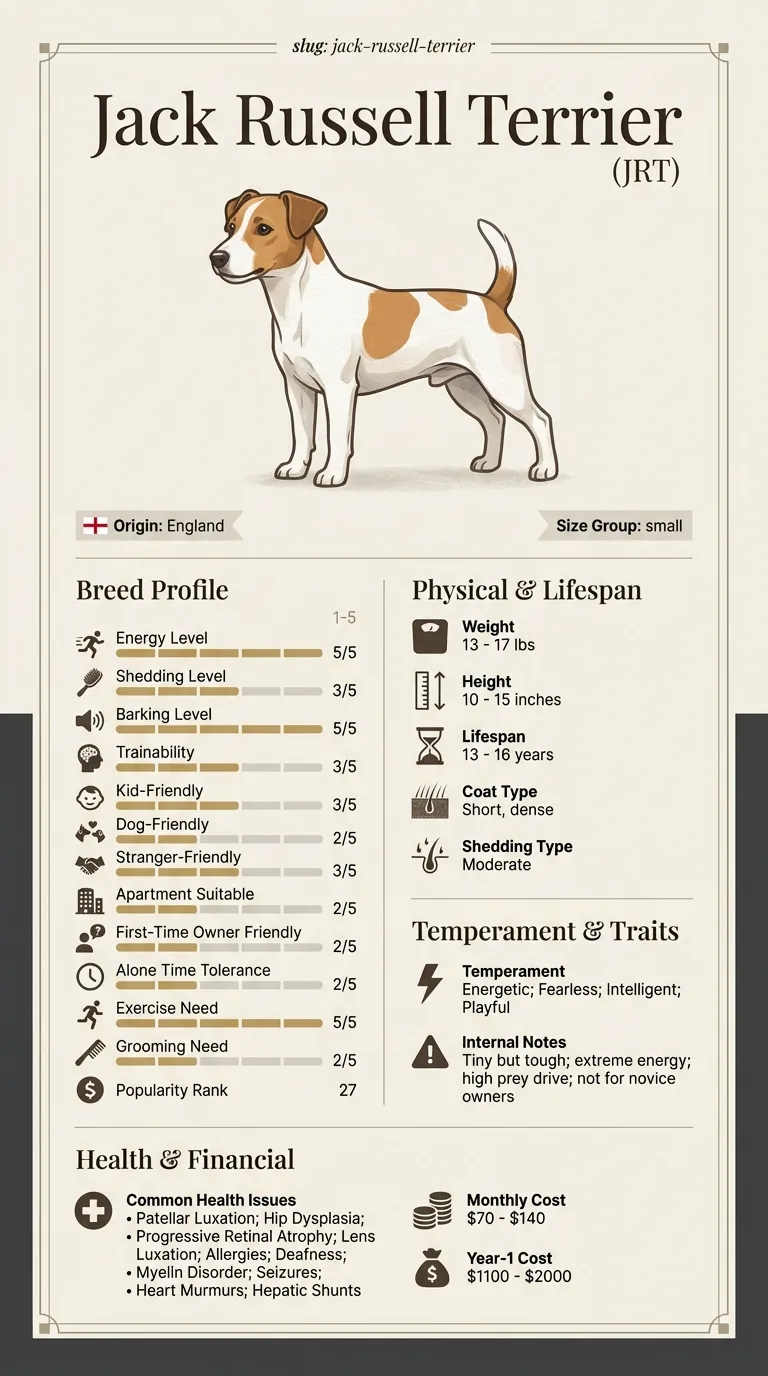
Understanding Jack Russell Terrier Pancreatitis & Diabetes - When Jack Russell Terrier Pancreatitis & Diabetes is an Emergency

Finding Balance for Max the Jack Russell Terrier

When Sarah adopted Max, her energetic Jack Russell Terrier, she noticed he frequently experienced digestive issues. After a vet visit, Max was diagnosed with pancreatitis and diabetes. Sarah learned how to adjust his diet to include low-fat, high-fiber foods and began regular vet check-ups. Within a few months, Max's health improved significantly. He was more active, had stable sugar levels, and his digestive problems were under control.

Key takeaway: Managing a Jack Russell Terrier with pancreatitis and diabetes requires dedication to dietary changes and vet consultations, but it can lead to a healthier, happier pup.

Frequently asked questions

Why does my Jack Russell Terrier have pancreatitis & diabetes?

Jack Russell Terriers can develop pancreatitis and diabetes due to a combination of genetics, diet, and weight. High-fat diets and obesity are significant risk factors. Regular vet check-ups and a balanced diet can help prevent these conditions. This answer relates to Jack Russell Terrier pancreatitis & diabetes.

How can I stop my Jack Russell Terrier from having pancreatitis & diabetes?

To prevent these conditions, maintain a healthy diet low in fat and high in fiber. Regular exercise is crucial to keep their weight in check. Consult your vet for specific dietary recommendations and routine health screenings.

What are the symptoms of pancreatitis & diabetes in Jack Russell Terriers?

Symptoms may include excessive thirst, frequent urination, lethargy, and abdominal pain. If your dog shows these signs, consult your veterinarian promptly for a diagnosis. Early intervention is key to managing these health issues.

What kind of diet should I follow for my Jack Russell Terrier with pancreatitis & diabetes?

A veterinarian-recommended diet that is low in fat and high in fiber is ideal for managing pancreatitis and diabetes. Look for foods specifically designed for dogs with these conditions. Always introduce new food gradually to avoid digestive upset.

Are there training methods to help manage my Jack Russell Terrier's pancreatitis & diabetes?

Training can help manage your dog's behavior and ensure they stick to their dietary plan. Positive reinforcement techniques are effective. Consistent routines can help your dog adapt better to their health needs.

Can Jack Russell Terriers develop pancreatitis and diabetes as they age?

Yes, Jack Russell Terriers can develop pancreatitis and diabetes, especially as they enter their senior years. Regular veterinary check-ups are crucial to catch these issues early and manage their health effectively.

What are the symptoms of pancreatitis and diabetes in Jack Russell Terriers?

Common symptoms include increased thirst, frequent urination, weight loss, and lethargy. If you notice these signs, it's essential to consult your vet as soon as possible.

How can I help my Jack Russell Terrier with pancreatitis and diabetes at home?

You can support your Jack Russell by maintaining a consistent, vet-approved diet and ensuring they get regular, moderate exercise. Monitoring their water intake and weight can also help manage their condition.

Is it possible to prevent pancreatitis and diabetes in my Jack Russell Terrier?

While you can't guarantee prevention, you can lower the risk by providing a balanced diet, avoiding table scraps, and managing their weight. Regular veterinary visits can help catch potential issues early.

When should I see a vet for my Jack Russell Terrier's pancreatitis and diabetes?

If your Jack Russell shows symptoms like vomiting, diarrhea, or sudden changes in appetite or behavior, you should see a vet promptly. Early intervention can lead to better management of their condition.

Quick answers

View more answers
Health

What are quick tips for managing Jack Russell Terrier pancreatitis & diabetes?

Feed a low-fat, high-fiber diet and ensure regular vet check-ups to monitor health. Keep your dog at a healthy weight through exercise and consistent feeding schedules.

Living

How often should I exercise my Jack Russell Terrier?

Aim for at least 30 to 60 minutes of exercise daily to help maintain a healthy weight and manage energy levels. Activities can include walks, playtime, and training sessions.

Costs

What are the costs associated with treating pancreatitis & diabetes in Jack Russell Terriers?

Monthly costs can range from $70 to $140 for food, medication, and vet visits. Be prepared for potential emergency expenses if complications arise.

Behavior

Can I prevent pancreatitis & diabetes in my Jack Russell Terrier?

Yes, by providing a balanced diet, regular exercise, and routine vet check-ups, you can significantly reduce the risk of these conditions. Early detection is crucial.

Related DogBreedCompass guides

  • Jack Russell Terrier common health problemsLearn more about the common health issues that can affect your Jack Russell Terrier.
  • Jack Russell Terrier pancreatitis & diabetes trainingDiscover effective ways to train your Jack Russell Terrier, especially if they struggle with pancreatitis and diabetes.
  • Jack Russell Terrier separation anxiety guideFind out how to manage your Jack Russell Terrier's separation anxiety, which can be compounded by health issues.
  • Jack Russell Terrier cost breakdownExplore the costs associated with owning a Jack Russell Terrier, including potential health care expenses.
  • Jack Russell Terrier behavior problemsUnderstand how to handle behavior problems in Jack Russell Terriers, especially those facing health challenges.

Related guides