Living
What is the energy level of a Labrador Retriever?
Labrador Retrievers have a high energy level, requiring plenty of exercise and playtime.

Quick answer
What is the energy level of a Labrador Retriever?
Labrador Retrievers have a high energy level, requiring plenty of exercise and playtime.
Deciding between a Labrador Retriever and a Pembroke Welsh Corgi? Both breeds offer unique traits and companionship, but they cater to different lifestyles.
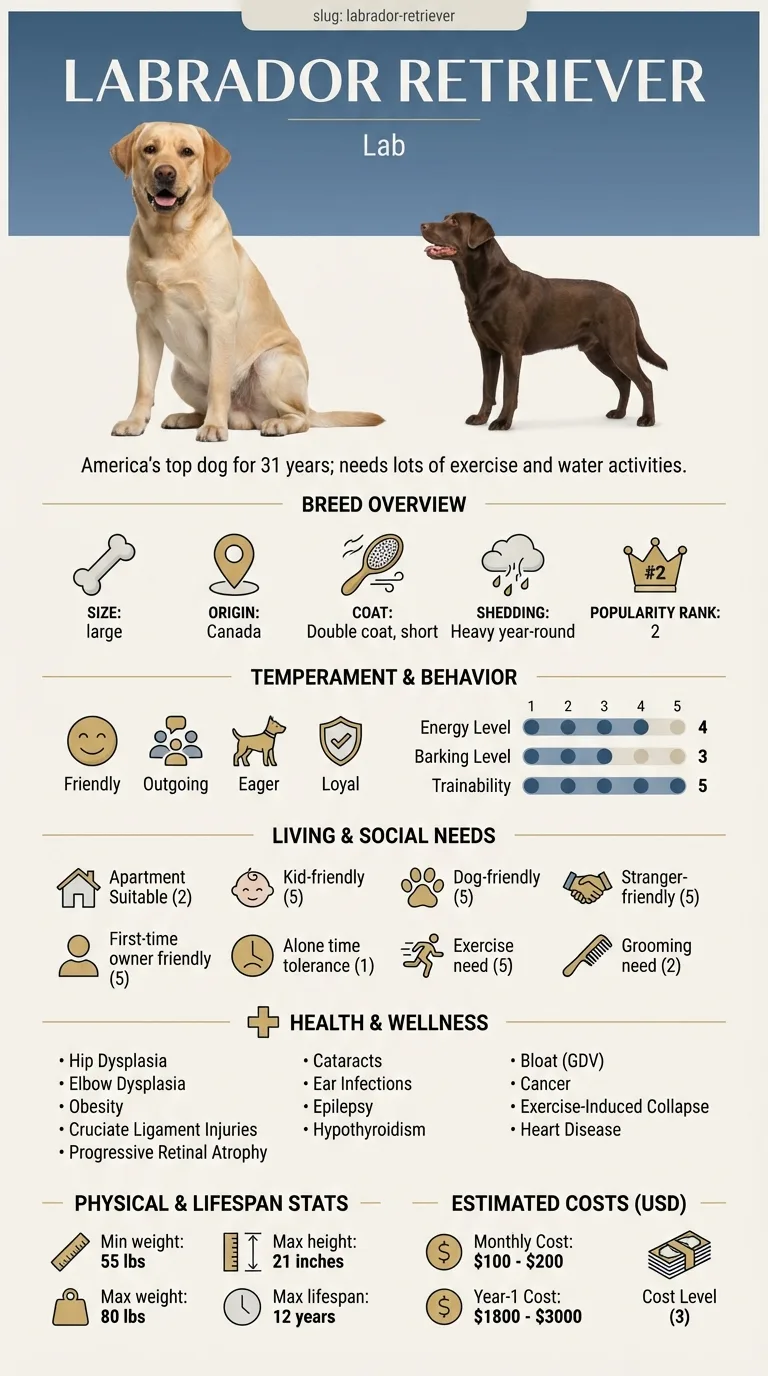
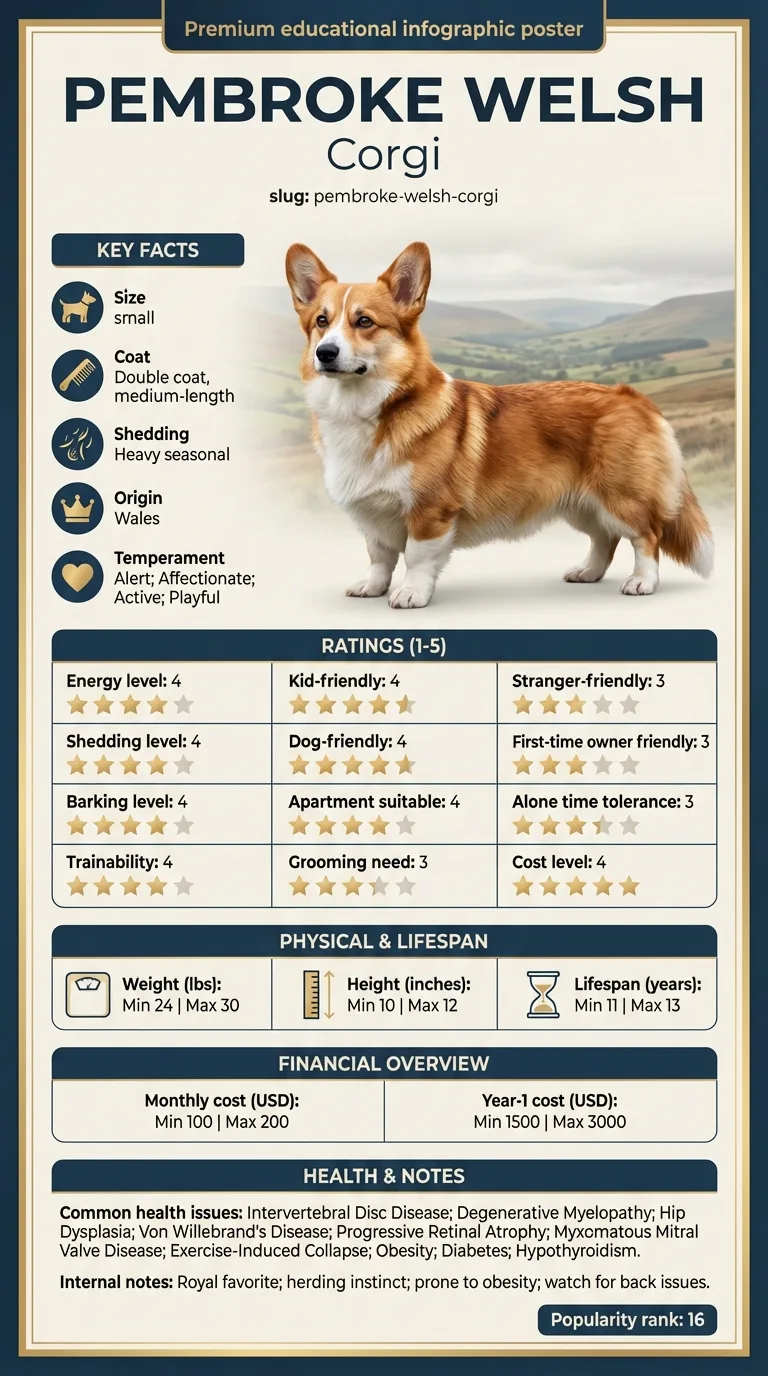
This comparison is perfect for potential dog owners who are torn between two popular breeds. You might be a family looking for a friendly companion, or perhaps you're a busy professional seeking a smaller breed that fits well in an apartment. Understanding the differences between these breeds will help you make a more informed decision based on your living situation, budget, and lifestyle.
The Labrador Retriever is ideal for active families, while the Pembroke Welsh Corgi is a better fit for smaller living spaces and moderate activity levels.
Choose a Labrador Retriever if you have plenty of space and are committed to regular exercise, as they thrive on activity and companionship.
Opt for a Pembroke Welsh Corgi if you prefer a smaller dog that adapts well to apartment life and has a playful yet manageable energy level.
| Feature | labrador retriever | pembroke welsh corgi | Winner |
|---|---|---|---|
| Size class | large | small | Equal |
| Weight | 55–80 lbs | 24–30 lbs | Equal |
| Height | 21–24 in | 10–12 in | Equal |
| Lifespan | 10–12 years | 11–13 years | pembroke welsh corgi |
| Exercise need | Very high (5/5) | High (4/5) | pembroke welsh corgi |
| Grooming need | Low (2/5) | Moderate (3/5) | labrador retriever |
| Shedding | High (4/5) | High (4/5) | Equal |
| Energy level | High (4/5) | High (4/5) | Equal |
| Barking | Moderate (3/5) | High (4/5) | labrador retriever |
| Apartment suitability | Low (2/5) | High (4/5) | pembroke welsh corgi |
| Good for first-time owners | Very high (5/5) | Moderate (3/5) | labrador retriever |
| Tolerates being alone | Very low (1/5) | Moderate (3/5) | pembroke welsh corgi |
| Trainability | Very high (5/5) | High (4/5) | labrador retriever |
| Good with kids | Very high (5/5) | High (4/5) | labrador retriever |
| Good with other dogs | Very high (5/5) | High (4/5) | labrador retriever |
| Friendly to strangers | Very high (5/5) | Moderate (3/5) | labrador retriever |
| Cost level | Moderate (3/5) | High (4/5) | labrador retriever |
| Coat | Double coat, short | Double coat, medium-length | Equal |
| Origin | Canada | Wales | Equal |
| Typical monthly cost | $100–$200 | $100–$200 | Equal |
| Typical first-year cost | $1,800–$3,000 | $1,500–$3,000 | Equal |
Labrador Retrievers are known for their high energy, requiring daily exercise to stay happy and healthy. They thrive on activities like running, swimming, and fetching. In contrast, Pembroke Welsh Corgis have a moderate energy level, needing less exercise overall but still enjoying playtime and walks.
This makes Corgis a better fit for less active owners or those with smaller living spaces.
The size difference between these two breeds significantly affects living conditions. Labs, being large, require more space and are not ideal for apartment living. On the other hand, Corgis, being small, adapt well to smaller homes.
This size factor is crucial for families or individuals living in apartments or smaller houses, as a Corgi can comfortably thrive in those environments.
When it comes to trainability, Labrador Retrievers generally take the lead. They are eager to please and quick learners, making them excellent candidates for obedience training. Corgis, while intelligent, can be a bit more stubborn.
This difference can impact first-time dog owners, as a Lab may be easier to train compared to a Corgi, who may require more patience.
If you live in an apartment, the Pembroke Welsh Corgi is the clear winner. Their smaller size and moderate energy level make them better suited for limited space. Labs, while friendly and loving, require more room to roam and can be quite boisterous indoors.
When it comes to families with kids, the Labrador Retriever takes the crown. Labs are known for their playful and gentle nature, making them great companions for children. Corgis can be playful too, but they might be less tolerant of roughhousing, which is why Labs are often the preferred family dog.
In terms of costs, the Pembroke Welsh Corgi generally offers a more budget-friendly option. While both breeds have similar monthly care costs, Corgis tend to have lower overall health-related expenses. Labradors, on the other hand, are known for certain health issues that can increase their long-term costs.
First-time dog owners might find the Labrador Retriever to be more forgiving. With their high trainability and friendly demeanor, Labs are eager to please. Corgis can be a bit more stubborn and may require a more experienced hand for training, making them slightly less ideal for novices.
For exercise needs, the Labrador Retriever is the winner. They thrive on high levels of activity and require significant daily exercise. Corgis can keep up but are generally satisfied with moderate exercise, making them a better fit for people with less active lifestyles.


The choice between a Labrador Retriever and a Pembroke Welsh Corgi depends on your lifestyle. Labs are large, friendly, and great for active families, while Corgis are smaller, alert, and may fit better in apartments. Consider your space, activity level, and family needs.
Both breeds have similar initial costs, but the Labrador Retriever generally has higher yearly expenses due to its larger size and greater exercise needs. Expect to pay around $1,800 to $3,000 for a Lab in the first year, compared to $1,500 to $3,000 for a Corgi.
Labrador Retrievers require more exercise due to their higher energy levels and larger size. They thrive on activities like swimming and running. Pembroke Welsh Corgis also need regular exercise but can meet their needs with shorter walks and playtime.
Labrador Retrievers have low grooming needs with a short double coat, while Pembroke Welsh Corgis require moderate grooming due to their medium-length coat. However, both breeds shed heavily, so regular brushing is a must.
Labrador Retrievers are known for their friendly and patient demeanor, making them great for families with kids. Pembroke Welsh Corgis are also good with children, but their herding instinct may lead them to nip if not properly trained.
Labrador Retrievers tend to be easier to train due to their eagerness to please and high trainability score. Pembroke Welsh Corgis are trainable but may require more patience and consistent reinforcement.
Labrador Retrievers bark moderately, mostly when excited or to alert their owners. Pembroke Welsh Corgis, however, may bark more frequently as they are more alert and protective of their territory.
Common health issues for Labs include hip and elbow dysplasia, while Corgis may face back problems due to their body structure. Regular vet check-ups for both breeds are essential to catch any health concerns early.
Labrador Retrievers have a high energy level, requiring plenty of exercise and playtime.
Pembroke Welsh Corgis have a moderate energy level and enjoy regular walks and play.
Labrador Retrievers shed heavily year-round due to their double coat.
Pembroke Welsh Corgis also shed heavily, especially during seasonal changes.
Secure checkout on Stripe. We never see your card.
7-day money-back guarantee. Instant access.

This guide is not medical advice. If your dog shows pain, sudden behavior change, or worsening symptoms, consult a licensed veterinarian.
Some links may be affiliate links. We may earn a commission at no extra cost to you. We only suggest products we believe are helpful for dog owners.
We research and check what we publish, but we do not warrant that any figure, date, price, or statement is accurate, complete, or current, and we accept no liability for any loss, cost, injury, or other harm arising from the use of this site. Use it as one reference among several. You remain responsible for your own decisions and for your dog's care - confirm anything that matters with a licensed veterinarian or another qualified professional before you act on it. Full disclaimer.
Match your lifestyle to the right dog.
Take quizNot sure which breed is right for you? Take our 2-minute quiz to find out.
Take the quiz