Health
Is my Labrador's heart murmur cardiomyopathy?
Probably not; the structural heart condition actually documented in this breed is a valve defect, tricuspid valve dysplasia, not muscle disease.

Quick answer
Is my Labrador's heart murmur cardiomyopathy?
Probably not; the structural heart condition actually documented in this breed is a valve defect, tricuspid valve dysplasia, not muscle disease.
If "cardiomyopathy" is the term that brought you here, the more precise and more relevant condition for this breed is tricuspid valve dysplasia, a different kind of heart problem with its own, generally more favorable, outlook.
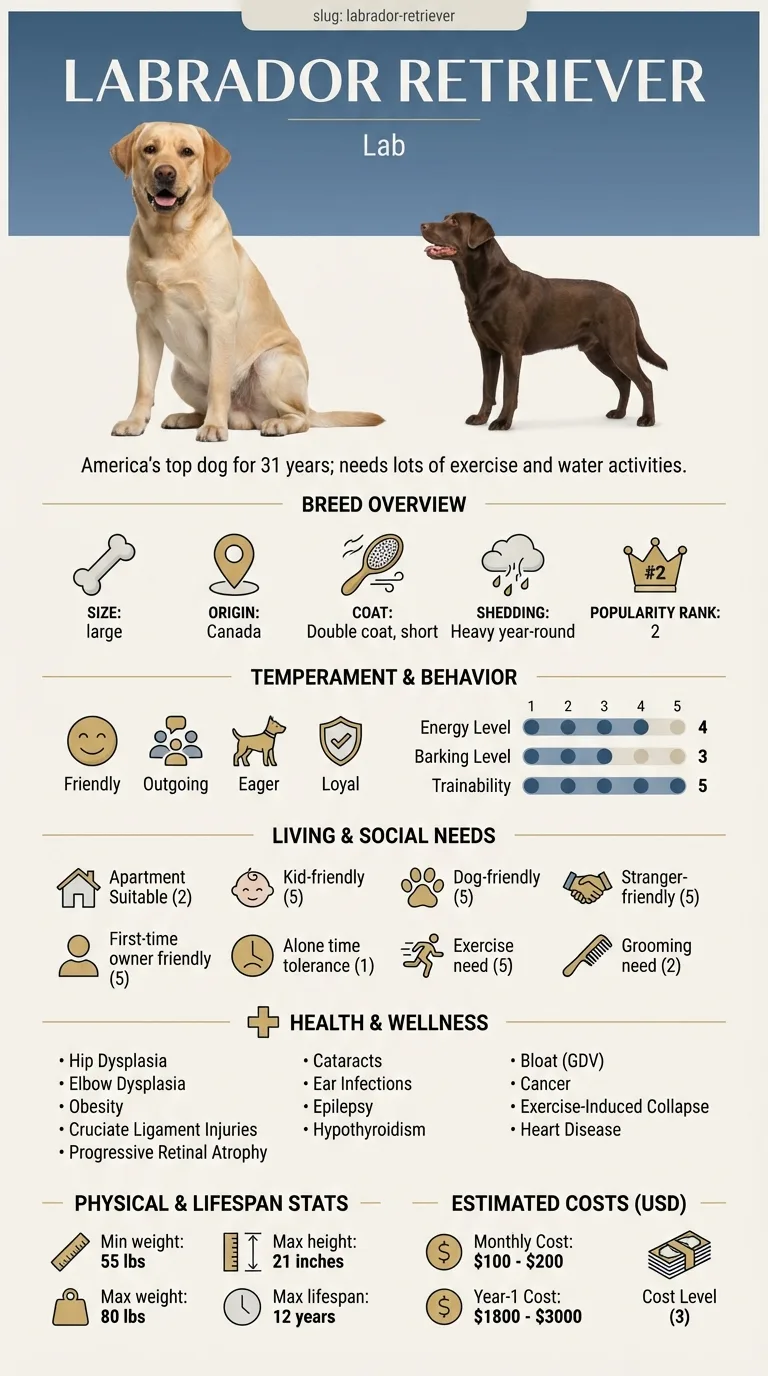
Owners whose Labrador has a heart murmur, or who are researching general heart muscle disease after reading about other breeds, benefit most from understanding exactly which condition actually applies here.
This guide is not medical advice. If your dog shows pain, sudden behavior change, or worsening symptoms, consult a licensed veterinarian.
Some links may be affiliate links. We may earn a commission at no extra cost to you. We only suggest products we believe are helpful for dog owners.
We research and check what we publish, but we do not warrant that any figure, date, price, or statement is accurate, complete, or current, and we accept no liability for any loss, cost, injury, or other harm arising from the use of this site. Use it as one reference among several. You remain responsible for your own decisions and for your dog's care - confirm anything that matters with a licensed veterinarian or another qualified professional before you act on it. Full disclaimer.
True cardiomyopathy, disease of the heart muscle itself, isn't documented as a hallmark condition in Labrador Retrievers the way it is in breeds like Dobermans or Boxers. The structural heart condition that actually has real documentation in this breed is tricuspid valve dysplasia, a congenital valve defect present from birth, a fundamentally different mechanism with its own, often more favorable, range of outcomes.
True muscle-disease cardiomyopathy is uncommon in this breed. Tricuspid valve dysplasia, the actually documented structural heart condition, appears in a meaningful minority of Labradors, most often identified as an incidental murmur rather than a symptomatic problem.
Labrador Retrievers don't carry the documented genetic predisposition to classic dilated or arrhythmogenic cardiomyopathy seen in other large breeds. What does appear in this breed's case reports is tricuspid valve dysplasia, a congenital malformation of the valve between the heart's right chambers, present from birth regardless of lifestyle or environment.
Because tricuspid valve dysplasia is congenital, environment doesn't cause it, but overall cardiac workload from obesity or intense unmanaged exercise can make symptoms in a more significantly affected dog harder to manage day to day.
Talk to your vet about any newly detected heart murmur, and ask specifically whether an echocardiogram is warranted. See your vet promptly for reduced exercise tolerance, labored breathing, or fainting in a dog with a known valve defect.
See all Labrador Retriever health problems, which breeds are prone to cardiomyopathy, or the full Labrador Retriever breed guide for temperament, exercise needs and ownership costs.
A congenital valve defect is present from birth and typically identified in puppyhood or found incidentally later. Severity generally stays stable over a dog's life in mild cases, with periodic rechecks used to catch any gradual change in a smaller number of more significant cases.
Success looks like an accurate diagnosis distinguishing this from unrelated muscle disease, and, for most affected dogs, a normal, full life with nothing more than periodic monitoring required.
True cardiomyopathy involves the heart muscle itself becoming enlarged, thickened, or weakened, classically documented in breeds like Dobermans and Great Danes for dilated cardiomyopathy, or Boxers for arrhythmogenic cardiomyopathy. Labrador Retrievers aren't documented as a hallmark breed for either of those specific muscle diseases. What is documented in this breed is tricuspid valve dysplasia, a structural malformation of one of the heart's valves present from birth, an entirely different mechanism: a plumbing problem rather than a pump problem.
A dog with tricuspid valve dysplasia has a valve that doesn't close properly, letting blood leak backward within the heart with each beat, heard as a murmur. Severity ranges enormously: many affected dogs live full, normal-length lives with nothing more than a lifelong murmur and periodic monitoring, while a smaller number of more severely affected dogs develop exercise intolerance or fluid buildup requiring ongoing management. The honest range of outcomes here is wide, which is exactly why an echocardiogram to grade severity, rather than the murmur alone, is what actually predicts a given dog's future.

If you think your Lab has cardiomyopathy, the plan is three steps: write down what you have seen and when it started, book a veterinary appointment rather than waiting for the next flare, and take video of the behaviour or symptom before you go — the thing you are worried about rarely happens in the consulting room. Screening in the parents covers hip dysplasia, elbow dysplasia, obesity.
What the vet visit should produce is a diagnosis and a written plan, not just reassurance: what is being ruled out, what the monitoring interval is, and which signs mean you come back sooner. Ask what the treatment costs across a year rather than per visit, because that is the number that decides whether you are managing this condition or reacting to it.
Between appointments, keep a short log — dates, what you saw, what changed. It is the single most useful thing an owner brings to a follow-up, and for cardiomyopathy it is often what separates a clear pattern from a guess.
Clive's murmur was found by chance during a routine dental cleaning exam at age four, something his owner hadn't noticed at home since Clive showed no symptoms at all. Worried it might be cardiomyopathy after some quick searching, his owner was relieved when an echocardiogram identified mild tricuspid valve dysplasia instead, a congenital finding with no measurable impact on his heart's overall function. Clive's vet recommended a recheck every two years rather than any treatment or activity restriction. Now seven, Clive still runs, swims, and retrieves exactly as he always has, with his owner no longer worried every time she hears him pant heavily after a hard play session.
Key takeaway: A heart murmur in a Labrador is worth a proper echocardiogram to identify what's actually going on, and the answer in this breed is far more often a manageable valve finding than true heart muscle disease.
Not in the classic sense of documented heart muscle disease seen in breeds like Dobermans or Boxers. The structural heart condition actually documented in Labradors is tricuspid valve dysplasia, a valve defect rather than a muscle disease.
Cardiomyopathy affects the heart muscle's ability to pump effectively. Valve disease, like tricuspid valve dysplasia, affects how well a valve seals between heartbeats, letting blood leak backward. They're different mechanisms with different typical outcomes.
It ranges from a lifelong, harmless-sounding murmur with no real impact to more severe cases involving exercise intolerance or fluid buildup. An echocardiogram grading severity is far more informative than the presence of a murmur alone.
Many dogs with mild tricuspid valve dysplasia live a completely normal lifespan and activity level, monitored periodically but never significantly limited by the condition.
Mild cases often need no treatment beyond monitoring. More significant cases may need medication to manage symptoms like fluid buildup, tailored by a veterinary cardiologist based on echocardiogram findings.
Yes, it's the only reliable way to determine whether a murmur reflects a mild, inconsequential finding or a more significant structural issue needing ongoing management.
It can in more significantly affected dogs, which is why periodic rechecks matter, but many mild cases remain stable and unchanged for a dog's entire life.
Probably not; the structural heart condition actually documented in this breed is a valve defect, tricuspid valve dysplasia, not muscle disease.
Many dogs with mild tricuspid valve dysplasia live a full, normal, active life with only periodic monitoring needed.
An echocardiogram, performed by a vet or veterinary cardiologist, is the reliable way to grade severity beyond just hearing the murmur itself.
Periodic rechecks and occasional echocardiograms add a moderate recurring cost over a dog's life, more if medication becomes necessary for a more significant case.
Mild cases usually need no exercise restriction; more significant cases should have activity levels guided specifically by a veterinary cardiologist rather than a blanket rule.
A one-page prep sheet for this condition: the signs, the questions to ask, what to get priced. Unlocks here.
You get: Vet visit prep sheet
No spam. One-click unsubscribe. See our privacy policy.
See a sample page before you decide.
Early access list
The free prep sheet covers the same-day warning signs, a symptom log and the questions to ask. We are considering a fuller kit that adds a cost worksheet for the usual tests and treatments (US price ranges with their sources) and a plain-English guide to ways of covering the bill. It is not built yet; this list tells us whether it is worth building.
One email, no spam, unsubscribe anytime. Information only, not veterinary advice.