Living
Which is the better overall pick?
Choose the Lab for an outgoing, low-drama family dog that's fine with strangers. Choose the Sheltie if you want a smaller, longer-lived dog and don't mind frequent barking and a more reserved personality.

Quick answer
Which is the better overall pick?
Choose the Lab for an outgoing, low-drama family dog that's fine with strangers. Choose the Sheltie if you want a smaller, longer-lived dog and don't mind frequent barking and a more reserved personality.
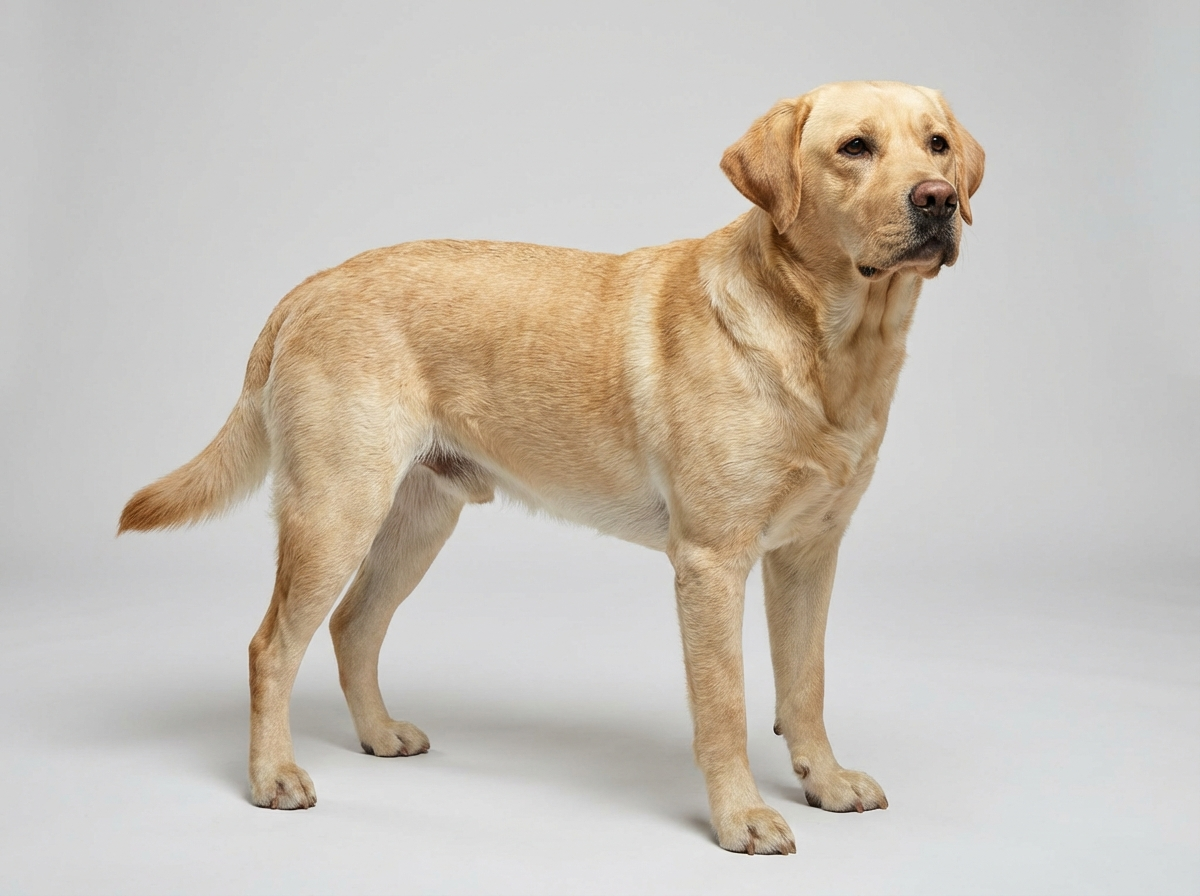
Labrador Retriever or Shetland Sheepdog? On paper they differ most on friendly to strangers, and on the scales Labrador Retriever is the heavier at 55–80 lbs. Here is how the two compare on everything that shapes an ordinary week.
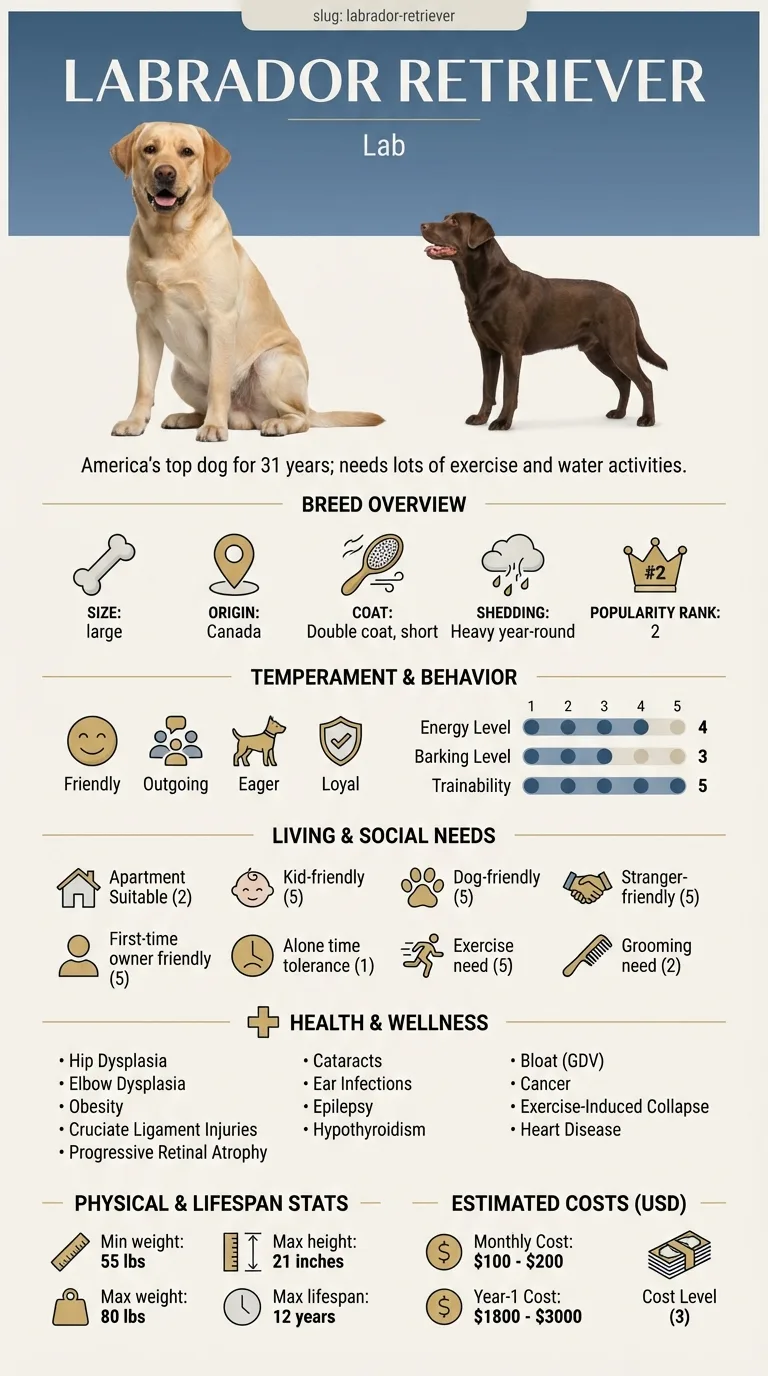
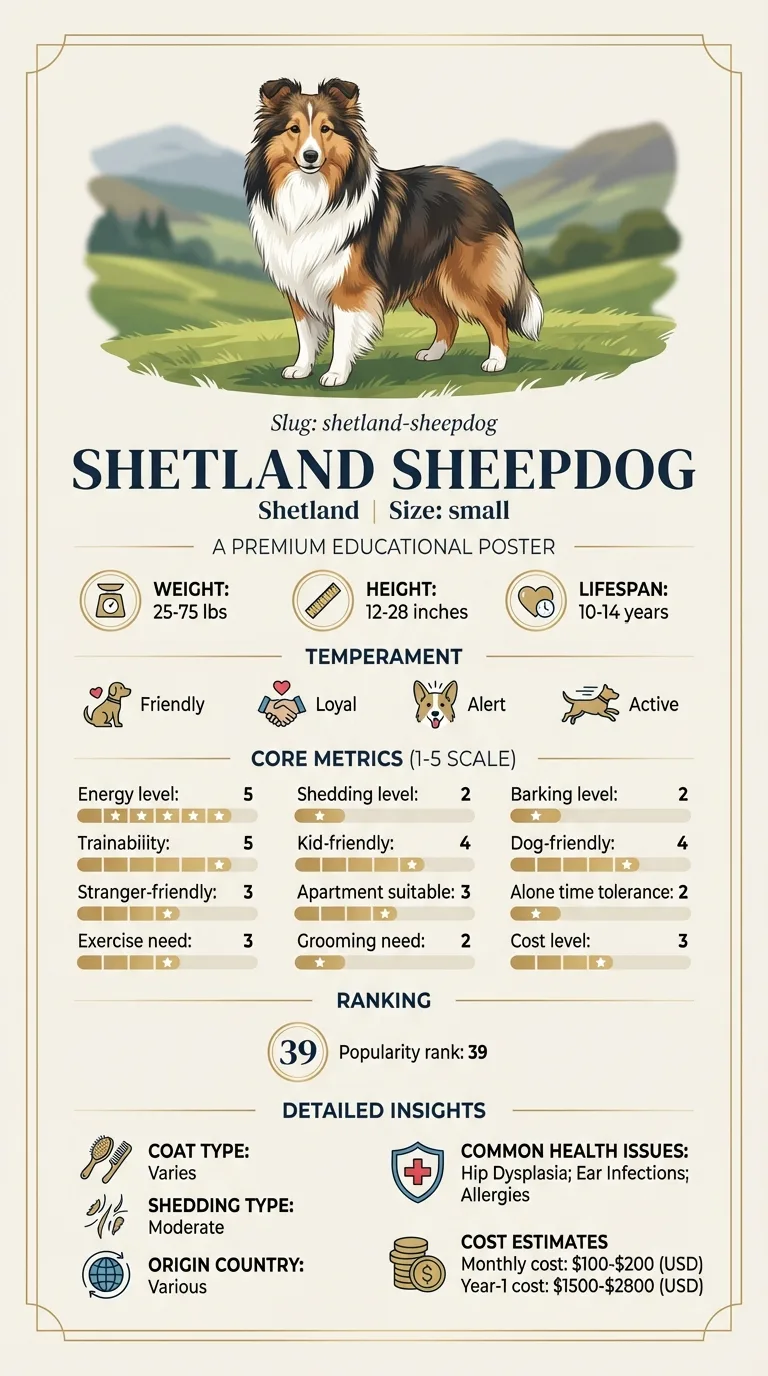
This is for someone already down to Labrador Retriever and Shetland Sheepdog and deciding between them. For this pair the decision usually turns on friendly to strangers and grooming need, so those are covered first and in most detail. Anyone choosing from a flat has a clear answer here: Shetland Sheepdog rates 3/5 against 2/5. It is written for the decision rather than the breed history.
Between Labrador Retriever and Shetland Sheepdog, friendly to strangers is what separates them; neither is the lower-effort dog overall.
Choose Labrador Retriever if this is your first dog, you do not want a standing grooming appointment and there are young children at home.
Choose Shetland Sheepdog if you are in a flat or a smaller home, your walking routine is modest and a smaller dog suits your car, your home or your back.
| Feature | labrador retriever | shetland sheepdog | Winner |
|---|---|---|---|
| Size class | large | small | Equal |
| Weight | 55–80 lbs | 15–25 lbs | Equal |
| Height | 21–24 in | 13–16 in | Equal |
| Lifespan | 10–12 years | 12–14 years | shetland sheepdog |
| Exercise need | Very high (5/5) | High (4/5) | shetland sheepdog |
| Grooming need | Low (2/5) | High (4/5) | labrador retriever |
| Shedding | High (4/5) | High (4/5) | Equal |
| Energy level | High (4/5) | High (4/5) | Equal |
| Barking | Moderate (3/5) | Very high (5/5) | labrador retriever |
| Apartment suitability | Low (2/5) | Moderate (3/5) | shetland sheepdog |
| Good for first-time owners | Very high (5/5) | High (4/5) | labrador retriever |
| Tolerates being alone | Very low (1/5) | Low (2/5) | shetland sheepdog |
| Trainability | Very high (5/5) | Very high (5/5) | Equal |
| Good with kids | Very high (5/5) | High (4/5) | labrador retriever |
| Good with other dogs | Very high (5/5) | High (4/5) | labrador retriever |
| Friendly to strangers | Very high (5/5) | Low (2/5) | labrador retriever |
| Cost level | Moderate (3/5) | Moderate (3/5) | Equal |
| Coat | Double coat, short | Long, dense double coat | Equal |
| Origin | Canada | Various | Equal |
| Typical monthly cost | $100–$200 | $80–$150 | Equal |
| Typical first-year cost | $1,800–$3,000 | $1,100–$2,300 | Equal |
Weight is where these two part ways fastest: the Labrador's 55-to-80-pound frame dwarfs the Sheltie's 15-to-25 pounds, with a seven-to-eight-inch gap in shoulder height too. Despite that, both breeds are working dogs built for stamina rather than bulk. If you've got limited space or want a dog that's easier to lift into a car, the Sheltie's compact frame is the more practical choice by a wide margin.
Exercise need runs high across the board, 5 out of 5 for the Lab, 4 out of 5 for the Sheltie, so neither is a couch-only breed. The Sheltie was bred to herd all day, and it shows: expect a dog that wants agility courses, fetch, or long structured walks rather than aimless wandering. The Lab wants similar volume but is less picky about structure, happy with a straightforward run or swim.
The Lab needs comparatively little coat maintenance (2 out of 5) but sheds heavily (4 out of 5), a pattern many double-coated dogs share. The Sheltie flips the grooming demand higher (4 out of 5, thanks to that long, dense double coat) while landing at the same heavy shedding level. In other words, the Sheltie asks for more brushing time and leaves the same amount of hair on the floor, not less.
Barking is the number to watch here: the Sheltie rates a full 5 out of 5, the highest possible, well above the Lab's moderate 3 out of 5. Shelties are famously vocal, and that habit doesn't fade with training the way some owners hope. Apartment suitability actually favors the Sheltie slightly (3 out of 5 versus the Lab's 2), but if your neighbors are close, the barking score may matter more than the space rating.
Both breeds share a top trainability score of 5 out of 5, and the Lab edges ahead only slightly on overall first-timer suitability (5 out of 5 versus the Sheltie's still-strong 4). Shelties are described as bright and sensitive, which in practice means they respond fast to gentle correction but can shut down under harsh handling, worth knowing if your training style leans firm.
The Lab wins every social category here, and by a wide margin on one of them. Both dogs score well with kids (5 versus 4) and other dogs (5 versus 4), but strangers is where they diverge sharply: the Lab rates a full 5 out of 5, the Sheltie a low 2 out of 5. Shelties tend to be reserved with people they don't know.
The Sheltie edges out the Lab on longevity, typically living 12 to 14 years against the Lab's 10 to 12. Its health list is also shorter and more breed-specific: collie eye anomaly, MDR1 drug sensitivity, and dermatomyositis are conditions tied closely to herding breeds. The Lab's list is longer and includes bloat, cancer, and exercise-induced collapse, conditions worth discussing with any breeder or vet before committing.
Both breeds carry a moderate 3 out of 5 cost rating, but the raw numbers favor the Sheltie: $80 to $150 a month against the Lab's $100 to $200, and a first-year total of roughly $1,100 to $2,300 versus $1,800 to $3,000. Smaller dogs generally cost less to feed and medicate, and that shows up clearly in the Sheltie's numbers here.
Labrador Retriever weighs 55–80 lbs and lives 10–12 years; Shetland Sheepdog weighs 15–25 lbs and lives 12–14 years. The two diverge most on friendly to strangers, grooming need and barking. They are level on cost level, energy level and shedding, so those cannot decide it. In the table, a "winner" means easier for an ordinary household — not better. Size, coat and origin are recorded without a verdict. Because both breeds are scored the same way, the gaps are reliable even where the absolute numbers are rough.

The Labrador is far larger, 55 to 80 pounds versus the Sheltie's 15 to 25. Height follows the same pattern, with the Lab standing roughly 21 to 24 inches to the Sheltie's 13 to 16.
They actually tie on shedding, both rated 4 out of 5. What differs is grooming effort: the Sheltie's long double coat needs far more brushing to manage that shedding than the Lab's short coat does.
Both work well, the Lab rates 5 out of 5, the Sheltie a strong 4 out of 5. Either breed trains easily, though the Sheltie's sensitivity calls for a gentler hand.
The Sheltie technically scores slightly better for apartment suitability (3 versus 2), but its high barking tendency can offset that advantage if your walls are thin.
The Sheltie runs cheaper to keep: $80 to $150 a month versus the Lab's $100 to $200, mostly a function of its smaller size and correspondingly smaller food bill.
Hypothyroidism appears on both lists, but otherwise the health profiles diverge. The Lab's list leans toward joint and cancer risks, the Sheltie's toward eye and drug-sensitivity conditions specific to herding breeds.
The Shetland Sheepdog, notably, rated a full 5 out of 5 for barking against the Lab's moderate 3 out of 5. If you live somewhere noise-sensitive, that's the single biggest factor to weigh.
Choose the Lab for an outgoing, low-drama family dog that's fine with strangers. Choose the Sheltie if you want a smaller, longer-lived dog and don't mind frequent barking and a more reserved personality.
The Sheltie runs $80-$150 a month, the Lab $100-$200, both moderate, but the Sheltie's smaller size keeps its bills lower.
Both need daily vigorous exercise, the Lab rates 5 out of 5, the Sheltie 4 out of 5. Neither is suited to a sedentary household.
The Sheltie, typically 12 to 14 years against the Lab's 10 to 12, a modest but real edge in expected lifespan.
Secure checkout on Stripe. We never see your card.
7-day money-back guarantee. Instant access.
Health information here is general and is not veterinary advice. If your dog shows pain, sudden behaviour change, or worsening symptoms, consult a licensed veterinarian.
Some links on this site are affiliate links. We may earn a commission at no extra cost to you, and we only suggest products we believe are helpful for dog owners.
We research and check what we publish, but we do not warrant that any figure, date, price, or statement is accurate, complete, or current, and we accept no liability for any loss, cost, injury, or other harm arising from the use of this site. Use it as one reference among several. You remain responsible for your own decisions and for your dog's care - confirm anything that matters with a licensed veterinarian or another qualified professional before you act on it. Full disclaimer.
Match your lifestyle to the right dog.
Take quizNot sure which breed is right for you? Take our 2-minute quiz to find out.
Take the quiz