Health
What's the diet concern with DCM?
Certain grain-free, legume-heavy diets have been associated with increased DCM cases in some breeds, an area of active veterinary research.

Quick answer
What's the diet concern with DCM?
Certain grain-free, legume-heavy diets have been associated with increased DCM cases in some breeds, an area of active veterinary research.
Few conditions in canine cardiology have generated as much debate in recent years as the possible connection between certain diets and dilated cardiomyopathy — and it's a conversation every large-breed owner should understand.
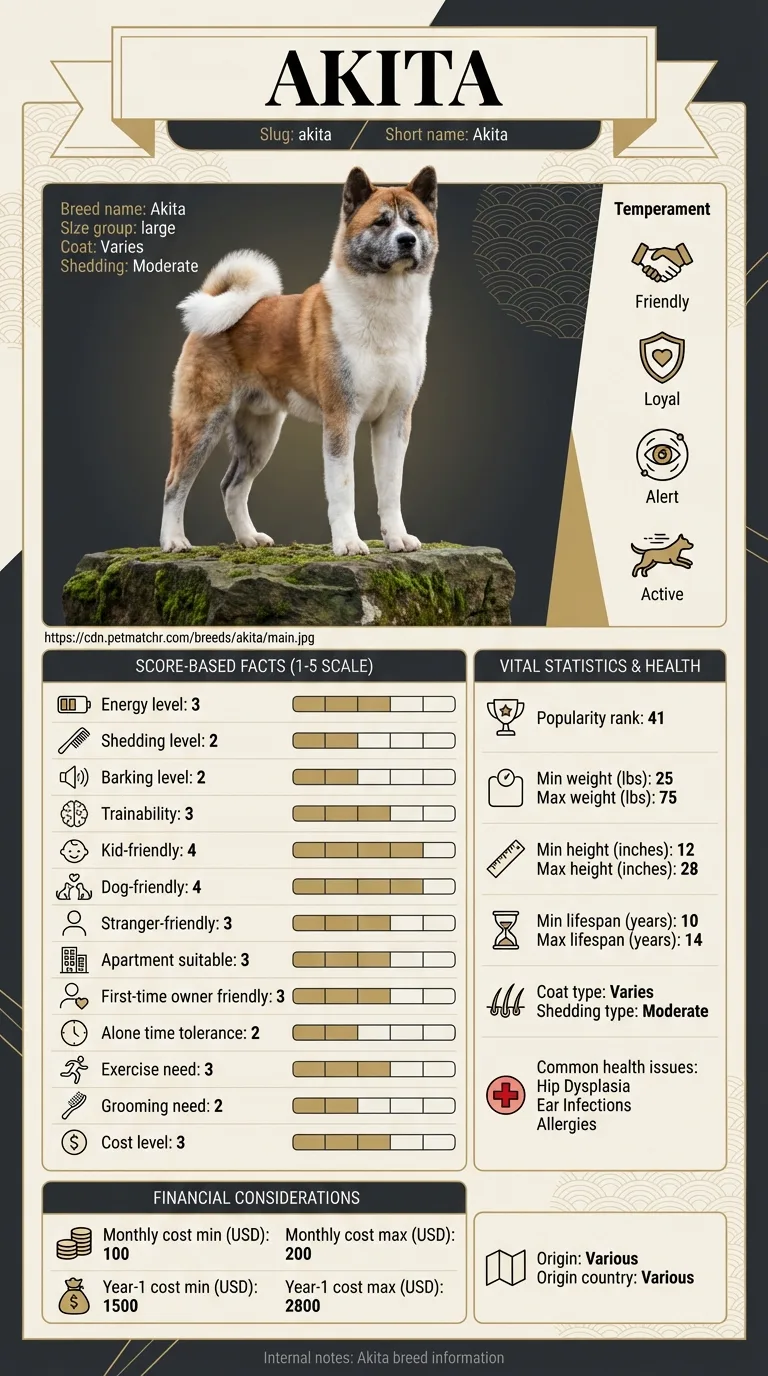
Owners feeding a grain-free or boutique diet who are now researching DCM, and owners of Akitas recently diagnosed with the condition trying to understand next steps, are both part of the audience here.
This guide is not medical advice. If your dog shows pain, sudden behavior change, or worsening symptoms, consult a licensed veterinarian.
Some links may be affiliate links. We may earn a commission at no extra cost to you. We only suggest products we believe are helpful for dog owners.
We research and check what we publish, but we do not warrant that any figure, date, price, or statement is accurate, complete, or current, and we accept no liability for any loss, cost, injury, or other harm arising from the use of this site. Use it as one reference among several. You remain responsible for your own decisions and for your dog's care - confirm anything that matters with a licensed veterinarian or another qualified professional before you act on it. Full disclaimer.
Check this first
Collapse, fainting, pale or bluish gums, or rapid and labored breathing at rest indicate the heart may be failing to keep up with the body's needs, or that a dangerous arrhythmia has developed — both recognized complications of DCM. These require same-day emergency veterinary care.
A new cough, reduced exercise tolerance, or abdominal swelling from fluid buildup suggest possible heart failure developing and need a prompt vet visit, generally within a day or two, sooner if breathing looks labored even at rest.
For dogs already diagnosed and being monitored, any noticeable change since the last recheck — new lethargy, a cough that wasn't there before, or reduced appetite — is worth calling your cardiologist about rather than waiting for the next scheduled appointment.
If any of these apply, call your vet or an emergency clinic now. The rest of this page is for the cases that are not an emergency.
Dilated cardiomyopathy is a stretching and weakening of the heart's main pumping chamber, and it's the large-breed cardiac condition most actively discussed in recent years due to research into a possible link with certain grain-free and boutique diets. Genetics play a role in some lines, but diet has become an equally important part of the diagnostic and treatment conversation.
DCM is the cardiomyopathy form most frequently discussed in large-breed dogs, and the diet-associated subset specifically drew significant national veterinary attention starting in 2018 as cases appeared in breeds and individual dogs not previously considered high-risk.
As a large breed, the Akita's heart has a larger muscle mass to maintain, which is part of the general pattern behind large-breed DCM research broadly. There's no single confirmed genetic mutation specifically mapped to DCM in Akitas the way there is in a few other individual breeds, which means diet history and taurine status are particularly relevant pieces of the diagnostic picture for this breed.
Diet is the most actively researched environmental factor, specifically certain grain-free and boutique formulations with high legume content. Ensuring adequate taurine intake, whether through diet formulation or supplementation when indicated, is a central, modifiable part of managing diet-associated risk.
See a vet the same day for collapse, fainting, pale or bluish gums, or labored breathing at rest. Schedule a prompt visit to discuss diet and request an echocardiogram if you have any concern about your dog's current food or a new murmur is found.
The diet-DCM research is genuinely complex and easy to oversimplify in either direction. Avoid these mistakes.
See all Akita health problems, which breeds are prone to dilated cardiomyopathy dcm, or the full Akita breed guide for temperament, exercise needs and ownership costs.
Diet-associated cases that respond well to diet change and taurine supplementation sometimes show measurable improvement on echocardiogram within three to six months, though not every case fully resolves. Cases without an identified reversible cause are managed as an ongoing condition with regular monitoring.
Success is a stable or improving echocardiogram on recheck, a dog maintaining good energy and exercise tolerance, and, for diet-associated cases, measurable heart function improvement after switching to an appropriate diet.
If you think your Akita has dilated cardiomyopathy, the plan is three steps: write down what you have seen and when it started, book a veterinary appointment rather than waiting for the next flare, and take video of the behaviour or symptom before you go — the thing you are worried about rarely happens in the consulting room. Screening in the parents covers hip dysplasia, progressive retinal atrophy, hypothyroidism.
What the vet visit should produce is a diagnosis and a written plan, not just reassurance: what is being ruled out, what the monitoring interval is, and which signs mean you come back sooner. Ask what the treatment costs across a year rather than per visit, because that is the number that decides whether you are managing this condition or reacting to it.
Between appointments, keep a short log — dates, what you saw, what changed. It is the single most useful thing an owner brings to a follow-up, and for dilated cardiomyopathy it is often what separates a clear pattern from a guess.
When Nadia's Akita, Ren, was diagnosed with DCM at a cardiology visit in Denver, the cardiologist asked about his diet and learned Ren had been on a grain-free, pea-heavy boutique food for years. Bloodwork showed low taurine levels. Nadia switched Ren to a diet with established nutritional research behind it and started taurine supplementation alongside cardiac medication. At his six-month recheck echocardiogram, Ren's heart function had measurably improved, and his cardiologist described it as one of the more encouraging diet-associated cases they'd seen that year.
Key takeaway: When DCM is diagnosed, diet history and taurine testing are worth pursuing seriously — for some dogs, addressing an underlying diet issue leads to genuine, measurable improvement.
Starting around 2018, veterinary researchers and the FDA identified an increased number of DCM cases in breeds not typically prone to it, many of which were eating grain-free diets high in legumes like peas and lentils. The exact mechanism is still being studied, but a taurine deficiency in some dogs on these diets is one working theory.
Not necessarily for every dog or every formula, but it's a reason to discuss your specific diet choice with your vet, particularly for a large breed, rather than assuming any diet labeled 'grain-free' or 'natural' is automatically heart-healthy.
An echocardiogram performed by a veterinary cardiologist measures the heart's chamber size and pumping function and is the standard way to confirm a diagnosis.
Yes — blood taurine levels can be checked, and if low, taurine supplementation alongside a diet change has led to meaningful improvement in some diet-associated DCM cases.
Cardiac medications to support heart function, dietary review and often a diet change, and in some cases taurine supplementation, combined with regular monitoring via follow-up echocardiograms.
In a meaningful number of documented cases, switching diet and, where relevant, supplementing taurine has led to measurable improvement in heart function on follow-up imaging, though not every case fully resolves.
Initial echocardiogram and taurine testing commonly run $400 to $800 combined; recheck imaging every few months during active treatment adds a similar ongoing cost until the condition stabilizes.
Certain grain-free, legume-heavy diets have been associated with increased DCM cases in some breeds, an area of active veterinary research.
Discuss your specific diet with your vet rather than switching based on general concern alone — this is a case-by-case decision.
An echocardiogram from a veterinary cardiologist confirms the diagnosis.
It typically adds a modest amount to the overall diagnostic workup, often combined into one blood draw with other testing.
In some diet-associated cases, yes — diet change and taurine supplementation have led to measurable improvement.
A one-page prep sheet for this condition: the signs, the questions to ask, what to get priced. Unlocks here.
You get: Vet visit prep sheet
No spam. One-click unsubscribe. See our privacy policy.
Preview page 1 before you decide.