Health
Is corneal dystrophy likely in my Lab?
Unlikely as a primary diagnosis; this breed isn't documented as predisposed to it, and cataracts, dry eye, or normal aging changes are more probable explanations.

Quick answer
Is corneal dystrophy likely in my Lab?
Unlikely as a primary diagnosis; this breed isn't documented as predisposed to it, and cataracts, dry eye, or normal aging changes are more probable explanations.
If a corneal cloudiness search brought you to "dystrophy," it's worth knowing that's not the most likely explanation for this specific breed, and the more likely answer is easier to manage.
Owners who've noticed a hazy or cloudy appearance to their Labrador's eye, particularly one that comes and goes or appears symmetrically in both eyes, are the ones most likely to benefit from understanding what's actually going on.
This guide is not medical advice. If your dog shows pain, sudden behavior change, or worsening symptoms, consult a licensed veterinarian.
Some links may be affiliate links. We may earn a commission at no extra cost to you. We only suggest products we believe are helpful for dog owners.
We research and check what we publish, but we do not warrant that any figure, date, price, or statement is accurate, complete, or current, and we accept no liability for any loss, cost, injury, or other harm arising from the use of this site. Use it as one reference among several. You remain responsible for your own decisions and for your dog's care - confirm anything that matters with a licensed veterinarian or another qualified professional before you act on it. Full disclaimer.
Corneal dystrophy is an inherited condition causing deposits to build up within the cornea, documented more consistently in breeds like Siberian Huskies and Boston Terriers rather than Labrador Retrievers. A cloudy-looking eye in a Lab is more likely explained by normal age-related lens haze, true cataracts, dry eye, corneal scarring from an injury, or inflammation, all of which a vet exam can distinguish from true dystrophy.
True corneal dystrophy is uncommon and not documented as a breed-relevant condition for Labrador Retrievers. The far more common reasons for a cloudy Labrador eye are age-related lens changes, cataracts, or minor injury-related scarring.
Labrador Retrievers don't carry the documented inherited predisposition to corneal deposit disorders seen in certain other breeds. What this breed does carry, well documented, is a predisposition to cataracts, a different eye structure entirely, which explains most genuine lens-clouding cases attributed to this breed.
An active, outdoors-oriented lifestyle raises the odds of minor corneal scratches or injuries that can leave localized scarring resembling cloudiness. Normal aging and, less commonly, underlying inflammation or glaucoma are the other realistic environmental and physiological contributors.
See your vet for any new corneal or eye cloudiness, regardless of how mild it seems. Treat sudden cloudiness accompanied by obvious pain, squinting, or redness as urgent, since it could indicate glaucoma or a significant injury needing same-day care.
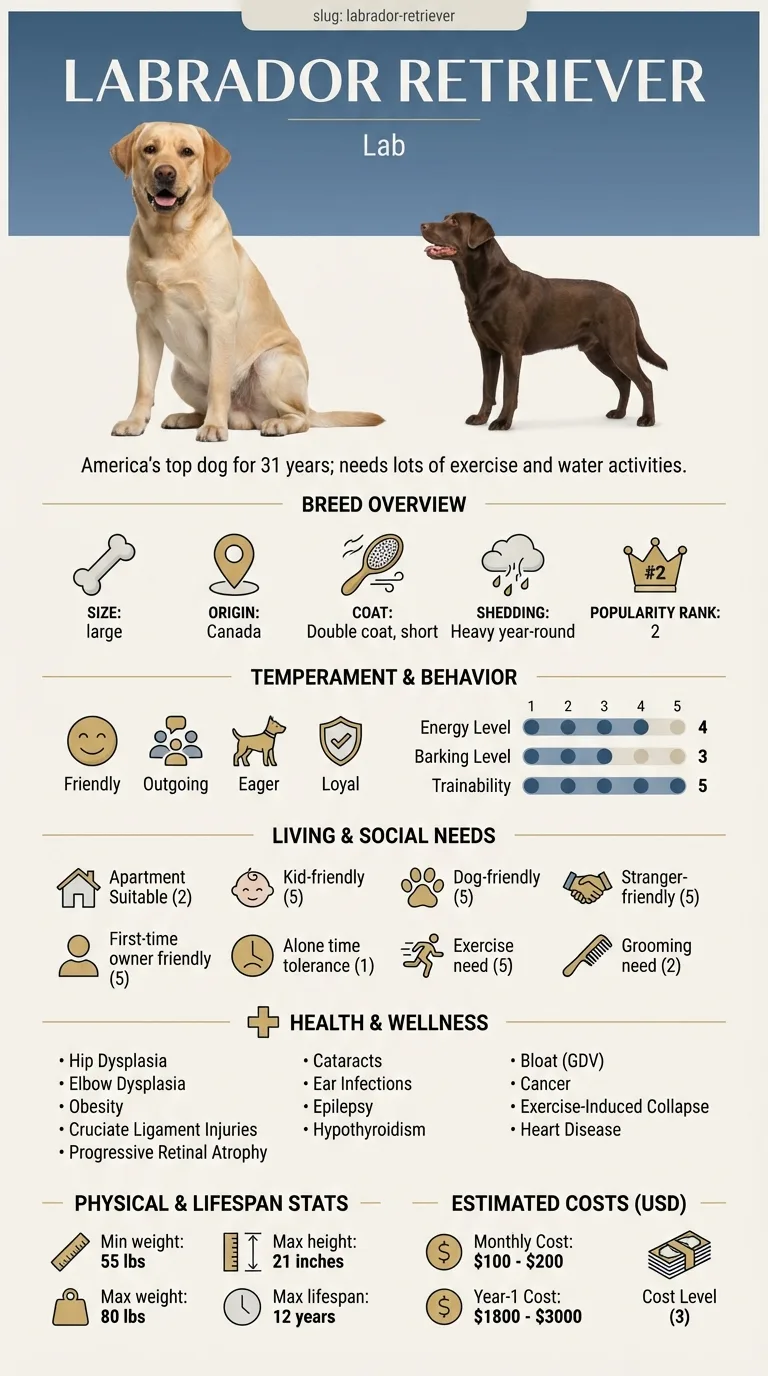
See all Labrador Retriever health problems, which breeds are prone to corneal dystrophy, or the full Labrador Retriever breed guide for temperament, exercise needs and ownership costs.
Diagnosis typically takes a single vet visit with a basic eye exam, sometimes followed by specialist referral if the cause isn't immediately clear. Treatment timelines vary widely depending on the actual underlying cause identified.
Success is getting an accurate diagnosis of what's actually causing the cloudiness, since the appropriate next step, whether monitoring, drops, or surgery, depends entirely on which condition is truly responsible rather than an assumed label.
True corneal dystrophy involves deposits building up directly within the layers of the cornea, typically inherited, and it has well-documented breed patterns that don't include Labrador Retrievers as a hallmark group. That doesn't make it impossible in an individual dog, but it does mean a vet examining a Lab's cloudy eye is going to consider several more likely explanations first, since this specific diagnosis simply isn't the expected finding for this breed's genetics.
These are the explanations a vet typically works through first when a Labrador's cornea or lens looks cloudy:

If you think your Lab has corneal dystrophy, the plan is three steps: write down what you have seen and when it started, book a veterinary appointment rather than waiting for the next flare, and take video of the behaviour or symptom before you go — the thing you are worried about rarely happens in the consulting room. Screening in the parents covers hip dysplasia, elbow dysplasia, obesity.
What the vet visit should produce is a diagnosis and a written plan, not just reassurance: what is being ruled out, what the monitoring interval is, and which signs mean you come back sooner. Ask what the treatment costs across a year rather than per visit, because that is the number that decides whether you are managing this condition or reacting to it.
Between appointments, keep a short log — dates, what you saw, what changed. It is the single most useful thing an owner brings to a follow-up, and for corneal dystrophy it is often what separates a clear pattern from a guess.
Scout's owner noticed a faint blue-gray haze in both of her ten-year-old Labrador's eyes and, after some online searching, became convinced it was corneal dystrophy and started worrying about vision loss. Her vet's exam instead identified textbook nuclear sclerosis, the normal, harmless aging haze that doesn't meaningfully affect vision, common in dogs Scout's age. Relieved, Scout's owner learned to recognize the difference between this normal change and a true cataract, and now simply keeps an eye out at annual exams rather than worrying every time she notices the familiar haze.
Key takeaway: A cloudy-looking eye in an older Labrador is far more likely to be a harmless normal aging change than a rare, breed-atypical corneal condition, and a vet exam is the only reliable way to know which one it is.
It's not documented as a breed-typical condition for Labradors the way it is for breeds like Siberian Huskies or Boston Terriers. A cloudy cornea in a Lab is more likely explained by something else, like cataracts, dry eye, or normal aging changes.
Corneal dystrophy involves deposits within the clear cornea at the front of the eye. Cataracts involve clouding of the lens, deeper inside the eye. They look similar to an untrained eye but are anatomically distinct, and cataracts are the far more relevant condition for this breed.
No, nuclear sclerosis is a harmless, normal age-related haze in the lens that doesn't meaningfully affect vision, while a true cataract is denser clouding that can impair sight. Only a vet exam reliably tells them apart.
Yes, this breed's active, outdoors-oriented lifestyle means corneal scratches or minor injuries are a realistic and often more likely cause of localized cloudiness than an inherited dystrophy.
Dry eye is reduced tear production causing a dull, sometimes cloudy corneal surface along with redness, discharge, and discomfort. It's diagnosed with a simple tear-production test and is a genuinely more common finding than corneal dystrophy in this breed.
Yes, absolutely. A cloudy eye always deserves a vet exam regardless of which specific cause turns out to be correct, since several of the more likely explanations do need treatment.
Sudden cloudiness paired with obvious pain, squinting, or redness can indicate glaucoma or a significant injury and warrants urgent same-day veterinary attention.
Unlikely as a primary diagnosis; this breed isn't documented as predisposed to it, and cataracts, dry eye, or normal aging changes are more probable explanations.
Nuclear sclerosis, a harmless age-related lens haze, is extremely common and doesn't significantly affect vision, distinct from a true cataract.
No, any new cloudiness still deserves a vet exam to rule out cataracts, dry eye, or other treatable causes rather than assuming it's harmless.
Yes, with prescription eye drops that stimulate tear production or replace moisture, often very effective once diagnosed with a simple tear test.
Not necessarily; conditions like normal aging haze don't meaningfully affect vision, while others like advanced cataracts can, which is why an exam matters more than appearance alone.
A one-page prep sheet for this condition: the signs, the questions to ask, what to get priced. Unlocks here.
You get: Vet visit prep sheet
No spam. One-click unsubscribe. See our privacy policy.
Preview page 1 before you decide.