Health
Is a cloudy eye always a cataract?
No, it could be harmless age-related nuclear sclerosis or a true cataract; only a veterinary eye exam distinguishes the two reliably.

Quick answer
Is a cloudy eye always a cataract?
No, it could be harmless age-related nuclear sclerosis or a true cataract; only a veterinary eye exam distinguishes the two reliably.
If your Lab's eye looks cloudier than it used to, the first useful question isn't whether it's serious, it's how old your dog is, since that changes what's actually likely going on.
Owners of young Labradors with a cloudy eye noticed well before old age, and separately, owners of senior Labs whose eyes have gradually clouded, both land here, and the two situations warrant different levels of concern.
This guide is not medical advice. If your dog shows pain, sudden behavior change, or worsening symptoms, consult a licensed veterinarian.
Some links may be affiliate links. We may earn a commission at no extra cost to you. We only suggest products we believe are helpful for dog owners.
We research and check what we publish, but we do not warrant that any figure, date, price, or statement is accurate, complete, or current, and we accept no liability for any loss, cost, injury, or other harm arising from the use of this site. Use it as one reference among several. You remain responsible for your own decisions and for your dog's care - confirm anything that matters with a licensed veterinarian or another qualified professional before you act on it. Full disclaimer.
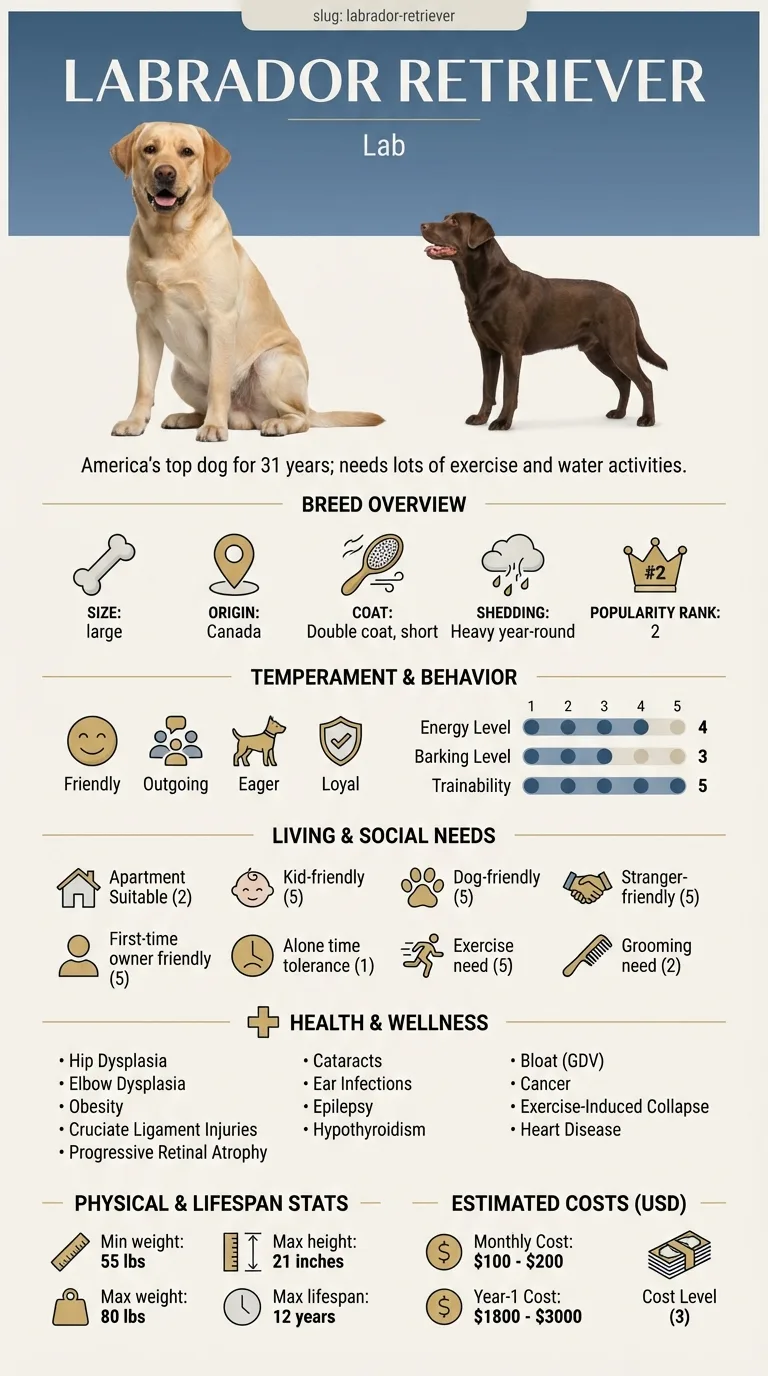
Cataracts, clouding of the eye's lens, are a documented health concern in Labrador Retrievers appearing on two distinct timelines: an inherited form that can show up in dogs under two years old, and a far more common age-related form typical of senior dogs. The two are frequently confused with harmless age-related haze called nuclear sclerosis, which only a veterinary eye exam can reliably distinguish from a true cataract.
Cataracts are directly documented as a real Labrador health concern, with age-related cataracts being the more frequently seen form in this breed's senior population, and hereditary early-onset cataracts occurring less often but still a recognized pattern.
Cataracts are specifically listed among Labrador Retrievers' documented health concerns, reflecting a genuine breed-level predisposition to both hereditary early-onset cataracts and, more commonly, age-related lens changes as dogs move into their senior years.
Diabetes, when present, can accelerate cataract formation regardless of breed, and prior eye trauma or inflammation can also trigger localized cataract development. Beyond these factors, environment plays a smaller role than genetics and simple aging in this breed's cataract risk.
See your vet if you notice any new eye cloudiness at any age, sudden vision changes, squinting, redness, or your dog bumping into objects it previously navigated easily. A sudden, painful-looking red or cloudy eye can indicate glaucoma and needs urgent same-day care.
See all Labrador Retriever health problems, which breeds are prone to cataracts, or the full Labrador Retriever breed guide for temperament, exercise needs and ownership costs.
Hereditary cataracts can progress over months to a couple of years; age-related cataracts typically develop more gradually over several years. If surgery is pursued, recovery generally takes a few weeks with restricted activity and follow-up medication.
Success is either a good surgical outcome restoring functional vision in an appropriate candidate, or, for dogs who aren't surgical candidates, a safely adapted home environment that lets the dog live comfortably despite reduced vision.
Cataracts, clouding of the eye's lens that can impair vision, are documented as a real Labrador health concern in two forms. Hereditary cataracts can appear in young dogs, sometimes under two years old, caused by an inherited genetic predisposition unrelated to age, and can progress to affect vision meaningfully if untreated. Separately, and far more commonly, older Labradors develop age-related cataracts as part of normal lens aging, typically starting in the senior years. It's worth noting these are also frequently confused with nuclear sclerosis, a harmless bluish haze from normal aging that doesn't affect vision the way a true cataract does; only a vet's eye exam reliably tells the two apart.
For cataracts significant enough to affect vision, surgical removal, similar in concept to human cataract surgery, is the only treatment that restores sight; no eye drop or supplement dissolves an existing cataract despite what some products claim. The procedure involves removing the clouded lens and typically implanting an artificial replacement, performed by a veterinary ophthalmologist under general anesthesia. Success rates are generally good in appropriately selected candidates, but it's a specialized, meaningfully priced procedure, and not every dog with cataracts is a good surgical candidate, particularly if other eye or health issues complicate the picture.

Nala's owner noticed a slight cloudiness in her Labrador's left eye at just eighteen months old and assumed it must be an injury from playing rough with the neighbor's dog. A veterinary ophthalmologist instead diagnosed hereditary cataracts, unrelated to any injury, already affecting Nala's vision in that eye. Given her young age and otherwise excellent health, Nala's owner opted for surgery, which restored clear vision within weeks of recovery. Now four years old, Nala has had no further vision problems, and her breeder has since adjusted their breeding program after learning the trait ran in that line.
Key takeaway: Cataracts in a young Labrador aren't always explained by injury, and hereditary early-onset cases respond well to surgery when caught and treated appropriately.
Yes, cataracts are documented as a real health concern for this breed, appearing both as an inherited condition that can show up in young dogs and as a more common age-related change in seniors.
Not reliably by looking. Nuclear sclerosis, a harmless bluish clouding from normal aging, looks similar to an early cataract but doesn't affect vision the same way. Only a veterinary eye exam can tell the two apart.
Yes, hereditary cataracts can appear in dogs under two years old, unrelated to age, caused by an inherited genetic predisposition. This is different from the far more common senior-onset form.
Yes, in appropriately selected candidates, surgical lens removal with an artificial lens implant generally restores good vision, similar in concept to human cataract surgery, though not every dog is an ideal candidate.
No, despite some marketed products claiming otherwise, there is no drop or supplement that reverses an existing cataract. Surgery is the only treatment that restores vision once a cataract has formed.
In some cases, an advancing cataract can cause secondary inflammation or glaucoma within the eye, which is part of why monitoring progression with a vet matters even if surgery isn't pursued immediately.
It's a specialized ophthalmology procedure, typically costing several thousand dollars total including pre-surgical evaluation, the procedure itself, and post-operative care and medication.
No, it could be harmless age-related nuclear sclerosis or a true cataract; only a veterinary eye exam distinguishes the two reliably.
Yes, hereditary cataracts can appear under two years old, a distinct pattern from the more common senior-onset form.
Diet has limited proven effect on hereditary or age-related cataracts; genetics and normal aging are the primary drivers in this breed.
For a good surgical candidate whose vision is significantly affected, many owners and vets consider it worthwhile given the meaningful quality-of-life improvement from restored sight.
A baseline eye exam, especially for dogs from breeding lines, can catch early hereditary cataracts before they visibly affect behavior.
A one-page prep sheet for this condition: the signs, the questions to ask, what to get priced. Unlocks here.
You get: Vet visit prep sheet
No spam. One-click unsubscribe. See our privacy policy.
Preview page 1 before you decide.