Health
What are quick tips for managing Miniature Schnauzer corneal dystrophy?
Regular vet check-ups are key. Keep your dog's eyes clean and avoid exposure to irritants like smoke or dust.

Quick answer
What are quick tips for managing Miniature Schnauzer corneal dystrophy?
Regular vet check-ups are key. Keep your dog's eyes clean and avoid exposure to irritants like smoke or dust.
Miniature Schnauzer corneal dystrophy can cloud your dog's vision and affect their quality of life.
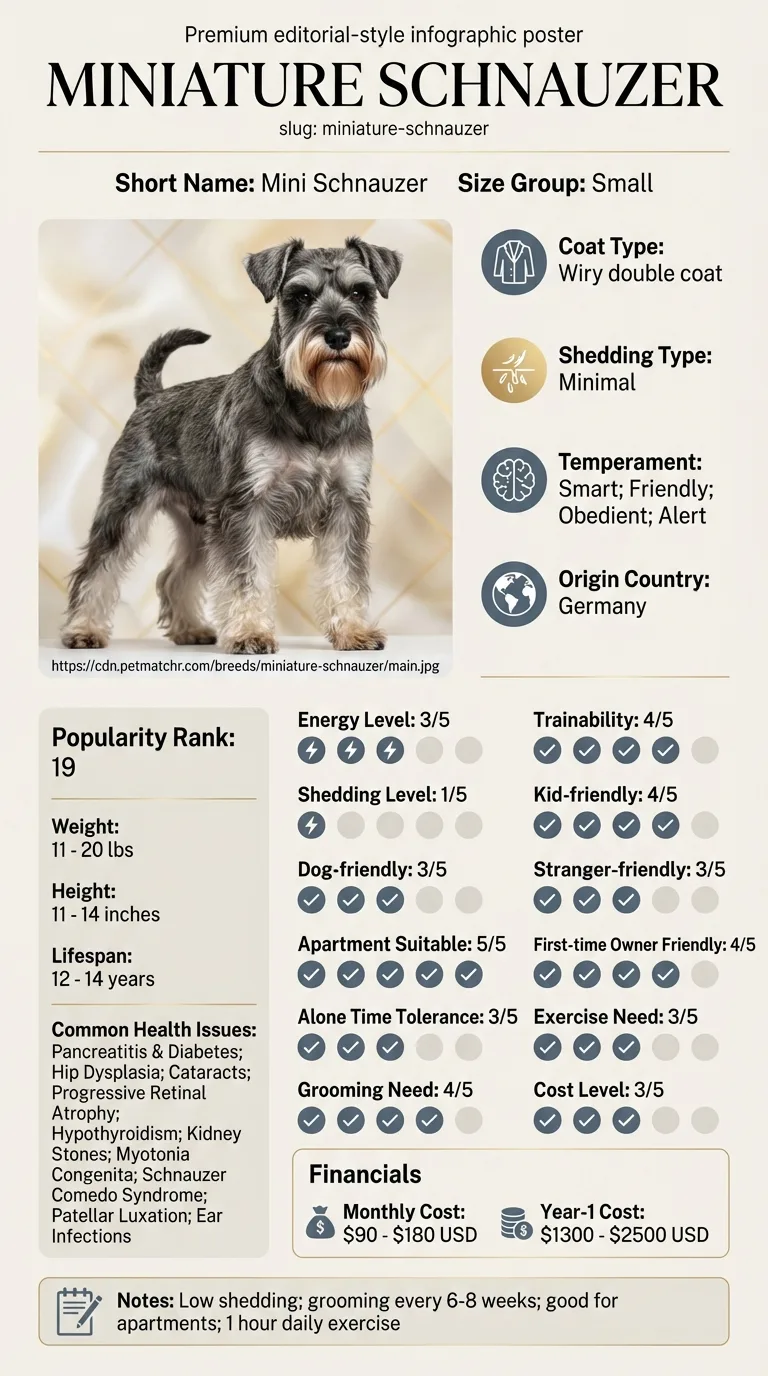
Owners of Miniature Schnauzers often face this issue, particularly those who may notice their dogs squinting, having difficulty seeing, or exhibiting signs of discomfort. First-time dog owners might feel overwhelmed by the medical terminology and treatment options.
This guide is not medical advice. If your dog shows pain, sudden behavior change, or worsening symptoms, consult a licensed veterinarian.
Some links may be affiliate links. We may earn a commission at no extra cost to you. We only suggest products we believe are helpful for dog owners.
We research and check what we publish, but we do not warrant that any figure, date, price, or statement is accurate, complete, or current, and we accept no liability for any loss, cost, injury, or other harm arising from the use of this site. Use it as one reference among several. You remain responsible for your own decisions and for your dog's care - confirm anything that matters with a licensed veterinarian or another qualified professional before you act on it. Full disclaimer.
Check this first
Corneal dystrophy in Miniature Schnauzers can vary from mild to severe. It's important to recognize when to call your vet immediately and when you can monitor your dog's condition at home. Here are some red flags that indicate an emergency:
- Severe cloudiness: If your Mini Schnauzer's eyes suddenly become extremely cloudy, it may indicate a serious issue. - Acute pain: Watch for signs of distress, like excessive whining, pawing at the eyes, or reluctance to open the eyes. - Changes in vision: If your dog seems to bump into objects or avoids bright lights, it's crucial to seek veterinary advice.
In less severe cases, you can adopt a wait-and-see approach. If your Miniature Schnauzer has mild cloudiness without any signs of pain or vision changes, keep an eye on their condition. Make sure to monitor for any worsening symptoms and take notes on any changes.
A good plan includes regular check-ins with your vet to discuss your dog's eye health. Consider maintaining a log of any symptoms or behaviors that seem unusual. This will help your vet assess the situation more effectively during visits. Overall, err on the side of caution; if you're ever unsure, it’s best to consult your vet. Your Mini Schnauzer's vision and comfort are paramount.
If any of these apply, call your vet or an emergency clinic now. The rest of this page is for the cases that are not an emergency.
Miniature Schnauzer corneal dystrophy is a common eye condition that affects the clarity of the cornea, leading to cloudiness. This condition can cause discomfort and may result in vision problems. If your Mini Schnauzer seems to squint, has watery eyes, or appears to have an unusual sheen to their eyes, it could be a sign of corneal dystrophy.
Corneal dystrophy is relatively common in Miniature Schnauzers, with many cases appearing in dogs over the age of four. It's essential to monitor your dog for any signs of eye discomfort, as early detection can lead to better management of the condition.
Miniature Schnauzers can be prone to corneal dystrophy due to genetic factors. This condition often arises from inherited traits that affect the cornea's health, leading to cloudiness and potential discomfort. Since this breed is known for its unique eye structure, these genetic predispositions can manifest more prominently.
Environmental factors such as exposure to irritants, allergens, or poor lighting conditions can also contribute to corneal issues. Dry air, harsh chemicals, or even excessive exposure to sunlight can exacerbate the problem. Keeping your Miniature Schnauzer's environment clean and comfortable is essential for preventing these complications.
If you notice persistent cloudiness in your Miniature Schnauzer's eyes, or if they seem to be in pain or having difficulty seeing, consult your vet. They can provide a proper diagnosis and recommend treatment options. Early intervention is key in managing corneal dystrophy effectively.
Avoiding certain behaviors can help improve your Miniature Schnauzer's corneal dystrophy. Here are common mistakes and safer alternatives.
Start here: Miniature Schnauzer Most Common Genetic Disorders: Screening
See all Miniature Schnauzer health problems, which breeds are prone to corneal dystrophy, or the full Miniature Schnauzer breed guide for temperament, exercise needs and ownership costs.
You may notice changes in your Miniature Schnauzer's eyes within a few weeks after starting treatment. Consistent care can lead to visible improvements in a few months.
Success means your Miniature Schnauzer’s corneal cloudiness is reduced, allowing them to see better and feel more comfortable. Regular vet check-ups will help track their progress.
When Sarah adopted Max, her Miniature Schnauzer, she noticed his eyes were cloudy. After a vet visit, she learned he had corneal dystrophy. Sarah started using prescribed eye drops daily and adjusted Max's diet to support eye health. Over the months, Max's vision improved and his discomfort lessened. Sarah felt relieved seeing him play without hesitation, and their bond grew stronger through the journey.
Key takeaway: Consistent vet care and following treatment plans can significantly improve your Miniature Schnauzer's quality of life.
Corneal dystrophy in Miniature Schnauzers can be due to genetic factors. It’s often seen in middle-aged dogs, but some puppies may also show signs. Consulting your vet is essential for a proper diagnosis.
While there is no cure for corneal dystrophy, monitoring your dog’s eye health is crucial. Keeping your Miniature Schnauzer's eyes clean and consulting with a vet regularly can help manage the condition.
Yes, corneal dystrophy can sometimes lead to secondary issues like eye infections. Monitoring your dog for discomfort and seeking veterinary advice can help prevent complications.
Corneal dystrophy itself is usually not painful, but it can cause discomfort or irritation. If your Miniature Schnauzer shows signs of pain or distress, it's important to consult your vet.
Treatment options may include eye drops or surgery in severe cases. Your veterinarian will recommend the best course of action based on your dog's specific condition.
Corneal dystrophy in Miniature Schnauzers is often genetic. It can lead to cloudiness in the cornea, which may affect vision. Environmental factors and certain health issues may also contribute.
To help your Miniature Schnauzer with corneal dystrophy, regular veterinary check-ups are essential. Your vet might recommend eye drops or other treatments to manage symptoms. Keeping your dog comfortable and reducing exposure to bright lights can also help.
Yes, corneal dystrophy can be more common in older Miniature Schnauzers. As they age, their eyes may experience more changes. It's important to monitor their vision and consult a vet if you notice any issues.
Cloudy eyes in your Miniature Schnauzer can indicate corneal dystrophy or other health issues. If you notice this change, it's best to consult your veterinarian for a proper diagnosis and treatment options.
While corneal dystrophy primarily affects vision, it can lead to discomfort, which may result in behavioral issues. Early intervention can minimize complications and help maintain your dog's quality of life.
Regular vet check-ups are key. Keep your dog's eyes clean and avoid exposure to irritants like smoke or dust.
It's a good idea to check your Miniature Schnauzer's eyes weekly for any signs of cloudiness or irritation.
While there's no specific diet, maintaining overall health with a balanced diet can support eye health.
Costs can vary widely but may range from $100 for routine vet visits to several hundred for specialized treatments.
Unfortunately, corneal dystrophy is often genetic, so prevention is not possible. Regular check-ups can help manage the condition.
A one-page prep sheet for this condition: the signs, the questions to ask, what to get priced. Unlocks here.
You get: Vet visit prep sheet
No spam. One-click unsubscribe. See our privacy policy.
Preview page 1 before you decide.