Health
What is dilated cardiomyopathy?
The main pumping chamber of the heart stretches and thins, so it holds more blood and moves less of it with each beat.

Quick answer
What is dilated cardiomyopathy?
The main pumping chamber of the heart stretches and thins, so it holds more blood and moves less of it with each beat.
The dangerous part of this disease is the part with no symptoms. Many dogs spend a year or more with a measurably failing heart while looking entirely well, and some are lost during that period without ever having seemed ill.
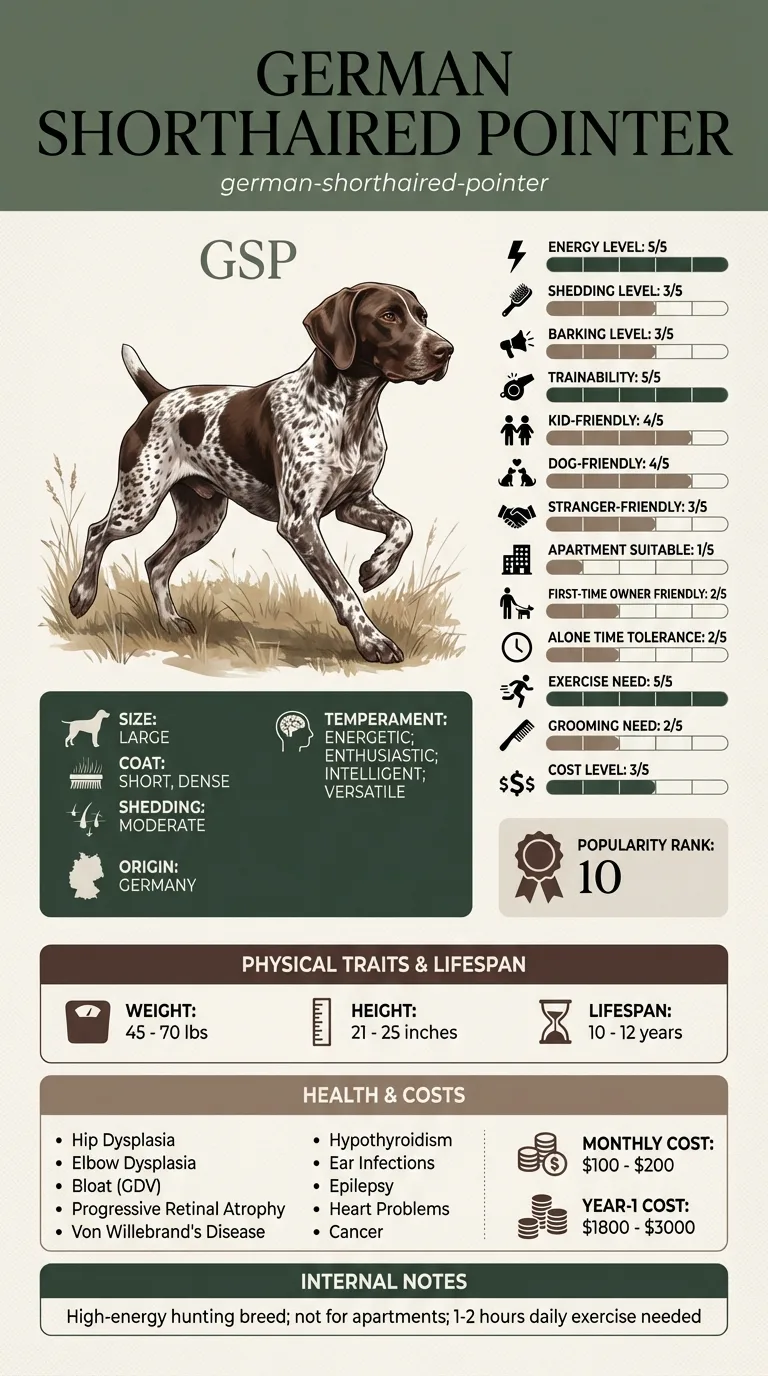
Owners of large-breed dogs who have read about diet-associated heart disease and want a clear answer, and owners of a GSP found to have an enlarged heart on a routine x-ray.
This guide is not medical advice. If your dog shows pain, sudden behavior change, or worsening symptoms, consult a licensed veterinarian.
Some links may be affiliate links. We may earn a commission at no extra cost to you. We only suggest products we believe are helpful for dog owners.
We research and check what we publish, but we do not warrant that any figure, date, price, or statement is accurate, complete, or current, and we accept no liability for any loss, cost, injury, or other harm arising from the use of this site. Use it as one reference among several. You remain responsible for your own decisions and for your dog's care - confirm anything that matters with a licensed veterinarian or another qualified professional before you act on it. Full disclaimer.
Dilated cardiomyopathy is progressive enlargement and weakening of the heart's main pumping chamber. It has a long hidden phase in which the disease is measurable but invisible, followed by congestive failure. It is a disease of large and giant breeds, with an unresolved association to certain diets that remains under investigation.
Not documented as a German Shorthaired Pointer condition. The breed's health list names heart problems generally without specifying dilated cardiomyopathy, and no GSP-specific cardiac screening scheme exists for it. The disease is concentrated in several other large and giant breeds, where it is a leading cause of death.
The German Shorthaired Pointer contributes size and concealment rather than a known genetic driver. At 45 to 70 pounds it sits in the weight range where muscle disease is more relevant than valve disease. Its documented health list includes heart problems as a category, so a family history is worth asking about. The breed's most significant contribution is its exercise capacity: a dog rated five out of five for energy and stamina has so much cardiac reserve that the hidden phase of this disease can pass entirely unnoticed, which is precisely the period when detection matters most.
Diet is the environmental factor under genuine investigation, and the appropriate response is a conversation with a vet rather than a unilateral food change. Beyond that, environment governs detection more than causation. A dog whose stamina is regularly tested by real work gives its owner a chance of noticing a decline; a dog walked gently around a block does not. Excess body weight adds workload to an already compromised pump and is worth controlling regardless.
Book an appointment for any fainting or near-fainting episode, for a lasting drop in stamina, for a new cough particularly at night, or if a chest x-ray taken for another reason has been reported as showing an enlarged heart. Go to an emergency clinic immediately for laboured or rapid breathing at rest, gums that are pale, grey or blue, a dog unable to settle or lie down, repeated collapse, or a rapidly distending abdomen. Fluid backing up into the lungs is life-threatening and can develop within hours in a heart that has been quietly failing for months.
See all German Shorthaired Pointer health problems, which breeds are prone to dilated cardiomyopathy dcm, or the full German Shorthaired Pointer breed guide for temperament, exercise needs and ownership costs.
Where the disease is found in its hidden phase, medication is typically started immediately and the aim is to delay heart failure, which in large-breed studies has been achieved by a meaningful margin. Once congestive failure develops, treatment usually produces marked improvement within days, followed by ongoing management with rechecks every three to six months. The disease is progressive and not curable.
A diagnosis made during the hidden phase rather than in a crisis, medication started early, an exercise ceiling that is actually enforced, and a dog that stays comfortable and active for a long period. Where diet is implicated, success can occasionally mean genuine improvement in heart measurements, which is unusual and worth pursuing.
Dilated cardiomyopathy has two stages. In the second, the visible one, the heart can no longer keep up and fluid backs up into the lungs or the abdomen. That stage is recognisable: coughing, breathlessness, a swelling belly, exhaustion.
The first stage is called occult, which simply means hidden. The chamber has already enlarged and the contraction has already weakened, and it is measurable on an ultrasound, but the dog has enough reserve to appear normal. In a German Shorthaired Pointer, rated at the maximum for both energy and exercise need, that reserve is enormous, and the occult phase can run for a year or longer with nothing an owner could reasonably notice.
Two things follow. The first is that treatment started during the occult phase, before symptoms appear, has been shown in large-breed dogs to delay the onset of heart failure meaningfully. Finding the disease early is not merely reassuring; it changes the outcome. The second is harder: a proportion of dogs with occult disease develop dangerous heart rhythms and die suddenly, sometimes as the first sign anything was wrong. That is why screening exists at all for the breeds where the disease is common, and why an unexplained faint in a large dog is taken seriously.
Diet-associated dilated cardiomyopathy has been a live veterinary issue, and the honest position is more nuanced than either side of the internet argument suggests.

If you think your GSP has dilated cardiomyopathy (dcm), the plan is three steps: write down what you have seen and when it started, book a veterinary appointment rather than waiting for the next flare, and take video of the behaviour or symptom before you go — the thing you are worried about rarely happens in the consulting room. Screening in the parents covers hip dysplasia, elbow dysplasia, bloat (gdv).
What the vet visit should produce is a diagnosis and a written plan, not just reassurance: what is being ruled out, what the monitoring interval is, and which signs mean you come back sooner. Ask what the treatment costs across a year rather than per visit, because that is the number that decides whether you are managing this condition or reacting to it.
Between appointments, keep a short log — dates, what you saw, what changed. It is the single most useful thing an owner brings to a follow-up, and for dilated cardiomyopathy (dcm) it is often what separates a clear pattern from a guess.
Corin was six and swallowed something he should not have. The x-ray taken to look for it found the object, which passed on its own, and also produced a comment from the vet that his cardiac silhouette looked larger than expected for his frame. He had no symptoms at all. He was hunting full days and was, by his owner's account, the fittest dog she had ever had. She nearly declined the referral on the grounds that there was obviously nothing wrong with him. The ultrasound showed an enlarged left ventricle with reduced contraction, and a three-day rhythm recording showed abnormal beats. He was in the hidden phase of dilated cardiomyopathy. Medication started that month, his diet was reviewed and changed, and his working days were shortened and made predictable. He did not develop heart failure until he was nine.
Key takeaway: He was found by accident, at the only point when finding him made a real difference. In a breed with this much cardiac reserve, an incidental comment on an x-ray can be worth more than a year of watching the dog.
It is not named among the breed's documented health issues, which record heart problems only as a general category. DCM is strongly associated with a handful of other large and giant breeds. A GSP's size means it is not implausible, but it is not a breed hallmark and no GSP screening scheme exists for it.
Talk to your vet rather than acting on headlines. The association reported has been with certain formulations rather than with the absence of grain as such, and the science has moved several times. Your vet can advise on a diet appropriate for your individual dog.
By ultrasound, which measures chamber size and contraction directly, usually paired with a multi-day rhythm recording to look for dangerous beats. A chest x-ray may show an enlarged heart incidentally, which is how some cases are first suspected.
Yes, and it is one of the reasons the disease is taken so seriously. Sudden death results from a chaotic heart rhythm and can occur in a dog that has never appeared unwell. It is uncommon but it is real, and it is why fainting episodes are always investigated.
Yes. Medication started in the hidden phase has been shown in large-breed studies to significantly delay the onset of heart failure. Once failure has developed, treatment manages fluid and supports the heart and can give good quality time, but the disease continues to progress.
What cardiac screening the parents have had, who performed it, and whether any dog in the line has died suddenly or young. Heart problems appear on this breed's documented list, so the question is legitimate and a good breeder will have a specific answer.
The main pumping chamber of the heart stretches and thins, so it holds more blood and moves less of it with each beat.
Because treatment started before symptoms appear delays heart failure meaningfully in large breeds, and the hidden phase can last a year or more.
Yes. Any faint or near-faint in a large-breed dog should be investigated urgently, since it can reflect a rhythm the heart cannot pump through.
A specialist ultrasound with a multi-day rhythm recording is a significant one-off cost, and is usually repeated annually once a problem is found.
A one-page prep sheet for this condition: the signs, the questions to ask, what to get priced. Unlocks here.
You get: Vet visit prep sheet
No spam. One-click unsubscribe. See our privacy policy.
Preview page 1 before you decide.