Living
What is the energy level of a Doberman Pinscher?
The Doberman Pinscher has a high energy level, requiring 1 to 2 hours of exercise daily.

Quick answer
What is the energy level of a Doberman Pinscher?
The Doberman Pinscher has a high energy level, requiring 1 to 2 hours of exercise daily.
Choosing between a Doberman Pinscher and a German Shorthaired Pointer can be tough. Both breeds are loyal and energetic but serve different lifestyles and needs. This guide compares their key differences to help you decide.
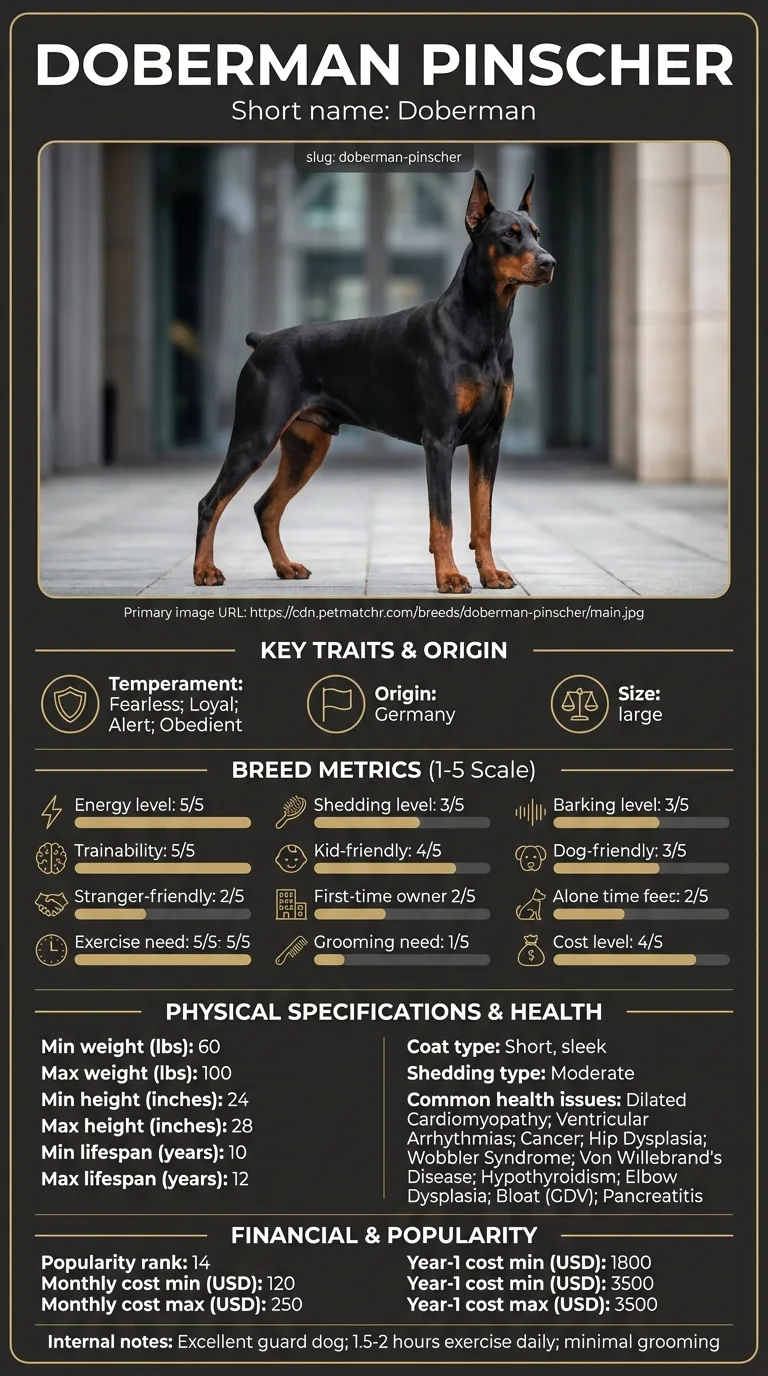
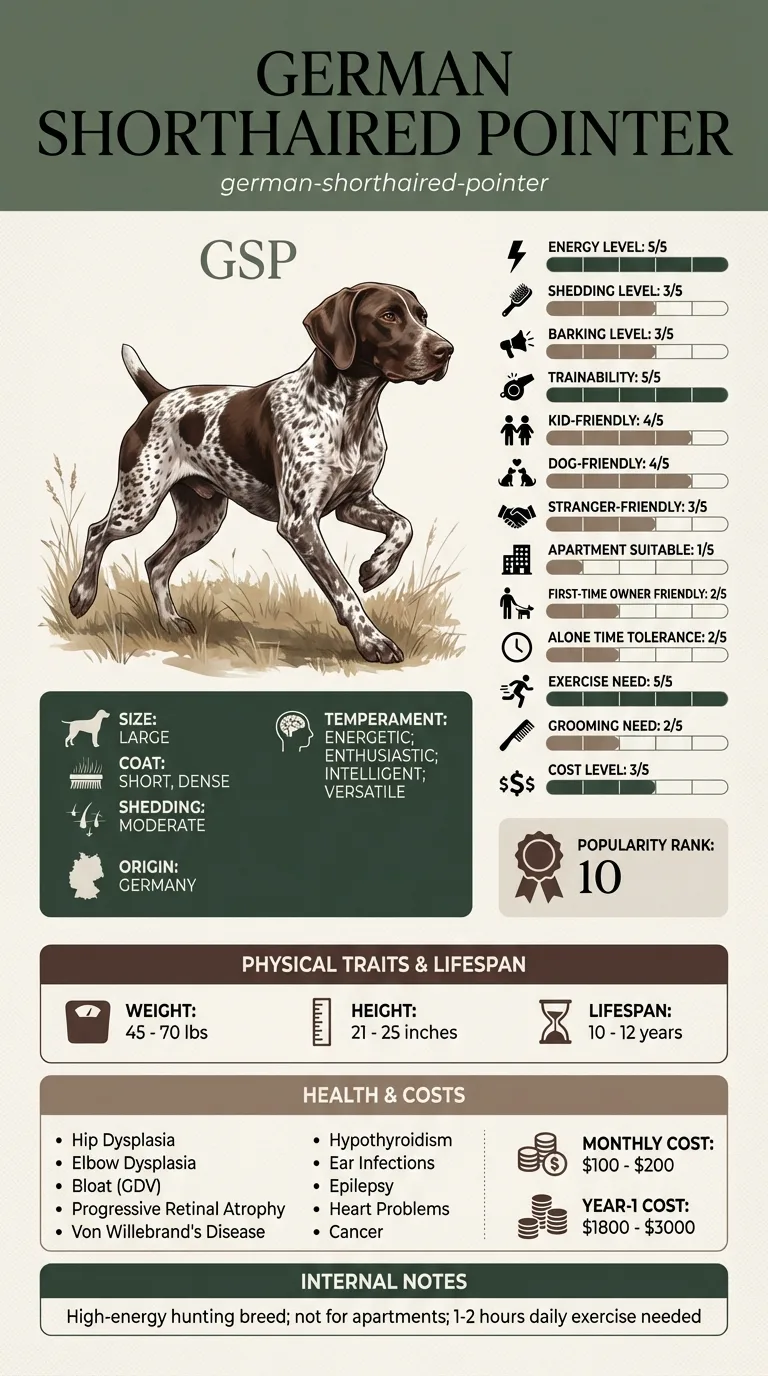
This comparison is perfect for dog lovers who are considering adding a new furry member to their family. You might be a busy family looking for a kid-friendly companion, or a single person living in an apartment wondering which breed suits your space. Whether you’re a first-time dog owner or an experienced handler, understanding the traits and needs of these popular breeds will guide your decision.
If you want a protective guard dog with a loyal disposition, choose the Doberman Pinscher; if you're looking for an energetic, family-friendly companion, go for the German Shorthaired Pointer.
Pick the Doberman Pinscher if you need a devoted protector and have the time for daily rigorous exercise and training.
Opt for the German Shorthaired Pointer if you seek a playful, versatile dog that thrives in active households and enjoys outdoor adventures.
| Feature | doberman pinscher | german shorthaired pointer | Winner |
|---|---|---|---|
| Size class | large | large | Equal |
| Weight | 60–100 lbs | 45–70 lbs | Equal |
| Height | 24–28 in | 21–25 in | Equal |
| Lifespan | 10–12 years | 10–12 years | Equal |
| Exercise need | Very high (5/5) | Very high (5/5) | Equal |
| Grooming need | Very low (1/5) | Low (2/5) | doberman pinscher |
| Shedding | Moderate (3/5) | Moderate (3/5) | Equal |
| Energy level | Very high (5/5) | Very high (5/5) | Equal |
| Barking | Moderate (3/5) | Moderate (3/5) | Equal |
| Apartment suitability | Low (2/5) | Very low (1/5) | doberman pinscher |
| Good for first-time owners | Low (2/5) | Low (2/5) | Equal |
| Tolerates being alone | Low (2/5) | Low (2/5) | Equal |
| Trainability | Very high (5/5) | Very high (5/5) | Equal |
| Good with kids | High (4/5) | High (4/5) | Equal |
| Good with other dogs | Moderate (3/5) | High (4/5) | german shorthaired pointer |
| Friendly to strangers | Low (2/5) | Moderate (3/5) | german shorthaired pointer |
| Cost level | High (4/5) | Moderate (3/5) | german shorthaired pointer |
| Coat | Short, sleek | Short, dense | Equal |
| Origin | Germany | Germany | Equal |
| Typical monthly cost | $120–$250 | $100–$200 | Equal |
| Typical first-year cost | $1,800–$3,500 | $1,800–$3,000 | Equal |
Both the Doberman Pinscher and the German Shorthaired Pointer are high-energy breeds requiring 1.5 to 2 hours of exercise daily. This makes them great companions for active owners and families who enjoy outdoor activities. However, the Doberman's exercise needs can be slightly more demanding in terms of mental stimulation, as they thrive on tasks that challenge them.
Both breeds are good with kids, making them suitable family pets. The Doberman is protective and loyal, while the GSP is enthusiastic and playful. However, the GSP is less suited for apartment living due to its energetic nature, while the Doberman can adapt better, although it still prefers space to roam.
In terms of health risks, both breeds face common issues like hip dysplasia and heart problems. The Doberman might have a higher average monthly cost, especially in health care, ranging from $120 to $250. The GSP, being slightly less expensive, ranges from $100 to $200 monthly.
Potential owners should prepare for these costs when considering which breed fits their lifestyle.
When it comes to apartment living, the German Shorthaired Pointer (GSP) is not the best fit. With a score of 1 for apartment suitability, they thrive in larger spaces where they can run. The Doberman Pinscher, while also not ideal, has a slightly better score of 2, making them the winner for apartment dwellers looking for a large breed.
For families with kids, both breeds score equally in kid-friendliness at 4. However, the German Shorthaired Pointer edges out slightly due to its higher dog-friendliness score. This makes them the better choice for families with other pets or those looking for a more sociable dog, declaring the GSP the winner for families.
Cost can significantly impact your decision. The Doberman Pinscher tends to have higher monthly costs, ranging from $120 to $250, compared to the German Shorthaired Pointer's $100 to $200. Thus, if keeping costs lower is a priority, the German Shorthaired Pointer is the clear winner.
Both breeds are not the most suitable for first-time dog owners, scoring a 2 in this category. However, the Doberman Pinscher's slightly lower trainability might make the German Shorthaired Pointer the better choice. If you're a first-time owner, consider the GSP, as it’s more adaptable to training despite both breeds needing experienced handling.
Both the Doberman Pinscher and the German Shorthaired Pointer require a significant amount of exercise, rated at 5. However, the true winner comes down to their adaptability. The GSP is more energetic and may require slightly more engagement in physical activities, making them the ultimate choice for active individuals or families.


Choosing between a Doberman Pinscher and a German Shorthaired Pointer depends on your lifestyle. Dobermans are excellent guard dogs and loyal companions, while GSPs are energetic and great for active families. Consider your living situation and exercise needs before deciding. This answer relates to Doberman Pinscher vs German Shorthaired Pointer.
Doberman Pinschers generally have a higher cost of ownership, with monthly expenses ranging from $120 to $250. In contrast, German Shorthaired Pointers usually cost between $100 and $200 monthly, making them slightly more budget-friendly.
Yes, Doberman Pinschers can be good family dogs, especially with older children. They are loyal and protective but require proper training and socialization to ensure they are well-adjusted around kids.
Neither breed is particularly suited for apartment living due to their high energy levels. Dobermans often require a lot of space to run, while GSPs are even less adaptable to small living spaces, needing ample exercise outdoors.
Both breeds have high energy levels, rated at 5 out of 5. They require 1 to 2 hours of exercise daily, making them suitable for active owners who can provide adequate physical and mental stimulation.
Doberman Pinschers have low grooming needs, requiring minimal maintenance. German Shorthaired Pointers have slightly higher grooming requirements due to their dense coat, but both breeds are relatively easy to care for in this regard.
Both breeds have moderate shedding levels, but Doberman Pinschers tend to shed slightly less due to their short coat. Regular brushing can help manage shedding for both breeds.
Doberman Pinschers may face issues like Dilated Cardiomyopathy and Hip Dysplasia, while German Shorthaired Pointers are prone to Hip Dysplasia and Progressive Retinal Atrophy. Regular vet check-ups are essential for both breeds.
The Doberman Pinscher has a high energy level, requiring 1 to 2 hours of exercise daily.
Doberman Pinschers have a moderate shedding level, requiring regular brushing to manage loose hair.
Yes, German Shorthaired Pointers are friendly and energetic, making them great companions for active families.
The monthly cost of owning a German Shorthaired Pointer generally ranges from $100 to $200.
Secure checkout on Stripe. We never see your card.
7-day money-back guarantee. Instant access.
This guide is not medical advice. If your dog shows pain, sudden behavior change, or worsening symptoms, consult a licensed veterinarian.
Some links may be affiliate links. We may earn a commission at no extra cost to you. We only suggest products we believe are helpful for dog owners.
We research and check what we publish, but we do not warrant that any figure, date, price, or statement is accurate, complete, or current, and we accept no liability for any loss, cost, injury, or other harm arising from the use of this site. Use it as one reference among several. You remain responsible for your own decisions and for your dog's care - confirm anything that matters with a licensed veterinarian or another qualified professional before you act on it. Full disclaimer.
Match your lifestyle to the right dog.
Take quizNot sure which breed is right for you? Take our 2-minute quiz to find out.
Take the quiz