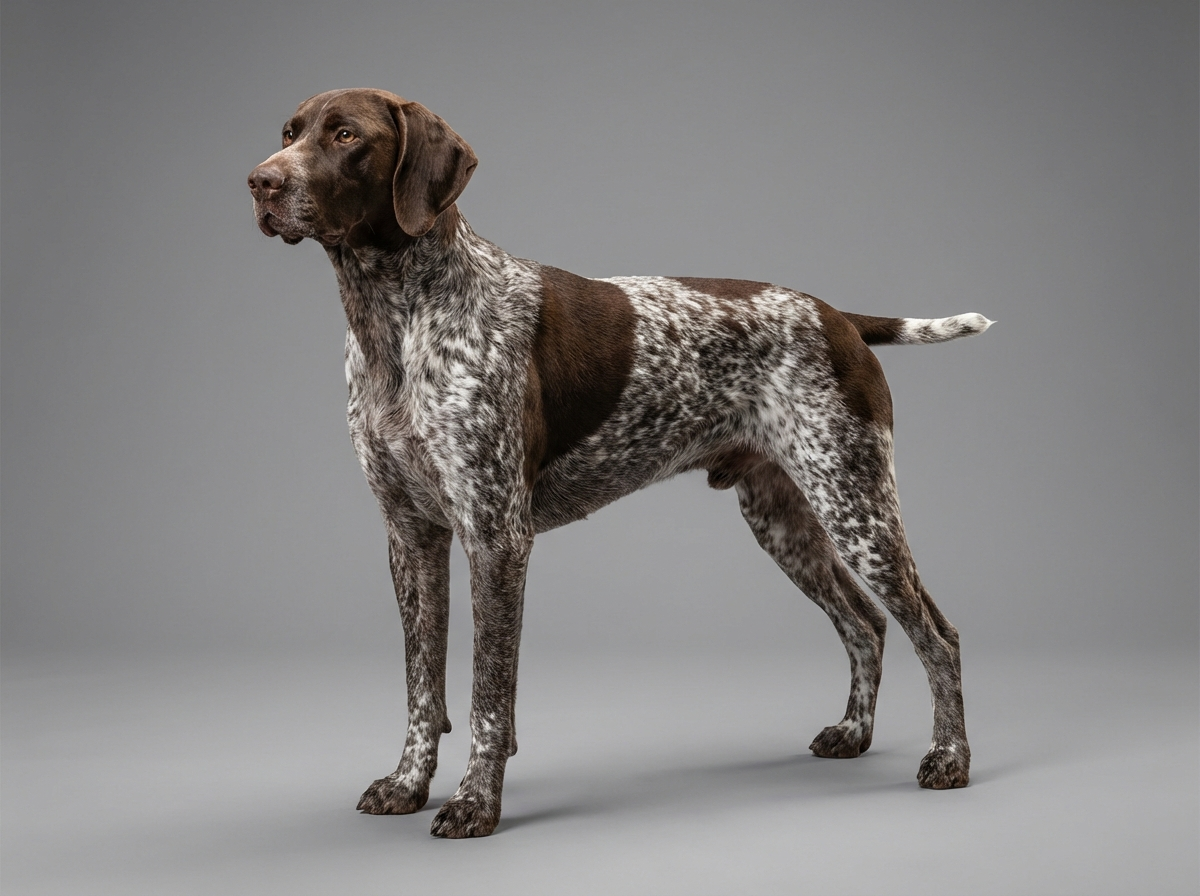
Costs
German Shorthaired Pointer cost in Des Moines
About $105–$210/month, $1,550–$2,650 for year one — below average, near real public hunting access through Iowa's genuine Habitat and Access Program.

See German Shorthaired Pointer price across all cities →
Quick answer
German Shorthaired Pointer cost in Des Moines
About $105–$210/month, $1,550–$2,650 for year one — below average, near real public hunting access through Iowa's genuine Habitat and Access Program.
A German Shorthaired Pointer in Des Moines costs about $105–$210 a month, with the first year around $1,550–$2,650 — below the national average, near real public hunting access through Iowa's genuine Habitat and Access Program.
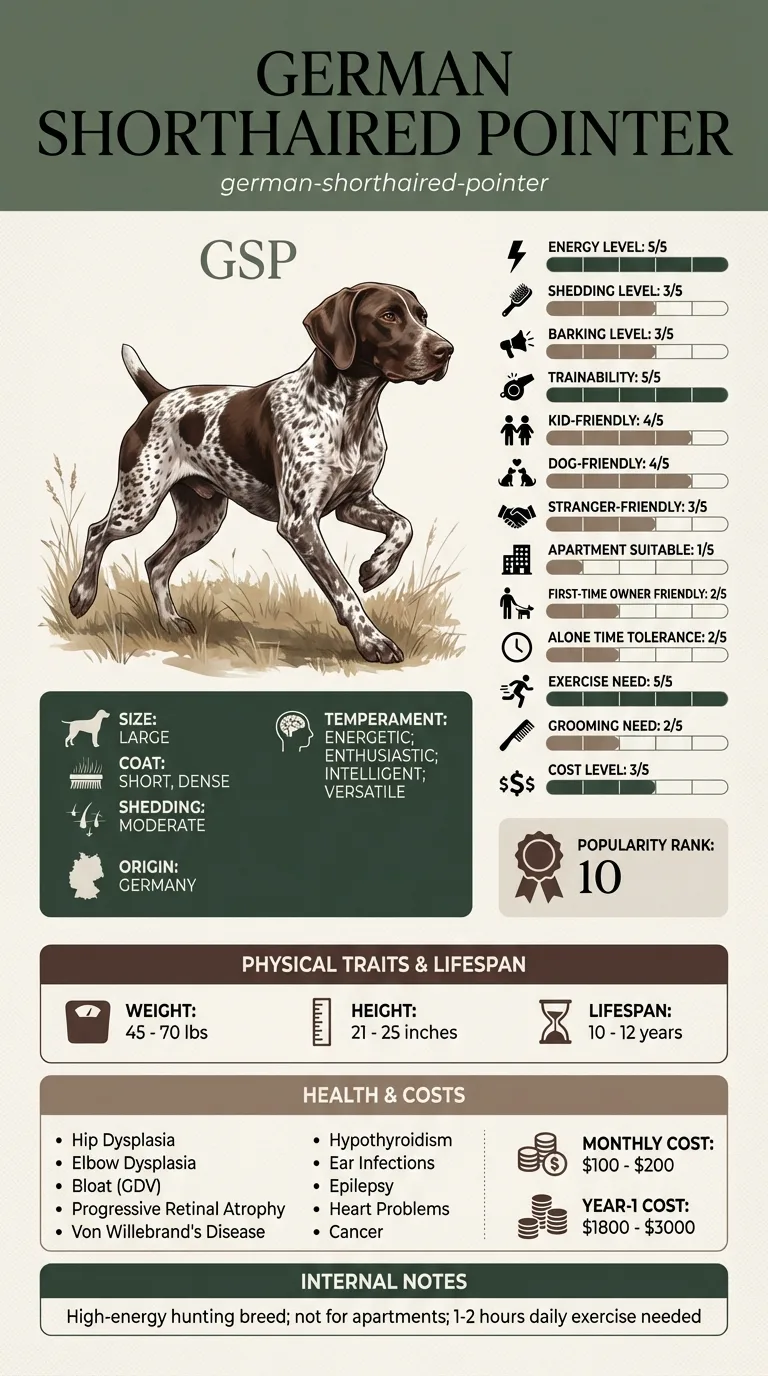
Bloat is a sudden emergency risk given this breed's deep chest — no warning, immediate surgery needed. Hip and elbow dysplasia are the separate, ongoing joint risks worth budgeting real, recurring vet attention for.
These figures reflect Des Moines' below-national-average general pricing, with this breed's genuinely substantial food needs factored in against the real value of Iowa's public hunting-access program.
Estimate · source: estimation · confidence: medium · updated 2026-09-05 · not a quote
| Item | Cost range |
|---|---|
Hunting license and field-training gear A genuinely worthwhile investment given Iowa's real Habitat and Access Program near Des Moines. | $60 - $175 |
One-time setup (initial vet visit, spay/neuter, gear) Covers the first exam, vaccinations, spay/neuter if needed, and gear sized for this breed's large adult weight — priced at Des Moines' below-average rates. | $335 - $570 |
| Item | Cost range |
|---|---|
Food Below the national average for a large, highly active breed, consistent with Des Moines' generally lower price level. | $55 - $88 |
Heartworm and flea/tick prevention A clear seasonal window rather than year-round, given Iowa's real winters. | $8 - $15 |
Each range starts from a national baseline for this breed's size class and is then adjusted for local cost of living and veterinary pricing. The baselines, and the source each one came from, are listed on our sources page (dataset 2026.09). Two inputs, the purchase price and the emergency reserve, have no published national figure we could verify, so we leave them to you rather than invent them.
These are planning estimates, not quotes. Your own numbers will move with the individual dog, your vet and your insurer. Build a budget with your own figures.
For a German Shorthaired Pointer in Des Moines, insurance is worth taking seriously given the breed's documented bloat and joint risk, independent of the region's genuinely favorable general cost of living.
This breed's well-documented bloat and joint risk makes insurance worth locking in early — a policy bought before any diagnosis covers costs a self-funded emergency fund alone often can't stretch to match.
Skipping coverage is a reasonable call for an owner who's already set aside a meaningful cash reserve and is comfortable managing a serious diagnosis without monthly premiums.
Des Moines' below-average costs help, and the state's real Habitat and Access Program is worth using deliberately for this breed's working drive.
Iowa's Habitat and Access Program pays private landowners directly to open real acreage to public hunting, a genuine, state-administered system that gives this working breed's documented drive a specific, structured outlet within reach of Des Moines. Unlike a generic city park, this program's land is specifically managed for exactly the kind of upland bird work this breed was developed for, a real, practical resource for an owner who hunts or wants to try.
Des Moines' general cost of living otherwise runs meaningfully below the national average, a real, welcome offset given how much food and gear this large, high-energy breed genuinely needs.
Iowa's real winters mean flea-and-tick and heartworm prevention stays on a clear seasonal window here rather than year-round, and yards are the norm over paid dog-walking for most owners, though this breed's real exercise needs mean a yard alone rarely covers the full requirement.

A Des Moines German Shorthaired Pointer owner had assumed real hunting access meant either owning land themselves or joining an expensive private club, until a coworker mentioned Iowa's Habitat and Access Program almost in passing. A quick search turned up several enrolled properties within a half-hour drive, all genuinely open to public hunting at no cost beyond a standard license. The dog's first real field outing on one of those properties confirmed instincts the family had only seen hints of at home.
Key takeaway: In Des Moines specifically, this breed's real working drive can find a genuine, low-cost outlet through a state program many residents don't realize exists.
About $105–$210, below the national average, consistent with Des Moines' generally lower cost of living.
Roughly $1,550–$2,650, including the initial vet exam, spay/neuter if needed, and gear on top of ongoing monthly costs.
Genuinely, yes — Iowa's Habitat and Access Program pays private landowners to open real acreage to public hunting, a specific, state-run resource within reach of Des Moines for this breed's working drive.
Genuinely affordable — Des Moines' general cost of living runs meaningfully below the national average, a real, welcome offset given how much this breed genuinely needs.
Worth pricing out given the breed's documented bloat and joint risk, bought while the dog is young and before anything is on record.
Around $690 covers a typical significant vet visit in this market, reflecting Des Moines' below-average general pricing.
About $105–$210/month, $1,550–$2,650 for year one — below average, near real public hunting access through Iowa's genuine Habitat and Access Program.
This guide is not medical advice. If your dog shows pain, sudden behavior change, or worsening symptoms, consult a licensed veterinarian.
Some links may be affiliate links. We may earn a commission at no extra cost to you. We only suggest products we believe are helpful for dog owners.
We research and check what we publish, but we do not warrant that any figure, date, price, or statement is accurate, complete, or current, and we accept no liability for any loss, cost, injury, or other harm arising from the use of this site. Use it as one reference among several. You remain responsible for your own decisions and for your dog's care - confirm anything that matters with a licensed veterinarian or another qualified professional before you act on it. Full disclaimer.
One sheet with every line item, the emergency fund and when insurance pays off - unlocks on this page.
You get: 12-month budget sheet
No spam. One-click unsubscribe. See our privacy policy.
See a sample page before you decide.