Health
Is OCD a Bichon Frise problem?
No. It is a large and giant breed growth disease and is not among this breed's documented health concerns.

Quick answer
Is OCD a Bichon Frise problem?
No. It is a large and giant breed growth disease and is not among this breed's documented health concerns.
This is a disease of rapidly growing skeletons carrying substantial weight. A Bichon reaching its full 12 to 18 pounds is not the animal this condition was described in.
Owners of growing Bichons who have found a limp and are working through a list of possible causes, and anyone comparing breed health lists and wondering why this condition appears on so many of them.
This guide is not medical advice. If your dog shows pain, sudden behavior change, or worsening symptoms, consult a licensed veterinarian.
Some links may be affiliate links. We may earn a commission at no extra cost to you. We only suggest products we believe are helpful for dog owners.
We research and check what we publish, but we do not warrant that any figure, date, price, or statement is accurate, complete, or current, and we accept no liability for any loss, cost, injury, or other harm arising from the use of this site. Use it as one reference among several. You remain responsible for your own decisions and for your dog's care - confirm anything that matters with a licensed veterinarian or another qualified professional before you act on it. Full disclaimer.
Osteochondritis dissecans is a developmental cartilage failure that produces joint pain in young, fast-growing, heavy dogs. It is a genuine and serious condition in the breeds it affects, and it is not one of them for the Bichon Frise. The useful function of this page is to redirect a worried owner toward the causes of juvenile lameness that actually apply to a small companion breed.
Within susceptible large breeds this accounts for a meaningful share of juvenile forelimb lameness referrals. Across small companion breeds it is rare, and the Bichon Frise has no documented association with it. Lameness in a Bichon puppy is far more likely to trace to the kneecap, to soft tissue, or to a small-breed hip condition.
The relevant Bichon fact is a negative one. Cartilage failure of this type requires a thick cartilage layer under substantial load during a fast growth phase, and a dog reaching 12 to 18 pounds at nine to twelve inches tall simply does not generate those conditions. The breed's own developmental orthopaedic weakness lies in the shape of the femoral groove and the alignment of the knee, which is a completely different mechanism producing a completely different limp.
For susceptible breeds, growth-phase nutrition and exercise intensity are the modifiable factors. For a Bichon owner the environmental lessons still transfer, just to different targets: feeding a small-breed puppy formulation in measured amounts, avoiding repetitive jumping onto and off furniture, and providing non-slip flooring all protect the joints that this breed does have trouble with.
Book an examination for any limp in a puppy that has lasted beyond a few days, that returns each time exercise resumes, or that is getting worse rather than better. Seek same-day attention if the puppy will not put the leg down at all, cries when the limb is handled, has visible swelling around a joint, or is limping after a fall, since fractures through growth plates are a real risk at this age. Do not give any human pain medication, several of which are toxic to dogs even in small amounts.
See all Bichon Frise health problems, which breeds are prone to osteochondritis dissecans ocd, or the full Bichon Frise breed guide for temperament, exercise needs and ownership costs.
Working out the cause of a juvenile limp usually takes one appointment plus imaging, and it should not take months. In a Bichon the likely findings are identifiable on physical examination alone. Where surgery is needed for any juvenile joint problem, recovery runs to two or three months of structured rehabilitation.
A correct diagnosis reached early, a dog moving evenly with symmetrical muscle on both sides, and a growth period that ends with sound joints. Success is not ruling out a rare disease; it is finding the common one that is actually there.
The mechanism explains the breed distribution better than any list can. Joint cartilage in a growing animal is nourished by diffusion rather than by its own blood supply. When cartilage grows unusually thick, the deepest layer sits too far from its nutrient source and dies.
Two things make that likely: fast growth and heavy loading. A Great Dane goes from a few pounds to over a hundred in a year, and the joints carrying that increase are under enormous pressure while the cartilage is still forming. Retrievers, Rottweilers, Labradors and Bernese Mountain Dogs occupy the same territory. Overfeeding during growth, and diets with excessive energy or mineral content, are recognised aggravating factors.
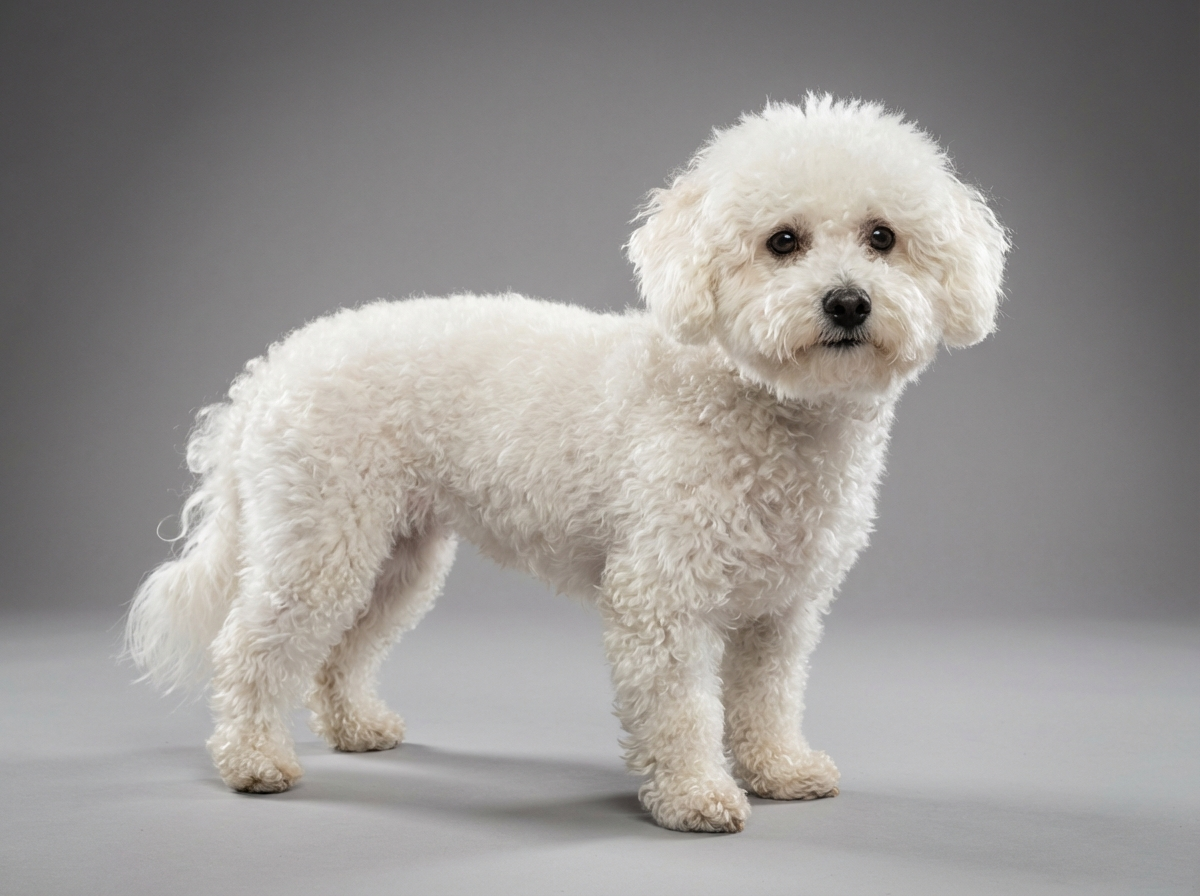
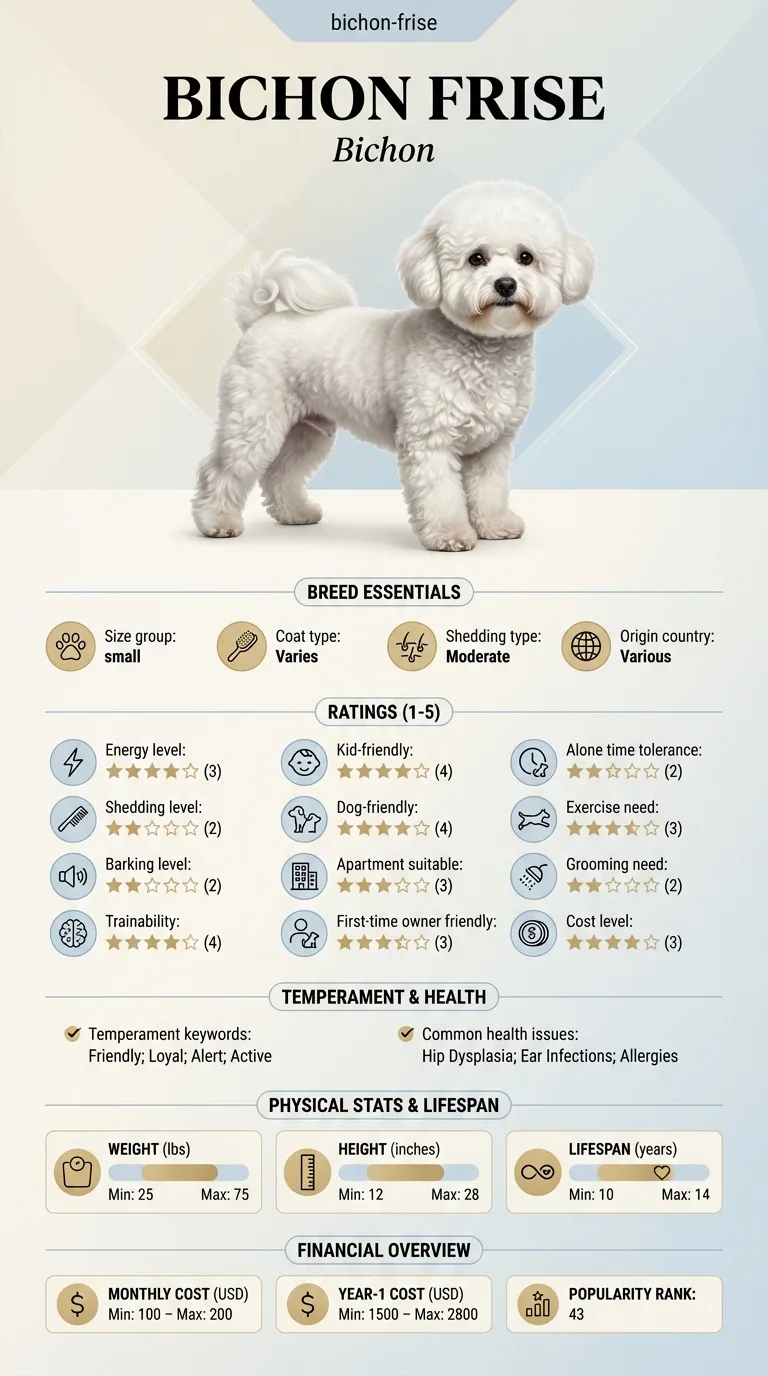
A Bichon Frise grows to nine to twelve inches at the shoulder and between 12 and 18 pounds. The growth curve is short and the loads are small. Its documented health concerns are skin allergies, patellar luxation, bladder stones, cataracts and dental disease, and joint cartilage disease is not among them.
When this condition appears on a Bichon health page, it has almost always been copied from a generic list of canine orthopaedic conditions rather than from anything observed in the breed. That is worth knowing, because it changes what you should actually be investigating in a limping Bichon puppy.

If you are working through causes of lameness in a young Bichon, these are the possibilities that deserve attention before a large-breed cartilage disease does.
Josh spent six weeks researching his seven-month-old Bichon's intermittent front leg limp. He had read extensively about shoulder cartilage disease and arrived at the appointment expecting to discuss imaging and arthroscopy. His vet flexed and extended both shoulders and elbows, found no pain and no restriction, then watched the puppy trot down the corridor. The limp appeared on the left front only after the dog had turned sharply on the vinyl floor. It was a soft tissue strain, aggravated by a slippery kitchen where the puppy skidded daily. Runners went down that afternoon and the limp stopped within ten days.
Key takeaway: Research shapes what you expect to find and can point you at the wrong species of dog entirely. Let the examination lead, and describe what you see rather than what you have read.
It is not documented as a Bichon condition and would be a genuinely unusual finding. The disease concentrates in large and giant breeds during rapid growth. If a vet raises it for your Bichon, it will be because imaging showed something specific rather than because of breed predisposition.
The shoulder is the most frequently affected site, followed by the elbow, stifle and hock. Lameness is usually worse after exercise and after rest, and affected dogs often show pain when the joint is flexed to its limit during examination.
Typically between four and ten months in the breeds that develop it, coinciding with the period of most rapid skeletal growth. That is also the age window when a Bichon might show a patellar or hip problem, which is one reason the conditions get confused in owner research.
Overfeeding and inappropriate mineral supplementation during growth are recognised contributing factors in susceptible large breeds. In a small breed the more relevant feeding concern is simply that overfeeding a puppy sets a pattern of excess weight, which loads the kneecaps this breed is prone to dislocating.
Small stable lesions are sometimes managed conservatively with restricted exercise and veterinary pain relief. Loose flaps and free fragments are usually removed surgically, often arthroscopically. Arthritis that has already developed in the joint persists afterwards.
Rest it for a few days and see. If the limp persists beyond that, worsens, or recurs each time you resume normal activity, book an examination rather than another round of rest. Repeated unsuccessful rest periods are the most common reason juvenile lameness gets diagnosed late.
No. It is a large and giant breed growth disease and is not among this breed's documented health concerns.
A slipping kneecap or a simple soft tissue strain. Both are far more likely than cartilage disease.
No. Growth formulations are tailored to the size of the adult dog, and a small breed has different requirements.
A few days is reasonable. If the limp is still there after that, book an appointment rather than extending the rest.
Better not to. Teach a ramp early, which protects the kneecaps this breed genuinely is prone to problems with.
A one-page prep sheet for this condition: the signs, the questions to ask, what to get priced. Unlocks here.
You get: Vet visit prep sheet
No spam. One-click unsubscribe. See our privacy policy.
Preview page 1 before you decide.