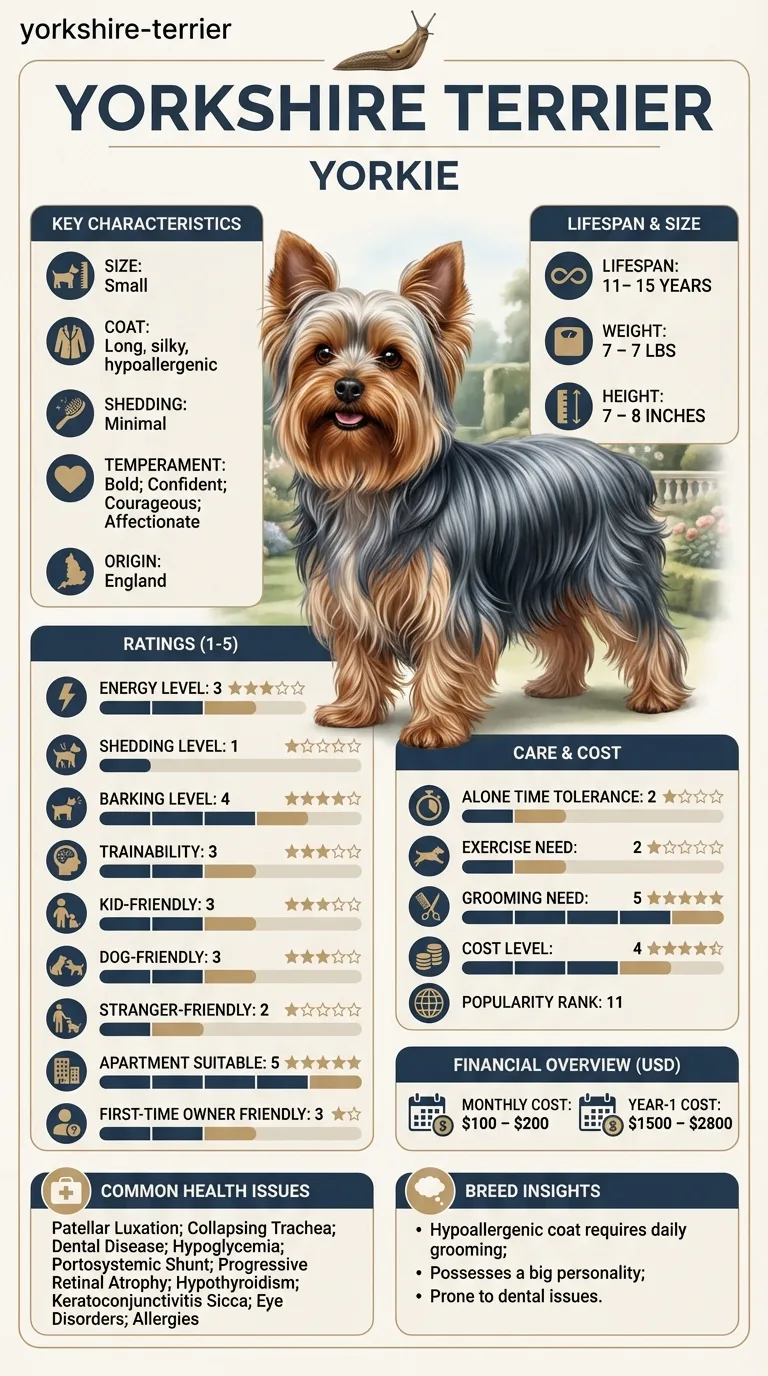
Understanding Yorkshire Terrier Osteochondritis Dissecans (OCD)
Yorkshire Terrier osteochondritis dissecans (OCD) can lead to joint pain and discomfort, affecting your dog's quality of life.

What you can try
- Limit high-impact activities, such as jumping or running on hard surfaces. Opt for smooth, soft surfaces during playtime.
- Introduce a structured exercise plan that includes short, gentle walks and low-impact activities to maintain their weight and joint health.
- Provide a comfortable, supportive bed to help reduce joint strain during rest periods.
Mistakes that make this worse
Understanding the common mistakes that owners make can help improve your Yorkshire Terrier's osteochondritis dissecans (OCD). Here are some behaviors to avoid and safer alternatives to consider.
- Ignoring signs of discomfort: Not addressing your Yorkie's signs of pain can worsen the condition. Instead, pay attention to their movements and consult a vet if you notice abnormalities.
- Overexercising: While Yorkies need exercise, too much can strain their joints. Opt for short, gentle walks instead of long, intense play sessions.
- Neglecting weight management: Obesity can exacerbate joint issues. Focus on a balanced diet and regular vet check-ups to maintain a healthy weight.
- Using harsh training methods: Punishment can increase anxiety and stress, making OCD worse. Use positive reinforcement techniques to encourage good behavior.
- Skipping vet visits: Regular check-ups are crucial for monitoring your dog's joint health. Make sure to schedule routine visits to catch potential problems early.
- Assuming all pain is normal: Just because your Yorkie is small doesn’t mean they should be in pain. Be proactive and seek veterinary advice if they seem uncomfortable.
- Not providing a supportive environment: Hard surfaces can aggravate joint issues. Ensure your dog has comfortable bedding and avoid letting them jump off furniture.
When Yorkshire Terrier Osteochondritis Dissecans (OCD) is an Emergency
Call your vet right away if your Yorkie shows severe symptoms such as intense limping, swelling around the joints, or sudden inability to bear weight on the affected leg. Other red flags include lethargy, persistent crying or whining, and a noticeable change in appetite. If your dog appears to be in severe pain or distress, don't wait—seek help immediately.
In contrast, if your Yorkshire Terrier shows mild signs of discomfort, like occasional limping or reluctance to jump, you might consider monitoring the situation for a few days. Keep a close eye on your dog's behavior and activity levels. If the mild symptoms persist or worsen, it's best to consult your vet for advice.
Creating a plan that includes rest and gradual exercise can help manage mild cases effectively.
In summary, act quickly for severe symptoms and monitor for mild ones. Your vigilance can make a significant difference in your Yorkie's health and well-being.

Frequently asked questions
Why does my Yorkshire Terrier have osteochondritis dissecans (OCD)?
Yorkshire Terriers may develop osteochondritis dissecans (OCD) due to genetic factors or rapid growth during their early life. This condition involves abnormal cartilage development, leading to joint discomfort. Ensuring a balanced diet and proper exercise can help mitigate risks.
How can I help my Yorkshire Terrier with OCD?
To help your Yorkshire Terrier with osteochondritis dissecans, consult your vet for a tailored treatment plan. This may include medication to manage pain and inflammation. Additionally, controlled exercise and physical therapy can improve their joint health.
What are the signs of OCD in Yorkshire Terriers?
Signs of osteochondritis dissecans in Yorkshire Terriers include limping, reluctance to play, and discomfort when moving. You might also notice swelling around the affected joints. Regular check-ups with your vet can help catch these signs early.
Can training help with my Yorkshire Terrier's OCD?
Training can help by reinforcing calm behaviors and avoiding strenuous activities that may exacerbate your Yorkshire Terrier's osteochondritis dissecans. Focus on gentle training methods that promote joint-friendly exercises. Always consult your vet before starting a new training regimen.
What is the long-term outlook for a Yorkshire Terrier with OCD?
The long-term outlook for a Yorkshire Terrier with osteochondritis dissecans varies based on treatment and management. Many dogs can lead active lives with proper care. Regular vet visits and attention to their exercise routine are critical for maintaining their quality of life.
What are the signs of osteochondritis dissecans (OCD) in Yorkshire Terriers?
Signs of Yorkshire Terrier osteochondritis dissecans (OCD) include limping, reluctance to play, and decreased activity levels. You may also notice swelling around the affected joints. If you see any of these signs, it's important to consult your vet.
Can Yorkshire Terrier osteochondritis dissecans (OCD) be treated without surgery?
In some cases, conservative management like weight control, physical therapy, and medications can help alleviate discomfort from Yorkshire Terrier osteochondritis dissecans (OCD). However, if symptoms persist, surgery might be necessary to address the underlying issue. Always discuss treatment options with your vet.
Is there a specific age when Yorkshire Terriers are more prone to osteochondritis dissecans (OCD)?
Yorkshire Terriers typically show signs of osteochondritis dissecans (OCD) between 4 and 8 months of age. However, it can occur in older dogs as well. Regular check-ups can help catch any issues early on.
What should I do if my Yorkshire Terrier is diagnosed with osteochondritis dissecans (OCD)?
If your Yorkshire Terrier is diagnosed with osteochondritis dissecans (OCD), follow your vet's recommendations for treatment and management. This may include rest, medication, or surgical options, depending on the severity of the condition. Regular follow-ups are crucial to monitor progress.
How can I prevent osteochondritis dissecans (OCD) in my Yorkshire Terrier?
To help prevent Yorkshire Terrier osteochondritis dissecans (OCD), ensure your dog maintains a healthy weight and receives appropriate exercise. Avoid excessive jumping and rough play, especially in young dogs. Regular vet visits can help catch any potential issues early.