Living
Smaller breed?
The Bichon Frise, by a wide margin.

Quick answer
Smaller breed?
The Bichon Frise, by a wide margin.
Bichon Frise or Poodle (Standard)? On paper they differ most on exercise need, and on the scales Poodle (Standard) is the heavier at 45–70 lbs. Here is how the two compare on everything that shapes an ordinary week.
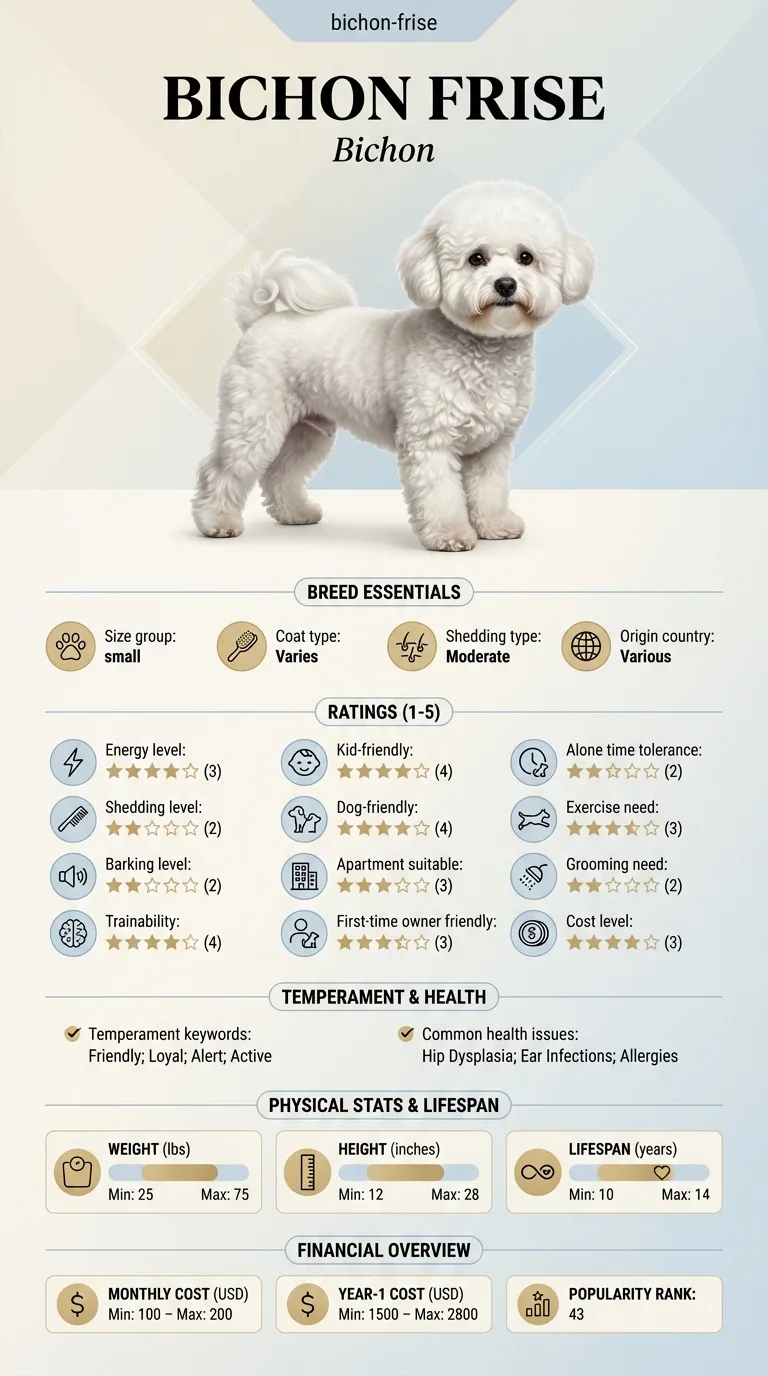
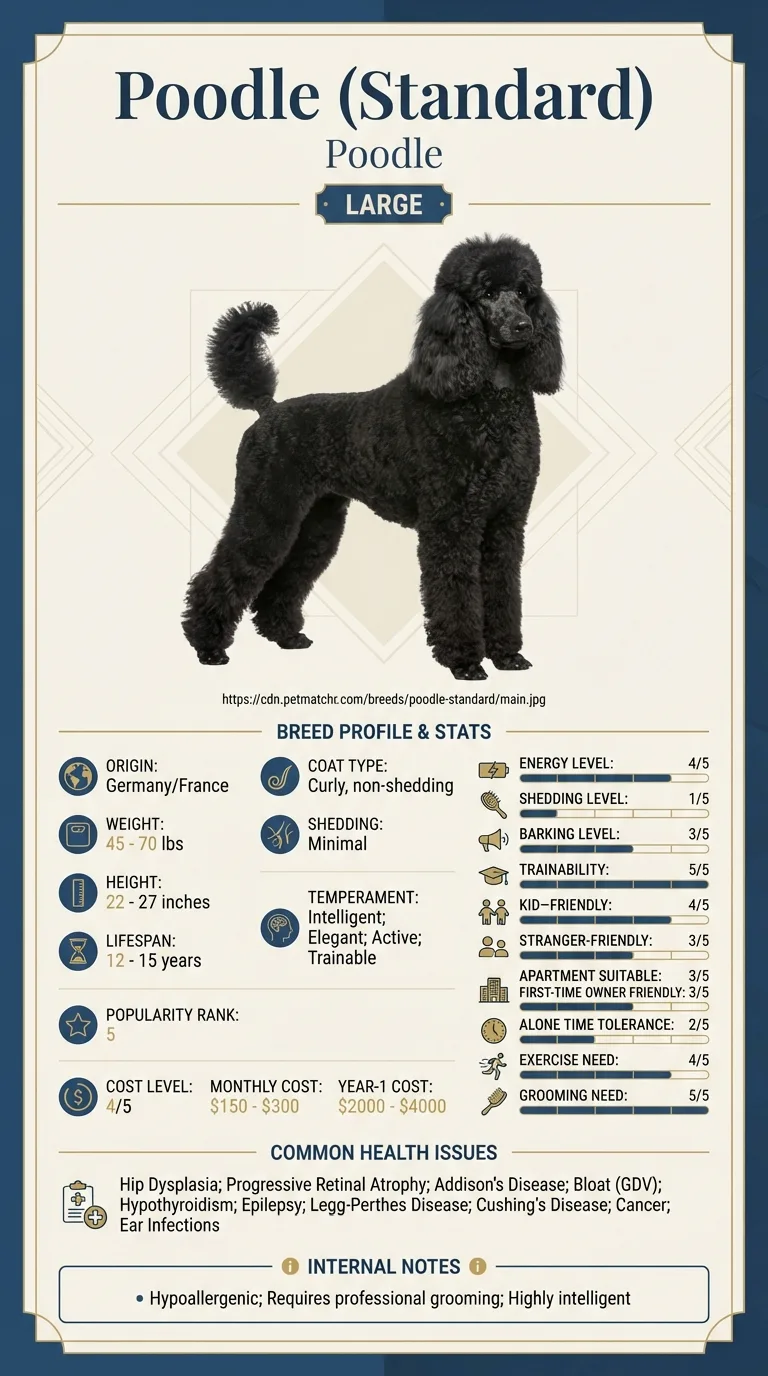
This is for someone already down to Bichon Frise and Poodle (Standard) and deciding between them. For this pair the decision usually turns on exercise need and apartment suitability, so those are covered first and in most detail. Anyone choosing from a flat has a clear answer here: Bichon Frise rates 5/5 against 3/5. There is no origin story here — only what changes about your week.
Between Bichon Frise and Poodle (Standard), exercise need is what separates them, and Bichon Frise is the lower-effort dog of the two to keep.
Choose Bichon Frise if you are in a flat or a smaller home, this is your first dog and your walking routine is modest.
Choose Poodle (Standard) if you want a dog that picks up training quickly, you want a dog that can keep up with an active routine and you want a dog that is more watchful with visitors.
| Feature | bichon frise | poodle standard | Winner |
|---|---|---|---|
| Size class | small | large | Equal |
| Weight | 12–18 lbs | 45–70 lbs | Equal |
| Height | 9–12 in | 22–27 in | Equal |
| Lifespan | 14–15 years | 12–15 years | bichon frise |
| Exercise need | Low (2/5) | High (4/5) | bichon frise |
| Grooming need | Very high (5/5) | Very high (5/5) | Equal |
| Shedding | Very low (1/5) | Very low (1/5) | Equal |
| Energy level | Moderate (3/5) | High (4/5) | Equal |
| Barking | Moderate (3/5) | Moderate (3/5) | Equal |
| Apartment suitability | Very high (5/5) | Moderate (3/5) | bichon frise |
| Good for first-time owners | High (4/5) | Moderate (3/5) | bichon frise |
| Tolerates being alone | Low (2/5) | Low (2/5) | Equal |
| Trainability | Moderate (3/5) | Very high (5/5) | poodle standard |
| Good with kids | High (4/5) | High (4/5) | Equal |
| Good with other dogs | High (4/5) | High (4/5) | Equal |
| Friendly to strangers | High (4/5) | Moderate (3/5) | bichon frise |
| Cost level | Moderate (3/5) | High (4/5) | bichon frise |
| Coat | Curly, dense double coat | Curly, non-shedding | Equal |
| Origin | Various | Germany/France | Equal |
| Typical monthly cost | $80–$150 | $150–$300 | Equal |
| Typical first-year cost | $1,100–$2,300 | $2,000–$4,000 | Equal |
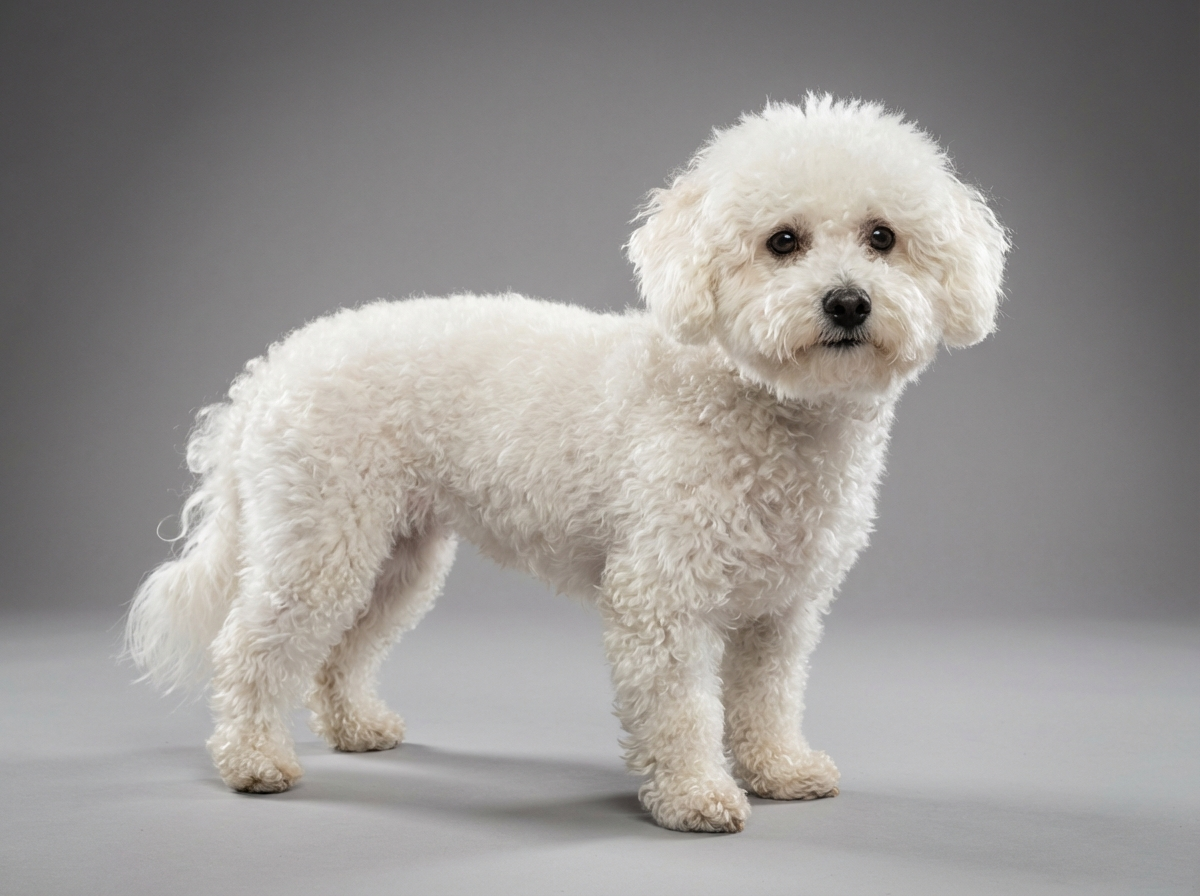
The gap here is one of the widest in this comparison: a Bichon Frise tops out around 12–18 lbs and 9–12 inches at the shoulder, while the Standard Poodle runs 45–70 lbs and stands 22–27 inches tall — more than triple the height and up to five times the weight. Despite the size gulf, the two share a curly, dense coat texture, so a Poodle essentially reads as a much larger, leggier cousin of the Bichon's silhouette. Anyone choosing between them is really choosing between a lap-sized companion and a substantial sporting-class dog that needs real floor space, a full-size crate, and a car big enough to load it into.
Exercise need splits the pair firmly: Low (2/5) for the Bichon versus High (4/5) for the Standard Poodle, with energy level rated Moderate (3/5) against High (4/5). Bred originally as a water retriever, the Poodle wants daily off-leash running, swimming, or structured fetch sessions to stay settled, while the Bichon is content with a couple of short walks and indoor play. A Poodle left to a Bichon-style routine of brief strolls will likely become restless and destructive, whereas the Bichon has no interest in — and no real capacity for — the mileage a Standard Poodle expects from its people.
Both breeds land at Very high (5/5) grooming need and Very low (1/5) shedding, so neither will leave hair on the couch, but both demand a serious ongoing coat commitment. The Bichon's dense double coat mats quickly and typically needs brushing every day or two plus a trim every four to six weeks to keep its round, powder-puff shape. The Standard Poodle's curly coat is just as prone to matting but covers vastly more surface area, so professional grooming sessions run longer and cost more per visit even though the frequency is similar.
Apartment suitability favors the Bichon clearly — Very high (5/5) versus the Poodle's Moderate (3/5) — a direct consequence of the size and exercise gap rather than temperament, since both score a middling Moderate (3/5) on barking. Neither breed tolerates being left alone well, both rated Low (2/5), so long solo workdays are a poor fit for either dog regardless of square footage. A Standard Poodle can live in a large apartment if its exercise needs are met daily, but a small unit paired with a sedentary owner suits the Bichon far more comfortably.
Trainability tips toward the Poodle at Very high (5/5) against the Bichon's Moderate (3/5) — the Standard Poodle is widely regarded as one of the most trainable breeds alive, described here as Intelligent and Trainable. Yet the Bichon actually scores higher for first-time owners, High (4/5) versus the Poodle's Moderate (3/5), because raw trainability doesn't offset the Poodle's exercise and grooming demands for a novice. A first-time owner gets an easier overall package with the cheerful, Curious Bichon, while an experienced handler who wants a dog that learns quickly will get more out of the Poodle.
Both breeds score High (4/5) with kids and High (4/5) with other dogs, making either a safe bet for a multi-pet household with children. The gap shows up with strangers: the Bichon's Affectionate, Cheerful nature earns High (4/5) friendliness to strangers, while the more Elegant, reserved Poodle sits at Moderate (3/5). Families wanting a dog that greets every visitor at the door will lean Bichon; those wanting a dog that's polite but slightly more discerning around new people may prefer the Poodle's cooler first impression.
The Bichon's 14–15 year lifespan outpaces the Standard Poodle's 12–15 years, and the health profiles diverge sharply in scope. The Bichon's concerns — Skin Allergies, Patellar Luxation, Bladder Stones, Cataracts, and Dental Disease — form a shorter list typical of a small breed. The Poodle's list runs to ten conditions, including Hip Dysplasia, Bloat (GDV), Addison's Disease, Epilepsy, and Cancer — several of them serious, size-linked risks that come with being a large, deep-chested dog. Prospective Poodle owners should budget for pet insurance and know the signs of bloat.
Cost level is rated Moderate (3/5) for the Bichon against High (4/5) for the Poodle, and the dollar figures confirm it: the Bichon runs $80–$150 a month and $1,100–$2,300 in year one, while the Standard Poodle runs $150–$300 a month and $2,000–$4,000 in year one — close to double across the board. The gap comes from more food, larger-dose medications and preventatives, bigger grooming bills, and higher costs for boarding or professional training given the Poodle's size and activity level.
Bichon Frise weighs 12–18 lbs and lives 14–15 years; Poodle (Standard) weighs 45–70 lbs and lives 12–15 years. The two diverge most on exercise need, apartment suitability and trainability. They are level on tolerates being alone, barking and good with other dogs, so those cannot decide it. Where the table declares a winner it means less work for the owner, nothing more; descriptive rows are left as ties on purpose. The value here is in the differences between the two columns; treat any single score as approximate.

Often yes — the Poodle stands 22–27 inches and weighs 45–70 lbs against the Bichon's 9–12 inches and 12–18 lbs, and its High (4/5) exercise need and only Moderate (3/5) apartment suitability mean it needs more room and daily exertion than a Bichon-sized home typically provides.
Neither sheds much — both are rated Very low (1/5) shedding with curly, non-shedding-style coats — so the real differentiator is grooming frequency and cost, not hair on the floor.
The Poodle, rated Very high (5/5) trainability versus the Bichon's Moderate (3/5) — it's one of the most consistently trainable breeds and picks up commands quickly with a confident handler.
The Bichon Frise edges it out, High (4/5) versus Moderate (3/5) for first-time owners, mainly because its lower exercise needs make it more forgiving of a less experienced routine.
The data lists ten health concerns for the Standard Poodle versus five for the Bichon, including size-linked risks like Bloat (GDV) and Hip Dysplasia that simply don't affect a toy-sized dog the same way.
Roughly double — $150–$300 a month and $2,000–$4,000 in the first year for the Poodle, against $80–$150 a month and $1,100–$2,300 for the Bichon.
The Bichon Frise, with a 14–15 year lifespan versus 12–15 years for the Standard Poodle.
The Bichon Frise, by a wide margin.
The Standard Poodle, rated High (4/5) versus Low (2/5).
The Bichon Frise, though both need frequent professional grooming.
The Bichon Frise, rated Very high (5/5) apartment suitability.
Secure checkout on Stripe. We never see your card.
7-day money-back guarantee. Instant access.
Health information here is general and is not veterinary advice. If your dog shows pain, sudden behaviour change, or worsening symptoms, consult a licensed veterinarian.
Some links on this site are affiliate links. We may earn a commission at no extra cost to you, and we only suggest products we believe are helpful for dog owners.
We research and check what we publish, but we do not warrant that any figure, date, price, or statement is accurate, complete, or current, and we accept no liability for any loss, cost, injury, or other harm arising from the use of this site. Use it as one reference among several. You remain responsible for your own decisions and for your dog's care - confirm anything that matters with a licensed veterinarian or another qualified professional before you act on it. Full disclaimer.
Match your lifestyle to the right dog.
Take quizNot sure which breed is right for you? Take our 2-minute quiz to find out.
Take the quiz