Behavior
What are quick tips for Rottweiler osteochondritis dissecans (OCD)?
To manage OCD in Rottweilers, maintain a healthy weight, limit high-impact exercise, and provide joint supplements as advised by your vet.

Quick answer
What are quick tips for Rottweiler osteochondritis dissecans (OCD)?
To manage OCD in Rottweilers, maintain a healthy weight, limit high-impact exercise, and provide joint supplements as advised by your vet.
Rottweiler osteochondritis dissecans (OCD) is a painful joint condition affecting your dog's mobility and quality of life.
Owners of Rottweilers, particularly those with young or active dogs, often face this challenge. If you notice your Rottweiler limping or hesitating to play, it might be due to OCD. This can be especially concerning for first-time dog owners who may not recognize the signs early on.
This guide is not medical advice. If your dog shows pain, sudden behavior change, or worsening symptoms, consult a licensed veterinarian.
Some links may be affiliate links. We may earn a commission at no extra cost to you. We only suggest products we believe are helpful for dog owners.
We research and check what we publish, but we do not warrant that any figure, date, price, or statement is accurate, complete, or current, and we accept no liability for any loss, cost, injury, or other harm arising from the use of this site. Use it as one reference among several. You remain responsible for your own decisions and for your dog's care - confirm anything that matters with a licensed veterinarian or another qualified professional before you act on it. Full disclaimer.
Check this first
Recognizing when Rottweiler osteochondritis dissecans (OCD) is an emergency is crucial for your pet's health. If your Rottie exhibits severe limping, swelling in the joints, or inability to bear weight on a leg, these are red flags. Additionally, if your dog shows signs of extreme pain, such as whimpering or refusing to move, you should call your vet immediately.
In less severe cases, you can monitor your Rottweiler at home. If your dog seems to have mild limping or occasional discomfort after exercise, this can often be managed with rest and gradual activity. Keep an eye on any changes in behavior, such as decreased appetite or lethargy.
If these symptoms persist or worsen, it’s time to consult your vet.
It's important to have a plan in place for both situations. For emergencies, ensure you have your vet's contact information readily available. For mild cases, you might consider a routine that includes gentle exercises and joint supplements.
Always prioritize your Rottweiler's comfort and well-being, and don't hesitate to seek professional advice when in doubt.
If any of these apply, call your vet or an emergency clinic now. The rest of this page is for the cases that are not an emergency.
Rottweiler osteochondritis dissecans (OCD) is a condition that affects the joints of Rottweilers, causing discomfort and mobility issues. This abnormal cartilage development typically occurs in young, growing dogs and can lead to pain and lameness. Owners may notice their Rottie limping or being reluctant to exercise, which can impact their overall quality of life.
Osteochondritis dissecans (OCD) is relatively common in Rottweilers, particularly in larger breeds. Studies indicate that 10-15% of Rottweilers may experience this condition, making it a significant concern for dog owners.
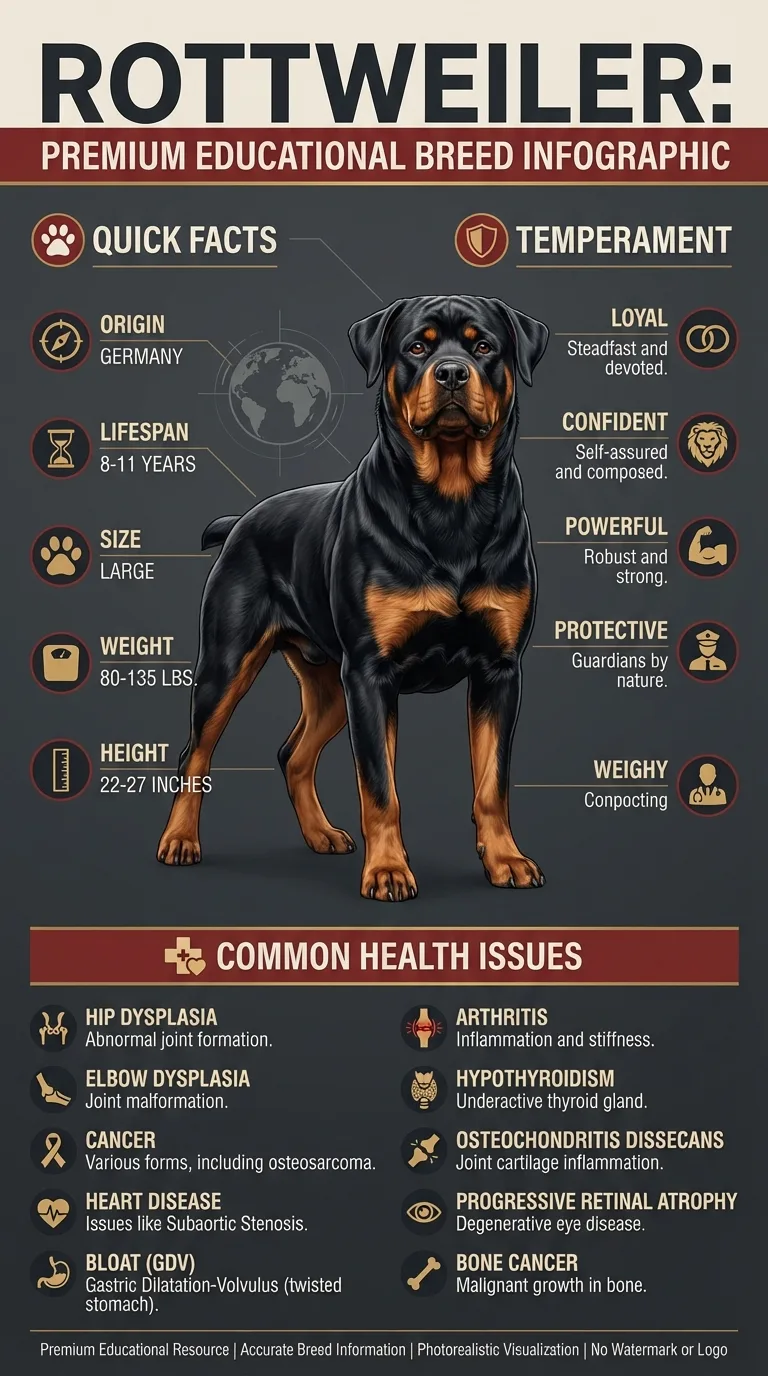
Rottweilers are large, powerful dogs with a strong build. Their size and rapid growth can contribute to joint issues like osteochondritis dissecans (OCD). Genetic predisposition also plays a role, as certain breeds, including Rottweilers, are more prone to this condition.
The environment can also influence the development of OCD. Factors such as inadequate exercise, excessive jumping, or slippery surfaces can exacerbate joint stress. Poor nutrition during the puppy stage might lead to improper bone development, increasing the risk of joint problems.
Seek veterinary advice if your Rottweiler shows signs of lameness, reluctance to exercise, or joint swelling. A vet can provide a proper diagnosis and recommend treatments such as medications or specific physical therapy tailored to your dog's needs.
Avoiding common pitfalls can significantly help your Rottweiler's condition. Here are some mistakes to steer clear of, along with safer alternatives.
See all Rottweiler health problems, which breeds are prone to osteochondritis dissecans ocd, or the full Rottweiler breed guide for temperament, exercise needs and ownership costs.
Managing Rottweiler osteochondritis dissecans (OCD) generally takes 3 to 6 months of consistent care and treatment.
Success means your Rottweiler shows reduced pain and improved mobility, allowing for a happier, more active lifestyle.
When Jake adopted Max, his Rottweiler, he quickly noticed something was off. Max limped after short walks, and Jake worried about his health. After a vet visit, they diagnosed Max with osteochondritis dissecans (OCD). Jake learned that with a mix of rest, physical therapy, and weight management, he could help Max. It was a long road, but after several months, Max was running around again, playing with other dogs at the park. Jake realized that patience and a solid care plan made all the difference.
Key takeaway: Managing Rottweiler osteochondritis dissecans (OCD) takes time and effort, but with the right approach, your dog can lead a happy life.
Rottweilers can develop osteochondritis dissecans (OCD) due to rapid growth, genetics, or nutrient imbalances. This condition often leads to abnormal cartilage development, resulting in joint discomfort. Regular vet check-ups can help catch these issues early.
To manage your Rottweiler's pain from OCD, focus on weight management and controlled exercise. Avoid high-impact activities like running or jumping until cleared by your vet. Consult with a veterinarian for tailored treatment options, including possible surgery.
Signs of OCD in Rottweilers include limping, reluctance to exercise, and joint swelling. You may also notice your Rottie favoring one leg or being less playful. If you observe these symptoms, contact your vet for a proper diagnosis.
Training a Rottweiler with OCD should focus on positive reinforcement and gentle commands. Limit strenuous activities and ensure training sessions are short and engaging. Consult a professional trainer who understands your dog’s condition for best practices.
Treatment for Rottweiler OCD may include physical therapy, anti-inflammatory medications, and, in severe cases, surgery. Always work closely with your veterinarian to create a comprehensive treatment plan tailored to your dog's needs.
Yes, a balanced diet can help manage your Rottweiler's OCD. Ensure your dog receives appropriate nutrients and consult your vet for specific dietary recommendations. Proper nutrition can support joint health and overall well-being.
Common signs include limping, reluctance to exercise, and joint swelling. You may also notice your Rottweiler being less playful or avoiding certain movements that cause discomfort.
Yes, while managing OCD in older dogs may be more challenging, it is possible. Consult your vet for a tailored treatment plan that may include weight management, joint supplements, and modified exercise.
Diagnosis typically involves a physical examination and imaging tests such as X-rays or MRIs. These tests help the vet assess cartilage development and joint condition.
Follow your veterinarian's advice for treatment options, which may include rest and anti-inflammatory medications. Depending on severity, surgery might also be necessary to correct the issue.
While you can't completely prevent OCD, maintaining a healthy weight, providing appropriate exercise, and avoiding high-impact activities can help reduce the risk. Regular vet check-ups are also essential for early detection and management.
To manage OCD in Rottweilers, maintain a healthy weight, limit high-impact exercise, and provide joint supplements as advised by your vet.
Provide a comfortable resting area, keep exercise moderate, and ensure your Rottweiler has regular vet check-ups to monitor joint health.
Low-impact activities like swimming or walking on a leash are ideal for Rottweilers with OCD. Avoid running, jumping, or rough play until your vet gives the go-ahead.
Yes, look for training programs that emphasize gentle methods and positive reinforcement. A trainer familiar with OCD can tailor exercises to your dog's needs.
A one-page prep sheet for this condition: the signs, the questions to ask, what to get priced. Unlocks here.
You get: Vet visit prep sheet
No spam. One-click unsubscribe. See our privacy policy.
Preview page 1 before you decide.