Health
Is OCD typical for Chinese Shar-Peis?
No, it's much more common in fast-growing large and giant breeds, making it an atypical though not impossible finding in this medium breed.

Quick answer
Is OCD typical for Chinese Shar-Peis?
No, it's much more common in fast-growing large and giant breeds, making it an atypical though not impossible finding in this medium breed.
This is usually described as a large-breed puppy problem, and a medium breed like the Shar-Pei encountering it is dealing with a less typical, though not impossible, version of the same growth-plate issue.
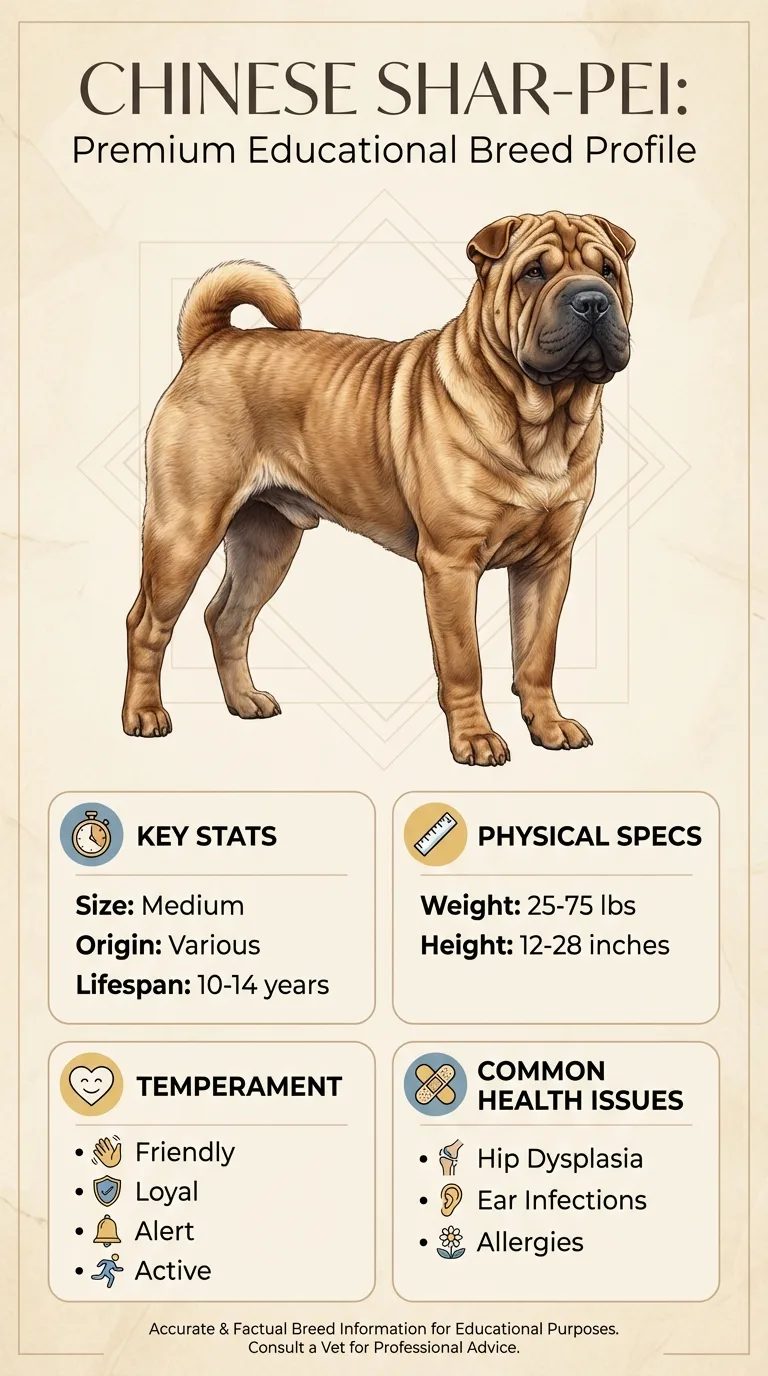
Owners of Shar-Pei puppies during their rapid growth phase, particularly those showing lameness that seems to worsen after exercise and ease with rest, the reverse of many other joint conditions.
This guide is not medical advice. If your dog shows pain, sudden behavior change, or worsening symptoms, consult a licensed veterinarian.
Some links may be affiliate links. We may earn a commission at no extra cost to you. We only suggest products we believe are helpful for dog owners.
We research and check what we publish, but we do not warrant that any figure, date, price, or statement is accurate, complete, or current, and we accept no liability for any loss, cost, injury, or other harm arising from the use of this site. Use it as one reference among several. You remain responsible for your own decisions and for your dog's care - confirm anything that matters with a licensed veterinarian or another qualified professional before you act on it. Full disclaimer.
Osteochondritis dissecans is a cartilage development abnormality during rapid puppy growth, most classically seen in large and giant breeds. The Chinese Shar-Pei's medium size makes this an atypical finding, but any growing puppy's joint cartilage can theoretically be affected, and the classic pattern, exercise-worsened, rest-eased lameness, warrants the same diagnostic workup regardless of breed size.
OCD is not considered a typical or breed-defining condition for the Chinese Shar-Pei given its medium size, occurring far less frequently here than in classically predisposed large and giant breeds, making it a genuinely atypical rather than expected finding.
The Chinese Shar-Pei doesn't share the rapid, large-scale bone growth pattern most strongly linked to OCD in giant breeds, meaning this condition doesn't have a strong established connection to the breed's typical genetics or growth pattern the way it does for larger breeds.
High-impact exercise or repeated jumping during the vulnerable growth window between four and eight months old can place additional stress on cartilage that's already undergoing the conversion process, regardless of the puppy's ultimate adult breed size.
Schedule an evaluation for any lameness in a growing puppy that seems to worsen after exercise and ease with rest, along with any visible joint swelling. While this specific condition is uncommon in the breed, these signs still warrant investigation given how much treatment timing affects long-term joint outcomes.
Start here: Chinese Shar-Pei Most Common Genetic Disorders: Screening
See all Chinese Shar PEI health problems, which breeds are prone to osteochondritis dissecans ocd, or the full Chinese Shar PEI breed guide for temperament, exercise needs and ownership costs.
Diagnosis typically follows within a few weeks of lameness onset once imaging is performed. Conservative treatment involves several weeks of strict rest, while surgical cases generally need a similar recovery window with structured rehabilitation afterward.
Success looks like resolved lameness and, when a loose cartilage fragment was surgically removed, a joint free of ongoing irritation, with a gradual, supervised return to normal activity that doesn't trigger a repeat episode.
During normal puppy growth, cartilage at the ends of long bones gradually converts to solid bone as the skeleton matures. In osteochondritis dissecans, a section of that cartilage fails to convert properly and instead develops a crack or flap, sometimes fully separating into a loose fragment that floats within the joint. This most commonly affects the shoulder, elbow, or hock joints, and it typically develops during the rapid growth window of puppyhood, generally between four and eight months old. While large and giant breeds are more classically associated with this condition, likely due to how much bone growth their joints undergo in a short window, any breed's growing joints can theoretically be affected, and a Shar-Pei puppy showing the classic pattern, lameness that worsens with exercise and eases with rest, warrants the same diagnostic workup a larger breed puppy would get rather than being dismissed based on size alone.
Mild cases of OCD, particularly small cartilage lesions caught early, are sometimes managed conservatively with strict rest and controlled exercise for several weeks, giving the cartilage a chance to heal on its own without further mechanical stress. More significant lesions, especially once a cartilage flap has become a loose fragment floating in the joint, generally respond better to surgical removal of that fragment, often performed arthroscopically through small incisions rather than a fully open surgery. Removing the loose fragment eliminates a source of ongoing joint irritation and mechanical catching, and most dogs recover well with an appropriate post-surgical rehabilitation program. Left untreated, a loose fragment can contribute to progressive arthritis in the joint over the dog's lifetime, which is part of why prompt diagnosis matters even in a breed where this condition is less expected.

Diesel, a six-month-old Shar-Pei puppy in Kansas City going through a noticeable growth spurt, started limping on one front leg that seemed to get worse after his evening play sessions and better by the next morning. His vet, despite OCD being an unusual diagnosis for this breed, took the classic exercise-worsened pattern seriously and ordered X-rays, which revealed a small cartilage lesion in his shoulder. Given how small the lesion was, his vet recommended strict rest rather than surgery. Six weeks of controlled activity later, Diesel's limp had fully resolved, and follow-up imaging showed the lesion had healed on its own.
Key takeaway: Diesel's vet took an unusual-for-the-breed symptom pattern seriously rather than dismissing it based on typical breed expectations, and that willingness to investigate caught a treatable lesion early enough to avoid surgery entirely.
No, it's much more classically associated with fast-growing large and giant breeds, and it's uncommon in a medium breed like the Shar-Pei, though any growing puppy's joint cartilage can theoretically be affected.
Lameness that tends to worsen after exercise and ease with rest is the classic pattern, along with visible joint swelling or a reluctance to fully extend the affected limb, usually appearing between four and eight months old.
X-rays can often show the characteristic cartilage or bone changes, though in some cases advanced imaging like CT or MRI, or direct arthroscopic examination, is needed to fully characterize the lesion.
Not always; small, early-caught lesions are sometimes managed with strict rest and controlled exercise, but larger lesions or fully separated cartilage fragments generally respond better to surgical removal.
The shoulder, elbow, and hock are the most commonly affected joints, though the specific joint involved and the size of the lesion both influence the recommended treatment approach.
Yes, an untreated loose cartilage fragment can cause ongoing joint irritation and mechanical catching, contributing to progressive arthritis over time if not addressed.
While the exact reasons are less understood in medium breeds compared to the classic large-breed growth-rate explanation, individual variation in growth pace or genetics can still occasionally produce the same cartilage development issue.
No, it's much more common in fast-growing large and giant breeds, making it an atypical though not impossible finding in this medium breed.
Lameness that worsens after exercise and eases with rest, typically appearing between four and eight months old during rapid growth.
Small early lesions sometimes respond to rest alone, but larger or fully separated cartilage fragments generally need surgical removal for the best outcome.
Arthroscopic surgery for OCD is a meaningful expense, generally less than a fully open joint surgery but still a significant cost to budget for.
Yes, an untreated loose cartilage fragment can contribute to progressive arthritis over a dog's lifetime if not addressed promptly.
A one-page prep sheet for this condition: the signs, the questions to ask, what to get priced. Unlocks here.
You get: Vet visit prep sheet
No spam. One-click unsubscribe. See our privacy policy.
Preview page 1 before you decide.