DogBreedCompass
← Back to breed profile

Bichon Frise Exercise Intolerance: What a Sudden Drop in Stamina Means

Quick answer

What is the most likely cause of exercise intolerance in a Bichon Frise?

Patellar luxation is the documented orthopedic condition most likely to cause sudden reluctance to exercise in this breed, often showing as intermittent skipping rather than a constant limp.

A Bichon that used to trot along for twenty minutes and now sits down after five is telling you something changed, even if nothing about the walk did.

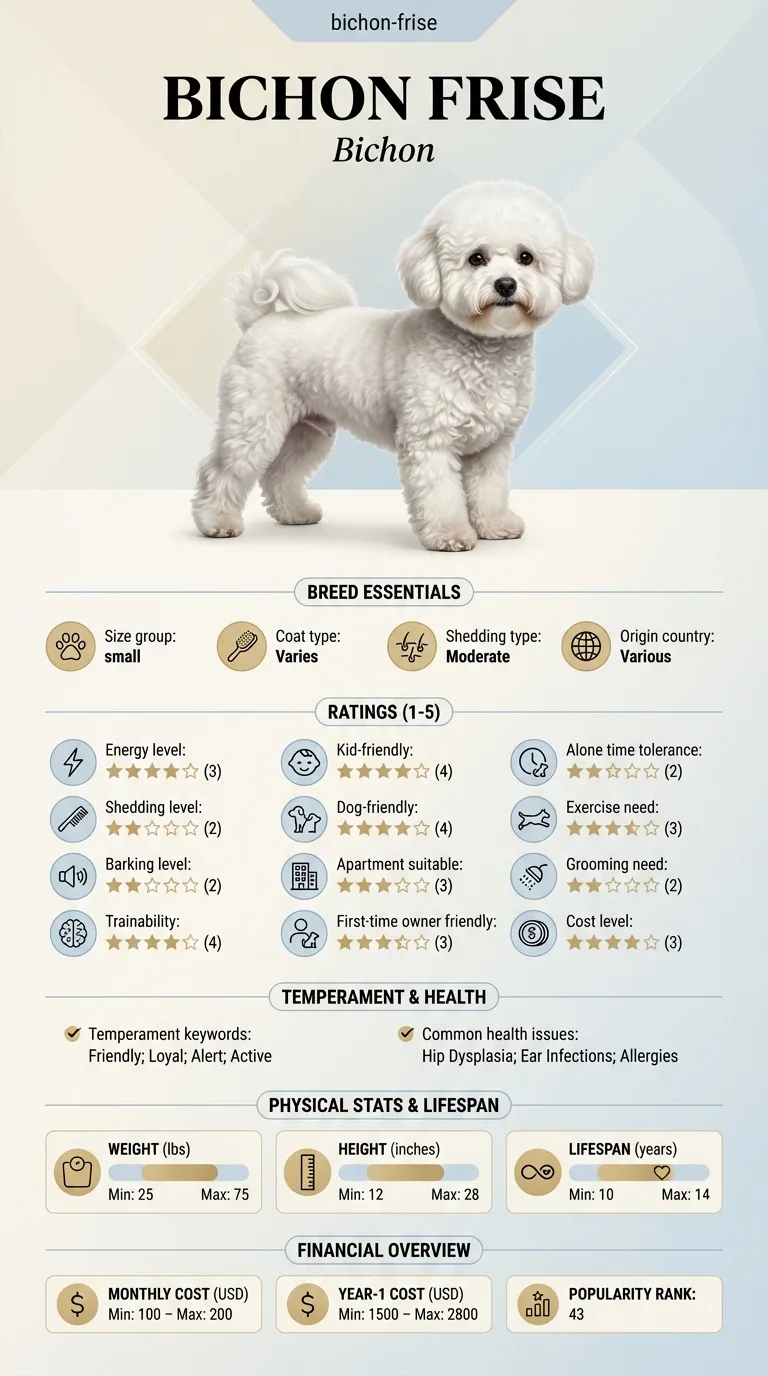
Bichon Frise Exercise Intolerance: What a Sudden Drop in Stamina Means infographic

Owners run into this most when a normally bouncy Bichon suddenly seems to run out of steam, and the confusion is whether this is just a low-energy breed being a low-energy breed, or a sign that needs a vet visit.

Important reminder

This guide is not medical advice. If your dog shows pain, sudden behavior change, or worsening symptoms, consult a licensed veterinarian.

Some links may be affiliate links. We may earn a commission at no extra cost to you. We only suggest products we believe are helpful for dog owners.

What this problem looks like

Exercise intolerance describes a dog doing measurably less than it used to, or less than expected for its size, and stopping partway through activity it previously managed. In the Bichon Frise the honest starting point is that the breed's own baseline energy is modest, so the real signal is a change from that baseline rather than the baseline itself.

Common triggers

  • A change from the dog's own established activity tolerance, not a naturally low energy level
  • Intermittent knee discomfort from patellar luxation, often showing as skipping rather than a constant limp
  • Extra body weight loading an already shallow kneecap groove
  • Warm or humid conditions compounding joint discomfort during activity
  • General malaise from an unrelated illness, including dental pain

Exercise intolerance as a symptom is common in the sense that owners frequently report it, but in this breed it most often traces back to a single documented condition, patellar luxation, rather than to a distinct exercise-intolerance disease of its own.

Why this happens

Breed factors

The Bichon Frise carries a documented predisposition to patellar luxation, a shallow kneecap groove that lets the patella slip sideways during movement. That mechanical instability is the most plausible documented explanation for a dog that suddenly resists exercise it used to handle, since motion becomes intermittently painful rather than simply tiring. No cardiac or respiratory condition is documented in this breed, so those should not be assumed as the default cause.

Environment factors

Hard surfaces, repeated jumping on and off furniture, and warm weather all increase load or discomfort on a joint that is already mechanically compromised. A dog managing mild, intermittent luxation on a cool morning may show clear reluctance on a hot afternoon walk, which can look like heat intolerance when the underlying driver is the knee.

What you can do at home (once it is not an emergency)

When to talk to your vet

Talk to a vet if reluctance to exercise is new, if you see intermittent skipping or a leg held up mid-stride, or if the dog seems stiff after rest and loosens with movement. Treat collapse, pale or blue gums, refusal to rise, or labored breathing that does not settle at rest as same-day emergencies, since none of those are expected findings in this breed.

At home, alongside your vet's plan

  • Track when the reluctance happens — every walk, only long ones, only after jumping — and note whether one leg looks favored.
  • Swap one long walk for two shorter, calmer ones on soft ground to reduce repeated joint stress while you investigate.
  • Block or ramp access to high furniture and stairs if you notice skipping or a leg held up after jumping down.
  • Keep the dog at a lean body condition, since extra weight directly increases load on an already shallow kneecap groove.
  • Keep a simple log of good days versus bad days to bring to the vet — a pattern is more useful than a single description.

See all Bichon Frise health problems, which breeds are prone to exercise intolerance, or the full Bichon Frise breed guide for temperament, exercise needs and ownership costs.

What to expect, and how you know it is working

If patellar luxation is confirmed as the cause, mild grades are often managed for months to years with weight control and activity adjustment before, if ever, surgery becomes necessary. Improvement from management changes alone is usually visible within two to four weeks.

Success is not a return to unlimited exertion but a dog whose activity level matches a stable, comfortable baseline again, without the skipping, hesitation or sudden refusal that prompted concern.

Low Energy Is the Breed's Normal — A Change From It Is Not

The Bichon Frise is documented with a modest exercise need and a moderate energy level rating, not a high-drive working temperament. A dog that prefers a couple of short walks and some indoor play to an hour of running is behaving exactly as the breed is built to behave, and that baseline should not be mistaken for a medical problem.

What matters is the delta. A dog that has always tired after ten minutes and still tires after ten minutes has not developed exercise intolerance — it has a stable, breed-typical activity ceiling. A dog that used to manage a full walk and now sits down, lags behind, or turns for home partway through has changed, and that change is the actual signal worth investigating, regardless of how modest the breed's baseline energy level is.

The Documented Driver: Joint Pain, Not Fatigue

Patellar luxation is a documented condition in this breed, and it is the most likely orthopedic explanation for a Bichon that suddenly resists exercise it previously tolerated. A kneecap slipping out of its groove does not always produce an obvious limp — sometimes it produces a dog that skips a few steps, holds a leg up briefly, then carries on, or one that simply becomes reluctant to keep moving because motion is starting to hurt.

What can look like low stamina or a bad mood on a walk is often a joint quietly telling the dog to stop. This is a mechanical explanation, not a cardiovascular one — the dog is not out of breath, it is avoiding a movement pattern that has become uncomfortable. Watching for intermittent skipping, a leg held up mid-stride, or reluctance specifically on stairs and jumps helps separate this from true fatigue.

Bichon Frise Exercise Intolerance: What a Sudden Drop in Stamina Means - The Documented Driver: Joint Pain, Not Fatigue

What This Breed's Health Record Does Not Support

No cardiac or respiratory condition is a documented feature of the Bichon Frise, and it would be misleading to reach for one as the default explanation for reduced stamina. Sudden collapse, blue-tinged gums, or persistent open-mouth breathing at rest are not expected findings for this breed and should not be waved away as "just a small dog thing." If exercise intolerance is severe, comes on fast, or is paired with any of those signs, the honest position is that something outside the breed's typical profile is happening and needs veterinary evaluation rather than a home explanation.

Why Milo Stopped Finishing His Route

Milo had walked the same fifteen-minute loop with his owner for two years without complaint. Over about three weeks, he started sitting down halfway, then eventually refusing to continue at all some days. His owner assumed he was simply slowing down or maybe bored of the route. A vet exam found a grade two patellar luxation, mild but clearly present, and asked whether anyone had noticed skipping. Looking back at recent videos, Milo's owner spotted it immediately — a brief hop on the left hind leg every few minutes that had been too subtle to register in real time. With a switch to two shorter walks on softer ground, a ramp for the sofa, and a few pounds off his frame, Milo finished his loop again within three weeks, without the sitting-down standoffs that had become routine.

Key takeaway: A sudden change in exercise tolerance in this breed is more often a knee quietly signaling discomfort than a drop in general fitness, and the skipping that gives it away is easy to miss without deliberately looking for it.

Frequently asked questions

Why has my Bichon Frise suddenly stopped wanting to walk?

A sudden change, as opposed to a lifelong low-energy pattern, is the important detail. The most likely documented cause in this breed is patellar luxation causing intermittent joint discomfort. Watch for skipping steps or a leg held up briefly, and have a vet check the knees if you see it.

Is low energy normal for a Bichon Frise?

Yes. The breed is rated with a modest exercise need and moderate energy level, not a high-drive working temperament. A dog that has always preferred short walks is showing normal breed behavior, not exercise intolerance.

Could my Bichon's tiredness be a heart problem?

Cardiac disease is not a documented feature of this breed, so it is not the default explanation. That said, sudden collapse, blue-tinged gums, or persistent labored breathing are not things to explain away and warrant same-day veterinary attention regardless of breed.

How do I tell joint pain apart from just being tired?

Fatigue tends to be gradual and symmetrical — the dog slows evenly. Joint-driven reluctance often shows as intermittent skipping, favoring one leg, or sudden hesitation before stairs and jumps, which points toward the kneecap rather than general stamina.

Should I stop exercising my Bichon if it seems intolerant?

Reduce the intensity and length rather than stopping entirely, and get a vet exam to identify the cause. Complete rest is rarely the right long-term answer, but pushing through unexplained reluctance can worsen a joint problem if that is what is driving it.

At what age does exercise intolerance usually start in this breed?

There is no single documented age. Patellar luxation can show up as early as puppyhood in some dogs and not become noticeable until middle age in others, so a change at any life stage deserves the same attention.

Can weight affect exercise tolerance in a Bichon?

Yes, and it compounds joint issues specifically. A dog carrying extra weight puts more load through an already shallow kneecab groove, which can make luxation-related discomfort appear sooner and more often during activity.

When is reduced stamina an emergency?

Collapse, refusal to rise, blue or pale gums, or open-mouth breathing that does not resolve with rest are emergencies for any dog and should go to a vet the same day, not be monitored at home.

Quick answers

View more answers
Health

What is the most likely cause of exercise intolerance in a Bichon Frise?

Patellar luxation is the documented orthopedic condition most likely to cause sudden reluctance to exercise in this breed, often showing as intermittent skipping rather than a constant limp.

Behavior

Is a Bichon Frise naturally low energy?

Yes, the breed carries a modest documented exercise need. A stable, lifelong preference for shorter activity is normal breed temperament, not a medical sign.

Health

Should I worry if my Bichon slows down on walks?

Worry about a change from the dog's own baseline, not about a naturally moderate energy level. A sudden drop from what the dog used to manage is the signal to check.

Health

Can dental disease cause reluctance to exercise?

Indirectly. Dental disease is documented in this breed and painful teeth can make a dog generally subdued and less willing to engage, though it is not the primary mechanism behind joint-related exercise intolerance.

Health

What signs mean I should see a vet today?

Collapse, pale or blue gums, refusal to stand, or labored breathing that does not settle with rest are same-day signs, not wait-and-watch ones.

Related DogBreedCompass guides

  • Bichon Frise patellar luxation explainedPatellar luxation is the documented driver behind most sudden exercise reluctance in this breed.
  • how weight gain hides under a Bichon's coatOwners confusing coat-hidden weight gain with declining fitness may need this companion piece.
  • Bichon Frise heat sensitivityHeat is a separate but related cause of a Bichon slowing down mid-activity.
  • understanding genetic health risk in BichonsOwners weighing whether a symptom is breed-typical often want general guidance on interpreting breed health risk.
  • Bichon Frise cost of ownershipCost context helps owners budget for an orthopedic workup if joint pain is suspected.

Bring the right questions to the vet

A one-page prep sheet for this condition: the signs, the questions to ask, what to get priced. Unlocks here.

You get: Vet visit prep sheet

No spam. One-click unsubscribe. See our privacy policy.

Preview page 1 before you decide.

Related guides