Costs
Bichon Frise cost in Honolulu
About $128–$240/month, $1,900–$3,375 for year one — the highest this site tracks, though this breed's size often still allows in-cabin flight transport, worth confirming directly with an airline.

See Bichon Frise price across all cities →
Quick answer
Bichon Frise cost in Honolulu
About $128–$240/month, $1,900–$3,375 for year one — the highest this site tracks, though this breed's size often still allows in-cabin flight transport, worth confirming directly with an airline.
A Bichon Frise in Honolulu costs about $128–$240 a month, with the first year around $1,900–$3,375 — the highest general pricing this site tracks, though this breed's documented adult weight, topping out around 18 pounds, often still qualifies for in-cabin airline transport with the right carrier, a real logistics advantage over a larger breed facing mandatory cargo-hold shipping.
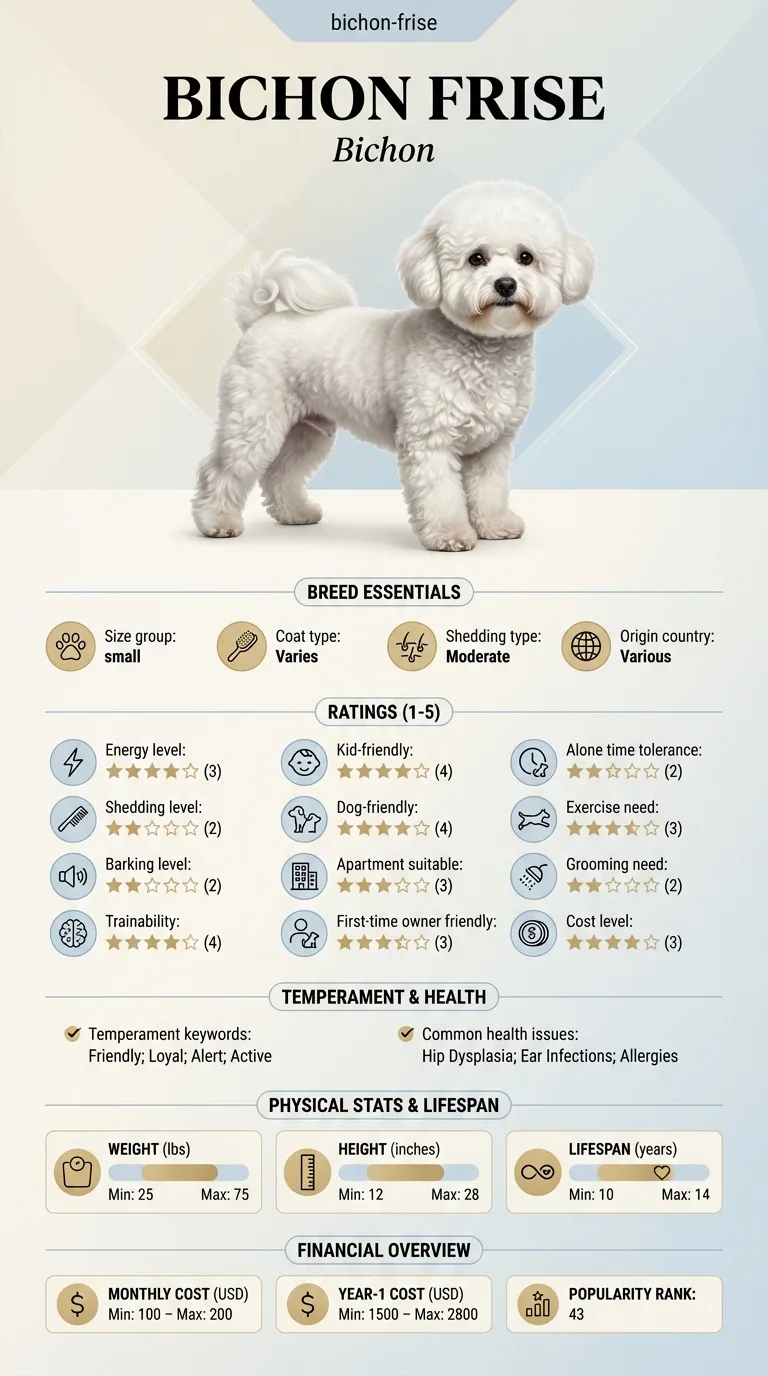
Skin Allergies and Patellar Luxation are the breed's more commonly documented health risks most likely to produce an unplanned bill, alongside this breed's real, documented Cataracts risk. This breed's genuine attachment to its people means alone-time tolerance is a real ongoing consideration, requiring attention regardless of city.
These figures reflect Honolulu's genuinely top-tier general pricing, with real quarantine-program fees factored in and a note on the in-cabin transport check worth making given this breed's borderline weight.
Estimate · source: estimation · confidence: medium · updated 2026-09-05 · not a quote
| Item | Cost range |
|---|---|
Rabies-free entry program fees (one time) A real, required cost tied to Hawaii's rabies-free-state entry program, lower when the blood titer test and paperwork deadlines are met well in advance. | $140 - $350 |
One-time setup (initial vet visit, spay/neuter, gear) Covers the first exam, vaccinations, spay/neuter if needed, and basic gear — priced at Honolulu's premium rates. | $395 - $665 |
| Item | Cost range |
|---|---|
Food Above the national average for this breed's small-to-medium size, driven by Hawaii's real shipping-cost premium on nearly all goods. | $43 - $70 |
Professional grooming (every 4-6 weeks) Priced among the highest this site tracks given Honolulu's genuinely elevated cost of living. | $90 - $155 |
Each range starts from a national baseline for this breed's size class and is then adjusted for local cost of living and veterinary pricing. The baselines, and the source each one came from, are listed on our sources page (dataset 2026.09). Two inputs, the purchase price and the emergency reserve, have no published national figure we could verify, so we leave them to you rather than invent them.
These are planning estimates, not quotes. Your own numbers will move with the individual dog, your vet and your insurer. Build a budget with your own figures.
For a Bichon Frise in Honolulu, insurance is genuinely worth taking seriously given this breed's documented skin, joint and eye-health risks, on top of the metro's already-premium general cost of living.
Given this breed's real, varied documented health risk profile and Honolulu's elevated vet pricing, insurance purchased while the dog is young is worth pricing out seriously before anything is on record.
Owners who've built a genuinely solid emergency fund sized for Honolulu's above-average local pricing and are comfortable managing a procedure themselves can reasonably self-insure instead.
Honolulu's high costs call for real planning, and confirming in-cabin eligibility early can meaningfully ease a relocation.
Relocating any dog to Hawaii involves real logistics beyond the standard entry paperwork, and transport method is a genuine, practical piece of that puzzle. Many airlines cap in-cabin pet transport, carrier included, around 20 pounds, and this breed's documented adult weight, typically 12 to 18 pounds, sits close enough to that threshold that it's genuinely worth confirming directly with a specific carrier rather than assuming either way.
Weighing the dog with its actual travel carrier well before booking, and calling the airline directly to confirm current pet-travel weight limits, are real, practical steps that can meaningfully simplify relocation logistics if the dog qualifies for in-cabin travel.
Honolulu ranks as the most expensive city this site tracks generally, with real shipping-driven premiums on food and supplies, and Hawaii's mild, year-round climate keeps parasite prevention a genuine twelve-month cost.

A family relocating to Honolulu with their Bichon Frise weren't sure whether their dog, sitting near the upper end of the breed's documented weight range, would qualify for in-cabin travel or need cargo-hold arrangements. A quick weigh-in with the actual travel carrier confirmed they came in just under the airline's limit, letting the family book with confidence weeks ahead of the move.
Key takeaway: In Honolulu specifically, this breed's real borderline weight makes an early, direct carrier check genuinely worth doing before booking a relocation flight.
About $128–$240, the highest general pricing this site tracks, reflecting Hawaii's real shipping-driven cost premium on nearly everything.
Roughly $1,900–$3,375, including the initial vet exam, spay/neuter if needed, entry-program fees, and gear.
Often, yes — its documented weight, typically 12 to 18 pounds, sits close enough to most airlines' in-cabin limits that it's worth confirming directly with a specific carrier.
Weigh the dog with its actual travel carrier and call the airline directly to confirm current pet-travel weight limits before assuming either way.
Worth pricing out given the breed's documented skin, joint and eye-health risks — Honolulu's high vet pricing makes a procedure here more expensive than a typical market.
Around $975 covers a typical significant vet visit in this market, reflecting Honolulu's genuinely elevated local pricing.
About $128–$240/month, $1,900–$3,375 for year one — the highest this site tracks, though this breed's size often still allows in-cabin flight transport, worth confirming directly with an airline.
This guide is not medical advice. If your dog shows pain, sudden behavior change, or worsening symptoms, consult a licensed veterinarian.
Some links may be affiliate links. We may earn a commission at no extra cost to you. We only suggest products we believe are helpful for dog owners.
We research and check what we publish, but we do not warrant that any figure, date, price, or statement is accurate, complete, or current, and we accept no liability for any loss, cost, injury, or other harm arising from the use of this site. Use it as one reference among several. You remain responsible for your own decisions and for your dog's care - confirm anything that matters with a licensed veterinarian or another qualified professional before you act on it. Full disclaimer.
One sheet with every line item, the emergency fund and when insurance pays off - unlocks on this page.
You get: 12-month budget sheet
No spam. One-click unsubscribe. See our privacy policy.
Preview page 1 before you decide.